
Laith Marouf: Hezbollah's drones & rockets just shattered Israel's buffer zone
YouTube · 0w8F8LS8Hxg
Quick Read
Summary
Takeaways
- ❖Hezbollah's combined drone and rocket attacks are proving highly effective against Israeli forces and infrastructure.
- ❖Iran's direct threat to attack northern occupied Palestine deterred an Israeli strike on Beirut's Dahiyeh suburb.
- ❖Hezbollah has destroyed numerous Iron Dome batteries, significantly reducing Israel's air defense capabilities in the north.
- ❖Israeli attempts to advance across the Litani River have resulted in heavy losses, turning strategic high points into 'kill zones'.
- ❖Hezbollah customizes drone payloads (fragmenting vs. armor-piercing) based on the target type.
- ❖The Lebanese government's negotiation position is weak because it disavows the 'resistance' as its primary leverage.
- ❖The strategic goals of the U.S. and Israel are diverging, with Israel's actions becoming a liability for U.S. regional influence.
- ❖The 'axis of resistance' restructured its military strategy to account for potential loss of land connectivity through Syria, leading to current tactical successes.
- ❖The ongoing conflict in northern Israel is causing significant economic damage and internal societal pressure, including mass displacement and halted industrial zones.
- ❖The 'chosenness' and 'superiority' narrative underpinning the Israeli project is collapsing under the pressure of Hezbollah's resistance.
Bottom Line
If the conflict in Gaza becomes the sole focus of global attention (due to ceasefires elsewhere), Israel's international credibility and trade situation will deteriorate much faster.
This suggests that Israel's current strategy of engaging on multiple fronts (Lebanon, Iran) might be a deliberate tactic to diffuse global attention from its actions in Gaza, preventing a more rapid international collapse of its standing.
Activists and media could strategically concentrate efforts on Gaza if other fronts de-escalate, leveraging increased global scrutiny to accelerate pressure on Israel.
The 'chosenness' and 'superiority' narrative that forms the ideological basis for the Israeli project is being 'crushed' by the resistance in South Lebanon, leading to widespread draft dodging and declining morale.
This ideological erosion, if accurate, poses a fundamental threat to the long-term viability and internal cohesion of the Israeli state, beyond just military losses.
Understanding and highlighting this ideological vulnerability could be a key strategy for those seeking to challenge the Zionist project, by demonstrating its practical failures and the psychological impact on its populace.
Lessons
- Recognize the significant tactical shift in modern warfare, where low-cost, precise drones can neutralize advanced, expensive defense systems like the Iron Dome.
- Analyze geopolitical conflicts through multiple lenses, acknowledging that narratives from 'resistance' groups offer critical, albeit biased, insights into their strategic thinking and operational successes.
- Consider the economic and social impact of prolonged conflict on civilian populations, even within the 'aggressor' state, as these factors can significantly influence political stability and military endurance.
Notable Moments
Laith Marouf recounts the 1982 'Olympia operation' in Beirut, where a civilian spontaneously attacked Israeli officers humiliating a waiter, which he frames as the spark that ignited the resistance and led to Israel's eventual withdrawal from Lebanon.
This anecdote serves to illustrate the deep-seated resistance spirit and the historical precedent for Lebanese civilians to initiate resistance against occupation, reinforcing the speaker's argument about the inevitability of Israeli withdrawal from South Lebanon.
Quotes
"The loudest voice of negotiation on the table of negotiation is the bullet."
"At one point, if the United States wants to remain a superpower and have say and not lose all its cards in in Western Asia or North Africa, it has to drop the Zionist card."
Q&A
Recent Questions
Related Episodes
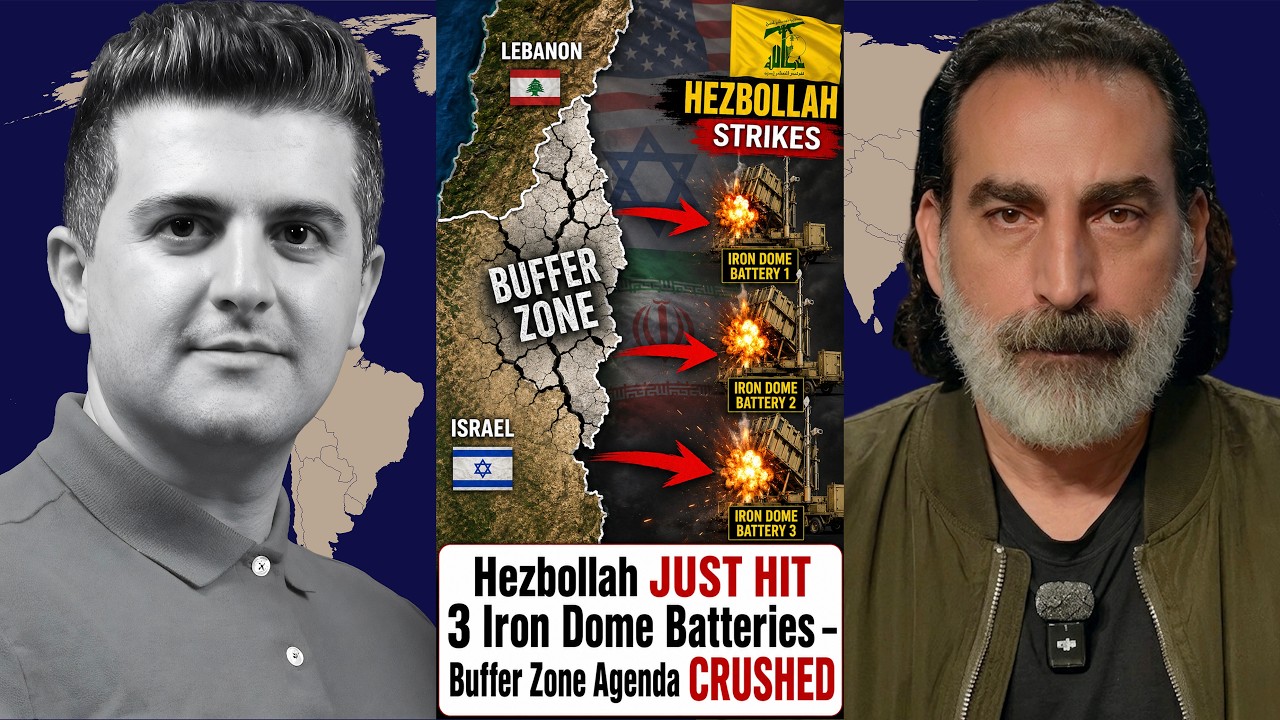
Laith Marouf: Hezbollah JUST HIT 3 Iron Dome Batteries – Buffer Zone Agenda CRUSHED
"Laith Marouf details Hezbollah's advanced drone warfare capabilities and intelligence gathering, asserting their strategic dominance over Israeli forces in southern Lebanon and northern Palestine."

Iran Update: Israel’s Newest Bombing Campaign, the Oncoming War With China and How to Avoid It
"Colonel Wilerson reveals how the US and Israel are actively bombing China's strategic infrastructure in Iran, escalating a covert economic war that Beijing intends to win without direct military conflict by dismantling the dollar's global dominance."

Mohammad Marandi & Larry C. Johnson: U.S. & Iran on the Brink as Critical Negotiations Unfold LIVE
"Two geopolitical analysts argue that the US and Israel are on the brink of a catastrophic war with Iran, driven by irrationality and miscalculation, which would lead to global economic collapse and US instability."

Iran Deal Skepticism. Whoopi Vs Vance. Potomac Park Invasion. Racist Hurls Slurs At Black Boy.
"This episode dissects multiple instances of alleged anti-Black policies and racial injustice, from the Trump administration's legal challenges to reparations and the Iran deal, to police brutality and the erasure of Black history."