BREAKING: U.S. Deploys DOOMSDAY Bombers; IDF Drones SWARM Iran; IRGC Strikes Gulf Oil | TBN Israel
YouTube · 14CTRgVZLPg
Quick Read
Summary
Takeaways
- ❖Mossad-backed AI-guided drone swarms reportedly struck Basij checkpoints in Tehran, eliminating dozens of personnel and generating internal fear within the Iranian regime.
- ❖The U.S. deployed B-52 strategic bombers to Europe, signaling a potential for heavier strikes against Iran.
- ❖Israel and the U.S. claim extensive destruction of Iran's missile, drone, and air force capabilities, with 5,500 targets hit and 60 Iranian ships sunk.
- ❖Iran initiated naval mine laying in the Strait of Hormuz, threatening global oil trade and rejecting international appeals to cease.
- ❖Internal reports indicate severe shortages of ammunition, food, and water within Iranian military units, alongside desertions and tension between the regular army and Revolutionary Guards.
- ❖An Israeli strike hit the data center of Bank Sepah, responsible for military salaries, exacerbating internal chaos within Iran's armed forces.
- ❖Iran threatened major U.S. tech giants (Google, Microsoft, Amazon, Nvidia, IBM, Palantir, Oracle) and is suspected of planning drone attacks from civilian vessels against California targets.
- ❖Over 3 million Iranians have been displaced from their homes, including regime personnel fleeing assassination fears.
Insights
1AI-Guided Drone Swarms Target Tehran's Internal Security
Israeli AI-guided drones reportedly carried out 'suicide strikes' on Basij checkpoints in Tehran, eliminating dozens of personnel. This operation, attributed to the Mossad and monarchist elements, aimed to create a sense of persecution within the regime and undermine its control over civilian movement, preventing internal protests.
Reports from Tehran and the Fars news agency, identified with the regime, admitted to casualties among Basij personnel at checkpoints. The hosts frame this as a 'science fiction movie' type attack.
2Extensive Destruction of Iranian Military Capabilities
The IDF and U.S. military claim to have severely degraded Iran's military. The Israeli Air Force focused on hunting Iran's drone array, attacking over 250 unmanned aerial vehicles, launchers, and dozens of launch sites. The U.S. reported destroying 5,500 targets and sinking 60 Iranian ships, including transport and air force aircraft. This has led to a significant drop in Iran's missile launch capabilities against Israel.
U.S. announcements of 5,500 targets destroyed and 60 ships sunk. IDF reports of attacking 250+ UAVs and launchers. Claims of Iran launching less than half the planned missiles.
3U.S. Deploys B-52 Bombers as Deterrent
Three U.S. B-52 'doomsday' bombers landed at Fairford, a base in Britain. This deployment is presented as a deterrent and an operational option, signaling that the next phase of the conflict could involve heavier strikes and bunker-penetrating munitions, changing the 'language' of the confrontation.
Deployment of three B-52 bombers to Fairford, UK, capable of carrying over 30 tons of munitions, including heavy bunker-penetrating munitions.
4Iran Mines Strait of Hormuz, Threatens Global Oil Supply
Iran began laying naval mines in the Strait of Hormuz, a critical bottleneck for a fifth of global oil supply. This strategic move aims to disrupt oil trade routes, cause a spike in prices, and pressure Gulf States, India, Pakistan, Turkey, and Egypt to push Washington to end the war. Iran stated, 'Security will be for everyone or it will be for no one.'
IDF confirmation of mines laid in the Strait of Hormuz. Reports of Oman evacuating tankers and attacks on ships and Gulf State infrastructure.
5Internal Collapse and Disarray within Iranian Military
Reports from Iran indicate severe shortages of ammunition, food, and water among front-line units, widespread soldier desertions, and growing tension between the regular army and the Revolutionary Guards. Attempts to mobilize reserve forces yielded limited results. Furthermore, an Israeli strike hit the data center of Bank Sepah, which is responsible for military salaries, acting as a 'force multiplier of chaos' within an already crumbling army.
Reports of 10-20 bullets per two soldiers, refusal of Revolutionary Guards to assist regular army wounded, limited reserve mobilization, and the strike on Bank Sepah's data center.
6Iran Targets U.S. Tech Giants and Threatens Mainland Attacks
Iran explicitly threatened major American tech companies including Google, Microsoft, Amazon, Nvidia, IBM, Palantir, and Oracle, signaling a shift of the conflict into the digital sphere. The FBI also warned of the possibility of Iranian drones being launched from civilian vessels at sea towards targets in California, raising the alert level in Los Angeles.
Iran's explicit threats against specific U.S. tech companies. FBI warning regarding potential Iranian drone attacks on California from civilian vessels.
Bottom Line
The targeting of Basij checkpoints in Tehran by AI-guided drones represents a significant psychological warfare tactic, aiming to instill a 'sense of persecution' among the regime's internal repression apparatus. This undermines their perceived safety and control, potentially fostering internal dissent or paralysis.
This tactic directly challenges the regime's ability to control its own streets and suppress internal opposition, which could be more destabilizing than conventional military strikes on external targets. It signals a new phase where the conflict is brought directly to the regime's domestic security forces.
Understanding the psychological impact of precision strikes on internal security forces could inform strategies for undermining authoritarian regimes from within, focusing on demoralization and creating internal instability rather than solely external military pressure.
Arab Gulf States exhibit a complex, two-voiced response: quiet relief at Iran's weakening alongside enormous fear of a chaotic vacuum if the Iranian regime collapses. They are unwilling to be dragged into a full-scale war despite being hit on their own soil, but also do not want to see a complete collapse.
This complexity means that while Arab states may tacitly support actions that weaken Iran, they will publicly avoid escalation and may not fully align with U.S./Israeli objectives if it risks regional chaos or their own direct involvement. This limits the scope for a unified regional front against Iran.
Diplomatic efforts need to navigate this nuanced position, offering assurances of stability post-conflict or engaging in discreet security cooperation that doesn't force public alignment, to maintain regional partners while addressing the Iranian threat.
Lessons
- Stay informed on geopolitical developments in the Middle East, particularly regarding the Strait of Hormuz and potential cyber threats, as these have global economic and security implications.
- Consider the hosts' call to 'spread the truth' and 'pray for the situation' as a direct action point, reflecting the podcast's specific religious and advocacy perspective.
- Monitor global energy markets and supply chain stability, as Iranian actions in the Strait of Hormuz could lead to significant disruptions and price spikes.
Notable Moments
AI-guided drone swarm attacks Basij checkpoints in Tehran, eliminating dozens of personnel and creating a 'sense of persecution' within the Iranian regime.
This marks a new, highly sophisticated form of warfare targeting internal security forces directly within the capital, aiming to destabilize the regime from within and undermine its control.
The U.S. deploys B-52 'doomsday' bombers to a base in Britain, explicitly as a deterrent and an operational option for heavier strikes against Iran.
This deployment signals a significant escalation in the U.S. commitment and capability to conduct large-scale, potentially bunker-busting, operations, sending a clear message to Iran about the potential for a more severe phase of conflict.
Iran begins laying naval mines in the Strait of Hormuz, threatening a global energy crisis and rejecting international appeals for freedom of navigation.
This move directly threatens a critical global chokepoint for oil supply, demonstrating Iran's willingness to use economic warfare to pressure international actors and potentially trigger a global energy crisis.
Quotes
"A swarm of Israeli AIG guided drones carried out suicide strikes on manned besiege checkpoints in Iran, eliminating them in a coordinated operation."
"Security will be for everyone or it will be for no one."
"When that bomber is deployed to Europe while the war is ongoing, that is not decoration. It is a message to Iran that the next phase could be heavier."
"In an army that is falling apart from within, a hit on the payment and the salary system is a force multiplier of chaos."
Q&A
Recent Questions
Related Episodes
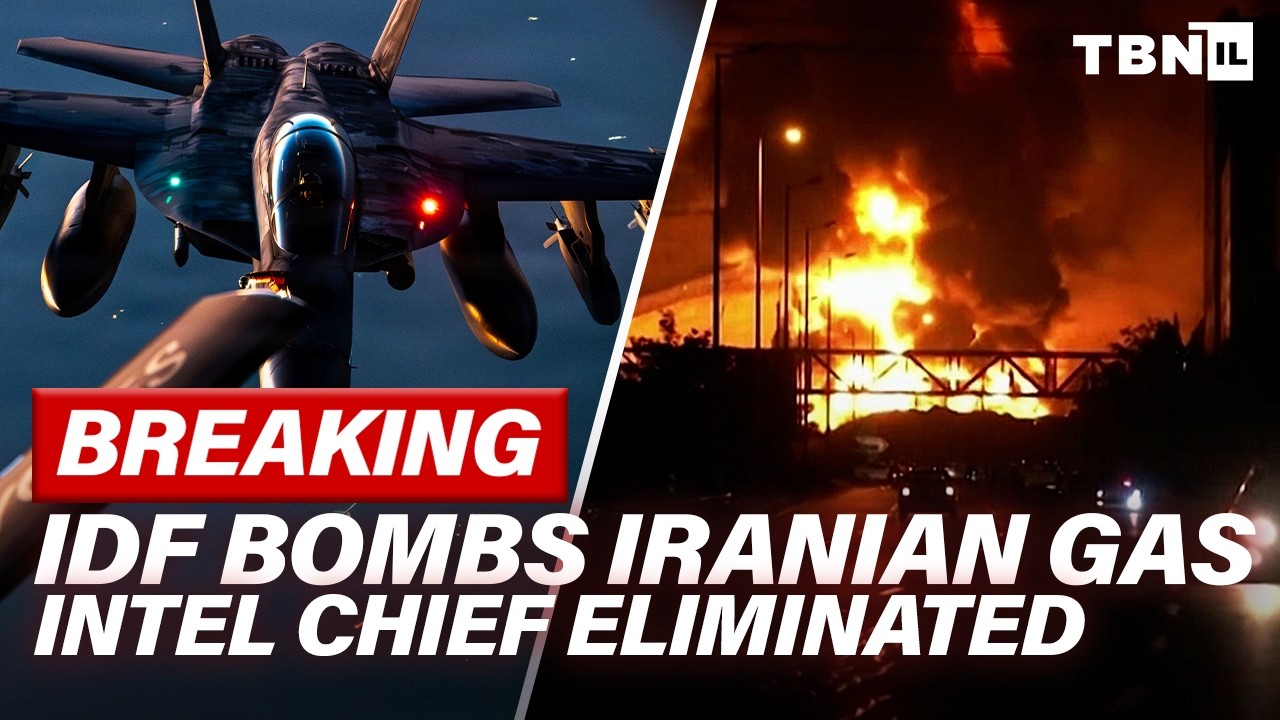
BREAKING: Israel BOMBS Major Iran Gas Site; Top Mullah ELIMINATED; Iran Vows VENGEACE | TBN Israel
"Israel and the United States have escalated their 'Roaring Lion War' against Iran, striking its largest gas facilities, eliminating key intelligence and military figures, and disrupting missile production, while Iran threatens a broader energy war in the Gulf."

Patrick Henningsen: Hezbollah JUST Fired Back at Israel - Iran Vows to “Crush” All Attacks
"Patrick Henningsen argues that the US and Israel initiated an illegal war against Iran, driven by Trump's incompetence and Israeli influence, leading to an inevitable escalation with severe global economic repercussions."

Bibi DEMANDS Ground Troops As Marines Rushed to Iran
"Benjamin Netanyahu is pushing for US ground troops in Iran, framing air strikes as insufficient, while the US rushes Marines to the region and struggles to secure the Strait of Hormuz against surprisingly capable Iranian defenses."

BREAKING: Iran Threatens To END Talks; U.S. Vows Retaliation; Hezbollah Collapsing? | TBN Israel
"Iran is leveraging Hezbollah and the Strait of Hormuz to manipulate US negotiations, while Israel asserts its right to dismantle Hezbollah's eroding but still dangerous infrastructure in Lebanon, independent of international talks."