'GET YOUR OWN OIL': Trump Floats Total Surrender
YouTube · 1Cbob7N1LJM
Quick Read
Summary
Takeaways
- ❖Trump has publicly indicated a willingness to withdraw from the Iran conflict, telling allies to 'go get their own oil' and suggesting the US will no longer secure the Strait of Hormuz.
- ❖The hosts characterize this potential withdrawal as a 'total surrender' by the US, resulting in a strategic victory for the Iranian regime.
- ❖Iran's control over the Strait of Hormuz could lead to a 'toll program' for global oil and LNG shipments, potentially denominated in non-dollar currencies like the Yuan.
- ❖The US military campaign in Iran is viewed as having failed its objectives, instead strengthening the Iranian regime and humiliating the US on the global stage.
- ❖US allies in Asia (Japan, South Korea) and Europe (UK, EU) would be severely impacted by oil disruptions and increased costs, potentially forcing them to align with Iran and China.
- ❖The economic ramifications for the US include potential drying up of Gulf sovereign wealth investments, higher oil prices, and broader economic instability.
- ❖Despite withdrawal signals, US airstrikes, including a bunker-busting bomb on an Iranian ammo depot, are still ongoing, creating an 'escalation trap'.
Insights
1Trump's 'Surrender' and Iran's Strategic Victory
Donald Trump's recent statements and reported private discussions indicate a willingness to disengage from the Iran conflict, effectively leaving the Strait of Hormuz under Iranian control. This move, framed by the hosts as a 'total surrender,' would allow Iran to implement a 'toll program' on global shipping, similar to Egypt's control of the Suez Canal. This outcome is seen as a massive strategic victory for the Iranian regime, which has survived the US military campaign and gained significant geopolitical leverage.
Trump's Truth Social post telling countries to 'Go get your own oil' (); Wall Street Journal report on Trump telling aides he's willing to end the war without reopening Hormuz (); Host stating, 'If he walks away and leaves the straight of Hormuz in Iranian hands... it's a surrender' ().
2Dismantling the US-Led Global Order
The hosts argue that US disengagement from securing the Strait of Hormuz would fundamentally undermine the US's role as the guarantor of global commerce and security. This shift would force US allies, particularly those heavily reliant on oil and LNG from the region (e.g., Asian nations, Europe), to make deals directly with Iran, potentially using non-dollar currencies like the Chinese Yuan. This could accelerate the formation of a 'new world order' where the US dollar's dominance and the swift sanctions system are weakened.
Discussion of 80% of oil through Hormuz going to Asia (), 70% of Qatar's LNG to Europe being 'gone' (); Host stating, 'What are we doing here now? ... This is a new world order' (); Discussion of China demanding oil exchanges be denominated in Yuan ().
3Economic Fallout and US Vulnerability
The potential US withdrawal and Iran's control of the Strait of Hormuz are predicted to cause severe economic ramifications globally and for the US. This includes sustained high oil prices, disruption to global supply chains, and a potential reduction in investments from Gulf sovereign wealth funds (e.g., Qatar Investment Authority) into US companies and markets. The hosts emphasize that while elites might be insulated, the broader US economy and citizens would face job losses, higher interest rates, and increased costs for essentials like gas and housing.
Discussion of Qatar's sovereign wealth fund taking a '17% haircut' on natural gas (); Host stating, 'our economy is a house of cards' (); Host warning of job losses, higher interest rates, and increased gas prices for average Americans ().
4Israel's Expanded Influence and Continued Instability
Despite the US's potential withdrawal, the hosts highlight that Israel has significantly expanded its territorial control and influence in the region since October 7th, effectively annexing parts of Lebanon and solidifying control over the West Bank and Gaza. However, they also note Israel's vulnerability, as its actions are heavily reliant on 'full and complete backing' from the US. A US withdrawal does not resolve the underlying Israeli-Iranian conflict, potentially leading to continued regional instability and renewed Israeli pressure on the US to intervene.
Host stating, 'Israelis, by the way, they're doing just great. They just basically annexed half of Lebanon' (); Host noting Israel's vulnerability without US backing (); Discussion of Israel potentially striking Iran anyway and dragging the US back in ().
Bottom Line
The US's perceived 'surrender' in the Strait of Hormuz could accelerate a global shift away from the US dollar as the primary currency for international oil transactions, particularly as nations like China and Iran seek to de-dollarize trade.
This could significantly erode the US's financial power and ability to impose sanctions, fundamentally altering the global economic landscape and empowering rival economic blocs.
Businesses and investors should monitor the adoption of alternative currencies (e.g., Yuan) in energy markets and consider hedging strategies against potential dollar depreciation or increased volatility in commodity prices.
The 'humiliating defeat' for the US could lead to a re-evaluation of alliances, with European and Asian allies seeking greater autonomy and making direct deals with regional powers like Iran, rather than relying on US security guarantees.
This could fragment existing military and economic alliances (e.g., NATO, US-Japan security treaty), leading to a more multipolar world with complex, shifting allegiances and potentially increased regional conflicts.
Governments and corporations should diversify their geopolitical risk exposure, cultivate direct relationships with a broader range of international partners, and invest in regional self-sufficiency for critical resources like energy.
Key Concepts
Escalation Trap
The US finds itself in a situation where withdrawing from the conflict has severe negative consequences for its global standing and economy, but continuing the conflict also leads to escalating costs and no clear path to victory. This creates a dilemma where both options are detrimental.
Suez Moment
The hosts compare the potential US disengagement from the Strait of Hormuz to the Suez Crisis, where the UK and France's failed intervention signaled a decline in their imperial power. This suggests a similar moment for the US, marking a significant shift in global influence and control over critical waterways.
Lessons
- Monitor global energy markets closely for price volatility and supply disruptions, especially those related to the Strait of Hormuz, as these could signal broader economic instability.
- Evaluate the geopolitical implications of shifting alliances and power dynamics in the Middle East, particularly the strengthening of Iran and its ties with China and Russia, for long-term investment and strategic planning.
- Assess the potential impact of de-dollarization trends on international trade and finance, considering how a weakened US dollar could affect asset valuations and global economic flows.
Quotes
"All of those countries that can't get jet fuel because of the straits of Hormuz like the United Kingdom which refused to get involved in the decapitation of Iran, I have a suggestion for you. Number one, buy from the US. We have plenty. Number two, build up some delayed courage. Go to the straight and just take it. You'll have to start learning how to fight for yourself. The USA won't be there to help you anymore, just like you weren't there for us. Iran has been essentially decimated. The hard part is gone. Go get your own oil."
"If he walks away and leaves the straight of Hormuz in Iranian hands for them to do with as they wish, it's a surrender. I mean, it is a surrender."
"This is a strategic nightmare. And yet somehow it is still the preferable outcome. Yes. And that's that's what's so insane about it is we were really screwed either way which is why we never should have been in this war."
"This is why this is like empire ending in a way is the Japanese are going to be like, 'Okay, our security guaranter or 90% of our oil. What do we do? What what choice would you make?' I mean this is when your your actual back is up against the wall."
Q&A
Recent Questions
Related Episodes

Bibi DEMANDS Ground Troops As Marines Rushed to Iran
"Benjamin Netanyahu is pushing for US ground troops in Iran, framing air strikes as insufficient, while the US rushes Marines to the region and struggles to secure the Strait of Hormuz against surprisingly capable Iranian defenses."
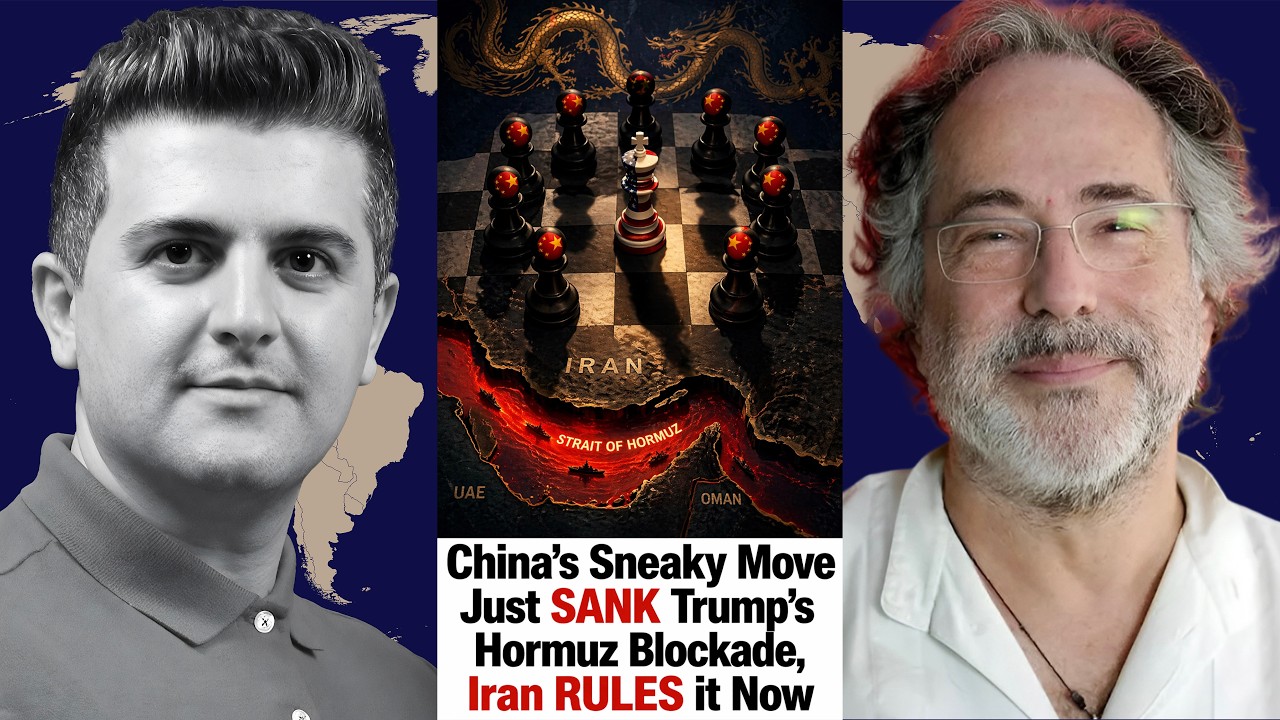
Pepe Escobar: “Total Failure”: Trump’s Blockade Just Backfired Disastrously
"Pepe Escobar argues that the US blockade against Iran, spearheaded by Donald Trump, has utterly failed and backfired, accelerating global economic chaos and challenging US geopolitical dominance."

Iran Update: Israel’s Newest Bombing Campaign, the Oncoming War With China and How to Avoid It
"Colonel Wilerson reveals how the US and Israel are actively bombing China's strategic infrastructure in Iran, escalating a covert economic war that Beijing intends to win without direct military conflict by dismantling the dollar's global dominance."

Patrick Henningsen: Hezbollah JUST Fired Back at Israel - Iran Vows to “Crush” All Attacks
"Patrick Henningsen argues that the US and Israel initiated an illegal war against Iran, driven by Trump's incompetence and Israeli influence, leading to an inevitable escalation with severe global economic repercussions."