Georgia Fort Pleads Not Guilty. Paralyzed Man Case Charges Dropped. Roy Cooper Senate Bid
YouTube · 1I4H3EC9p08
Quick Read
Summary
Takeaways
- ❖Reverend Jesse Jackson Sr. passed away at 84, leaving an unmatched legacy in civil rights, human rights, and economic justice.
- ❖His 1984 and 1988 presidential campaigns were pivotal, securing millions of votes and forcing significant reforms within the Democratic Party, including changes to superdelegate and winner-take-all rules.
- ❖Jackson pioneered economic empowerment strategies like Operation Bread Basket and the Wall Street Project, pressuring corporations to diversify hiring, contracts, and investments in black banks.
- ❖He was a global diplomat, negotiating the release of hostages and prisoners from Syria, Cuba, and other nations, demonstrating influence beyond traditional political channels.
- ❖Jackson consistently advocated for the poor, working class, and marginalized, uniting diverse coalitions across racial and economic lines.
- ❖His 'Keep Hope Alive' message and 'I Am Somebody' chant inspired generations, emphasizing self-worth and collective power.
- ❖Jackson understood and strategically utilized media, often crafting narratives and testing ideas with journalists before public dissemination.
- ❖Many black politicians and corporate executives today owe their opportunities to Jackson's foundational work, though some fail to reciprocate support for civil rights movements.
- ❖The challenge remains for current black leaders and communities to fund their own advocacy and maintain independent political power, rather than relying on external funding that can compromise their message.
Insights
1Jackson's Presidential Campaigns Transformed the Democratic Party
Reverend Jesse Jackson's presidential bids in 1984 and 1988 were not just symbolic; they fundamentally reshaped the Democratic Party's internal rules. By mobilizing millions of new voters, particularly black and progressive white voters, he gained significant leverage. This led to changes in delegate allocation (from winner-take-all to proportional representation) and the role of superdelegates, which directly impacted future elections, notably creating the pathway for Barack Obama's nomination in 2008.
Congresswoman Maxine Waters noted Jackson's strong showing, taking 18% of primary votes in 1984 and nearly 7 million votes in 11 contests in 1988, sweeping Southern states. Michael Brown detailed how Jackson, with his father Ron Brown and Dr. Ron Walters, changed DNC rules, arguing that without these changes, Barack Obama's 2008 nomination would not have been possible. (, , )
2Pioneering Corporate Economic Empowerment and Diversity
Jackson's Operation Bread Basket and later the Rainbow Push Coalition systematically applied economic pressure to corporations to achieve diversity, equity, and inclusion long before these terms were mainstream. He leveraged collective black consumer power, bought company stock to gain access to shareholder meetings, and demanded representation on boards and in senior management, as well as contracts with minority-owned businesses and investments in black banks.
Jackson himself stated, 'Just as we have focused on leveraging our votes to get elected officials, we also can leverage our economy to get the private sector.' He cited buying stock in 25 companies to gain access to shareholder meetings, which led to black board members at Facebook, Twitter, Apple, and Microsoft. Robert Patillo highlighted Jackson's role in mandating federal government contracts with minority corporations and pushing for DEI officers. (, , )
3Unmatched Global Diplomatic Influence
Beyond domestic civil rights, Jackson acted as an independent global diplomat, negotiating the release of American hostages and prisoners from hostile nations like Syria, Cuba, and Yugoslavia. His ability to engage with world leaders and secure outcomes where official government channels failed demonstrated his unique moral authority and international standing.
Congresswoman Waters recalled Jackson going to Syria to rescue Lieutenant Robert Goodman in 1985. Michael Neighbors detailed Jackson's negotiations with Hezbollah for Americans held during the TWA hijacking and with Serbians for American service members. Cliff Albright recounted being a young boy seeing Jackson bring hostages home, shaping his understanding of black power on the world stage. (, , )
4The Power of Voter Mobilization as 'Currency'
Jackson viewed voter registration and turnout as a crucial form of 'currency' in the political landscape. He built a grassroots methodology for mobilizing voters, particularly in underserved communities, which gave him significant leverage in political negotiations and forced parties to address the needs of his diverse coalition. He believed that an unregistered or non-voting black person was leaving their economic and political power on the table.
Robert Patillo explained that Jackson 'essentially created the modern get out the vote methodology' by registering voters in towns and churches, then arriving at the DNC with 'two million of his own voters,' forcing the party to listen. Barbara Arwine noted that the one thing that 'hurt him to his heart was an unregistered black voter' and those who didn't vote. (, )
Bottom Line
Black businesses and professionals, despite benefiting significantly from civil rights activism, often fail to financially support the movements that created their opportunities.
This creates a dependency on external funding sources (foundations, corporations) that can compromise the independence and messaging of civil rights organizations, limiting their ability to challenge systemic issues effectively.
Develop new models for sustainable funding within black communities, emphasizing direct contributions from successful black entrepreneurs and professionals to ensure the freedom and autonomy of advocacy groups. Implement a 'tithe' system where beneficiaries of civil rights work contribute a percentage back to the movement.
The political and economic strategies pioneered by Reverend Jesse Jackson Sr. are often credited to later, often white, politicians (e.g., Bernie Sanders) or are diluted in mainstream historical narratives.
This historical revisionism erases the foundational contributions of black leaders and disempowers current and future generations by obscuring the true origins of progressive policies and effective organizing tactics.
Actively educate younger generations about Jackson's specific contributions to economic justice, healthcare, environmental justice, and coalition-building. Black-owned media must proactively control and disseminate this narrative to prevent its co-option and ensure proper attribution and understanding.
Opportunities
Black-Owned Media Ecosystem for Narrative Control
Establish and aggressively fund a network of black-owned media platforms (streaming, digital, print) dedicated to controlling the narrative of black history, civil rights, and economic empowerment. This ecosystem would proactively educate, celebrate, and preserve the true legacies of leaders like Jackson, preventing their co-option or erasure by mainstream outlets.
Community-Funded Advocacy & Development Hubs
Create local and national hubs, inspired by Operation Bread Basket, that facilitate connections between black-owned businesses and community needs. These hubs would also serve as fundraising mechanisms, collecting direct contributions from black professionals and businesses that have benefited from civil rights work, ensuring independent funding for ongoing advocacy and economic development initiatives.
Key Concepts
The Ballot, The Book, and The Buck
This model, emphasized by Jackson, posits that political power (the ballot), education (the book), and economic leverage (the buck) are interdependent pillars for community advancement and liberation. Neglecting any one weakens the others, leading to a formula for 'suicide' for a community.
Economic Withdrawal / Redistribute the Pain
Derived from Dr. Martin Luther King Jr.'s philosophy and implemented by Jackson's Operation Bread Basket, this model advocates for leveraging collective consumer power through boycotts and targeted economic pressure. By withdrawing patronage from companies with discriminatory practices, and directing it towards those that comply with diversity and inclusion demands, the 'pain' of economic inequality is redistributed to those in power, forcing change.
Lessons
- Actively register new voters and mobilize existing ones, recognizing the ballot as a crucial 'currency' for political and economic power, as emphasized by Reverend Jackson.
- Support black-owned media and institutions financially and through engagement to ensure independent narratives and proper historical preservation of black leaders' legacies.
- Hold black professionals and executives in corporate and political positions accountable for expanding opportunities for other black people, rather than solely pursuing personal gain, echoing Jackson's pressure on corporations for diversity.
Reverend Jackson's Grassroots Voter Mobilization Strategy
Identify underserved communities and engage directly through churches, schools, and community centers.
Conduct mass voter registration drives, emphasizing the direct link between voting and tangible community benefits (e.g., justice, economic opportunity).
Build a 'currency' of mobilized voters to leverage political influence, demanding concessions and representation from political parties and candidates.
Educate voters on the full scope of political power, including the ability to influence judicial processes (e.g., jury service) and public policy through elected officials.
Notable Moments
Reverend Jackson, despite battling Parkinson's, insisted on marching in the Ahmaud Arbery trial demonstration, refusing to stay in an SUV and wave, showcasing his unwavering commitment to being on the front lines.
This demonstrated his profound dedication to justice and solidarity with the marginalized, even at great personal physical cost, serving as a powerful example of leadership and sacrifice. (03:30:30)
During a critical hospital stay in November, where doctors believed his organs were shutting down, Jackson's primary concern was not rest but planning future political meetings and organizing efforts, illustrating his lifelong commitment to activism.
This anecdote reveals the depth of his dedication and how intertwined his identity was with the movement, suggesting that his purpose was literally what kept him alive. (03:07:56)
Jackson's 1988 Democratic National Convention speech, particularly its closing seven minutes, is highlighted as one of the greatest oratorical performances, moving audiences to tears by connecting his personal story of abandonment and struggle to the collective black experience and the 'Keep Hope Alive' message.
This speech crystallized his political and social agenda, demonstrating his unparalleled ability to inspire and unite, and remains a powerful testament to his rhetorical genius and profound empathy. (02:47:28)
Quotes
"You don't drown because the water is deep. You drown because you stop kicking. Ben, don't ever stop kicking."
"We didn't know how good baseball could be until we let everybody play. We don't know how good America can be until we get everybody a seat at the table."
"If you spend more than you have and vote less than you have, that's the formula for suicide. You must spend less than you make and vote all you can."
"I was born in the slum, but the slum was not born in me. And it wasn't born in you, and you can make it."
"The only justification we have for looking down on someone is that we're going to stop and pick them up."
Q&A
Recent Questions
Related Episodes
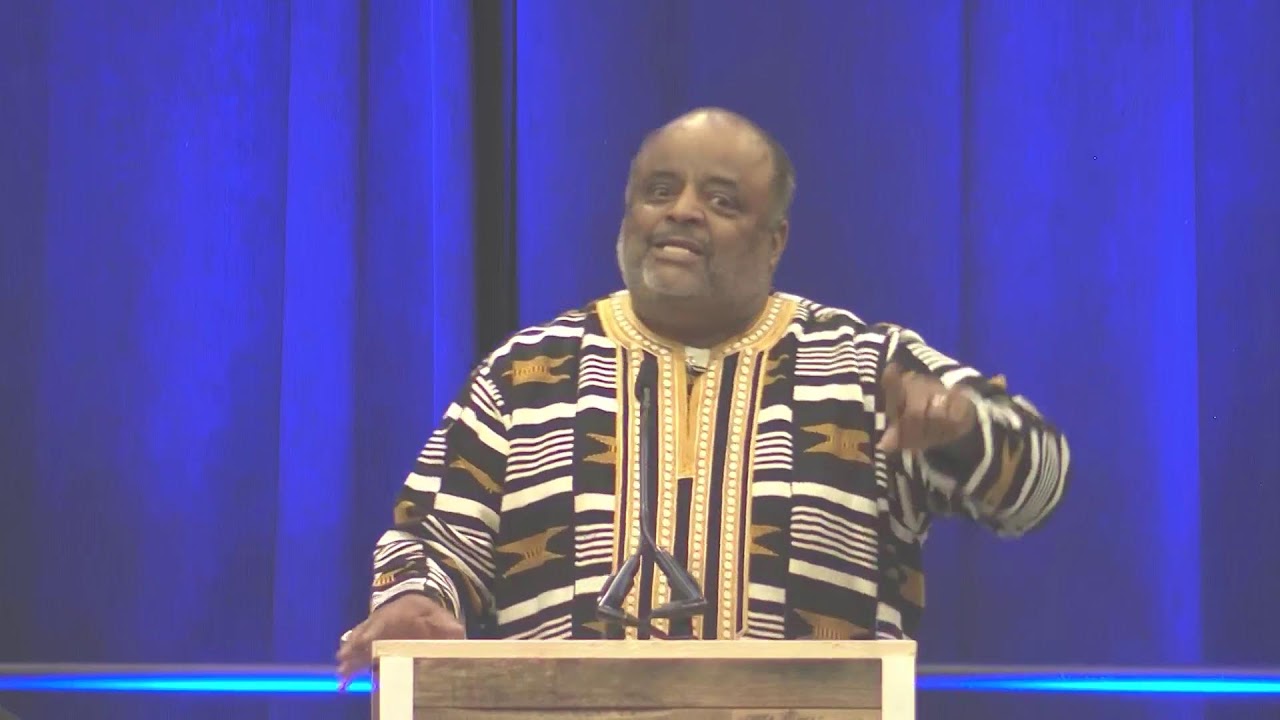
Roland speaks at Columbus Educ. Assoc. MLK Dinner
"Roland Martin challenges the audience at an MLK dinner to move beyond passive celebration and engage in active, sustained political and economic struggle, emphasizing that 'rest time is over' for those seeking real societal change."

All Roads Lead To the South: Nat’l Day Of Action For Voting Rights | Mass Rally | Montgomery, AL
"A mass rally in Montgomery, Alabama, ignites 'Freedom Summer 2026' to combat the Supreme Court's decimation of Black political power and demand unprecedented voter mobilization across the South."
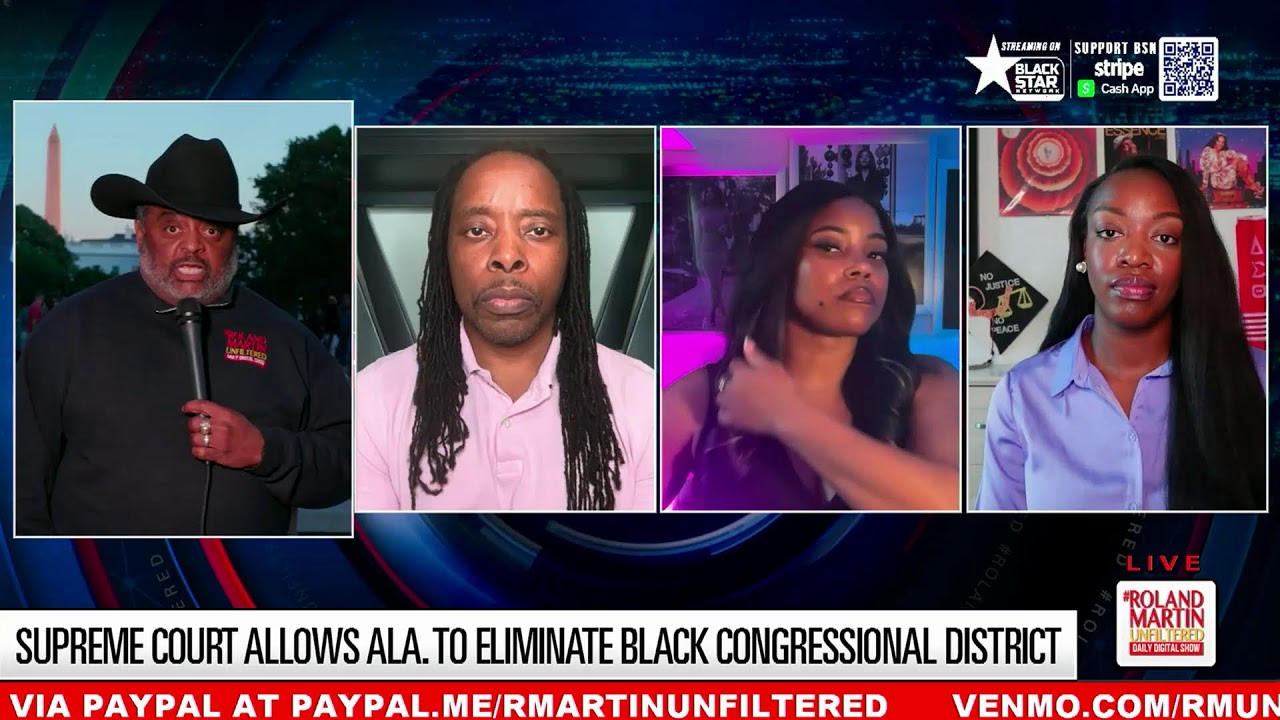
Moral Monday at BLM Plaza. Cleo Fields Sounds Alarm on Louisiana & Gary Chambers Pushes Turnout
"Activists and faith leaders gathered at Moral Monday to denounce 'policy violence' in various forms, from war and budget cuts to voter suppression and healthcare denial, urging sustained mobilization against a 'hijacked' democracy."
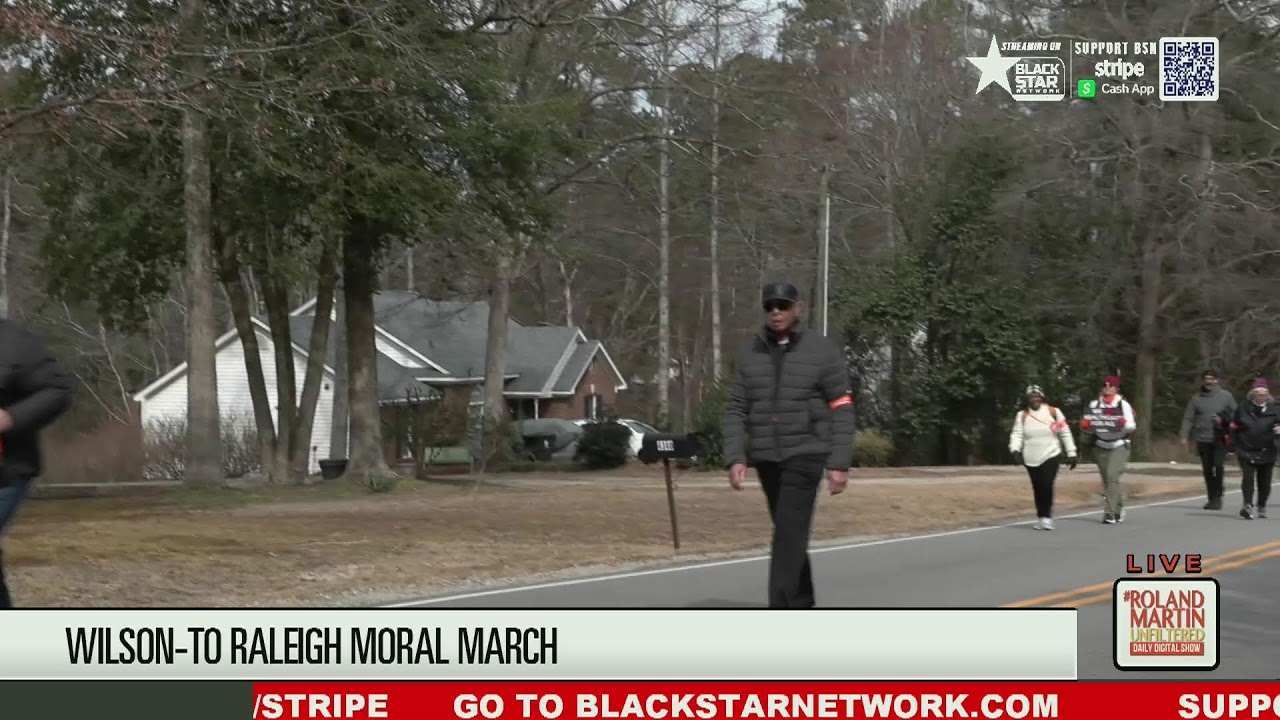
NC Early Voting Push. Cancer Alley Win. NFL Shuts Out Black Coaches.Trump Nominee’s “White Identity”
"Roland Martin Unfiltered dissects systemic racism in politics, sports, and environmental justice, revealing how Black communities are fighting back against gerrymandering, corporate exploitation, and hiring discrimination."