
🚨 BREAKING: Civil War Erupts In Iran - IRGC Lose Control Of Capital
YouTube · 1_rZtDKM-yk
Quick Read
Summary
Takeaways
- ❖Anti-Islamic protesters have reportedly taken control of multiple neighborhoods in Tehran and other major Iranian cities on the eighth day of the uprising.
- ❖The IRGC is described as desperate, using foreign proxies from Iraq, attacking hospitals to kidnap injured protesters, and struggling to maintain control.
- ❖Iranian citizens are forming local armies, disarming security forces, and employing tactics like Molotov cocktails to fight back.
- ❖Crown Prince Reza Pahlavi is sending urgent messages to the younger generation, urging them to 'stay out' and 'not give up' on the revolution.
- ❖The host claims the Iranian regime is financially fragile, unable to survive without support from China, Russia, or other BRICS countries, which are also facing economic challenges.
- ❖The host predicts the regime could fall in a matter of weeks, rather than months or years, if the protests continue with current intensity, citing the IRGC's depleted leadership and resources.
Insights
1Protesters Gaining Control and Adapting Tactics
The host reports that anti-Islamic protesters have taken control of multiple neighborhoods in Tehran and other major cities like Mashad, Hamadan, and Punak. They are forming local armies, disarming IRGC forces, and using improvised weapons like Molotov cocktails. This suggests a significant escalation and tactical evolution of the protest movement beyond peaceful demonstrations.
IRGC forces have withdrawn from multiple neighborhoods in Tehran (). Protesters in Hamadan disarmed Islamic forces (). Improvised flame throwers were used against IRGC units (). Molotov cocktails are now officially in use (). People in Punak have taken control (). In Fulchar, people quickly took back control after security forces opened fire ().
2IRGC's Desperation and Alleged Atrocities
The host claims the IRGC is becoming desperate, shooting people, and attacking hospitals to kidnap injured protesters. He alleges they injure people on the streets, force them to hospitals, then abduct them, with bodies sometimes found years later. The IRGC is also reportedly using foreign proxies, primarily from Iraq, to bolster their numbers.
IRGC is getting desperate and shooting a lot of people (). They attack hospitals, injure people on the streets, force them to hospitals, then kidnap them (, ). Bodies of missing people are found years later (). IRGC forces include foreign proxies, primarily from Iraq (, ).
3Crown Prince's Role and Call to Action
Reza Pahlavi, the Crown Prince in exile, is actively sending urgent messages to the Iranian people, especially the younger generation, urging them to 'stay out' and 'not give up.' The host reinforces this message, comparing the situation to the Egyptian uprising against Mubarak, where sustained presence in the streets was key.
Crown Prince Reza Pahlavi sent an urgent message to everybody, especially the younger generation (). The host doubles down on the Crown Prince's message: 'Stay out. Get out of your houses. Don't give up. It's too late to give up.' ().
4Regime's Financial Weakness and Geopolitical Isolation
The host asserts that the Iranian regime is facing a severe financial crisis and cannot survive without support from China, Russia, or other BRICS countries. He claims these BRICS nations have been 'damaged massively,' citing the 'loss of Venezuela' and Chinese forces being 'pushed out' of North African countries, further isolating Iran.
There is a financial crisis in Iran. The regime cannot survive without China, Russia, or other BRICS countries (). BRICS countries have been damaged massively, especially after the loss of Venezuela (). Chinese have been pushed out completely from North African countries ().
5Accelerated Timeline for Regime Change
While acknowledging that a civil war against a large regime typically lasts 6 months to a year, the host expresses a strong belief that the Iranian regime could fall much quicker, potentially in 'days' or 'a few weeks,' if the people continue their fight and win daily battles. This is attributed to the regime's depleted resources and leadership.
A civil war against a big regime in a huge country should last about 6 months, but the way it's going, it won't be as long as it should (). It could be days, but it could be only a few weeks (). The regime doesn't have much left ().
Lessons
- Stay out on the streets: The host and Crown Prince urge protesters to remain in the streets 24/7 to paralyze the regime and prevent it from regaining control.
- Do not give up: Emphasize that protesters have gone 'too far' to retreat, framing giving up as equivalent to death, thus reinforcing commitment.
- Block roads and disrupt regime mobility: Encourage blocking main roads and connections to hinder the regime's ability to mobilize troops and maintain control, especially in neighboring villages.
Notable Moments
Protesters in Hamadan disarm Islamic forces who were shooting at them.
This demonstrates the protesters' growing boldness and ability to directly confront and overcome regime forces, a significant shift in the power dynamic.
Use of improvised flame throwers and Molotov cocktails by protesters.
This marks an escalation in the protesters' tactics, moving beyond peaceful demonstrations to armed resistance, indicating a more violent phase of the conflict.
IRGC attacking hospitals to kidnap injured protesters.
This highlights the extreme measures the regime is allegedly taking to suppress dissent, including targeting the wounded, and underscores the brutality of the conflict.
The host plays the '2026 Revolution song' for Iran.
This illustrates the cultural and emotional elements of the movement, using music as a tool for mobilization and expressing aspirations for a future Iran under the monarchy.
Quotes
"The Islamic Republic of Iran have withdrawn their forces from multiple neighborhoods in the capital. Thran is currently under the control of the anti-Islamic protesters on day eight of this uprising."
"The people as long as they stay out, they will be able to paralyze the regime from within."
"Stay out. Get out of your houses. Don't give up. It's too late to give up. You've gone too far. You give up, you die. This is the end. Stay out."
"The Islamic Republic are planning something else which is going to get very dangerous for them by the way for the regime themselves."
"The Iranian regime doesn't have any military left thanks to the IDF. They don't they definitely don't have strategic leadership because the top commanders have all been taken out."
"The Israel and the United States have a very clear interest in overthrowing the regime."
"The Iranian people want to have him alive when the revolution happens. So he's doing him a favor. He doesn't want to die yet because he want he wants you to capture him and so he could he could witness his own regime falling apart."
"You can't compare to any other country because this is a very very different ballgame. The closest you can compare it to is the Eastern European blocks with with the fall of the Soviet Union."
Q&A
Recent Questions
Related Episodes

🚨 THEY F*CKED AROUND FOR THE LAST TIME 😭😭😭
"This episode unleashes a torrent of highly opinionated commentary on the US-Iran deal, Israel's role, and a scathing critique of 'leftist' policies and immigration, particularly highlighting the UK grooming gang report as evidence of Western societal decay."
BREAKING: Protests ERUPT In Iran Over IRGC Surrendering To Trump - Infighting Clashes In Tehran
"Iran is experiencing severe internal infighting and protests as hardline IRGC elements clash with government figures over a perceived 'surrender' to the US, while mainstream Western media misrepresents the situation."
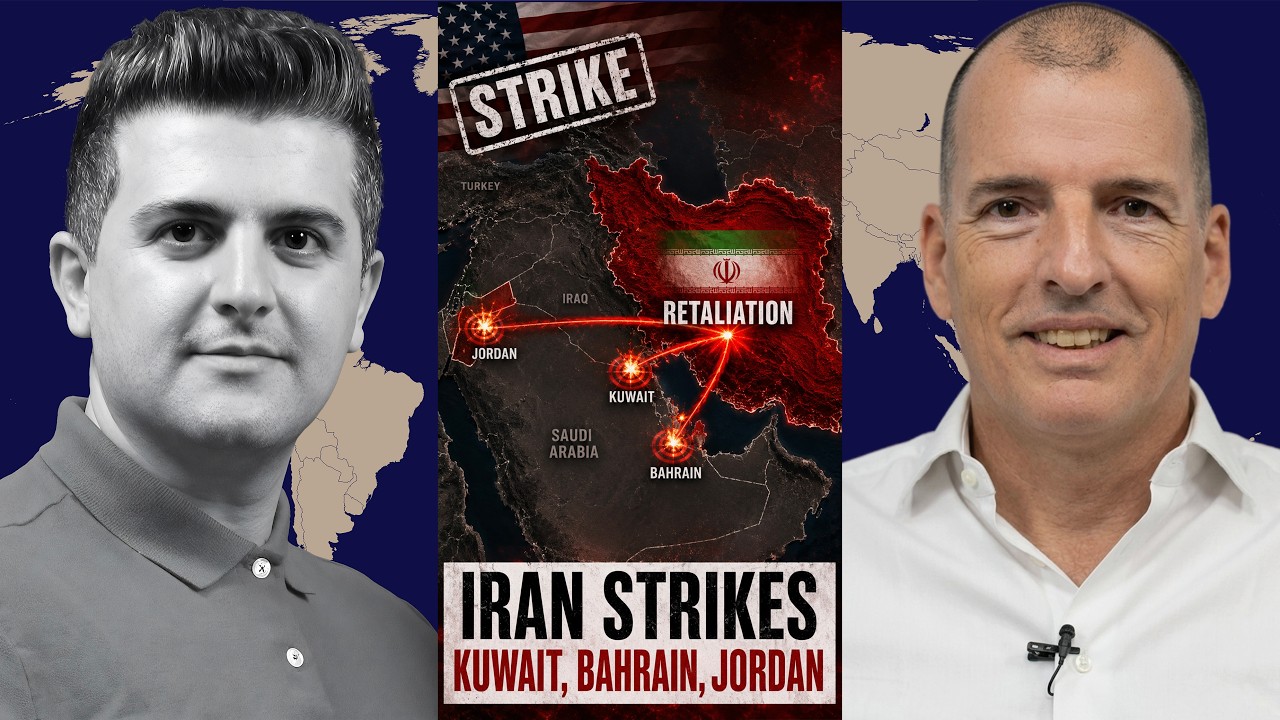
Alex Krainer: US STRIKES Iran – Iran RETALIATES Against Kuwait, Bahrain & Jordan!
"Amidst escalating US-Iran conflict and Iranian retaliation against regional US allies, this episode argues that US foreign policy is deeply controlled by an 'Anglo-Zionist conspiracy' led by the Rothschild banking dynasty, prioritizing Israeli interests over American ones."

Patrick Henningsen: Hezbollah JUST Fired Back at Israel - Iran Vows to “Crush” All Attacks
"Patrick Henningsen argues that the US and Israel initiated an illegal war against Iran, driven by Trump's incompetence and Israeli influence, leading to an inevitable escalation with severe global economic repercussions."