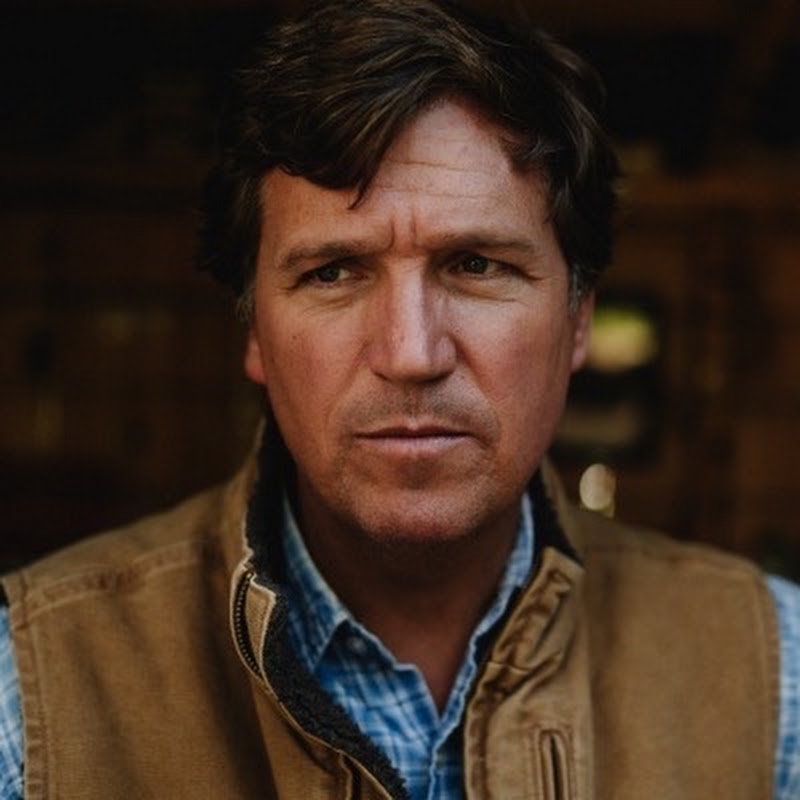
Joe Kent Reveals All in First Interview Since Resigning as Trump’s Counterterrorism Director
YouTube · 1cbw1utqzHg
Quick Read
Summary
Takeaways
- ❖Joe Kent, former Director of the National Counterterrorism Center, resigned over the Iran war, stating Iran posed no imminent threat to the US.
- ❖Kent asserts that Israel drove the decision for US military action against Iran, leveraging its lobby and prime minister to pressure the president.
- ❖The 'imminent threat' narrative was a fabrication; US officials, including Secretary of State Marco Rubio, indicated the US acted to preempt Iranian retaliation against Israeli actions.
- ❖The US policy shifted from preventing an Iranian nuclear weapon (which Iran had no imminent plan for) to prohibiting any nuclear enrichment, a 'red line' pushed by pro-Israel groups.
- ❖Kent describes an 'ecosystem' of Israeli officials and pro-Israel media figures (e.g., Mark Levin, Mark Dubowitz, FDD) that laundered misinformation to influence US policy makers.
- ❖President Trump's administration, despite his 'America First' platform, was allegedly deceived and potentially coerced into the war.
- ❖Kent claims that intelligence assessments regarding the lack of imminent threat and the consequences of war were stifled and not fully presented to the president.
- ❖The suppression of investigations into events like Charlie Kirk's murder and other security breaches around President Trump raises concerns about potential coercion influencing presidential decisions.
- ❖Kent proposes a solution: President Trump must forcefully tell Israel to stop offensive operations, threatening to withdraw US defense support, and then engage in aggressive economic diplomacy with Iran to de-escalate.
- ❖Ending sanctions on Iran, tied to settling oil transactions in US dollars, could align US economic interests with de-escalation.
Insights
1No Imminent Threat from Iran
Joe Kent, as Director of the National Counterterrorism Center, concluded that Iran posed no imminent threat to the United States. This contradicts the public justification for military action. He cites statements from US officials, including Secretary of State Marco Rubio, indicating that the US attack was preemptive, not against an imminent Iranian threat, but to mitigate Iranian retaliation against an anticipated Israeli strike.
Kent's direct experience and access to top-level intelligence as NCTC Director. Marco Rubio's contemporaneous explanation: 'We knew that there was going to be an Israeli action. We knew that that would precipitate an attack against American forces. And we knew that if we didn't preemptively go after them before they launched those attacks, we would suffer higher casualties.'
2Israeli Influence Drove US into War
Kent explicitly states that Israel drove the decision for the US to take military action against Iran. He details how Israeli officials and their lobby in the US pressured the president, with the Israeli Prime Minister reportedly telling the US President, 'We're going without you. Join us because if you don't, your troops in the region, your interest in the region, your citizens in the region will all be at risk. You have no choice.'
Kent's direct statement: 'Israel got us into this war. Its lobby in the United States pressured the president and its prime minister in Israel told the president, 'We're going without you. Join us because if you don't, your troops in the region, your interest in the region, your citizens in the region will all be at risk. You have no choice.''
3Misinformation Campaign and Shifting Red Lines
A 'misinformation campaign' orchestrated by high-ranking Israeli officials and influential pro-Israel American media figures (e.g., Mark Levin, Mark Dubowitz, Foundation for the Defense of Democracies) 'wholly undermined' President Trump's 'America First' platform. This campaign shifted the 'red line' from preventing Iran from acquiring a nuclear weapon (which Iran had a fatwa against and no imminent plans for) to preventing any nuclear enrichment whatsoever, sabotaging potential negotiations and pushing for conflict.
Kent's description of the 'ecosystem of information that's laundered through a lot of prominent neoconservative types that are very sympathetic to the Israeli cause and then also Israeli government officials who give us things in semi-official channels.' He states, 'enrichment basically became the new US policy' despite no intelligence supporting an imminent nuclear weapon threat.
4Suppression of Dissenting Intelligence and Debate
Key decision-makers and intelligence officials, including Kent, were prevented from fully expressing their opinions or providing contrary data to the president regarding the Iran conflict. The planning for the latest iteration of the war was 'compartmentalized,' and a 'robust debate' that occurred before previous actions (like the 12-day war) was absent, suggesting a 'foregone conclusion' driven by a small circle of advisors.
Kent states: 'a good deal of key decision makers were not allowed to come express their opinion to the president.' He adds, 'there wasn't a robust debate... what actually gets briefed to the president can be very very different depending on who and how it's delivered.'
5Lack of Post-Regime-Change Plan for Iran
The Israelis, who are pushing for regime change in Iran, do not have a plan for what would replace the current government. This suggests a willingness to see Iran descend into chaos, which would be catastrophic for global energy, cause mass migration, and destabilize the entire region, directly contradicting American interests.
Kent states: 'The Israelis are completely fine with Iran slipping into chaos. That means that the Ayatollah and the IRGC can't really threaten them anymore... for us, for global energy, Straits of Hormuz, our partners in the GCC, mass migration problems in Europe. This is a major problem. It's a catastrophe for the world.'
Bottom Line
The FBI and DOJ allegedly blocked the National Counterterrorism Center (NCTC) from fully investigating potential foreign ties to the murder of Charlie Kirk, a close advisor to President Trump who vocally opposed war with Iran.
This raises serious questions about the integrity of federal investigations and whether information that could reveal foreign influence or a deeper conspiracy is being deliberately suppressed. If true, it suggests a systemic effort to control narratives and prevent transparency in matters of national security and political violence.
A full, independent investigation into the circumstances surrounding Charlie Kirk's murder, including all potential foreign connections and the reasons for blocking NCTC's access, is critical to ensure justice and restore public trust in federal law enforcement and intelligence agencies.
President Trump's shift on Iran policy, despite his long-standing anti-war stance, could be influenced by a 'darker' element of coercion or intimidation, potentially related to assassination attempts and security breaches against him and his allies.
If a US president's foreign policy decisions are being influenced by threats to his personal safety or his family, it represents a profound vulnerability in national security and a subversion of democratic processes. This implies that powerful, unseen forces can dictate policy against the will of the electorate and the president's stated objectives.
Independent bodies must investigate all reported security breaches and assassination attempts against the president and his close advisors with full transparency. Understanding the extent of potential coercion is vital for safeguarding the presidency and ensuring national policy reflects national interests, not external pressures or threats.
Key Concepts
The Echo Chamber of Misinformation
This model describes how a specific narrative, often driven by foreign interests and their domestic lobbyists, is amplified through media, think tanks, and semi-official channels, effectively bypassing or overwhelming official intelligence assessments to influence policy-makers. This creates a distorted reality for decision-makers, leading to actions contrary to national interests.
Bureaucratic Inertia and Power Dynamics
This model explains how established government bureaucracies can resist presidential directives (e.g., declassifying documents) or stifle dissenting opinions through procedural delays, compartmentalization, and control over information flow to maintain their power and influence, even if it undermines transparency or effective governance.
The Escalation Ladder (Iranian Pragmatism)
This refers to Iran's calculated approach to military and geopolitical actions, where they respond deliberately and proportionally to avoid uncontrolled escalation, especially under strong US leadership like President Trump's first term. This contrasts with narratives portraying Iran as an irrational, immediate threat.
Lessons
- President Trump must immediately and forcefully confront Israel, demanding a halt to offensive operations in Iran and threatening to withdraw US defense support if they continue.
- The US should aggressively engage in diplomacy with Iran, leveraging economic tools like lifting sanctions in exchange for de-escalation, opening the Straits of Hormuz, and settling oil transactions in US dollars.
- Leaders must prioritize truth-telling and transparency within government and intelligence agencies, ensuring dissenting voices are heard and information is not suppressed to prevent costly, misinformed wars.
Joe Kent's Plan to Exit the Iran Conflict and Reassert US Interests
**Address Israeli Aggression:** President Trump must use his unique authority to forcefully tell Israel to cease all offensive operations against Iran. This includes a clear threat to withdraw US defense system features if Israel continues its offensive actions, making it clear 'this is our war, we're paying for it, we're bleeding for it. This is not your war.'
**Engage in Aggressive Diplomacy with Iran:** With a new team of diplomats, the US should aggressively pursue a ceasefire and a negotiated peace with Iran. This involves lifting sanctions as a condition for Iran to rebuild its energy sector, open the Straits of Hormuz, and settle oil transactions in US dollars, aligning US economic interests with de-escalation.
**Reassert American National Interests:** The US must make decisions based solely on what is good for its own citizens, not on the agendas of foreign nations or influenced by misinformation campaigns. This requires a clear-eyed assessment of allies' objectives and a willingness to act independently when those objectives diverge from American interests.
Notable Moments
Joe Kent's prediction in January 2024 about the consequences of war with Iran, including US entanglement and China's benefit, is highlighted as 'prescient' by Tucker Carlson.
This establishes Kent's credibility as an analyst who accurately foresaw the current geopolitical situation, lending weight to his subsequent criticisms and proposals.
The host discusses the historical pattern of punishing whistleblowers and critics of foreign policy failures, citing examples like Walter Cronkite during Vietnam and Colonel Stu Sheller after the Afghanistan withdrawal.
This frames Joe Kent's resignation and public statements within a broader pattern of suppressing truth-tellers, explaining why his message is met with slander rather than debate, and highlighting a systemic issue in US foreign policy accountability.
Kent reveals that the NCTC's investigation into Charlie Kirk's murder was blocked by the FBI and DOJ, despite leads suggesting potential foreign ties and prior knowledge among some individuals.
This is a highly sensitive revelation that suggests a deliberate obstruction of justice in a high-profile case involving a presidential advisor, raising profound questions about transparency, accountability, and potential political motives behind the suppression of information.
Quotes
"If we get deeply involved and deeply entangled with Iran, we are playing right into China's hands because China would like nothing more than for us to be committing our military industrial base to a war in Eastern Europe in Ukraine and then to be committing our conventional military power, our blood and our treasure back in the Middle East. That will make the Pacific, our actual border, extremely vulnerable to Chinese aggression."
"Whenever you have somebody who stands up and says, 'Don't do this. Here's what could happen.' And then you do it anyway. And it turns out that person was right. Your first instinct is not to apologize and correct your behavior. Your first instinct is to crush the person who called it correctly."
"Israel got us into this war. Its lobby in the United States pressured the president and its prime minister in Israel told the president, 'We're going without you. Join us because if you don't, your troops in the region, your interest in the region, your citizens in the region will all be at risk. You have no choice.'"
"The system doesn't want to get us used to things being rapidly declassified. They don't want a president to be able to come in and say, 'Here's an executive order and I said declassify it because the people demand it and it happens like that as fast as it could happen.' They don't want that to happen."
"What President Trump must do is number one, he has to address the main issue. The main issue is what the Israelis are doing. And he needs to very forcefully and probably with a new team of diplomats go to the Israelis and say, 'You're done. We will defend you. We will make sure that you know ballistic missiles aren't rained down upon you. However, you are done going on the offense because this is our war. We're paying for it. We're bleeding for it. This is not your war.'"
Q&A
Recent Questions
Related Episodes

Iran Update: Israel’s Newest Bombing Campaign, the Oncoming War With China and How to Avoid It
"Colonel Wilerson reveals how the US and Israel are actively bombing China's strategic infrastructure in Iran, escalating a covert economic war that Beijing intends to win without direct military conflict by dismantling the dollar's global dominance."

Bibi DEMANDS Ground Troops As Marines Rushed to Iran
"Benjamin Netanyahu is pushing for US ground troops in Iran, framing air strikes as insufficient, while the US rushes Marines to the region and struggles to secure the Strait of Hormuz against surprisingly capable Iranian defenses."
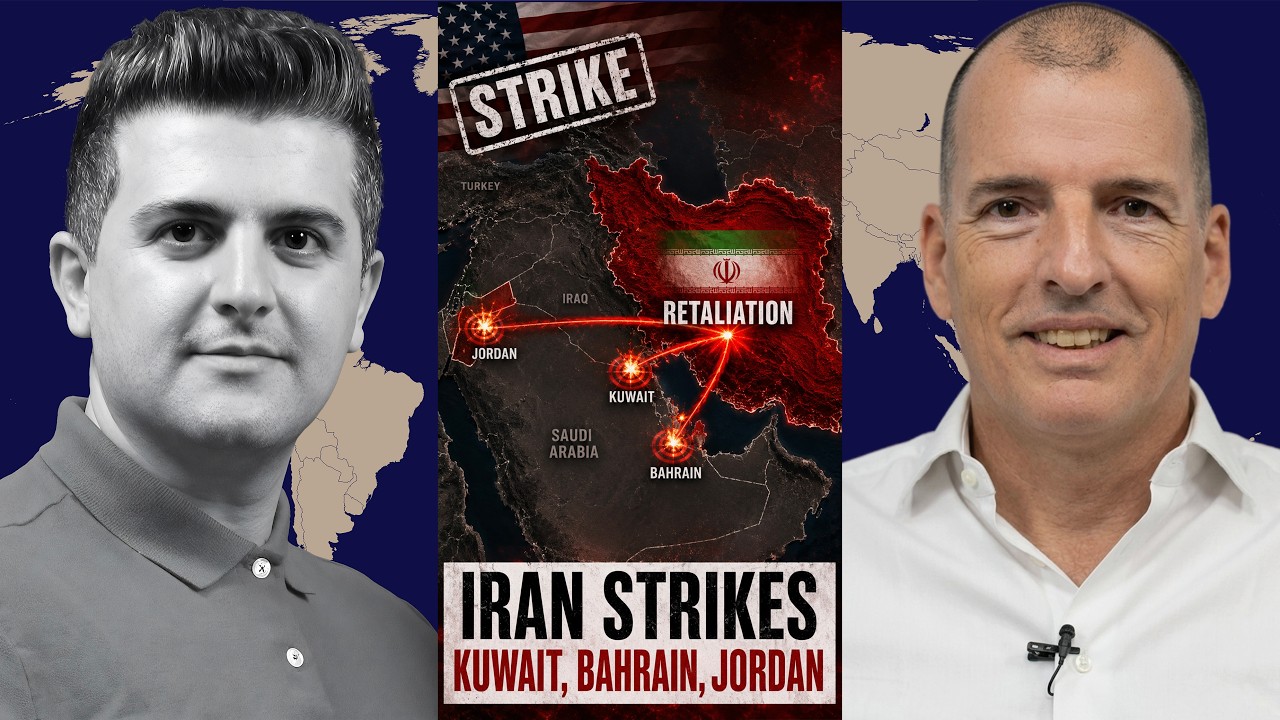
Alex Krainer: US STRIKES Iran – Iran RETALIATES Against Kuwait, Bahrain & Jordan!
"Amidst escalating US-Iran conflict and Iranian retaliation against regional US allies, this episode argues that US foreign policy is deeply controlled by an 'Anglo-Zionist conspiracy' led by the Rothschild banking dynasty, prioritizing Israeli interests over American ones."
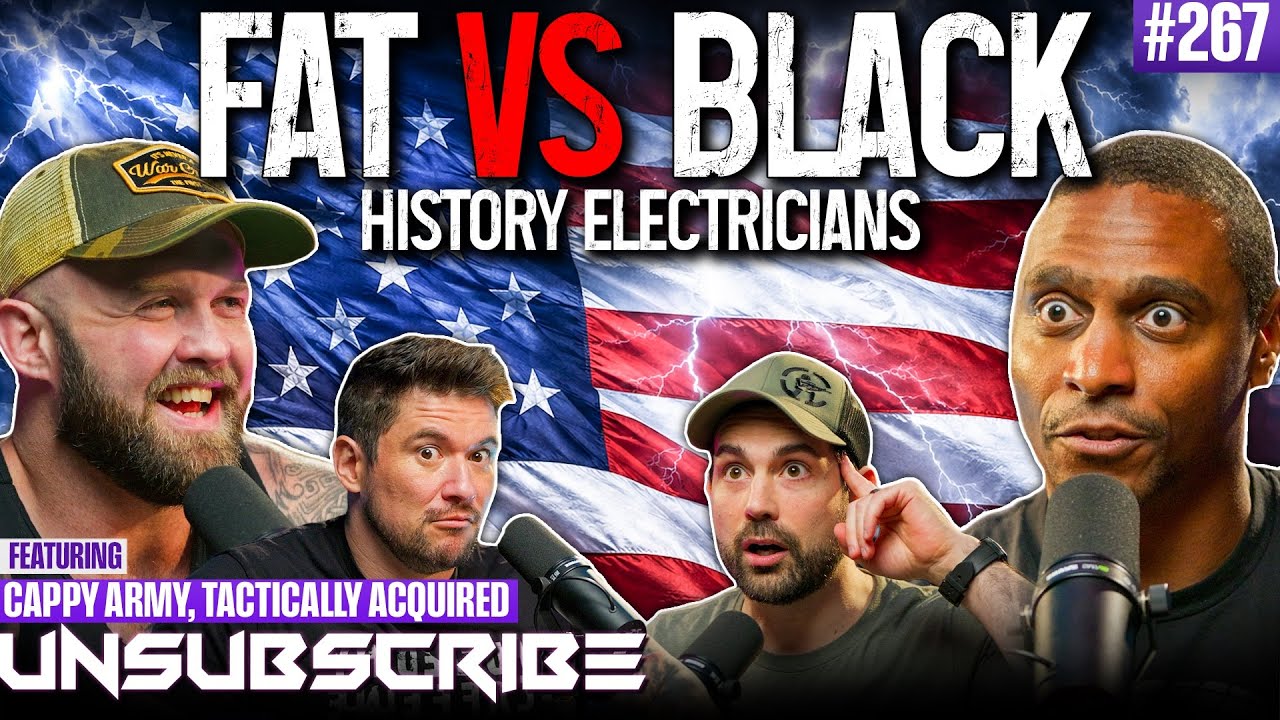
The Fat Electrician Vs Tactically Acquired | Unsubscribe Podcast 267
"This episode features military content creators discussing current geopolitical hotspots, advanced weaponry, and the surprising psychological warfare tactics of modern conflict, alongside their personal journeys building online communities."