Trump FUNDING CUTS BLOCKED in Court as Admin BEGS for WAR FUNDING
YouTube · 252bgVfCSs8
Quick Read
Summary
Takeaways
- ❖A federal appeals court blocked the Trump administration's attempt to freeze trillions of dollars in congressionally approved funding.
- ❖The court found the administration's actions "arbitrary, capricious, and legally indefensible."
- ❖Programs targeted included child healthcare, after-school lunches, disaster relief, and unemployment benefits.
- ❖The President cannot override Congress's funding decisions, particularly after the veto period has passed.
- ❖The administration's orders, issued early in its term, were disguised as a "temporary pause" and gave agencies only 24 hours' notice.
- ❖The court cited violations of the Administrative Procedures Act, which requires reasoned explanations for administrative decisions.
- ❖The hosts suggest the administration's 'flood the zone' strategy (attributed to Steve Bannon) of throwing out many challenges is failing.
Insights
1Federal Appeals Court Blocks Trillions in Funding Cuts
The First Circuit Court of Appeals issued a binding decision blocking the Trump administration's attempt to freeze 'trillions of dollars' in funding previously approved by Congress. The court explicitly called the administration's actions 'arbitrary, capricious, and legally indefensible,' marking a significant legal defeat.
A federal appeals court just said no. Very clearly, unequivocally said no. In a major decision that just came out of the first circuit, a coalition of 23 states had challenged the Trump administration's attempt to freeze a great amount of funding. I think it's in the trillions of dollars. And the court just didn't push back. He called it arbitrary, capriccious, and legally indefensible and just totally shut it down.
2Executive Branch Cannot Override Congressional Spending
The court's ruling affirmed that the President cannot unilaterally override funding decisions made by Congress, especially after the opportunity to veto legislation has passed. This upholds the constitutional authority of the legislative branch over federal appropriations.
You, Mr. President, cannot override what Congress has decided to do and you didn't veto. Yeah. It's too late, right? you you can't you can't do it anymore. He could have it. You're unhappy with something. You don't like it. Get Congress to change it, but you can't just sit there in an arbitrary and capriccious way and say, 'We're not going to fund these programs anymore.'
3Targeted Programs and Administrative Tactics
The administration's attempted cuts impacted essential programs such as child healthcare, after-school lunches, disaster relief (FEMA), and unemployment benefits. The administration tried to frame these cuts as a 'temporary pause' and gave agencies only 24 hours' notice, often without clear justification or adherence to the Administrative Procedures Act.
They affected child health care, child care programs, afterschool lunches for children... disaster relief, um unemployment benefits... This was like the second week of his presidency when he started issuing these orders... The memo was called temporary pause of agency grant loan and other financial assistance programs... they gave people 24 hours.
4Failure to Meet Administrative Procedures Act Requirements
The court found the administration failed to comply with the Administrative Procedures Act (APA), which mandates that such decisions be reasoned, explained, and consider their consequences. The administration's lack of analysis for why programs like school lunches were deemed 'wasteful' or contrary to their agenda (e.g., DEI, gender ideology) was a key factor in the ruling.
There's what's called the APA, right? The administrative procedures act... it requires that decisions like this be reasoned, explained. The consequences need to be concern considered before doing it... How is a school lunch program or an afterschool supervision program of children whose parents work, how is that somehow contrary to this administration's agenda? I mean, that's part of the problem, right? We we don't know. There's no analysis of why it's...
Key Concepts
Separation of Powers
The principle that governmental power is divided among distinct branches (legislative, executive, judicial) to prevent any single branch from becoming too powerful. This case exemplifies the judiciary upholding the legislative branch's authority over federal spending against executive overreach.
Administrative Procedures Act (APA)
A federal statute that governs the way administrative agencies of the federal government propose and establish regulations. It requires agencies to follow specific procedures, including providing reasoned explanations and considering consequences, before taking administrative actions, which the court found the administration failed to do.
Notable Moments
The administration's attempt to cut funding was initiated within the second week of the presidency.
This indicates an early and aggressive effort to reshape federal spending priorities through executive action, setting the stage for legal challenges and highlighting a consistent strategy.
Agencies were given only 24 hours' notice that their funding would be cut or paused.
This extremely short notice demonstrates a disregard for the operational realities of these programs and the due process required for such significant administrative changes, contributing to the court's finding of arbitrary action.
The administration's 'manual review process' for FEMA funding was deemed by the court as merely 'freezing money by another name.'
This highlights the administration's attempts to circumvent legal restrictions on defunding by re-labeling their actions, which the court saw through, reinforcing the judiciary's role in scrutinizing executive intent.
Quotes
"He called it arbitrary, capricious, and legally indefensible and just totally shut it down. So, another major major loss."
"You, Mr. President, cannot override what Congress has decided to do and you didn't veto."
"This is a Bannon strategy... flood the zone. Just throw everything out there at once."
Q&A
Recent Questions
Related Episodes

Trump DOJ REACHES NEW LOW Trying to SAVE Trump
"Professor Aziz Huck dissects the foundational principles of the rule of law, revealing how modern political partisanship and the Justice Department's 'weaponization fund' challenge core constitutional mechanisms and legal predictability."

SHOCK Ruling on Trump Deportation PLOT + DEBUNKED Election WARRANT?!? | It's Complicated
"The Fifth Circuit Court's controversial ruling redefines 'seeking admission' for non-citizens, potentially allowing indefinite detention for millions, while a federal search warrant for 2020 election ballots is criticized as a 'test run' for future election interference."
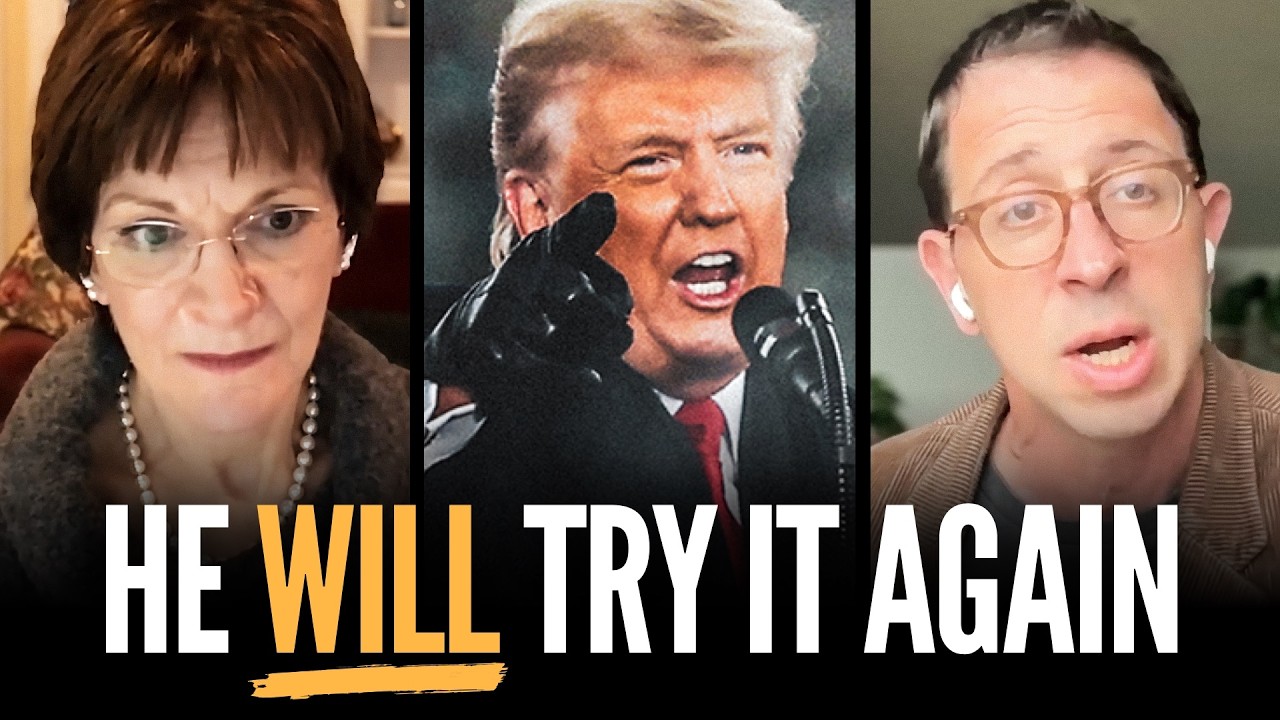
Trump’s Blueprint for Breaking Elections (w/ Ian Bassin) | Mona Charen Show
"Ian Bassin, founder of Protect Democracy, details how Trump's predictable playbook to subvert elections and undermine democratic institutions can be countered through strategic litigation, state-level reforms, and robust citizen engagement."

Trump Dirt REVEALED: Iran, Zohran, Pardons, Deportations
"Journalists Maggie Haberman and Jonathan Swan reveal how Donald Trump operates in his second term, detailing his inner circle, policy priorities, and the surprising checks on his executive power."