Oxfam Warns of Rising Authoritarianism & Billionaire Boom
YouTube · 2JMwIq1OgyA
Quick Read
Summary
Takeaways
- ❖The World Economic Forum in Davos became an emergency summit amidst geopolitical tensions, highlighting a 'rupture' in the international order.
- ❖Oxfam's report, 'Resisting the Rule of the Rich,' reveals billionaires' wealth increased by $2.5 trillion, enough to end extreme poverty 26 times over.
- ❖Billionaires are actively acquiring political power by influencing elections, media, and governments, leading to a global shift towards oligarchy.
- ❖Highly unequal countries are seven times more likely to experience erosion of rule of law and undermined elections.
- ❖Concentrated wealth enables policies like tax cuts for the super-rich, diverting resources from essential public services like education and health.
- ❖The global 'poly-crisis' (climate, hunger, inequality) is a single crisis of a flawed economic system with multiple manifestations.
- ❖Mass protests against economic inequality are rising globally, but states are increasingly repressing dissent and eroding civil and political rights.
Insights
1Billionaire Wealth Surge and its Global Impact
The collective wealth of billionaires increased by $2.5 trillion last year, reaching $18.3 trillion. This amount is nearly equivalent to the total wealth of the bottom half of humanity (4.1 billion people) and could eradicate extreme poverty 26 times over. The US alone holds over one-third of global billionaire wealth.
Oxfam International's report highlights that billionaires added $2.5 trillion to their wealth, which is enough to eradicate poverty 26 times over. US billionaire wealth stands at $7.935 trillion, more than one-third of global billionaire wealth.
2Billionaires' Pursuit of Political Power and the Rise of Oligarchy
Billionaires are no longer content with just being rich; they are actively seeking political power by buying votes, media houses, political parties, and governments. This trend means billionaires are 4,000 times more likely to hold political office than an average citizen, pushing societies from democracies towards oligarchies.
Amitab Behar states, 'billionaires are now not happy being rich and richer. They really want now political power and they've started buying votes, media houses, political parties and governments.' He adds that 'billionaires are 4,000 times more likely to hold political office than an average citizen.'
3Wealth Concentration Undermines Rule of Law and Elections
Oxfam's research indicates a direct correlation between high inequality and the erosion of democratic institutions. Countries with significant wealth disparities are seven times more likely to experience a decline in the rule of law and compromised elections.
Oxfam reports that 'highly unequal countries are seven times more likely to experience the erosion of the rule of law and the undermining of elections.'
4Billionaire Control Over Media and Policy
Billionaires exert massive influence by controlling key sectors: 50% of global media, nine out of ten biggest social media platforms, and eight out of ten biggest AI initiatives are owned by the same wealthy individuals. This control allows them to shape narratives and twist economic policies, such as implementing tax cuts for the super-rich, which then starves public services.
Behar notes, '50% of the global media is owned by uh these billionaires. Nine out of the 10 biggest social media platforms are again owned by the same billionaires and eight of the 10 biggest uh AI initiatives are again owned by the same billionaires.' He cites Trump's presidency as an example where 'the first big thing they do is to slash taxes for the super rich.'
5The 'Poly-Crisis' as a Single Systemic Crisis
The various global crises—climate, hunger, and inequality—are not independent but are interconnected manifestations of a single, flawed economic system. Governments' choices to support billionaire wealth accumulation over investment in public services perpetuate this systemic issue.
Behar argues, 'when World Economic Forum says that we're going through a poly crisis, it's not really a poly crisis. It's not a crisis, a climate crisis independent of the hunger crisis and independent of the inequality crisis. These are all uh one crisis of the economic system we have created with multiple manifestations of it.'
Lessons
- Advocate for policies that address extreme wealth concentration, such as progressive taxation on the super-rich and wealth taxes, to reallocate resources towards public services.
- Support independent media and initiatives that challenge billionaire control over information, ensuring diverse narratives and accountability.
- Engage with and amplify social movements protesting economic inequality and the erosion of democratic rights, recognizing their role in driving change.
Notable Moments
Canadian Prime Minister Mark Carney describes a 'rupture, not a transition' in the world order, where economic integration is weaponized and the fiction of mutual benefit no longer holds.
This sets the geopolitical context at the World Economic Forum, highlighting a fundamental shift in international relations and the breakdown of established norms, which precedes the discussion on economic inequality's role in this instability.
Protesters gather in Davos ahead of President Trump's visit, expressing anger over his policies and the nature of the WEF as a 'meeting of rich people' that fails to improve global life.
This illustrates the public dissent and skepticism surrounding elite gatherings like the WEF, providing a grassroots counterpoint to the discussions happening inside and foreshadowing the Oxfam report's findings on public anger against rigged systems.
Quotes
"We are in the midst of a rupture, not a transition. Over the past two decades, a series of crises in finance, health, energy, and geopolitics have laid bare the risks of extreme global integration. But more recently, great powers have begun using economic integration as weapons, tariffs as leverage, financial infrastructure as coercion, supply chains as vulnerabilities to be exploited."
"These billionaires are now not happy being rich and richer. They really want now political power and they've started buying votes, media houses, political parties and governments. So at this moment billionaires are 4,000 times more likely to hold political office than an average citizen."
"When you have economic poverty, it leads to hunger, but when you have political poverty, it leads to anger. And that is what we are seeing across the world."
Q&A
Recent Questions
Related Episodes

BREAKING: Iran Threatens To END Talks; U.S. Vows Retaliation; Hezbollah Collapsing? | TBN Israel
"Iran is leveraging Hezbollah and the Strait of Hormuz to manipulate US negotiations, while Israel asserts its right to dismantle Hezbollah's eroding but still dangerous infrastructure in Lebanon, independent of international talks."

🚨 THEY F*CKED AROUND FOR THE LAST TIME 😭😭😭
"This episode unleashes a torrent of highly opinionated commentary on the US-Iran deal, Israel's role, and a scathing critique of 'leftist' policies and immigration, particularly highlighting the UK grooming gang report as evidence of Western societal decay."
BREAKING: Protests ERUPT In Iran Over IRGC Surrendering To Trump - Infighting Clashes In Tehran
"Iran is experiencing severe internal infighting and protests as hardline IRGC elements clash with government figures over a perceived 'surrender' to the US, while mainstream Western media misrepresents the situation."
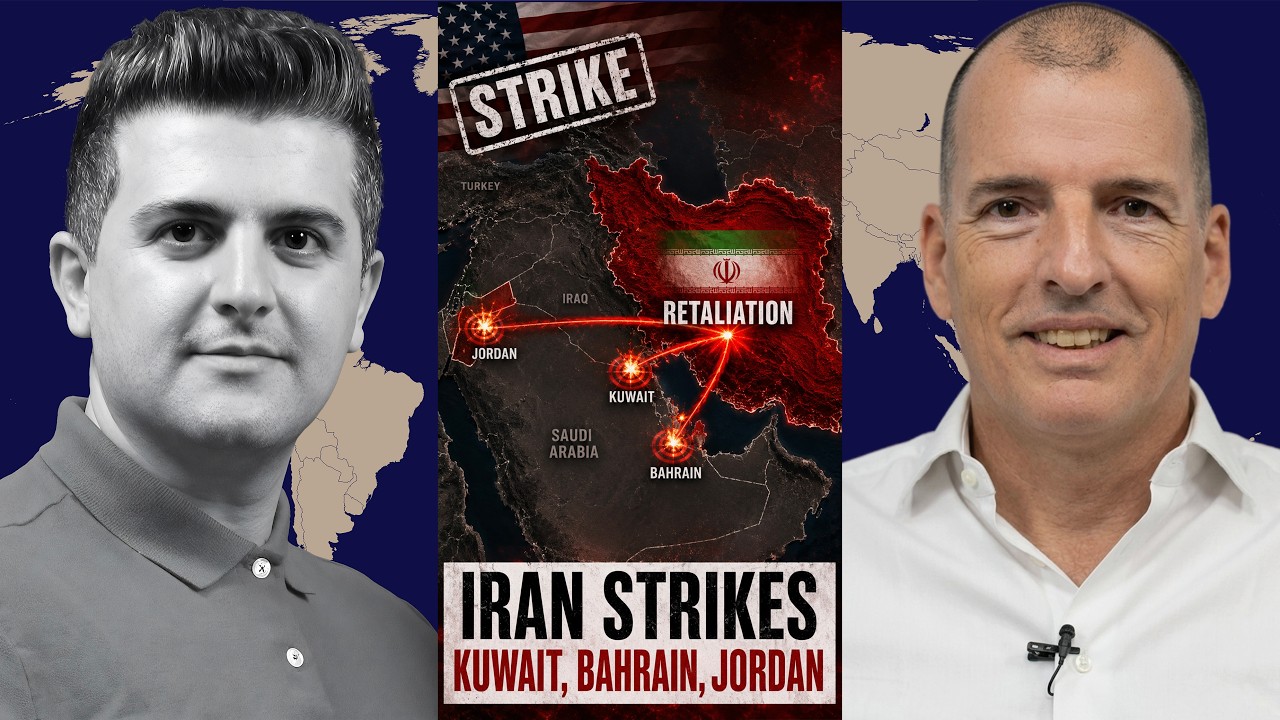
Alex Krainer: US STRIKES Iran – Iran RETALIATES Against Kuwait, Bahrain & Jordan!
"Amidst escalating US-Iran conflict and Iranian retaliation against regional US allies, this episode argues that US foreign policy is deeply controlled by an 'Anglo-Zionist conspiracy' led by the Rothschild banking dynasty, prioritizing Israeli interests over American ones."