BREAKING: Kharg Island HIT By U.S. Bombers; Iran Threatens Gulf Targets | TBN Israel
YouTube · 2_QnNefnE9E
Quick Read
Summary
Takeaways
- ❖The United States executed heavy bomber strikes on Iran's Kharg Island, a key oil export hub, destroying military targets but intentionally preserving oil infrastructure as a warning.
- ❖President Trump explicitly stated that the US would consider wiping out Iran's oil infrastructure if Iran obstructed navigation in the Strait of Hormuz.
- ❖Iran expanded its target bank, threatening strikes on US-cooperating oil companies and launching a drone attack on the UAE's Fujairah port, a strategic oil collection point outside Hormuz.
- ❖The US deployed 2,200 Marines with amphibious capabilities and F-35s to the Middle East, signaling readiness for ground or coastal operations.
- ❖US and Israeli air forces are cooperating to destroy thousands of Iranian military targets, dramatically reducing missile launch capabilities, and using AI-driven swarm warfare.
- ❖Iran possesses 450 kg of 60% enriched uranium, enough for 11 nuclear bombs, which is difficult to locate and may require a prolonged ground operation to extract.
- ❖Israel is planning a broad ground operation in Lebanon to take control of territory south of the Litani River and dismantle Hezbollah's military infrastructure.
- ❖Iran threatened Ukraine, stating it would become a legitimate target if it assisted Israel with drone interception technology.
- ❖The conflict has expanded into the high-tech world, with Iran targeting data centers and cloud infrastructure of US tech companies like Amazon and Microsoft in the region.
Insights
1US Bombs Kharg Island, Threatens Economic Lifeline
The United States conducted heavy bomber strikes on Kharg Island, Iran's 'crown jewel' and primary oil export hub, destroying all military targets. President Trump stated he intentionally avoided wiping out the oil infrastructure but would reconsider if Iran continued to obstruct freedom of navigation in the Strait of Hormuz. This action marks a direct threat to Iran's economic oxygen line.
Trump's statement: 'We bombed Iran's oil island. We destroyed every military target.' () and 'I decided not to wipe out the oil infrastructure on the island, but if Iran sabotages freedom of navigation in the Strait of Hummus, I will consider it.' ()
2Iran Retaliates by Expanding Target Bank to Gulf States and Tech Infrastructure
Following the Kharg Island strike, Iran threatened any strike on its oil infrastructure would lead to attacks on oil companies cooperating with the US. This materialized with a drone strike on the port of Fujairah in the UAE, a key oil plant outside the Strait of Hormuz. Iran also expanded its cyber warfare, targeting US technology companies like Amazon and Microsoft with data centers in the region.
Iran threatened 'any strike on the oil infrastructure would lead to Iranian strikes and oil companies that are cooperating with the United States.' () and 'A drone struck at the port in the Amirati of Farjarak, a key oil plant outside of the straight of Hormuz.' ()
3US Deploys Marines and F-35s, Signaling Amphibious Assault Capability
The US reinforced its Middle East forces with the 31st Marine Expeditionary Unit, comprising 2,200 Marines on three amphibious ships, along with an F-35 squadron. This deployment signals a readiness for amphibious assaults on Iranian islands or coastlines, providing ground forces for potential complex operations, including the search for enriched uranium.
The 31st Marine Expeditionary Unit 'permanently stationed in Japan received orders to move to the region against the backdrop of the war in Iran, including its F-35 squadron.' ()
4US-Israeli Air Cooperation Severely Degrades Iran's Missile Capabilities
Senior Pentagon officials confirm that US and Israeli air forces are working together, destroying thousands of Iranian targets, dramatically reducing missile launch capabilities by over 90%, and undermining the regime. This cooperation includes an 'unimaginable pace of target generation and attack' and almost complete freedom of action in Iranian skies.
Trump stated, 'We have already destroyed 90% of their missiles.' () and 'Senior Pentagon officials claim that the cooperation between the Israeli and the American air forces is severely damaging Iran's military capabilities, destroying thousands of targets...' ()
5Iran's 450kg Enriched Uranium Poses a 'Holy Grail' Challenge
Iran reportedly possesses 450 kg of 60% enriched uranium, enough for 11 nuclear bombs. This material can be hidden in sealed lead cylinders across multiple sites, making its destruction or extraction extremely difficult via air strikes alone. This suggests a potential need for a 'secure prolonged ground operation' with specialized personnel.
Material 'enough for 11 nuclear bombs' () and '450 kilograms of enriched uranium that the revolutionary guards still have in Iran.' () and 'If the goal is truly to get hold of it, an air strike may not be necessary, not be necessary and not might not be enough.' ()
6Israel Plans Broad Ground Operation in Lebanon Against Hezbollah
Following a barrage of over 200 rockets, Israel is planning a significant ground operation in Lebanon. The objectives are to take control of the territory south of the Litani River and dismantle Hezbollah's military infrastructure, preparing for a multi-week campaign.
Israeli and American officials announced that 'Israel is planning a significant expansion of the ground operation in Lebanon. The goals taking control of the territory south of the Litani River and dismantling Hisbala's military infrastructure.' ()
Bottom Line
The US and Israel are leveraging advanced AI-driven swarm drone warfare and Palantir software to rapidly identify targets and execute strikes, representing a significant technological shift in modern conflict.
This accelerates the 'kill chain' and increases the efficiency of military operations, allowing for precise targeting of even mobile or dispersed assets, and potentially reducing human risk in combat.
Further development and integration of AI in defense systems could create new markets for autonomous defense, predictive intelligence, and rapid response platforms, requiring expertise in AI, robotics, and secure data processing.
Iran's shift to targeting high-tech companies and cloud infrastructure in the region (e.g., AWS facilities, Microsoft systems) expands the battlefield beyond traditional military and energy targets.
This makes global tech companies with regional presence vulnerable to state-sponsored cyber attacks, potentially disrupting critical services and supply chains, and forcing them to invest more heavily in cybersecurity and geopolitical risk assessment.
There's a growing need for specialized cybersecurity firms that understand geopolitical motivations and can offer robust defense strategies for critical infrastructure and cloud services in conflict zones, potentially including 'cyber-militia' services for defense.
Israel is seeking cooperation with Ukraine to share anti-Iranian drone defensive systems, indicating a transfer of combat-proven technology and intelligence.
This collaboration could enhance global defenses against Iranian drone technology, which is widely proliferated. It also signals a deeper strategic alignment between Israel and Ukraine, potentially drawing Ukraine into Iran's expanded target list.
The demand for counter-drone technologies and electronic warfare systems will surge, creating opportunities for defense contractors and tech companies specializing in these areas, particularly those that can integrate lessons learned from active conflict zones.
Key Concepts
Economic Leverage as a Weapon
The US strategy of bombing military targets on Kharg Island, a vital oil export hub, while explicitly sparing its oil infrastructure, demonstrates the use of economic destruction as a direct threat and leverage point. This approach aims to compel compliance by holding Iran's economic lifeline 'with a finger on the trigger,' rather than immediately severing it, thereby maximizing psychological and financial pressure without triggering a full global oil crisis.
Asymmetric Retaliation and Decentralized Warfare
As Iran's conventional military capabilities are degraded by US/Israeli strikes, it shifts to asymmetric and decentralized methods. This includes targeting regional economic infrastructure (e.g., Fujairah port, Gulf oil companies), cyber attacks on high-tech companies, and relying on proxies like the Houthis. This 'mosaic defense' model disperses operational capability to maintain pressure and inflict damage even after leadership and central power structures are hit.
The 'Holy Grail' Problem (Nuclear Material Extraction)
The challenge of 450 kg of enriched uranium, enough for 11 nuclear bombs, represents a 'holy grail' problem. Its small volume and ability to be hidden in sealed lead cylinders across multiple sites make it resistant to air strikes. This necessitates a potentially prolonged, secure ground operation involving specialized engineering, excavation, and nuclear experts, highlighting the limitations of air power alone in achieving complete denuclearization.
Lessons
- Monitor geopolitical developments in the Middle East, particularly US-Iran tensions and the Strait of Hormuz, as they directly impact global oil prices and shipping routes.
- Assess cybersecurity risks for businesses operating or relying on cloud infrastructure in the Middle East, given Iran's demonstrated intent to target tech companies in the region.
- For defense sector stakeholders, analyze the implications of AI-driven warfare and swarm robotics, as demonstrated by US/Israeli operations, for future military procurement and strategy.
Notable Moments
US heavy bombers strike Kharg Island, Iran's main oil export terminal, destroying military targets but intentionally sparing oil infrastructure.
This marks a direct, explicit threat to Iran's economic lifeline, demonstrating US capability to cripple Iran's economy while offering a conditional reprieve based on Iran's actions in the Strait of Hormuz.
Iran launches a drone strike on the UAE's Fujairah port, a strategic oil collection point outside the Strait of Hormuz.
This demonstrates Iran's expanded target bank and its intent to disrupt alternative oil routes, signaling a broader regional economic threat beyond just the Strait of Hormuz.
The US deploys the 31st Marine Expeditionary Unit, including F-35s, to the Middle East.
This significant reinforcement of amphibious assault capabilities signals a readiness for ground operations, potentially for coastal targets or the extraction of Iran's enriched uranium, escalating the conflict's scope.
Israel admits an Iranian attempt to shoot down an Israeli fighter jet over Iranian territory came 'close to being hit' but failed.
This highlights that despite US/Israeli air superiority, Iranian air defenses remain a credible threat, emphasizing the risks involved in air operations over Iran.
Quotes
"We bombed Iran's oil island. We destroyed every military target."
"To be fair, I decided not to wipe out the oil infrastructure on the island, but if Iran sabotages freedom of navigation in the Strait of Hummus, I will consider it."
"All of Iran's defensive industries will be destroyed, their leaders like rats."
Q&A
Recent Questions
Related Episodes
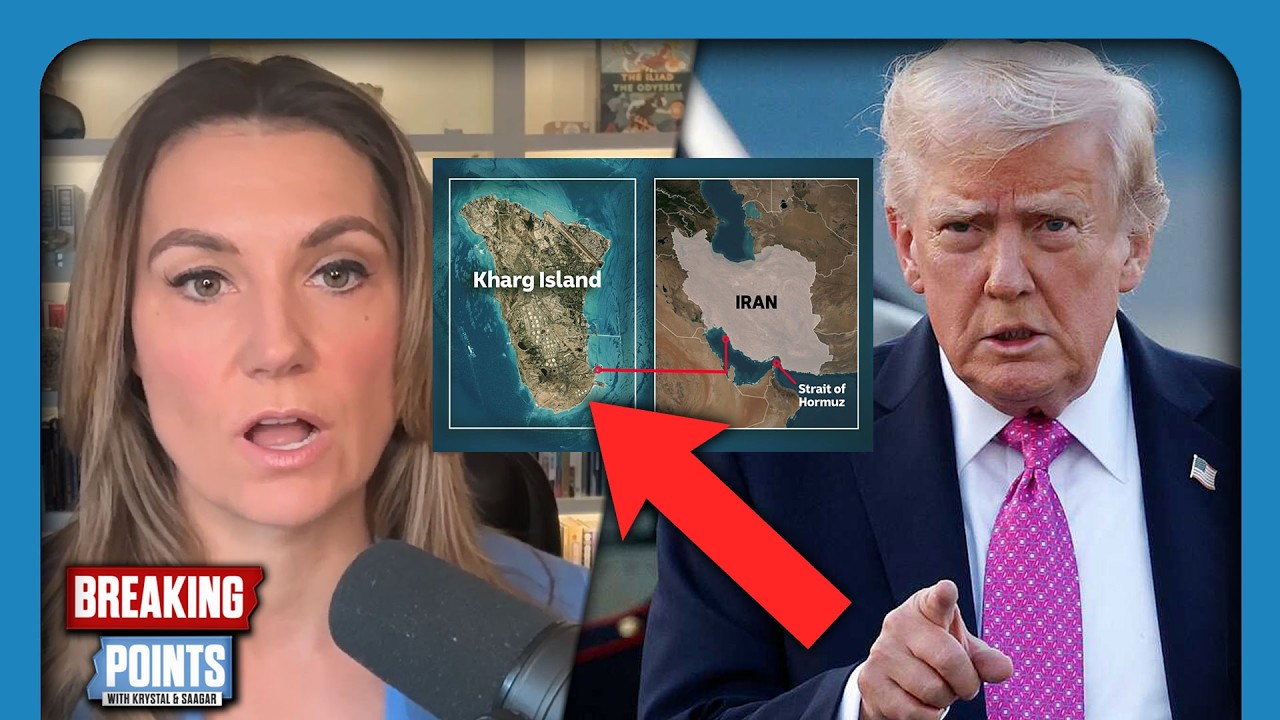
BREAKING: TRUMP ATTACKS OIL ISLAND, MARINES CALLED IN, 5 US PLANES HIT
"The US-Iran conflict escalates with a Trump-ordered strike on Iran's Karg Island, triggering Iranian retaliation against UAE oil facilities and US military assets, while the US deploys Marines and Israel plans a ground invasion of Lebanon."
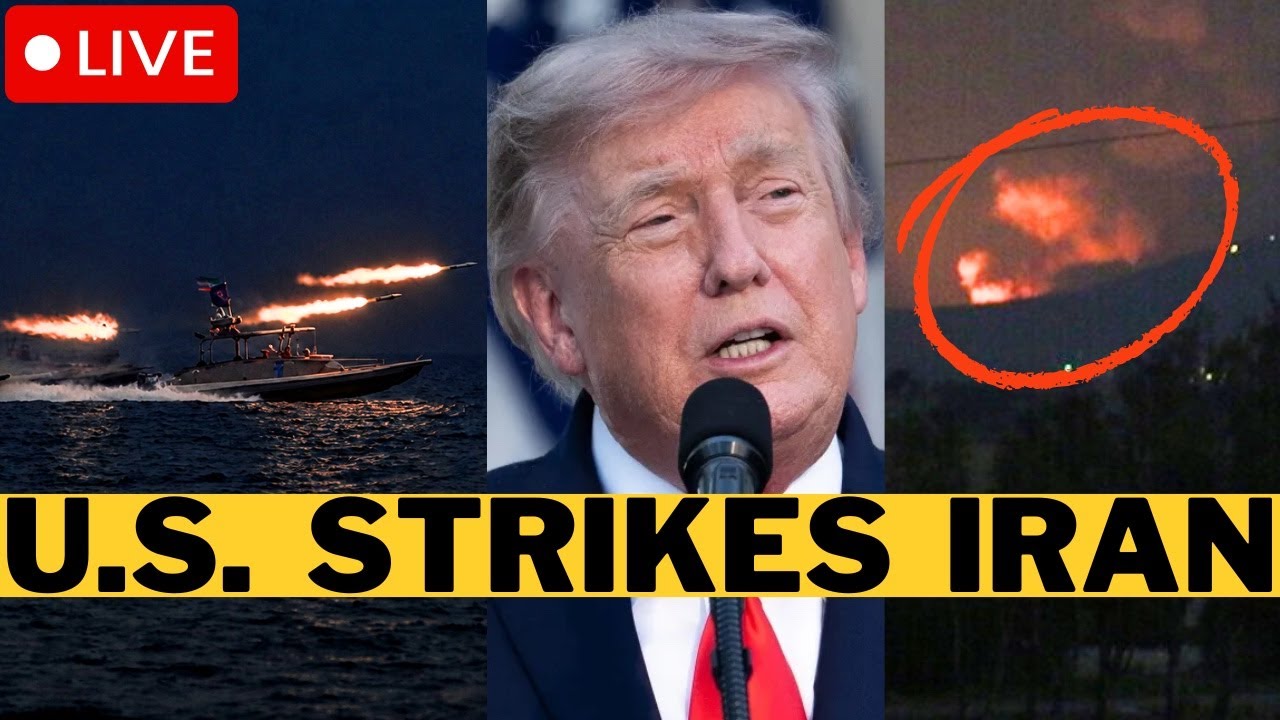
BREAKING: IRGC Break Ceasefire - U.S. Military Launch Strikes In Iran
"The US military launched retaliatory strikes against IRGC bases in Iran after the IRGC broke a ceasefire by attacking international vessels, while Hezbollah militants caused chaos in Beirut over a Lebanese-Israeli agreement."

BREAKING: Iran Threatens To END Talks; U.S. Vows Retaliation; Hezbollah Collapsing? | TBN Israel
"Iran is leveraging Hezbollah and the Strait of Hormuz to manipulate US negotiations, while Israel asserts its right to dismantle Hezbollah's eroding but still dangerous infrastructure in Lebanon, independent of international talks."
The REAL Story About The War From INSIDE IRAN! – Jimmy Interviews Prof. Marandi
"Professor Marandi, an Iranian academic, details how Iran emerged stronger from recent conflicts, now controlling the Strait of Hormuz and possessing a credible deterrent against its adversaries, despite facing economic siege and Western-backed regional proxies."