“WORST to Come!” - Venezuelan on Maduro, Narcos & $17 Trillion Oil Conspiracy | D. DiMartino • 370
YouTube · 2n9Y_AJlzmA
Quick Read
Summary
Takeaways
- ❖Venezuela experienced hyperinflation where prices rose 10% per week or day, not per year, leading to bags of cash being worthless.
- ❖Chavez nationalized industries, including farms, factories, and foreign companies like BP and John Deere, without compensation.
- ❖Cuba exerted significant control over Venezuela, advising on dictatorship and embedding officers within the military and intelligence apparatus.
- ❖Maduro, a former bus driver and loyal Chavez supporter, was appointed president before Chavez's death, consolidating an oligarchy rather than a single-man dictatorship.
- ❖Venezuela's crisis has resulted in 9 million refugees, making it the largest peacetime refugee crisis in human history.
- ❖The US imposed broad sanctions on Venezuela only in 2018-2019 under the Trump administration, not earlier as often claimed.
- ❖The Venezuelan regime actively engaged in narco-trafficking, collaborating with Colombian FARC and ELN, using state-owned planes for drug transport.
- ❖Venezuelan gold reserves, repatriated for 'sovereignty,' were laundered through Dubai, with evidence surfacing via social media posts.
- ❖The regime employs severe torture methods, including psychological torment (false releases) and physical abuse, in facilities like El Helicoide.
- ❖The US strategy post-Maduro's capture involves negotiating with Delcy Rodríguez (Maduro's VP) for a managed transition, acknowledging the opposition's lack of operational control.
Insights
1Hyperinflation and Economic Collapse
Venezuela experienced catastrophic hyperinflation, with prices rising 10% per week or day, not annually. This rendered cash worthless, forcing people to carry bags of money for basic purchases and eventually relying on debit cards, which also failed due to lack of imported technology. The guest notes Venezuela had more inflation in one year than the US had in 250 years.
Daniel DiMartino's personal experience and statement: "We had 10% inflation a week or a day in Venezuela, not per year. Venezuela had more inflation in 1 year than America had in 250 years of history."
2Widespread Nationalization and Property Seizure
Chavez's socialist agenda involved extensive nationalization, taking over private businesses, farms, and even foreign-owned companies like BP, Exxon, John Deere, and Michelin. This led to widespread shortages as businesses could not profit and ceased operations. A notable case is Franklin Brito, who died on a hunger strike protesting the seizure of his family farm.
The guest details: "the government took over the companies. They went to the farmers and they took people's land... Chavez would walk around the street... saying, 'What's that building? Oh, it's a jewelry store. Expropriate it.'"
3Cuban Control over Venezuelan State Apparatus
Cuba played a significant role in establishing and maintaining the Venezuelan dictatorship. Fidel Castro trained Hugo Chavez and Maduro. Cuban intelligence controls Venezuela's communications and military, with Cuban officers embedded in every Venezuelan military unit to prevent dissent and ensure loyalty to the regime. The 'Cuban doctors program' is largely a cover for intelligence operations.
The guest states: "Fidel Castro trained Hugo Chavez and Maduro... Cubans control the entire intelligence apparatus. They tap the communications. They keep the Venezuelan military in check... having a Cuban officer in every military unit."
4Maduro's Rise and the Oligarchy
Nicolas Maduro, initially a bus driver, rose through the ranks as a loyal Chavez supporter, becoming Vice President and appointed successor before Chavez's death. After Chavez, the regime transitioned from a one-man dictatorship to an oligarchy, with several powerful figures (like Diosdado Cabello, Delcy Rodríguez) sharing control, though Maduro remained the public figurehead.
The guest explains: "Maduro was just a big loyalist and he managed to become vice president before Chavez died and got Chavez to appoint him... it became an oligarchy. It's several people in charge."
5Largest Peacetime Refugee Crisis
Venezuela's economic and political collapse has caused the largest peacetime refugee crisis in human history, with 9 million people (nearly a third of its population) fleeing the country over the last 10-15 years. This surpasses the number of Ukrainian or Syrian refugees, despite no active war.
The guest asserts: "The largest refugee crisis in the planet is Venezuela... There are more Venezuelan refugees than Ukrainian or Syrian refugees... It's nearly a third of the population."
6Narco-State Operations and Corruption
The Venezuelan regime transformed into a narco-state, collaborating with Colombian FARC and ELN guerrillas to traffic cocaine. Venezuelan state-owned airplanes and military assets were used for transport, with high-ranking officials like Maduro's nephews directly involved. This illicit trade became a primary source of wealth for the regime's elite.
The guest details: "They kicked out the American DEA... Colombia is the biggest producer of cocaine in the world. Who produces it in Colombia? FARC and ELN... they used Venezuelan airplanes, state-owned airplanes. Even Maduro's nephews."
7US Intervention and Post-Maduro Strategy
Following Maduro's capture by US Delta Force, the US government's strategy involves negotiating with Delcy Rodríguez (Maduro's Vice President) and other regime leaders for a managed transition. This approach acknowledges the Venezuelan opposition's lack of operational capacity to seize and maintain power, aiming for a phased handover and general elections under US influence.
A journalist's report cited by the guest states: "Delcy Rodríguez and the core of the regime's leadership are negotiating with the United States as we speak... The US does not believe that María Corina Machado and the opposition have the operational capacity to seize power in Venezuela."
Bottom Line
The Venezuelan regime's 'pragmatism' allowed it to maintain power by not fully persecuting all dissent or banning religion, instead focusing on control and wealth extraction while permitting private life dissent.
This highlights that totalitarian regimes are not always ideologically pure; they can adapt tactics to maximize survival and personal enrichment, making them more resilient than purely ideological states.
Understanding this pragmatism can inform more effective foreign policy strategies, focusing on disrupting financial networks and power structures rather than solely ideological opposition.
Social media played an unexpected role in exposing the regime's corruption, with Instagram posts revealing Venezuelan Central Bank gold bars being laundered in Dubai.
Even in highly controlled states, digital platforms can inadvertently become tools for transparency, exposing illicit activities of the elite.
Intelligence agencies and human rights organizations could leverage open-source social media intelligence more systematically to track illicit financial flows and expose corruption in authoritarian regimes.
Trump's explicit statement about US interest in Venezuela's oil, contrasting with other officials' emphasis on drug wars, is seen by some as a refreshing honesty that could deter adversaries.
Transparently stating national interests, even if self-serving, can be perceived as a show of strength and predictability, potentially deterring other hostile actors like China and Russia.
Policymakers could explore strategic transparency in foreign policy, where clearly articulated national interests, combined with decisive action, might be more effective than veiled motives in certain geopolitical contexts.
Key Concepts
Comparative Advantage
The principle that individuals and countries should specialize in producing goods and services they are relatively better at, even if they are absolutely better at everything, to maximize overall efficiency and wealth through trade. This explains why tariffs are detrimental to an economy.
Socialism vs. Free Markets
A core contrast demonstrating that economic systems based on free markets and private property rights lead to prosperity, while socialist systems with price controls, nationalization, and state control inevitably lead to shortages, poverty, and societal collapse, regardless of natural resources.
Resource Curse
The paradox that countries with abundant natural resources (like Venezuela with oil) tend to have less economic growth, less democracy, and worse development outcomes than countries with fewer natural resources, often due to corruption, rent-seeking, and lack of diversification.
Lessons
- Educate yourself on the real-world consequences of socialist economic policies by studying case studies like Venezuela, focusing on the impact of price controls, nationalization, and property rights on daily life and national prosperity.
- Support organizations and policies that promote economic freedom, private property rights, and rule of law globally, recognizing these as fundamental pillars against authoritarianism and economic collapse.
- Critically evaluate geopolitical narratives, distinguishing between stated reasons for intervention (e.g., humanitarian, drug war) and underlying economic or strategic interests, to form a more complete understanding of international events.
Notable Moments
Franklin Brito's hunger strike and death in 2009, protesting the government's seizure of his family farm.
Brito became a martyr for private property rights, symbolizing the regime's disregard for individual ownership and the devastating human cost of nationalization policies.
Chavez's self-proclaimed title of 'intergalactic commander' and his daily TV show 'Hello, Mr. President'.
These examples illustrate the extreme cult of personality and propaganda employed by the regime to deify Chavez and control public perception, highlighting the absurdity and psychological manipulation inherent in such dictatorships.
The White House posting a meme-like video in response to Maduro's challenge, showing US military action in Venezuela set to music.
This demonstrates a shift in US foreign policy communication, using informal and provocative media to project power and respond to adversaries, signaling a more aggressive and less conventional approach to international relations.
Quotes
"We had 10% inflation a week or a day in Venezuela, not per year. Venezuela had more inflation in 1 year than America had in 250 years of history."
"You do not become the dictator of a country being a dumb person."
"It's not about dictatorship or democracy. It's about whether you have free markets or not."
"A country doesn't get rich because of its natural resources. It gets rich because of its freedom."
Q&A
Recent Questions
Related Episodes

🚨 TOTAL F*CKING CHECKMATE 😂😂😂
"The host argues that Trump's 'ceasefire' with Iran was a calculated '5D chess' move to orchestrate a global energy market reshuffle, while simultaneously lambasting 'woke' domestic policies and the 'freefall' of anti-Trump conservative figures."

Will Venezuela Be Trump's Vietnam?
"An expert breaks down three perilous pathways for Venezuela under potential US intervention, from a 'Panamanian model' to a 'Libyan-style civil war,' and the broader geopolitical fallout for Latin America."
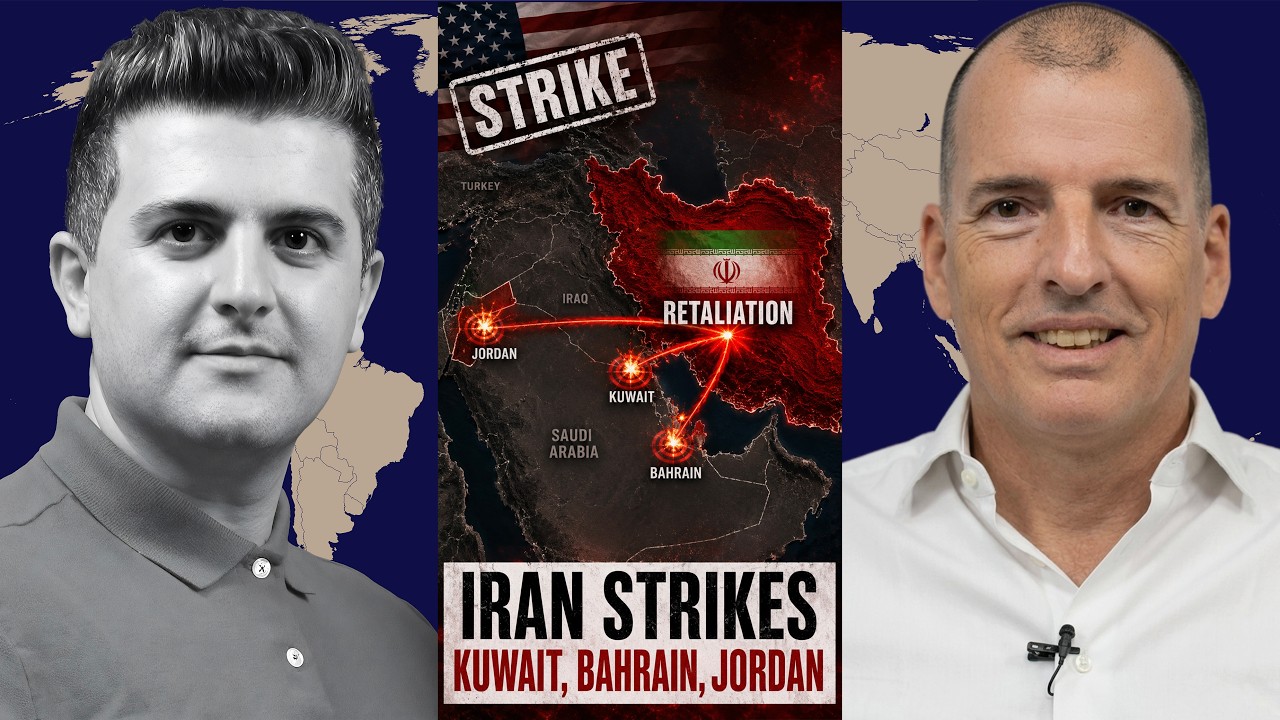
Alex Krainer: US STRIKES Iran – Iran RETALIATES Against Kuwait, Bahrain & Jordan!
"Amidst escalating US-Iran conflict and Iranian retaliation against regional US allies, this episode argues that US foreign policy is deeply controlled by an 'Anglo-Zionist conspiracy' led by the Rothschild banking dynasty, prioritizing Israeli interests over American ones."

Iran Update: Israel’s Newest Bombing Campaign, the Oncoming War With China and How to Avoid It
"Colonel Wilerson reveals how the US and Israel are actively bombing China's strategic infrastructure in Iran, escalating a covert economic war that Beijing intends to win without direct military conflict by dismantling the dollar's global dominance."