NC Targets DEI. Trump Blocks Housing Bill. Minority Banks Face New Rules. Kohen Wiley Protests
YouTube · 2qsb_UA63Tc
Quick Read
Summary
Takeaways
- ❖The Trump administration redefined 'minority-owned bank' criteria, making it harder for Black banks to qualify and grow, impacting community access to capital.
- ❖Senator Ted Cruz's bill to regulate college athlete NIL deals is criticized for granting the NCAA antitrust immunity without guaranteeing employee status or union rights for athletes.
- ❖Trump's State Department is withholding billions in congressionally approved foreign aid, affecting critical global health programs like PEPFAR, particularly in Africa.
- ❖The Postmaster General proposed withholding mail-in ballots from states that do not share voter lists with the federal government, raising concerns about voter suppression and federal overreach.
- ❖Protests in Mississippi following the death of one-year-old Kohen Wiley led to a successful Walmart boycott, demonstrating economic power in demanding police accountability.
- ❖The term 'student-athlete' was originally coined to deny injured college players workers' compensation benefits, highlighting the NCAA's historical exploitation of athletes.
Insights
1Redefining Minority-Owned Banks to Undermine Black Financial Institutions
The Trump administration changed the definition of a 'minority-owned bank' (MDI) to allow institutions to qualify if 51% of ownership is held by someone from a 'socially or economically disadvantaged group,' replacing a 30-year-old standard that presumed Black, Hispanic, Asian, Pacific Islander, and Native American individuals met this criterion. This change opens the door for non-minority individuals to claim MDI status, creating uncertainty and a 'chilling effect' on the formation and growth of new and existing Black banks.
Nicole Elim, President CEO of the National Bankers Association, stated the new language replaces a clear standard with ambiguity, making it harder for future minority-owned banks to qualify for MDI status and impacting existing MDIs' ability to raise capital or merge. Roland Martin highlighted that Black banks do twice as much lending in their communities as their peers, making this an attack on Black communities' access to capital.
2Ted Cruz Bill Threatens College Athletes' Economic Rights and NCAA Accountability
Senator Ted Cruz is pushing a bill to regulate Name, Image, and Likeness (NIL) deals for college athletes. Critics argue this bill, similar to the defunct SCORE Act, aims to grant the NCAA antitrust liability exemption, effectively bailing out the organization from decades of exploitation. The bill also reduces the percentage of athletic revenue schools can allocate to athletes from 50% (under the House settlement) to 20%, without guaranteeing college athletes employee status or the right to unionize.
Demar Smith, former executive director of the NFL Players Association, explained that the Cruz-Canwell Act gives the NCAA more power than professional leagues without requiring player unionization, which is a prerequisite for antitrust exemptions in pro sports. He highlighted the historical context of the 'student-athlete' term, created to deny workers' compensation benefits to injured players, and criticized the bill for accepting this 'original sin' of athlete exploitation.
3Trump Administration Defies Congress by Withholding Foreign Aid
The Trump administration has refused to spend billions of dollars in foreign aid congressionally earmarked for humanitarian and global health initiatives, including PEPFAR (President's Emergency Plan for AIDS Relief). This defiance is described as a 'remarkable infringement on Congress's authority over federal spending' and has led to severe consequences, such as reduced food rations in refugee camps and a resurgence of cholera outbreaks.
Anna Maria Barry Jester, a reporter for ProPublica, detailed how the administration labeled funds as 'unallocated' to prevent spending without further permission from the budget manager. She cited instances in Kenya and South Sudan where cuts in US aid directly led to starvation and increased deaths from treatable diseases. Senator Brian Schatz (D) noted broad bipartisan support for foreign aid, while Senator Lindsey Graham (R) refused to comment on the administration's actions.
4USPS Proposal Threatens Mail-in Voting and State Election Control
The Postmaster General proposed a new rule stating the Postal Service will not deliver mail-in ballots to states that refuse to turn over their voter lists to the federal government. This move is seen as a backdoor attempt by the Trump administration to gain control over state voter information and suppress votes, particularly impacting military personnel, disabled individuals, senior citizens, and college students who rely on mail-in voting.
The Postmaster General argued the rule ensures efficient and secure ballot delivery via 'Kit 600' barcodes and envelopes, but acknowledged it would be a mandatory requirement. Critics, including Robert Patillo, argued this coerces states into ceding constitutional control over their elections to the federal government, potentially for nefarious purposes, and equated the 'Save America Act' (which mandates photo ID and proof of citizenship) to Jim Crow laws.
Bottom Line
The systematic dismantling of race-based policies across various sectors (banking, education, foreign aid) is part of a broader 'race-neutral' and 'gender-neutral' political agenda, which disproportionately harms minority communities.
This 'neutrality' argument is a political tactic to justify policies that, in practice, reverse progress made through affirmative action and targeted support, leading to increased economic and social disparities.
Advocates must expose the discriminatory impact of 'race-neutral' policies and push for intentional, race-conscious solutions at state and federal levels, leveraging 'states' rights' arguments to protect local autonomy.
The NCAA's historical and ongoing exploitation of athletes, particularly Black athletes, is being challenged by NIL deals and the transfer portal, but legislative efforts seek to re-establish institutional control.
This struggle highlights the tension between athlete autonomy and the financial interests of collegiate sports, revealing how power structures resist changes that empower labor (athletes) over management (NCAA/schools).
State legislators can champion bills to treat college athletes like any other student, ensuring equal rights, scholarships, and medical coverage, thereby bypassing federal attempts to re-enshrine exploitative practices.
Opportunities
Create Black-owned store chains and co-ops in underserved communities.
Establish community-owned or Black-owned retail chains to provide essential products and services, reducing reliance on external corporations that may not respect or serve the community's interests. This also creates economic leverage for boycotts and local wealth building.
Lessons
- Engage in state and local elections to prevent Republican supermajorities, which enable the passage of anti-Black legislation and voter suppression measures.
- Pressure Democratic candidates and parties to invest in Black media and grassroots organizations, ensuring their platforms and resources directly address Black community needs and motivate voter turnout.
- Support and advocate for state-level legislation that protects college athletes' rights, treating them equally to other students regarding scholarships, transfers, and medical care, challenging the NCAA's exploitative 'student-athlete' model.
Community-Led Economic Boycott for Accountability
Identify a specific target (e.g., a business or institution) whose actions harm the community and whose economic power is vulnerable to collective action.
Organize and unify community members and local organizations, ensuring clear communication and shared objectives.
Implement a sustained boycott, tracking its economic impact on the target to demonstrate collective power and force concessions (e.g., policy changes, accountability for individuals).
Simultaneously advocate for long-term solutions, such as developing alternative Black-owned businesses or community resources to reduce dependence on the boycotted entity.
Notable Moments
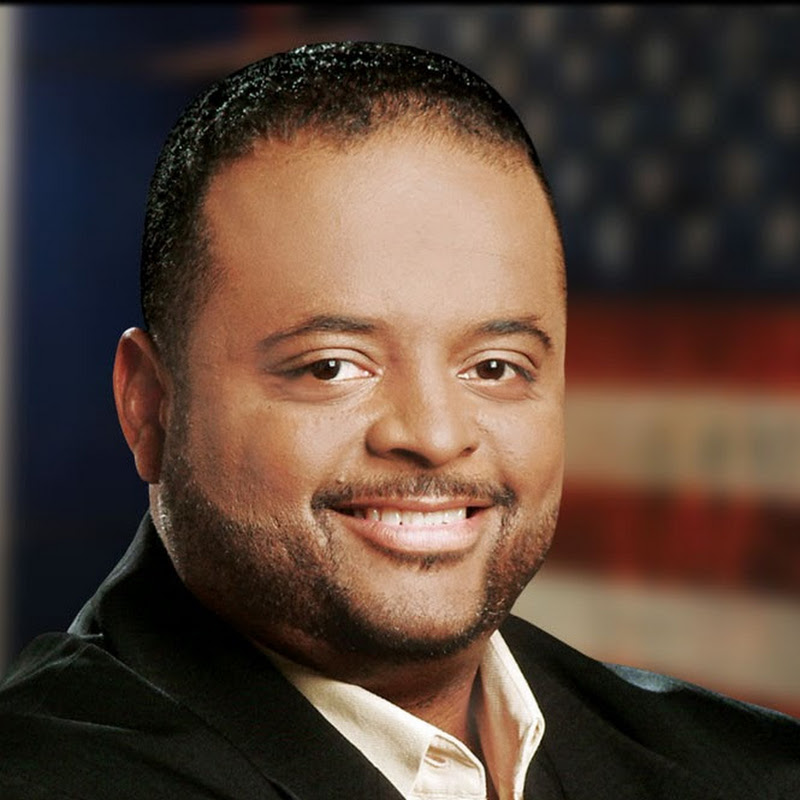
The host, Roland Martin, directly challenges the notion of 'radical policies' by listing various extreme actions and statements made by Donald Trump, arguing that the concept of 'radical' no longer applies to progressive Black issues.
This reframes the political discourse, asserting that policies addressing Black issues are not inherently radical, especially when compared to the unconventional and often extreme actions of conservative leaders, thereby validating the pursuit of such policies.
Jalanda Jones, a Texas State Representative, recounts her personal experience as a full-scholarship athlete who 'starved' while bringing prestige to her school, highlighting the historical exploitation of athletes before NIL deals.
This personal testimony provides powerful evidence of the systemic injustices faced by college athletes, particularly women in non-revenue sports, and underscores the urgency of reforms like NIL and employee status.
Quotes
"Capital is the civil rights issue of the 21st century. And when you attack people's ability to have access to capital, you attack their ability to build wealth."
"This thing gives the NCAA more power than any professional league ever got. So the idea that they are giving basically the NCAA a blank check to be absolutely immune from most laws and nonetheless there is nothing in both of those bills that say every college athlete will be treated as an employee and therefore they can form a union. It's it's getting all of the up with none of the down."
"That term came from a man named Ray Denny and his family who Ry died on a football field. His wife gets death benefits under workers comp. The precursor of the NCAA rides in they sue the wife. They sue the three kids. Why? Because paying for benefits and paying for health care is not the NCAA model. So, for the first time in history, the NCAA convinced a court that Ray Dennison was a thing called a student hyphen athlete."
"The only thing these people care about is their economic power. The Walmart in Cinitobia makes 85 million to $15 million a year. Every time we've shut it, successfully shut it down three times with no violence. Um, 100% peaceful. Didn't even leave trash in the parking lot. only violence came from the police and every time we shut that store down that's 200 to 300,000. Um we went in the city council meeting and they told us oh no they can't put the officer on leave without pay. We went and shut down the Walmart. They did it the next morning."
"Nowhere in the constitution does it say you need a stateisssued photo ID in order to vote. Thus, in order to change the actual ability to vote in America, you need a constitutional amendment."
Q&A
Recent Questions
Related Episodes

NC Targets DEI. Trump Blocks Housing Bill. Minority Banks Face New Rules. Kohen Wiley Protests
"This episode exposes how current political actions, from changes in minority bank definitions to attempts to regulate college athlete earnings and block foreign aid, are systematically undermining Black economic power, voting rights, and social justice."

The Immortal Jim Crow. 'Goon Squad' Defamation Suit. Google Race Discrimination Case. #TheBreakdown
"This episode exposes the enduring grip of systemic racism through a Mississippi defamation suit, Google's racial discrimination settlement, and a deep dive into how Jim Crow's legacy still shapes Black America today."

LIVE: Ex-TOP Prosecutor BREAKS SILENCE On Trump Election Scheme | The Weekend Show
"Former Assistant Attorney General for Civil Rights, Kristen Clark, details how a recent Supreme Court ruling delivered a 'death nail' to the Voting Rights Act, exposing a coordinated agenda to dismantle civil rights and consolidate white political power."

Trump RUSHES Election Scheme as Midterms HAUNT HIM
"The hosts and guest expose the SAVE Act as a deceptive voter suppression tactic, drawing a stark contrast between the protection of gun rights and the erosion of voting rights."