BREAKING: Downed U.S. Apache Sparks Investigation Following Intense Israel-Iran Clash | TBN Israel
YouTube · 3AUvS1sM_Ys
Quick Read
Summary
Takeaways
- ❖An American Apache helicopter crashed near the Strait of Hormuz, with investigations considering Iranian fire, technical malfunction, or operational failure.
- ❖Iran is attempting to create a new equation by tying a ceasefire in Lebanon to broader negotiations with the US, which Israel rejects.
- ❖Israel and the US are likely coordinating closely behind the scenes to weaken Iran, despite public displays of disagreement.
- ❖Hezbollah is facing growing internal pressure and declining support among Shiite communities in Lebanon due to the costs of conflict.
- ❖The Iranian regime operates from an eschatological worldview, interpreting negotiations as temporary ceasefires (hudna) to rebuild for future conflict.
- ❖Israel continues to operate against Hezbollah in Lebanon, asserting its freedom of action despite Iranian threats.
Insights
1US Apache Helicopter Crash Near Strait of Hormuz Under Investigation
An American AH-64 Apache attack helicopter crashed near the Strait of Hormuz, a critical global friction point. While the two crew members were rescued, the cause is under investigation, considering Iranian fire, technical malfunction, or operational failure. This incident occurred amidst heightened tensions and increased US military activity in the area.
An American Apache helicopter crashed near Iran... An American AH64 Apache attack helicopter crashed yesterday near the straight of Hormuz... At this stage, it is still not clear what caused the crash. Officials that are familiar with the details said that the responsib the possibility that the helicopter was hit by Iranian fire is also being examined alongside other lines of investigation. This is including a technical malfunction or an operational failure.
2Iran's Post-Escalation Narrative: Victory and Threats
Following recent clashes, Iranian regime officials are publicly claiming victory and issuing threats, emphasizing that any future action against its regional allies could trigger another response. State-affiliated media outlets are actively shaping the public narrative, listing "achievements" and blaming the US and Israel for the escalation, while expressing distrust in diplomatic efforts.
Less than 24 hours after the round of fighting between Israel and Iran, senior regime officials in Tehran continue to send messages of victory and of threats, alongside presenting what they define as achievements made during the confrontation... In the newspaper Kamashari owned by the Tehran municipality, there's a list of five achievements... Thran continues to present the United States and Israel as responsible for the latest escalation and conflict.
3Israel's Strategic Strikes on Iranian Petrochemical Facilities
Israel conducted strikes deep inside Iran, targeting the Karun petrochemical facility. This facility is considered critical to the Iranian regime, and the IDF's action drew significant attention in Persian media. These strikes were part of a broader Israeli response that "stripped away Iran's air defensive systems" and hit regime targets and military infrastructure.
After Israel struck the soft underbelly of the revolutionary guards and attacked the prochemical facilities in Iran, the question must be asked, why is this facility so critical to the regime? The IDF strike on the Karun petrochemical facility in Iran drew major attention in the Persian media... and Israel with amazing ease stripped away Iran's air defensive systems. The air force struck deep inside Iran, hit the regime targets, the defensive systems and the military infrastructure.
4Covert US-Israel Coordination: The "Good Cop, Bad Cop" Dynamic
Despite public statements suggesting a rift or differing agendas, there is a strong likelihood that Israel and the United States are closely coordinated behind the scenes. This "good cop, bad cop" strategy allows the US to pursue diplomatic agreements while Israel acts as the "bad cop" with aggressive military actions, serving a joint goal of weakening Iran's nuclear, ballistic, and proxy warfare programs.
Behind the scenes, Israel and the United States are fast friends. We have coordinated with each other. Israeli attacks in Lebanon contrary to what people believe were communicated and coordinated with the White House and were the were done with the blessing and the knowledge of the White House... it is very likely that Israel and the US are playing good cop, bad cop. Israel being the bad cop in this equation.
5Iran's Attempt to Link Lebanon to Broader Ceasefire Negotiations
Iran is actively trying to establish a new geopolitical equation by making Lebanon and Hezbollah's status part of any broader agreement with the US regarding Iran. This move aims to tie Israel's hands in its self-defense operations against Hezbollah, granting the terrorist organization an "Iranian layer of protection" and turning every strike in Lebanon into an international crisis. Israel unequivocally rejects this linkage.
Iran is trying to create a new equation, an equation in which Lebanon are part of any agreement that is related to to Iran outside of this region. They were trying to tie in to tie in a ceasefire in Lebanon to their negotiations with the US about what's happening in Iran. And this is a very problematic precedent. One, it it they're attempting to tie Israel's hands in self-defense as we fight against.
6Cracks in Hezbollah's Shiite Support in Lebanon
While Hezbollah still maintains broad support among Shiites in Lebanon, a new study and on-the-ground observations indicate growing anger, exhaustion, and questioning of the organization's priorities. The displacement of nearly a million people and the destruction of homes are leading more Shiites to realize Hezbollah is fighting for Iran, not just Lebanon. Calls for cities to be declared "weapon-free" and reduced attendance at pro-Hezbollah demonstrations signal a significant shift in public perception.
Is still strong and still holds support, but cracks can already be seen. More people understand that the organization is not fighting only for Lebanon, but also for Iran... In Lebanon's Ministry of Social Affairs, about 1 million displaced people are registered... On social media. More Shiite voices are appearing against hisbala... Young Shiite opposition movements like the change movement in the south towards salvation and also groups called Shiites against the war and no to the Iranian occupation... dozens of Shiite figures from the local elite called to declare Ty and Abata as cities without weapons.
7Iranian Regime's Eschatological Worldview and Negotiation Strategy
The Iranian regime operates from an eschatological (end-times) perspective, believing in the coming of the Mahdi after the destruction of Israel. This ideology shapes their foreign policy, viewing negotiations with Western powers not as a path to lasting peace but as a temporary "hudna" (armistice) to rebuild strength and continue their mission. They perceive Western leaders like Trump as "whoremonger and gambler" who God would not grant victory.
their thinking became more and more focused on this esqueological end time what the Jewish people called perspective which define their foreign policy. So they see Trump as, and these are the words I've heard them say often, whoreonger and gambler. And they say that God would never give the victory to such a man... Trump is negotiating for peace. They're negotiating for hudna. It's a very different concept. It's an armistice, a temporary reprieve in order for them to build back better and attack.
Bottom Line
The growing discontent among Shiite populations in Southern Lebanon against Hezbollah, fueled by displacement and destruction, presents a potential long-term opportunity for the Lebanese state to reassert control.
This internal pressure could weaken Hezbollah's social and political grip, making it more vulnerable to external military pressure and potentially paving the way for a sovereign Lebanese government to replace it as the primary caretaker of the Shiite public.
International actors and the Lebanese government could strategically support local initiatives that empower non-Hezbollah Shiite leadership, provide humanitarian aid directly to affected communities, and strengthen the legitimate Lebanese army to fill the power vacuum.
The Iranian regime's internal factionalism and decision-making processes are complex and not always unified, with some elements potentially seeking tactical compromises.
This suggests that while the dominant IRGC faction is uncompromising, there might be internal leverage points or opportunities for external pressure to exacerbate these divisions, potentially leading to defections or shifts in policy.
Intelligence efforts should focus on understanding these internal factions and their motivations to identify potential points of influence or weakness that could be exploited to promote a more moderate or survival-oriented approach within the regime.
Key Concepts
Good Cop, Bad Cop Strategy
This model suggests that the United States and Israel, despite public disagreements or "daylight" between them, are secretly coordinating their actions against Iran. Israel acts as the "bad cop" with aggressive military actions, while the US plays the "good cop" by pushing for diplomatic solutions, creating leverage and managing international relationships.
Hudna (Temporary Truce)
Rooted in Islamic jurisprudence (specifically the Treaty of Hudaybiyyah), this model describes a temporary ceasefire or armistice. From the Iranian regime's perspective, negotiations are not about achieving lasting peace but about gaining a strategic pause to rebuild strength, rearm, and prepare for the next phase of conflict or expansion of the "realm of Islam."
Eschatological Foreign Policy
This model explains the Iranian regime's foreign policy and actions through the lens of end-times religious beliefs. The regime believes in the coming of the Mahdi (12th Imam) after the destruction of Israel, which motivates their uncompromising stance, pursuit of nuclear capabilities, and support for proxies as steps towards this ultimate religious goal.
Lessons
- Recognize that Iran's negotiation tactics are often rooted in an eschatological worldview, viewing "peace" as a temporary "hudna" to regroup, rather than a Western concept of lasting resolution.
- Understand that public disagreements between the US and Israel on Iran policy may be part of a coordinated "good cop, bad cop" strategy to achieve shared objectives of weakening the Iranian regime.
- Monitor the growing discontent among Shiite communities in Lebanon as a potential indicator of Hezbollah's weakening influence and a long-term opportunity for the Lebanese state to reclaim sovereignty.
Quotes
"We had a very good conversation. He was attacked and he responded. I can't blame him for that. He was attacked and then he responded and now it's over. They will stop."
"Israel is crazy. We can't control them. They do what they want to do. They go crazy. We tell them not to attack and they attack."
"You don't really need to pull the trigger if you've set up a terrorist organization. You've funded them, you've trained them, you've equipped them, you've ideologically indoctrinated them to hate Israel and fight on your behalf, and then they pull the trigger and you say, 'We don't know how this happened. We had no control.'"
"Trump is negotiating for peace. They're negotiating for hudna. It's a very different concept. It's an armistice, a temporary reprieve in order for them to build back better and attack."
"There's three concepts of peace. There's the Greek concept of peace which is the absence of war... There is the Islamic concept of peace which goes to the treaty of hubaya is called hudna which means that Allah taught something which was when you are weak you make a temporary ceasefire and build your strength and once you're strong enough you continue the expansion of the realm of Islam... And then there's the Hebrew concept of shalom, which is a benediction in the midst of conflict."
"Iran has been saying this since the revolution says you are the small Satan. They are the big Satan. We plan to destroy you. They spend billions of dollars a year doing it. Maybe we should take them at their word."
Q&A
Recent Questions
Related Episodes

Patrick Henningsen: Hezbollah JUST Fired Back at Israel - Iran Vows to “Crush” All Attacks
"Patrick Henningsen argues that the US and Israel initiated an illegal war against Iran, driven by Trump's incompetence and Israeli influence, leading to an inevitable escalation with severe global economic repercussions."
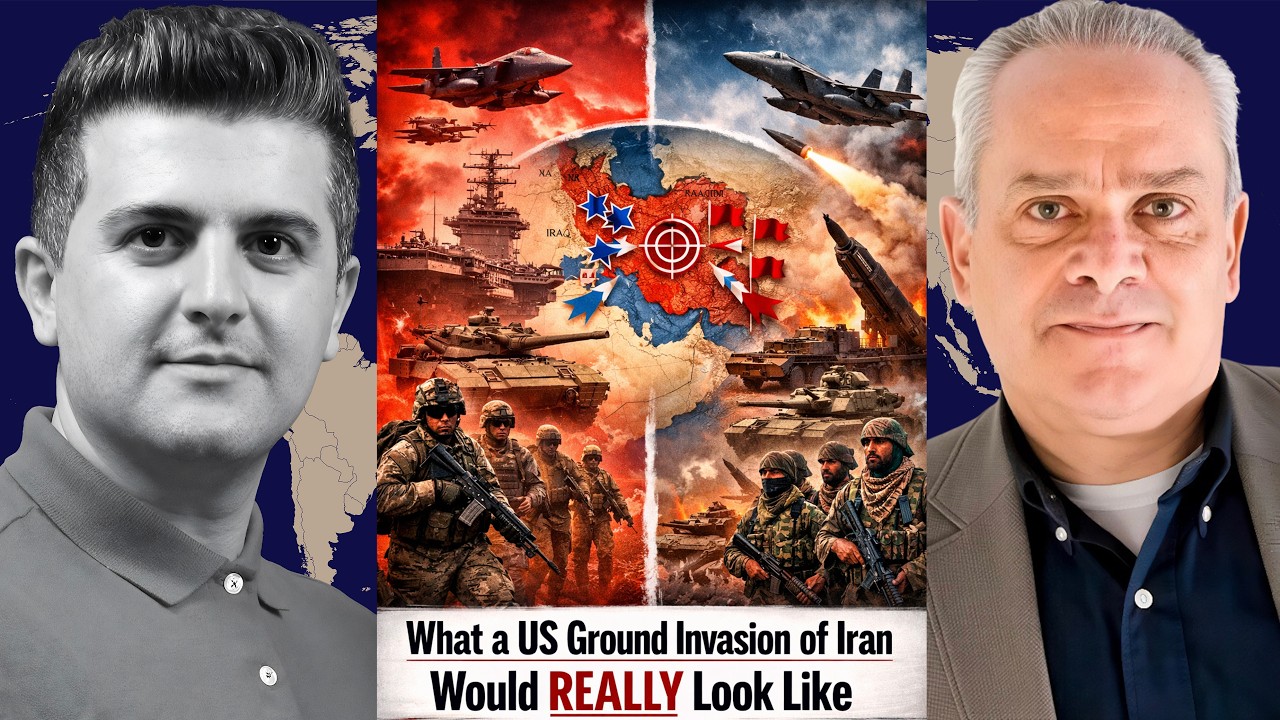
Col. Jacques Baud: What a US Ground Invasion of Iran Would REALLY Look Like
"Colonel Jacques Baud dissects the strategic futility of a US ground invasion of Iran, arguing that current troop levels are insufficient and such an action would backfire, exposing US allies and potentially leading to Iran's nuclearization."

BREAKING: Iran Threatens To END Talks; U.S. Vows Retaliation; Hezbollah Collapsing? | TBN Israel
"Iran is leveraging Hezbollah and the Strait of Hormuz to manipulate US negotiations, while Israel asserts its right to dismantle Hezbollah's eroding but still dangerous infrastructure in Lebanon, independent of international talks."
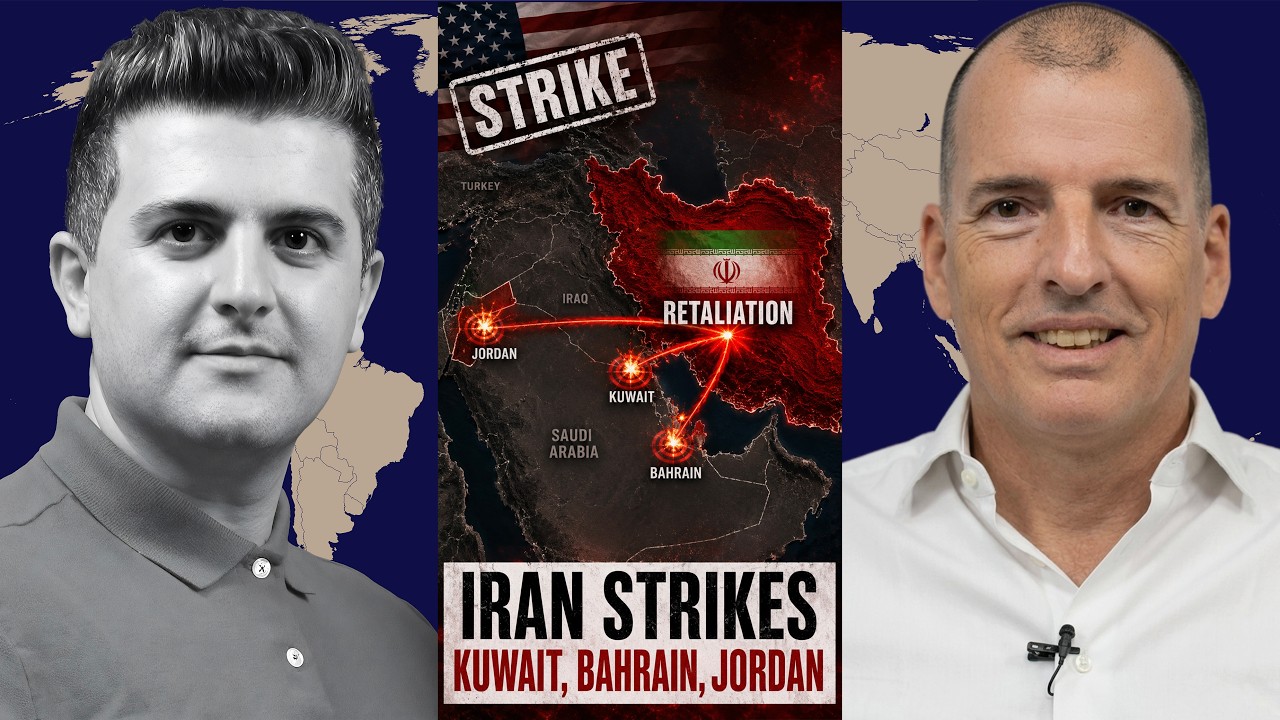
Alex Krainer: US STRIKES Iran – Iran RETALIATES Against Kuwait, Bahrain & Jordan!
"Amidst escalating US-Iran conflict and Iranian retaliation against regional US allies, this episode argues that US foreign policy is deeply controlled by an 'Anglo-Zionist conspiracy' led by the Rothschild banking dynasty, prioritizing Israeli interests over American ones."