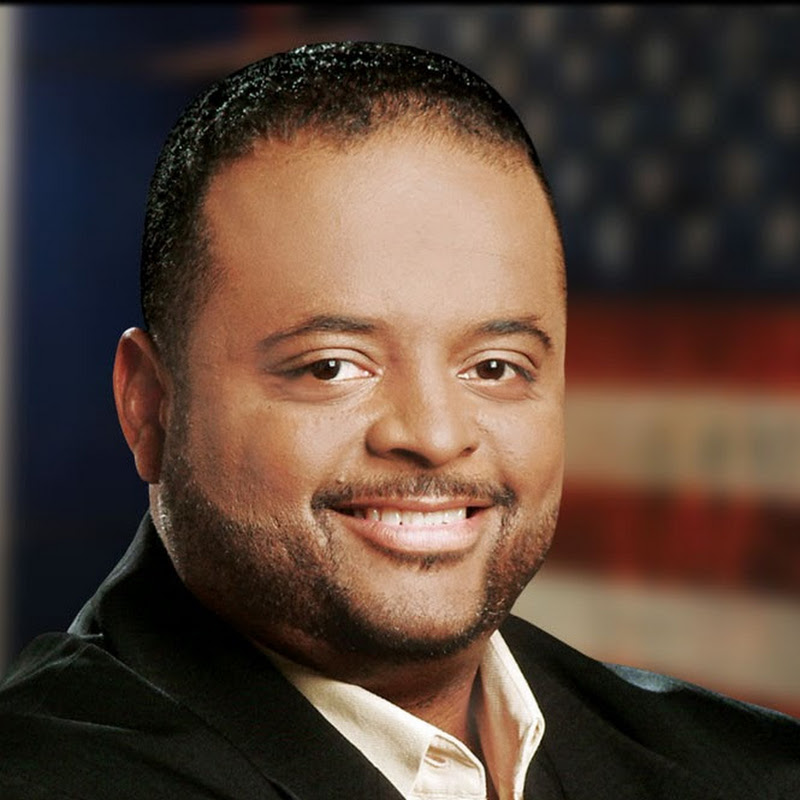
RainbowPUSH homegoing for Rev. Jesse Jackson Sr.
YouTube · 3Dt6bF3FUng
Quick Read
Summary
Takeaways
- ❖Jesse Jackson's early life in a segregated South, born in poverty, shaped his relentless fight against injustice.
- ❖His 1984 presidential campaign was born from a moment of disrespect towards Harold Washington, leading to millions of new voter registrations and reshaping American politics.
- ❖Jackson was instrumental in advocating for economic inclusion, establishing the Wall Street and Silicon Valley projects to push for diversity in corporate America.
- ❖He was a global diplomat, freeing hostages and actively campaigning against apartheid in South Africa, earning him recognition as an 'African' by President Ramaphosa.
- ❖His personal philosophy emphasized that 'little becomes much when you place it in the master's hand' and that 'God uses plain ordinary people'.
- ❖Jackson taught that everyone deserves equal protection under the law and that a leveled playing field allows everyone to win.
- ❖His family, particularly his wife Jacqueline, played a crucial role in supporting his mission, sharing him with the world for over 64 years.
- ❖The ongoing mission of the Rainbow Push Coalition is to continue fighting for voting rights, ending inequalities, promoting peace, and giving voice to the voiceless.
- ❖Jackson's impact led to the creation of more African American millionaires and board members than any other individual.
- ❖He believed in America more than America believed in itself, honoring its ideals of independence and the Constitution more than its founders.
Insights
1From 'Classic Nobody' to National Figure
A newspaper once described Jesse Jackson's arrival in Chicago as a 'classic nobody' from the South, in his 20s, and 'blackened by the clannish rules of Chicago politics.' Despite these initial perceptions and systemic barriers, Jackson defied expectations, building a movement that eventually compelled major metropolitan press to cover his work.
A newspaper this past week had one paragraph. It said, 'When Reverend Jesse Jackson arrived in Chicago, he was a classic nobody. Nobody scent. He was from the south. Blackened in his 20s by the clanish rules of Chicago politics since 1964. He should have shouldn't have amounted to much.'
2Voter Registration and Political Reshaping
Jesse Jackson's 1984 presidential campaign, born from a moment of disrespect towards Harold Washington, registered two to five million new voters. This surge in voter engagement significantly impacted American politics, contributing to Democratic control of the Senate in 1986 and paving the way for the election of black officials like David Dinkens and Doug Wilder, and ultimately Barack Obama.
From that moment of disrespect, the Jackson candidacy for president in 1984 was born. ... Two to five million people were registered to vote. And in 1986, the Democrats took back control of the Senate with wins in Louisiana, Alabama, Georgia, and North Carolina. David Dinkens was elected mayor of New York. Doug Wilder was elected governor of Virginia because of those registration drives. And in 1992, Bill Clinton was elected president. ... the Jackson candidacy and the rainbow movement paved the way for the victory in 2008 of Barack Obama.
3Economic Empowerment Initiatives
Jackson recognized the critical link between economic empowerment and civil rights. He launched the Wall Street Project and Silicon Valley Project to address the lack of diversity in financial services and technology. He successfully lobbied major corporations like Goldman Sachs, Apple, and Google to acknowledge unfairness and embrace inclusion, demonstrating that diversity was beneficial for their bottom line.
He understood the connection between economic empowerment and civil rights. ... Reverend saw clearly the extraordinary impact that they had as job creators, philanthropist, and civic leaders. ... Reverend Jackson started the Wall Street project and the Silicon Valley project. ... he got the country's most powerful CEOs to see to not only to acknowledge the unfairness, but he also got them to see to understand that inclusion was good for their bottom line and they would make their companies grow faster when they included us.
4International Diplomacy and Anti-Apartheid Activism
Jackson's commitment extended globally, notably in his fight against apartheid in South Africa. He visited Soweto, declared 'this land is changing hands,' and became a leading advocate for economic sanctions against the apartheid regime. He was present for Nelson Mandela's release and inauguration, and his 'Keep Hope Alive' message became an anthem for the struggle.
Jesse Jackson stood with the people of South Africa during our darkest days and hours against apartate. ... He drew massive crowds at rallies in Sutoto where he famously declared as though he was a prophet and indeed he was. He said this land is changing hands. ... By placing South Africa at the center of American electoral politics during his presidential election campaign, Jesse Jackson influenced millions of voters to confront a partate as their moral responsibility too. ... When Nelson Mandela finally walked free in 1990 after 27 years of imprisonment, Jesse Jackson was there in Cape Town, witnessing a moment the world would never forget.
5Personal Sacrifice and Family Support
Jackson's family, particularly his wife Jacqueline, made immense sacrifices, sharing him with the world for over 64 years. His daughter Ashley recounted how he would always reach back for her hand while on calls with world leaders, symbolizing his commitment to both his public mission and his private family life. His children also described his personal struggles with progressive supranuclear palsy and the family's dedicated care.
We thank you for his wife who shared her husband with the world. ... He would reach back his hand to find mine while he was on the phone. It didn't matter who was on the other end of the line, presidents, organizers, global leaders. The call would continue and still his hand would find mine. ... My dad would later be diagnosed with progressive supra nuclear palsy.
6Mentorship and Empowering Black Women
Jesse Jackson empowered many Black women in politics, including Minyon Moore, Yolanda Caraway, Donna Brazile, and Tina Flournoy, whose impact continues today. He also mentored countless individuals, teaching them to speak up against injustice and to believe in their own worth.
This movement would not be what it is but for Jesse Jackson empowering some black women. Minan Moore, Yolanda Carowway, Donna Brazil, Tina Fenoi, the color girls are still having impact because of Reverend Jackson.
Bottom Line
Jesse Jackson's 'unannounced' visits and ability to 'kick down doors' in corporate and political spheres were not just about access, but about forcing recognition and inclusion for marginalized communities.
This highlights that true advocacy often requires disruptive presence and a refusal to adhere to established protocols when those protocols perpetuate exclusion. His approach created tangible opportunities where none existed.
Leaders and organizations can adopt a 'Jesse Jackson' approach by actively seeking out and challenging exclusionary practices, rather than passively waiting for invitations, and by leveraging their influence to create pathways for those traditionally locked out.
The revelation that Jesse Jackson created more African American millionaires than anyone alive, yet some never returned to support his organization, points to a challenge in sustaining movements once individual success is achieved.
This exposes a potential 'leak' in the pipeline of collective empowerment, where personal gain can sometimes overshadow the foundational support that enabled it. It's a critical lesson for community-building and philanthropy.
Organizations focused on economic empowerment should integrate mechanisms for sustained engagement and reciprocal giving from beneficiaries, perhaps through mentorship programs, alumni networks, or tiered membership structures that emphasize ongoing commitment to the movement's broader goals.
Opportunities
Diversity & Inclusion Consulting for Legacy Industries
Leverage Jesse Jackson's legacy with the Wall Street, Silicon Valley, and automotive projects to create a consulting firm specializing in diversity, equity, and inclusion (DEI) for 'legacy' industries. This firm would focus on tangible outcomes like increasing minority representation on boards, access to capital for minority entrepreneurs, and equitable supply chain integration, using Jackson's historical successes as case studies and a moral imperative.
Impact Investment Fund for 'Ordinary People' Entrepreneurs
Establish an impact investment fund specifically targeting entrepreneurs from marginalized or 'ordinary' backgrounds, echoing Jackson's belief that 'God uses plain ordinary people' and 'little becomes much'. The fund would provide not just capital but also mentorship, networking, and strategic guidance, focusing on businesses that address community needs and create local jobs, thereby linking economic growth with social justice.
Key Concepts
The Power of Ordinary People
God uses plain, ordinary people to build coalitions and achieve extraordinary change. This model emphasizes that individuals, regardless of their perceived status, can make a significant impact when they commit to a cause greater than themselves, as exemplified by Jackson's own journey and his empowerment of others.
Turning Disrespect into Movement
A moment of disrespect or injustice can be a catalyst for a broader movement for respect and change. Jesse Jackson's 1984 presidential campaign, sparked by the Democratic Party's initial refusal to support Harold Washington, demonstrates how perceived slights can galvanize a base and reshape political landscapes.
Economic Empowerment as Civil Rights
True civil rights extend beyond legal equality to include economic opportunity and inclusion. Jackson's work with the Wall Street and Silicon Valley projects, and his efforts in the automotive industry, illustrate the model that access to capital, jobs, and corporate leadership positions is fundamental to achieving holistic justice and building generational wealth.
The Torch of Freedom (Relay Race)
The struggle for justice is a continuous, intergenerational relay race where the 'torch of freedom' is passed from one generation to the next. Leaders like Martin Luther King Jr. passed the dream to Jesse Jackson, who in turn passed it to subsequent activists, emphasizing that the mission is ongoing and requires sustained commitment across lifetimes.
Lessons
- Commit to being a 'change agent' and continue the legacy of fighting for voting rights, ending racial, gender, and economic inequalities, and promoting peace and human rights.
- Challenge violence with nonviolent engagement and confront systems that take society backward, moving from racial battlegrounds to economic common ground and moral higher ground.
- Never live your life by someone else's agenda; define your own purpose and pursue it with conviction, even when it means going against the current.
- Use your voice and presence to advocate for the voiceless and faceless, getting to the microphone and camera when necessary to fight for critical issues.
- Support organizations like the Rainbow Push Coalition, which are dedicated to carrying forward Jesse Jackson's mission of building coalitions and fighting for justice.
The 'Keep Hope Alive' Playbook for Social Change
**Identify and Challenge Disrespect:** Recognize moments of systemic disrespect or exclusion and actively transform them into catalysts for broader movements for respect and justice.
**Empower the 'Ordinary':** Focus on mobilizing and empowering individuals from marginalized backgrounds, believing in their inherent worth and capacity to drive significant change.
**Demand Economic Inclusion:** Actively push for diversity, equity, and access to capital and opportunities in dominant economic sectors (e.g., finance, tech, automotive) to ensure economic justice is a core component of civil rights.
**Cultivate Global Solidarity:** Extend advocacy beyond national borders, building international coalitions and showing unconditional solidarity with oppressed people worldwide, recognizing that injustice anywhere threatens justice everywhere.
**Maintain a Prophetic Voice:** Consistently speak truth to power, holding political and corporate entities accountable, and refusing to compromise on the demands of justice for the 'least of these'.
Notable Moments
A speaker recounts Jesse Jackson's response to a limo driver who planned detours before taking him to his hotel. Jackson insisted on going straight to the hotel, then leaned over and told the speaker, 'Never live your life by someone else's agenda.'
This anecdote reveals a core principle of Jackson's leadership: self-determination and unwavering focus on his own mission, a lesson he imparted to others.
Stevie Wonder shares a personal story of marching with Jesse Jackson, noting how Jackson kept pushing him forward despite his fatigue, saying 'just a little bit more, Stevie.' Wonder then delivers a powerful speech challenging 'you' (the audience/society) to overcome hate, white supremacy, and violence.
This moment highlights Jackson's persistent and inspiring nature, even in physically demanding situations, and transitions into a direct, unvarnished call to action from Stevie Wonder, emphasizing the ongoing need to fight systemic issues.
Congressman Jonathan Jackson recounts his childhood embarrassment over his father's constant protesting and boycotting, only to later embrace and be proud of his father's arrest record and commitment to fighting for others, even getting arrested himself.
This illustrates a powerful personal transformation and the intergenerational impact of Jesse Jackson's activism, showing how a child's initial discomfort evolved into a man's deep pride and continuation of the legacy.
President Cyril Ramaphosa of South Africa speaks at length, claiming Jesse Jackson as 'one of our own' because Jackson 'first laid claim on us' during the anti-apartheid struggle, emphasizing that belonging is determined by where one chooses to join the fight against evil.
This powerfully demonstrates the global reach and profound impact of Jackson's solidarity, showing how his activism transcended national borders and earned him a unique place in the history of other nations' freedom struggles.
Jesse Jackson Jr. shares a poignant story of asking his father, while in prison, 'Daddy, do you think you can get me out of here?' and his father's response: 'I'm trying, son, but don't give up. Hold your head high. Stick your chest out. You can make it.'
This deeply personal moment reveals Jackson's unwavering hope and encouragement, even when facing immense personal challenges, and his consistent message of resilience to his own family and others.
Quotes
"Little becomes much when you place it in the master's hand."
"He taught us everyone deserves equal protection under the law. He taught us if the playing field is leveled and the rules are the same for everybody, we can all win."
"He taught us if faith without works is dead. Your faith should have substance. Get to the microphone as soon as you can because the voiceless need a voice. Get to the camera as soon as you can because the faceless need a face to fight for their issues."
"He taught us that we should measure someone not simply but where by where they started from but where they ended up but where they started from."
"This man took a moment of disrespect and turned it into a movement for respect."
"Do we have two parties with one assumption or one party with two names?"
"Reverend Jesse Jackson was too tall to hide, too poor to be included, too black to be respected, and the only thing that saved him was the fact that he was too bold and outspoken to be ignored."
"He taught me that the rights of the individuals do not come from the generosity of the state but rather from the hand of God."
"Belonging is not determined by the soil on which you were born. Belonging is determined by the soil on which you choose to join the fight against an evil system."
"Your pain is my pain. The chains that bind you are my chains. Your struggle for freedom is my struggle as well."
"God never fails, rarely explains, sometimes delays, but he always prevails."
Q&A
Recent Questions
Related Episodes

George Floyd 6 Years Later. Redistricting War in The South. Talarico Senate Campaign
"This episode exposes the ongoing legislative battles and strategic resistance against efforts to diminish Black political power, from federal policing reform to state-level gerrymandering and calls for economic boycotts by Black athletes."
Black Woman Killed in ICE Pursuit. Newsom “Can’t Read” Remark. Tariff Repayment Push. TPS Fight
"This episode dissects multiple critical events, from the tragic deaths during an ICE pursuit and a police shooting, to debunking a viral controversy around Governor Gavin Newsom's remarks, and honoring Reverend Jesse Jackson's enduring legacy in economic and media justice."
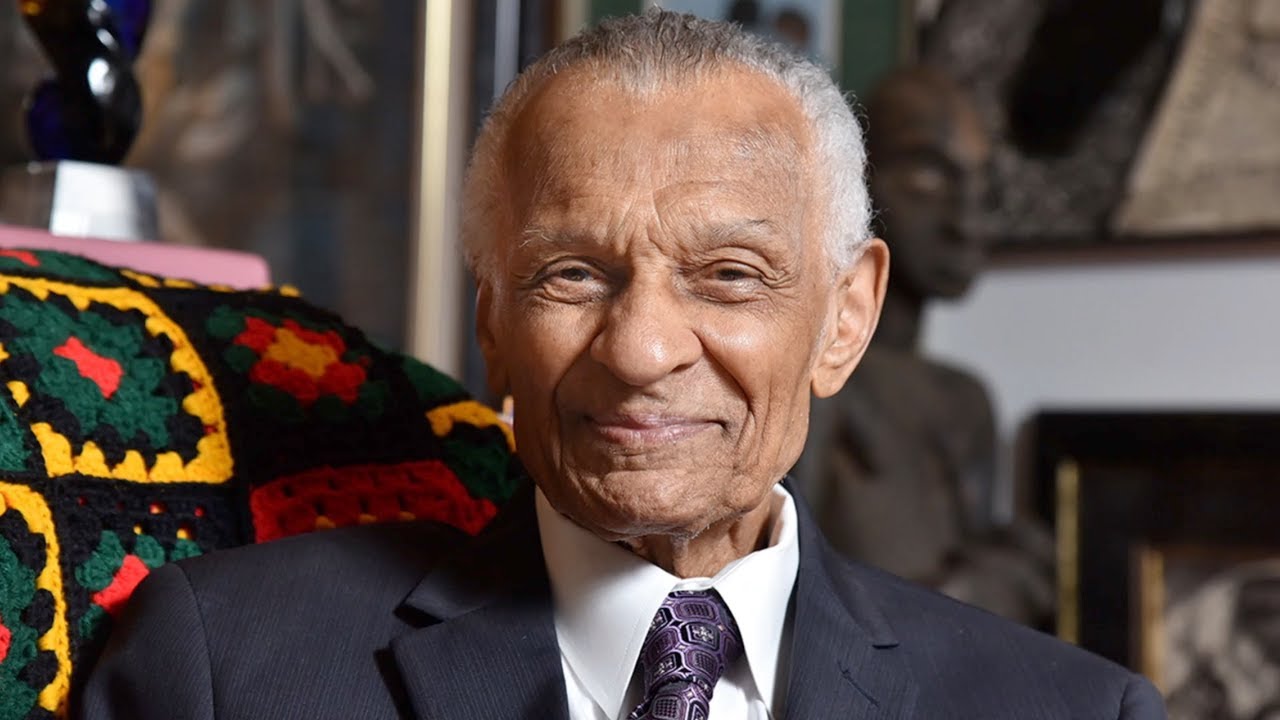
Rev. C.T. Vivian talks MLK and staring death in the face. #MLKDay2026
"Civil Rights icon Rev. C.T. Vivian reflects on a lifetime of struggle, from facing childhood bullies to confronting Jim Clark, and shares his profound insights on the continuous fight for freedom and the true cost of a movement."

Unc & Iso Joe COOK De'Aaron Fox PRETENDING he doesn't hear the CHOKING noise after GM4! | Nightcap
"The hosts dissect NBA player De'Aaron Fox's mental state after a critical Game 4 loss, sparking a broader discussion on how professional athletes truly handle public criticism and the impact of old-school coaching methods."