
LIVE: US AND IRAN MEETING CANCELLED…TRUMP FOLDS!!! 4/21/2026
YouTube · 3giuN-Bl1Ro
Quick Read
Summary
Takeaways
- ❖US-Iran negotiations in Islamabad were cancelled because Iran refused to attend due to the Trump administration's continued naval blockade and threatening social media posts.
- ❖Iran viewed Trump's public statements, which misrepresented their diplomatic overtures as surrender, as a deliberate humiliation.
- ❖The host asserts that Trump's negotiation style is characterized by weakness, idiocy, and a failure to grasp basic diplomatic principles.
- ❖Iran's civilian leadership, who made a gesture of goodwill by partially opening the Strait of Hormuz, faced internal backlash after Trump's public boasts.
- ❖The US naval blockade of the Persian Gulf is largely ineffective, with many Iranian ships bypassing it.
- ❖During the diplomatic impasse, Iran has significantly built up its military capabilities, including drones and ballistic missiles, with support from Russia and China.
- ❖The host criticizes Trump's administration for appointing unqualified individuals and for policies like removing mandatory flu vaccines for military personnel, citing historical health risks to soldiers.
Insights
1Trump's Self-Sabotaging Diplomacy
The host argues that Donald Trump's contradictory actions—maintaining a naval blockade and issuing threats while supposedly seeking negotiations—directly led to Iran's cancellation of talks. Iran perceived these actions as a lack of good faith and an attempt to use negotiations as a tool for battlefield gains.
Iran made clear its non-negotiables... We don't trust you. So unless and until the naval blockade of the Persian Gulf by the United States ends... we're not showing up." () "You want to do negotiations. Stop saying that you're going to blow up bridges and you're going to blow up civilian infrastructure. Stop threatening that you're going to kill us all." ()
2Humiliation as a Diplomatic Blunder
The host contends that Trump's public boasting and misrepresentation of Iran's diplomatic overture (partially opening the Strait of Hormuz) as a surrender was a severe diplomatic blunder. This act humiliated Iran's civilian leadership, who had taken a political risk to make the gesture, and ultimately made further negotiations impossible.
Aragchi invested a great deal of his own political capital... So they post that and what does Donald Trump do? Donald Trump then starts posting last week and throughout the weekend. I've made them surrender. They've agreed to everything... What a master negotiator. I beat them." () "You've now embarrassed them. They were trying to help... you took him giving you an out as a way to humiliate him and humiliate the civilian group such that they didn't want to show up today." ()
3Iran's Strategic Response to Perceived Weakness
Iran, viewing Trump's actions as both idiotic and weak, has used the diplomatic impasse to rapidly build up its military capabilities with support from Russia and China. This suggests that Trump's aggressive posture has backfired, making Iran stronger and more prepared for conflict.
If you are... any other country in the world who has seen Donald Trump's behavior... you know that he's a weak and pathetic and that he's a loser." () "Iran has used this time period to build up its shahi drones, to build up its um uh to build up its FPV drones, to build up its unmanned vessels." ()
4Erosion of US Credibility and Global Standing
The host argues that Trump's erratic and undignified behavior has severely damaged the United States' international credibility, leading other nations to view it with "utter weakness" and even contempt.
The message sent internationally... is utter weakness. Utter weakness. China sees this utter weakness. Russia sees this utter weakness. NATO sees this utter weakness." () "Iran is saying we can't even dignify being in a room with the United States of America, right? It's almost the way we used to treat Iran or Kim Jong-un." ()
Bottom Line
Instead of boasting, a more effective US strategy would have been to acknowledge Iran's goodwill gesture (partially opening the Strait of Hormuz) and reciprocate by easing the blockade, framing it as progress towards technical talks. This approach could have de-escalated tensions and fostered trust.
Such a strategy would have preserved diplomatic channels and prevented the complete breakdown of negotiations, potentially averting further escalation and military buildup.
Diplomatic efforts should prioritize genuine de-escalation and trust-building through reciprocal actions, rather than public posturing, to achieve long-term stability and prevent conflicts.
Trump's tendency to announce indefinite delays or extensions (the "two-week loop") without concrete action or a clear strategy is perceived internationally as weakness and a stalling tactic, rather than a strategic move.
This pattern undermines any serious diplomatic effort, leading adversaries to exploit perceived indecision and allies to question reliability, eroding international trust and effectiveness.
Leaders should adopt clear, decisive, and consistent diplomatic strategies, avoiding vague delays that can be interpreted as weakness or incompetence, to maintain credibility and achieve foreign policy objectives.
Lessons
- Recognize that effective international diplomacy requires consistent messaging, respect for counterparts, and a clear understanding of cultural and political dynamics, rather than aggressive posturing or public humiliation.
- Be wary of political leaders who prioritize self-aggrandizement and "winning" public narratives over genuine, good-faith negotiation, as such approaches can lead to diplomatic failures and escalate conflicts.
- Demand sophisticated, fact-based analysis of foreign policy from media and political figures, moving beyond simplistic "strong vs. weak" narratives to understand complex geopolitical realities.
A "Grown-Up" Approach to US-Iran Negotiations
Publicly appreciate any diplomatic overtures from Iran, even small ones, as a sign of progress.
In response to Iranian gestures, remove elements of the naval blockade and cease hostile rhetoric.
Propose a longer negotiation period (e.g., 3-4 weeks) to allow for thorough preparation and technical discussions.
Bring in top nuclear experts, IAEA representatives, and experienced diplomats, sidelining unqualified political appointees.
Negotiate temporary measures, such as increased shipping traffic through the Strait of Hormuz, to build trust during talks.
Consider a modified version of the JCPOA as a starting point, acknowledging Iran's increased leverage.
Hold international conferences with NATO allies, Europe, and Middle Eastern nations to collectively address the new regional realities and seek collaborative solutions.
Quotes
"Iran made clear its non-negotiables. It made clear its 10-point framework of negotiations, which Donald Trump previously agreed to, and Iran said, 'We're not going to just show up there so you can misrepresent our presence. We don't trust you.'"
"If you choose the negotiation path then you have to respect us in the negotiation. If you don't want to respect us in the negotiation let's go to war and we can do the war path."
"If you're not embarrassed by this behavior, by the so-called commander-in-chief, then I don't know what humiliation threshold you have because this is some like humiliation ritual."
"Iran is saying we can't even dignify being in a room with the United States of America, right? It's almost the way we used to treat Iran or Kim Jong-un."
"You took a gesture that was trying to help you save face. And you may be saying, 'Well, Ben, we're the United States. Why would we save face? We obliterate.' Look, as I mentioned from the outset, there are two paths here."
"The notion that a flu vaccine must be mandatory for every service member everywhere in every circumstance at all times is just overly broad and not rational."
"You want to be in the military, you should probably be taking vaccines so that you don't get sick and spread your diseases to other people. It's so you can be combat ready. How about that?"
Q&A
Recent Questions
Related Episodes

Iran Deal Skepticism. Whoopi Vs Vance. Potomac Park Invasion. Racist Hurls Slurs At Black Boy.
"This episode dissects multiple instances of alleged anti-Black policies and racial injustice, from the Trump administration's legal challenges to reparations and the Iran deal, to police brutality and the erasure of Black history."
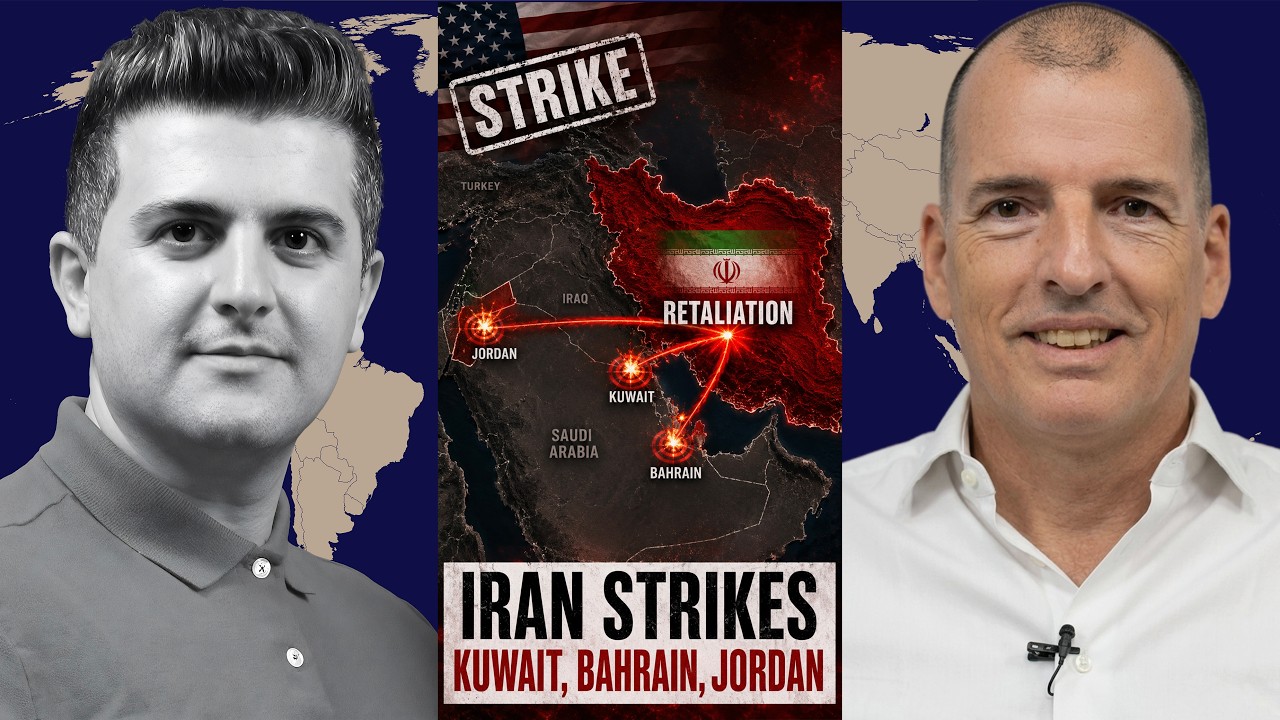
Alex Krainer: US STRIKES Iran – Iran RETALIATES Against Kuwait, Bahrain & Jordan!
"Amidst escalating US-Iran conflict and Iranian retaliation against regional US allies, this episode argues that US foreign policy is deeply controlled by an 'Anglo-Zionist conspiracy' led by the Rothschild banking dynasty, prioritizing Israeli interests over American ones."

Larry Johnson: Iran Missiles Rain Down on Northern Israel – Massive Strikes!
"Geopolitical analyst Larry Johnson details how Israel's recent strike on an 'empty building' in Beirut triggered direct Iranian missile retaliation, escalating regional tensions and jeopardizing a US-Iran peace deal brokered by Pakistan."

LIVE: Trump HIDES FROM PUBLIC as US SOLDIER KILLED!!! 6/2/2026
"The host exposes alleged government cover-ups regarding military casualties, Trump's unexplained public absence, and questionable political appointments, arguing these reflect a 'regime of loser babies' and a failing foreign policy."