Emergency Podcast: Iran, Israel, & Imminent Destruction | The Tim Dillon Show #486
YouTube · 3lTk2SOHeVM
Quick Read
Summary
Takeaways
- ❖The Trump administration's approach to Iran was based on a fundamental misreading of its complex, horizontally integrated state structure, unlike Venezuela or Libya.
- ❖Democratic Party leadership, despite public posturing, largely sat on their hands or cynically supported the war, hoping for Trump's electoral damage.
- ❖Israel's core objective in the conflict is to shatter Iran into a failed state, ensuring no regional military deterrent against its agenda.
- ❖Trump's decision to initiate the war was influenced by an inflated ego from perceived successes (like Venezuela) and immense pressure from pro-Israel figures like Jared Kushner and Miriam Adelson.
- ❖The US rejected significant Iranian concessions on nuclear and conventional weapons, indicating the war was not primarily about security or non-proliferation.
- ❖US military casualties and injuries in the region are likely being significantly underreported by the Pentagon.
- ❖Gulf states are expressing outrage and considering shifting alliances (e.g., towards China) due to US actions destabilizing the region and failing to protect their interests.
- ❖There are credible allegations, including from the Iranian government and reports by Tucker Carlson, of Israeli false flag operations in Gulf states to draw other nations into the conflict.
- ❖The isolationist wing of the MAGA movement, including figures like Tulsi Gabbard and J.D. Vance, has been completely sidelined or forced to conform to the pro-war agenda.
- ❖Iran claims to be holding back its most modern and powerful missile systems, including hypersonics, suggesting a significant escalation could still occur.
- ❖A US nuclear submarine torpedoed an Iranian ship after a joint naval exercise, resulting in over 80 Iranian deaths and violating international law regarding saving drowning sailors.
- ❖The conflict risks a global financial crisis as Gulf states threaten to withdraw investments from the US economy due to regional instability.
- ❖The war is increasingly perceived as a religious conflict across the Middle East, with long-term blowback for the US.
Insights
1US Miscalculation of Iranian State Structure
The Trump administration approached Iran as if it were a single-leader dictatorship like Venezuela or Libya, believing that removing key leadership would collapse the state. However, Iran has built horizontal institutions across society since 1979, with security and economic sectors not solely dedicated to one individual, making a simple 'decapitation strike' ineffective.
Jeremy Scahill states, 'Iran has been building horizontal institutions since 1979. It is not just a dictatorship of one and you kill the supreme leader and all of a sudden the state collapses.'
2Democratic Party's Cynical Support for War
Despite public criticism of Trump, Democratic Party leadership, including figures like Chuck Schumer, sat on their hands during the buildup to the war. Many Democrats secretly desired regime change in Iran and hoped Trump would 'screw it up' electorally, allowing them to benefit politically while advancing a pro-war agenda.
Scahill notes, 'The leadership of the Democratic party, they completely sat on their hands in the whole buildup to this... The Democrats sort of cynically exploited this because a lot of them actually want regime change in Iran and support the agenda, but they also hope that, you know, Trump screws it up and it becomes bad for him electorally.' Ryan Grim adds, Schumer 'taunted Trump into the war'.
3Israel's Objective: Shatter Iran into a Failed State
Benjamin Netanyahu's primary goal is not necessarily to install a specific regime in Iran but to shatter the Iranian state, converting it into a failed state. This would involve bombing its conventional military to ensure no nation-state with a real military can serve as a deterrent against Israel's regional agenda.
Scahill states, 'the only winner here is sort of the agenda of Israel. Because I don't think Netanyahu so much cares who comes into power in Iran as much as he wants that state shattered. He wants to convert it into a failed state.'
4Trump's Motivation: Ego and External Pressure
Trump's decision to initiate the war was fueled by an inflated sense of success from previous operations (e.g., Venezuela) and intense pressure from pro-Israel factions. Figures like Jared Kushner (with Gulf money ties and ideological investment in Israel) and Miriam Adelson (called 'most influential Israeli in the world' by Trump) heavily influenced his foreign policy decisions.
Ryan Grim explains, 'Trump has been told so many times that you can't do a certain thing and then he has done that thing and then it has gone fantastically for him... the latest one... was Venezuela.' Scahill adds, 'Trump's son-in-law Jared Kushner is up to his neck in Gulf money. He's very invested in Israel on an ideological and religious level. You have Miam Adlesen who, you know, Trump basically has said is is calling shots.'
5Rejection of Iranian Concessions
The US administration rejected significant concessions from Iran on its nuclear program and even potential negotiations on conventional weapons, including ballistic missile range. These proposals went 'far beyond what Obama was able to get in 2015,' indicating that the war was not genuinely about security or nuclear non-proliferation.
Scahill explains, 'what the Iranians put on the table went far beyond what Obama was able to get in 2015 from them. It was a massive massive series of concessions from the Iranians on that nuclear issue... The Iranians were talking about also having negotiations on conventional weapons, including talking about range of ballistic missiles.'
6Underreported US Casualties and Injuries
While large-scale cover-ups of deaths are difficult for rank-and-file soldiers, there is strong evidence that the number of American troops injured, some seriously, is being covered up. Iranian strikes have been more successful against US targets than publicly acknowledged.
Scahill states, 'I think a lot more American troops have been injured, some of them seriously uh than than the Pentagon has been willing to acknowledge at this point. I think the Iranians have been far more successful at hitting American targets than anyone is willing to talk about.'
7Gulf States' Outrage and Potential Alliance Shifts
Gulf states, including the UAE and Qatar, are expressing significant outrage over the US-Israel war, which has destabilized the region, closed major airports like Dubai, and made their countries vulnerable to Iranian attacks. They question US protection and may shift alliances towards powers like China.
Ryan Grim cites a powerful UAE businessman asking, 'who gave you the right to do this? who authorized you to set this region on fire?' Scahill adds that the Gulf states' 'entire project was based on this idea... that the United States puts military bases... and they have an American security guarantee. I don't think that they in their wildest dreams they thought that the United States was going to allow Iran to pummel them.'
8Allegations of Israeli False Flag Operations
The Iranian government suggests Israel has engaged in false flag attacks in Arab countries (e.g., Saudi Aramco, British base in Cyprus) to draw those nations into the war as combatants. This aligns with Israel's historical pattern of covert operations and attempts to blame other groups.
Scahill mentions, 'What they're saying is that they believe Israel has engaged in some false flag attacks in some of these um Arab countries or potentially um in Azerbaijan in an attempt to try to draw those nations into the war as actual combatants in it.' Ryan Grim notes the Saudis' initial statement about the Aramco attack being 'debris from a drone they shot down,' not an Iranian strike.
9Sidelining of Isolationist Voices in Trump Administration
The 'America First' and isolationist wing of the MAGA movement, represented by figures like Tulsi Gabbard, J.D. Vance, and Elbridge Colby, has been completely sidelined or forced to abandon their anti-war stances within the Trump administration. Critical voices are viewed as disloyal, creating an environment where pro-war agendas dominate.
Scahill recounts how Daniel Davis, an isolationist military officer, had his nomination withdrawn due to criticism of Israel. He states, 'there's only like a handful of of sane people left in the inner circle... anybody who sort of speaks up, it's not welcome to sort of be giving contrary views. It's that you're going to be viewed as disloyal.'
10US Deliberately Engineered Iranian Protests
The US Treasury Secretary publicly admitted to deliberately engineering a currency crisis in Iran through sanctions to spark protests. Additionally, the US shipped 50,000 Starlink satellite devices into Iran and actively fermented uprisings, though the protests themselves had genuine anger over economic hardship.
Ryan Grim quotes the Treasury Secretary: 'we deliberately engineered a a a currency crisis in Iran in order to spark a protest.' He also mentions the shipment of Starlink devices.
11AI in Military Targeting and Civilian Casualties
AI is being used by the US and Israel for military targeting, as seen in Gaza and Iran. This has led to absurd and tragic outcomes, such as bombing 'Police Park' (a civilian park) or a school previously part of a military base, without adequate human oversight or up-to-date intelligence (e.g., checking Google Earth).
Ryan Grim details the bombing of 'Police Park' in Tehran and a school in Manab, noting, 'if they did use AI, why is the AI not checking Google Earth before bombing the school?'
Lessons
- Critically evaluate official narratives regarding military conflicts, especially casualty reports and stated objectives, as they are often influenced by political agendas and censorship.
- Recognize the significant influence of external lobbies and internal political calculations on US foreign policy, which can override national security interests or diplomatic opportunities.
- Understand that economic sanctions and covert operations can be deliberately used to destabilize countries and incite protests, often with unintended and severe humanitarian consequences.
Navigating Geopolitical Conflicts: A Critical Framework
Deconstruct stated war objectives: Differentiate between publicly declared goals (e.g., 'security,' 'democracy') and underlying strategic ambitions (e.g., regional dominance, resource control).
Map influence networks: Identify key political figures, lobbyists, and financial interests driving foreign policy decisions, especially where personal gain or ideological alignment is evident.
Analyze economic warfare: Recognize how sanctions, currency manipulation, and financial pressures are deployed as tools to destabilize adversary states and incite internal dissent.
Scrutinize intelligence and reporting: Question official casualty figures, investigate claims of false flag operations, and be aware of censorship or deliberate misinformation campaigns.
Assess long-term blowback: Evaluate the potential for unintended consequences, such as shifts in global alliances, economic collapse, or the radicalization of populations, that may arise from current military actions.
Notable Moments
US nuclear submarine torpedoes Iranian ship after joint naval exercise, resulting in over 80 deaths and violating international law.
This incident demonstrates extreme aggression and disregard for international maritime law, potentially escalating the conflict and damaging US diplomatic relations, particularly with India, which hosted the exercise. It highlights the brutality and lack of accountability in modern warfare.
Quotes
"The leadership of the Democratic party, they completely sat on their hands in the whole buildup to this. Trump was telegraphing that it was going to happen. They didn't have any kind of a public debate on it."
"The only winner here is sort of the agenda of Israel. Because I don't think Netanyahu so much cares who comes into power in Iran as much as he wants that state shattered. He wants to convert it into a failed state."
"Trump has been told so many times that you can't do a certain thing and then he has done that thing and then it has gone fantastically for him."
"If it was up to John Bolton, we'd be in World War II. Well, you fast forward to Trump 2.0 know and what I would call the sort of neocon Netanyahu wing of the MAGA movement... they kind of took over this entire portfolio."
"It's just proof that none of this was actually about actual security. It wasn't about nuclear weapons."
"I think a lot more American troops have been injured, some of them seriously uh than than the Pentagon has been willing to acknowledge at this point. I think the Iranians have been far more successful at hitting American targets than anyone is willing to talk about."
"Who benefits from this, Tim, who benefits is Israel from the idea that you know Iran is this kind of madman, this mad dog loose and they're just biting everyone."
"The MAGA movement needs to understand the whole thing was an epic sham. There is no isolationist wing of this administration. There is no America first. This is Israel first right now and it's Trump family business first."
"We deliberately engineered a a a currency crisis in Iran in order to spark a protest."
"If anybody knows Trump, just tell them it's a beautiful win. Just take the win."
Q&A
Recent Questions
Related Episodes

Patrick Henningsen: Hezbollah JUST Fired Back at Israel - Iran Vows to “Crush” All Attacks
"Patrick Henningsen argues that the US and Israel initiated an illegal war against Iran, driven by Trump's incompetence and Israeli influence, leading to an inevitable escalation with severe global economic repercussions."
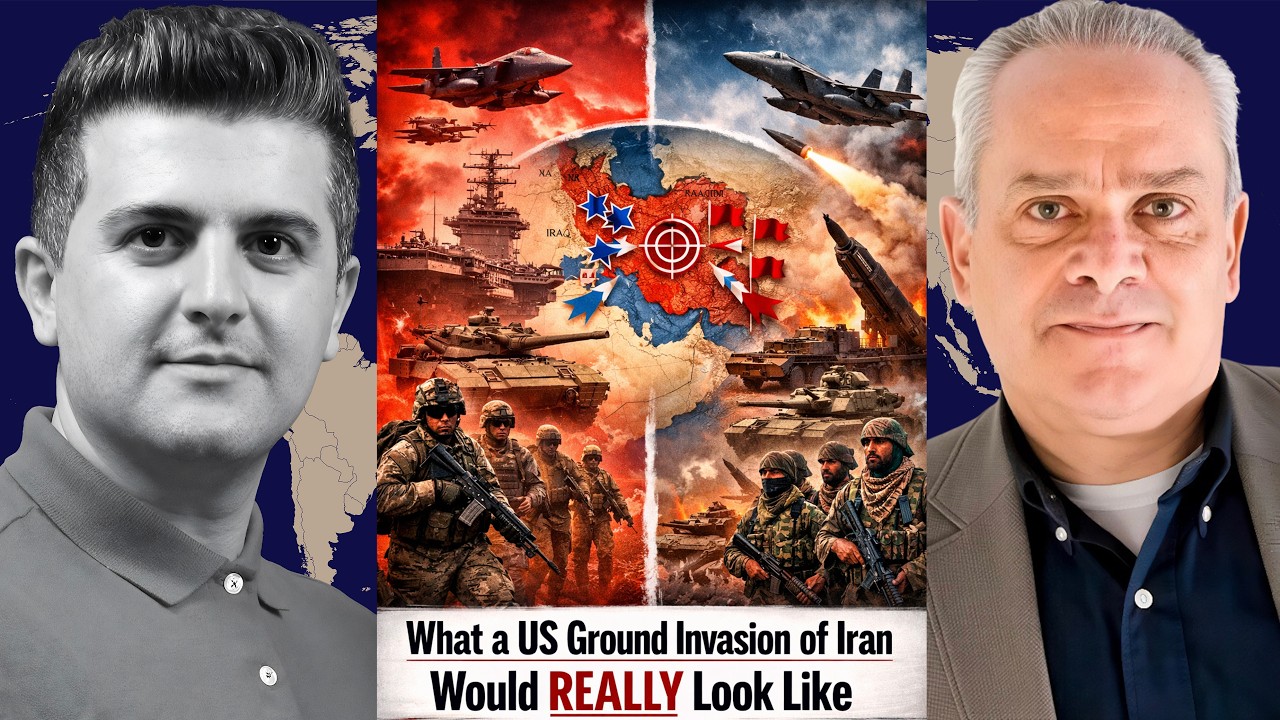
Col. Jacques Baud: What a US Ground Invasion of Iran Would REALLY Look Like
"Colonel Jacques Baud dissects the strategic futility of a US ground invasion of Iran, arguing that current troop levels are insufficient and such an action would backfire, exposing US allies and potentially leading to Iran's nuclearization."
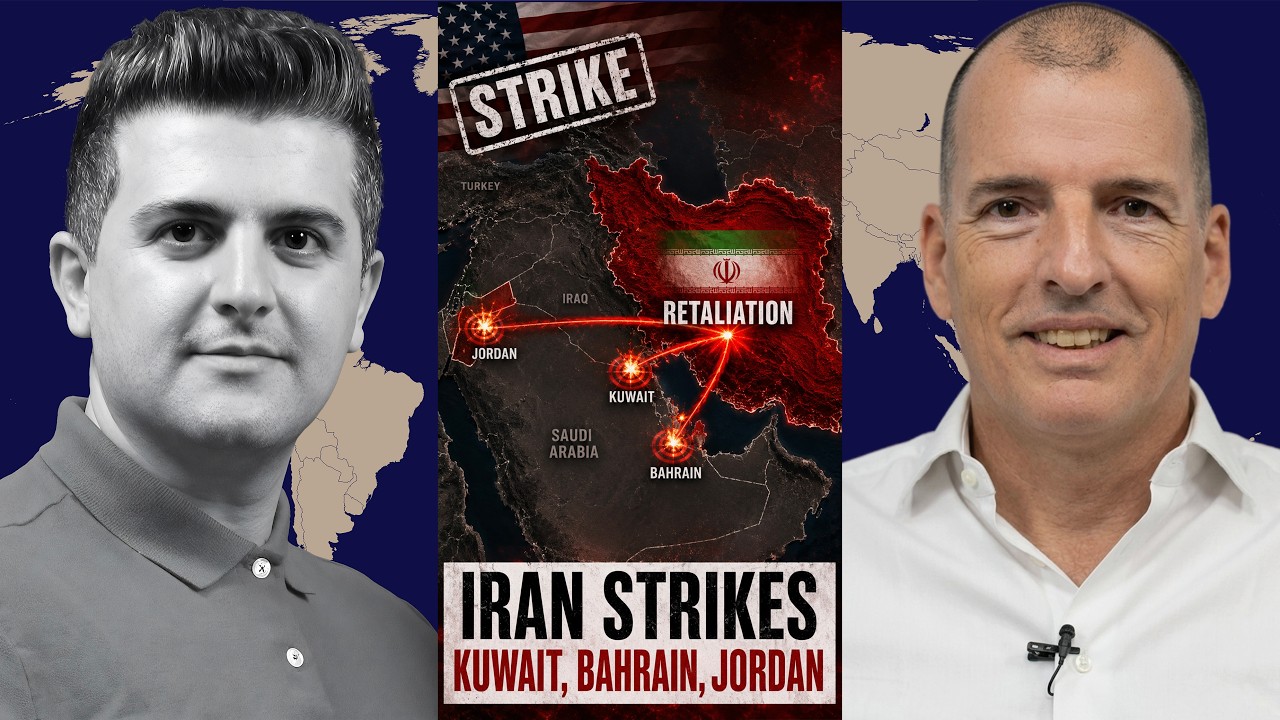
Alex Krainer: US STRIKES Iran – Iran RETALIATES Against Kuwait, Bahrain & Jordan!
"Amidst escalating US-Iran conflict and Iranian retaliation against regional US allies, this episode argues that US foreign policy is deeply controlled by an 'Anglo-Zionist conspiracy' led by the Rothschild banking dynasty, prioritizing Israeli interests over American ones."

Iran Update: Israel’s Newest Bombing Campaign, the Oncoming War With China and How to Avoid It
"Colonel Wilerson reveals how the US and Israel are actively bombing China's strategic infrastructure in Iran, escalating a covert economic war that Beijing intends to win without direct military conflict by dismantling the dollar's global dominance."