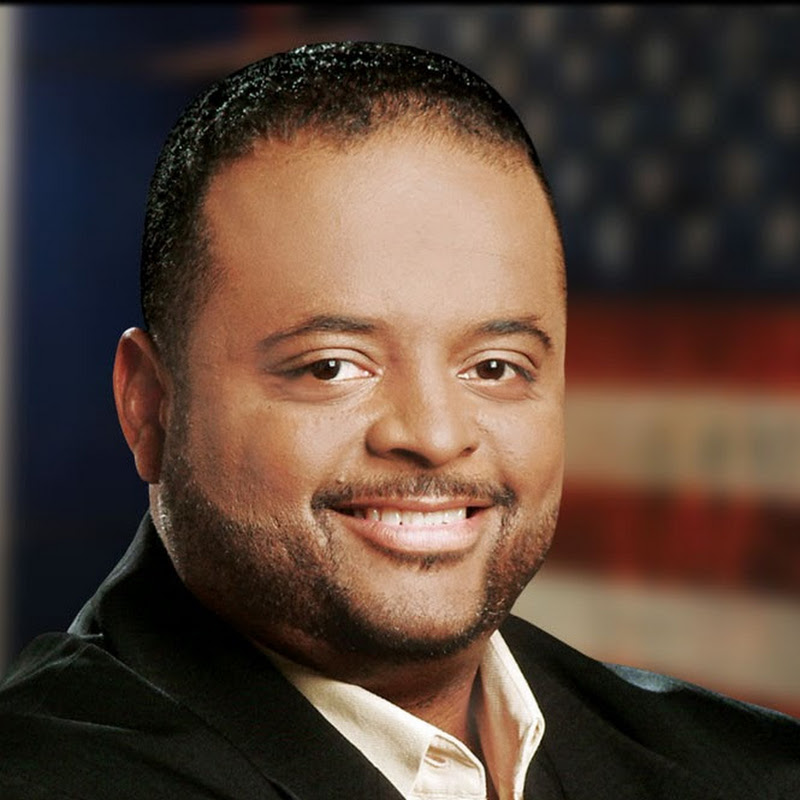
Roland gives MLK address in Dallas, Texas
YouTube · 3m9NmFuZnrg
Quick Read
Summary
Takeaways
- ❖Dr. King's full message, including calls for economic withdrawal and boycotts, is often ignored in favor of a sanitized 'I Have a Dream' narrative.
- ❖Coretta Scott King was instrumental in ensuring Black media access to Dr. King's funeral, highlighting the historical struggle for Black press recognition.
- ❖America is experiencing a 'white minority resistance' fueled by demographic shifts, leading to attacks on Black success and infrastructure.
- ❖Current anti-DEI, anti-CRT, and anti-'woke' movements are coordinated efforts to undermine Black America, comparable to post-Reconstruction rollbacks.
- ❖MLK Day should be a 'day of protest' challenging systemic injustices, not merely a 'day of service' focused on charity.
- ❖Complacency and silence enable 'evil forces' to dismantle civil and economic rights; active resistance and courage are imperative.
Insights
1Sanitization and Gentrification of Dr. King's Legacy
Roland Martin argues that Dr. King's message is consistently 'sanitized and gentrified' during national celebrations. He points out that the 'I Have a Dream' speech was officially titled 'Enormous Emancipation Proclamation' and focused significantly on police brutality, voting rights, and economic inequality, not just racial harmony. Similarly, the 'Mountaintop' speech is often reduced to its final two minutes, ignoring King's explicit calls for boycotts and economic withdrawal from companies that didn't do business with Black communities.
He talked about police brutality, he talked about voting rights, he talked about check stamp insufficient funds... you can't talk about the mountaintop part if you ignore what he talked about when he name checked companies we should be boycotting... he talked about how we must withhold our resources that if people don't do business with us, we don't do business with them.
2Coretta Scott King's Pivotal Role in Protecting Black Media
Martin emphasizes that Coretta Scott King was a fierce advocate for Black media, ensuring its inclusion in critical historical moments. He recounts how she demanded Ebony and Jet magazines be allowed in the press pool for Dr. King's funeral, threatening to bar all press if Black media was excluded. This action led to Moneta Sleet of Ebony winning the first Pulitzer Prize for an African American for his iconic photo of Bernice King on her mother's lap.
Ketta Scott King said, 'Let all of them know that if Ebony and Jet will is not allowed in that press pool, there will be no press allowed in the church to cover my husband's feet.' So the reason he was able to capture that photo is because she stood up and said, 'Ebony and Jet must be allowed in that press pool.'
3The Coordinated Effort to 'Defund Black America'
Martin asserts that current political actions constitute a 'massive effort to defund Black America.' He cites examples like the current administration pulling back from lawsuits targeting housing discrimination and withholding disaster relief funds from minority communities. He also highlights the attacks on affirmative action, the proposed elimination of the federal DBE (Disadvantaged Business Enterprise) program, and the cutting of grants for Black health and mental health initiatives, framing these as systemic attacks on Black economic and social infrastructure.
There's a massive effort to defund black America... this administration pulled back from that lawsuit... they were withholding a billion dollars from minorities in Harris County... Donald Trump has literally said to a federal judge his administration they want to get rid of the federal DBE program.
4Demographic Shifts Driving 'White Minority Resistance'
Roland Martin argues that the current political climate is a direct result of 'white minority resistance,' a phenomenon he predicted in 2009. He points to studies showing declining optimism among white Americans about the country's future, despite higher average wealth, correlating with the increasing diversity of the nation. He connects this to concerns over fertility rates (as highlighted by figures like Elon Musk) and anti-immigration sentiment in both the US and Europe, framing these as efforts to maintain 'whiteness' and control.
We are living in the beginning stages of white minority resistance... White Americans highest wealth, lowest optimism... around 2010, there were 10 states where the average white death rate was higher than the average white birth rate. Now, you understand why they are attacking undocumented workers the way they are. This is about maintaining whiteness, y'all.
5MLK Day as a 'Day of Protest,' Not Just Service
Martin challenges the contemporary observance of MLK Day, arguing that it has been reduced to a 'day of service' rather than a 'day of protest.' He contends that if Dr. King were alive today, he would be challenging institutions like ICE, Border Patrol, HUD, Commerce, and the DOJ, and that true appreciation for King's work requires active engagement in challenging injustice, not just charitable acts.
Ain't nobody got a picture or a photo of Dr. King at a shelter passing out food doing stuff. If King was alive... Monday would not be a day of service. It would be a day of protest. I can tell you he will be challenging ICE, challenging Border Patrol. He'll be challenging HUD, challenging Commerce Department, challenging DO DOJ.
Key Concepts
White Minority Resistance
Roland Martin posits that as America's demographics shift towards a majority-minority population, there is a recurring historical pattern of 'white backlash' or 'white minority resistance.' This model explains current political actions—such as attacks on voting rights, affirmative action, and DEI—as attempts by a declining white majority to maintain power and control, often fueled by anxieties over fertility rates and immigration, and manifested through policy rollbacks that 'defund Black America.' This isn't new, but a cyclical response to periods of Black success.
Lessons
- Challenge the sanitized narrative of Dr. King by educating yourself and others on his full, radical message of economic justice and collective action, including his calls for boycotts and protests.
- Actively resist political complacency and silence in the face of systemic attacks on civil and economic rights, recognizing that inaction enables 'evil forces' to dismantle progress.
- Transform MLK Day from a passive 'day of service' into a 'day of protest' by engaging in advocacy, challenging unjust policies, and supporting movements that align with King's broader fight for justice.
- Hold elected officials accountable for their actions, especially those who undermine civil rights, voting rights, and economic opportunities for marginalized communities, regardless of their party affiliation.
- Engage in local and state politics by phone banking, giving to campaigns, and going door-to-door to support candidates and initiatives that fight against discrimination and promote equitable policies.
Notable Moments
Roland Martin recounts his personal confrontation with Hillary Clinton's advance team at the MLK Center in Dallas, demanding the inclusion of Black media in the press pool.
This anecdote illustrates Martin's long-standing commitment to advocating for Black-owned media and challenging systemic exclusion, even at high-profile events, reinforcing his broader message about the importance of Black voices.
Martin describes his refusal to address Donald Trump as 'Mr. President' during White House media lunches, citing a lack of respect for the office and democratic institutions.
This moment highlights Martin's personal conviction and willingness to defy social norms to express his moral and political stance against leaders he perceives as undermining democratic values and showing disrespect to marginalized groups.
Quotes
"You cannot sanitize and talk about oh he talked about content of character and he wanted our kids to get along because first of all if you want to recite the I have a dream speech first that was not the name of the speech."
"If you show me a period of black success, I will show you a period of white backlash that follow it every time."
"You cannot fight fascism when you have weak folks in political office who have no guts and courage."
"This is about maintaining whiteness, y'all. It's sitting before our very eyes."
"So don't tell me you love and appreciate the work of Dr. King if you are unwilling to actually do the his work in 2026."
"You can't lead an insurrection and think I'mma call you by a title. You can't call black women out their names and think, 'I'mma show you some respect.'"
"Texas is not a red state. Texas is an unorganized state. That's what it is."
Q&A
Recent Questions
Related Episodes
George Floyd 6 Years Later. Redistricting War in The South. Talarico Senate Campaign
"This episode exposes the ongoing legislative battles and strategic resistance against efforts to diminish Black political power, from federal policing reform to state-level gerrymandering and calls for economic boycotts by Black athletes."
Black Woman Killed in ICE Pursuit. Newsom “Can’t Read” Remark. Tariff Repayment Push. TPS Fight
"This episode dissects multiple critical events, from the tragic deaths during an ICE pursuit and a police shooting, to debunking a viral controversy around Governor Gavin Newsom's remarks, and honoring Reverend Jesse Jackson's enduring legacy in economic and media justice."

All Roads Lead To the South: Nat’l Day Of Action For Voting Rights | Mass Rally | Montgomery, AL
"A mass rally in Montgomery, Alabama, ignites 'Freedom Summer 2026' to combat the Supreme Court's decimation of Black political power and demand unprecedented voter mobilization across the South."
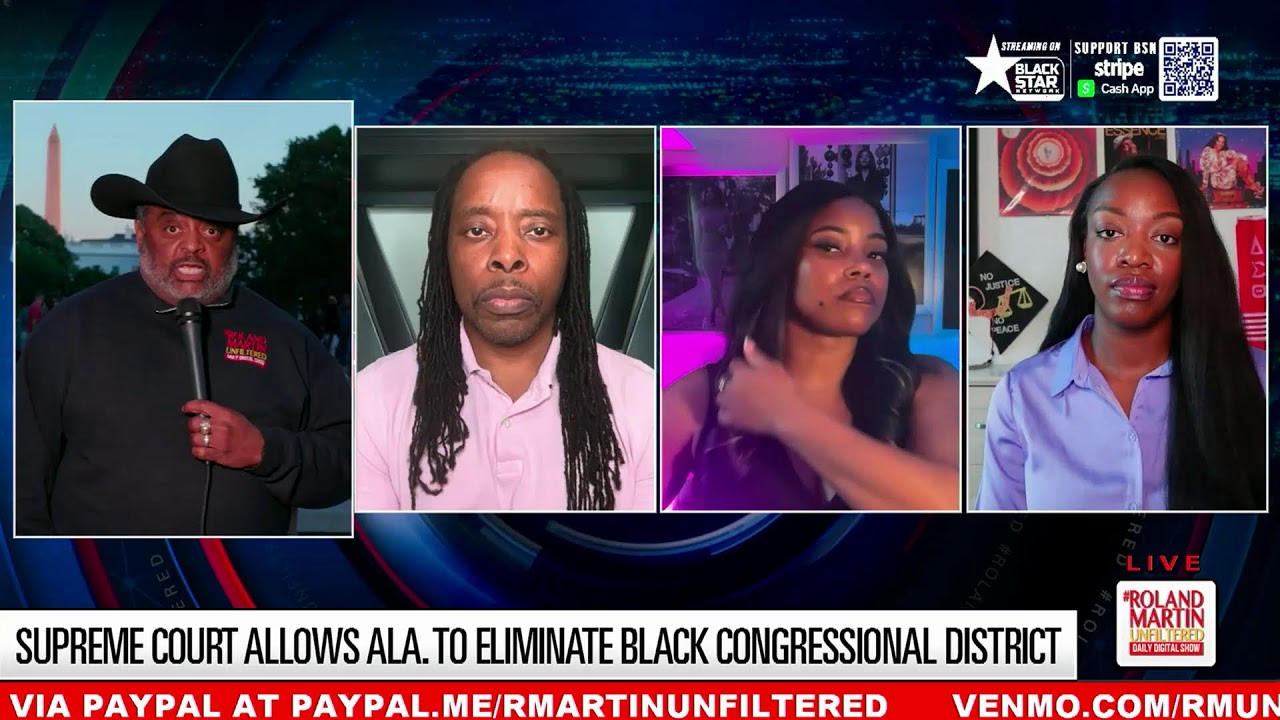
Moral Monday at BLM Plaza. Cleo Fields Sounds Alarm on Louisiana & Gary Chambers Pushes Turnout
"Activists and faith leaders gathered at Moral Monday to denounce 'policy violence' in various forms, from war and budget cuts to voter suppression and healthcare denial, urging sustained mobilization against a 'hijacked' democracy."