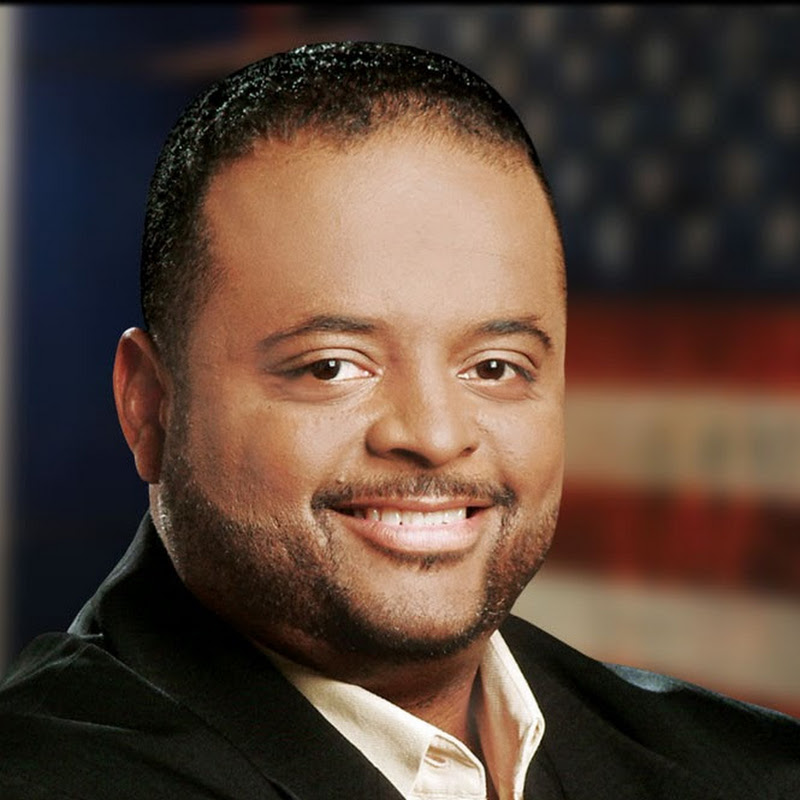
Voting Rights Siege. Kemp Redistricting Push. Keisha Lance Bottoms Gov Bid. ICE Agent Charged
YouTube · 3mf_y8_-rR8
Quick Read
Summary
Takeaways
- ❖The Supreme Court's Louisiana v. Clay's decision weakened the Voting Rights Act, making it harder to challenge racial discrimination in redistricting.
- ❖Republican officials are arguing that private individuals and groups lack the right to sue under Section 2 of the Voting Rights Act, a stance Justice Ketanji Brown Jackson pushed back against.
- ❖Georgia Governor Brian Kemp called a special legislative session to redraw state electoral maps, scheduled to begin on June 17th, impacting the 2028 election cycle.
- ❖The 'All Roads Lead to the South Rally' in Alabama mobilized thousands, including state representatives and advocacy groups, to protest attacks on voting rights and Black representation.
- ❖Gubernatorial candidate Keisha Lance Bottoms expressed optimism about Georgia's 'purple' political status and emphasized the importance of high voter turnout to counter Republican efforts.
- ❖Dr. Omango Debinga characterized the proposed $1.776 billion Justice Department fund for January 6th defendants as 'reparations for white insurrectionists'.
- ❖Congresswoman Nikema Williams highlighted that the special session for redistricting in Georgia is happening on Juneteenth, underscoring the disregard for Black representation.
Insights
1Supreme Court Weakens Voting Rights Act, Limits Private Enforcement
The Supreme Court declined to address whether private individuals and groups can sue under Section 2 of the Voting Rights Act, sending cases from Mississippi and North Dakota back to lower courts. This follows the Louisiana v. Clay's decision, which weakened protections against racial discrimination in redistricting. Republican officials are advancing a novel argument that only the US Attorney General can sue under Section 2, a position Justice Ketanji Brown Jackson dissented against, warning of ambiguity and further erosion of voting protections.
The Supreme Court's unsigned order on Monday sent cases involving state legislative maps from Mississippi and North Dakota back to lower courts for reconsideration, taking into account its recent ruling in Louisiana v. Clay's. Republican officials argue that private individuals and groups lack the right to sue under Section 2 of the Voting Rights Act. Justice Katanji Onika Brown Jackson dissented, stating the Clay's case did not address enforceability by private individuals.
2Georgia Governor Kemp Calls Special Session to Redraw Maps Amidst Voting Rights Concerns
Georgia Governor Brian Kemp has called a special legislative session for June 17th to redraw the state's electoral maps and address voting system issues. This move follows the Supreme Court's Clay's decision, which limited the use of race in redistricting. Critics argue that this is a politically motivated effort to diminish Black representation, especially given that Georgians are primarily concerned with issues like affordability, not new maps. The new maps are intended for the 2028 election cycle.
Governor Brian Kemp called a special legislative session for next month to redraw the state's electoral maps and address voting system issues following the Supreme Court's Clay's decision. The session is scheduled to begin on June 17th. Congresswoman Nikema Williams stated, 'What folks have not asked for are new voting maps. People have asked for lower gas prices, more affordable housing.'
3Grassroots Mobilization: 'All Roads Lead to the South Rally' Counters Disenfranchisement
Thousands gathered for the 'All Roads Lead to the South Rally' in Alabama, a massive mobilization in response to nationwide attacks on voting rights and Black representation. The rally, which included clergy, activists, and state representatives, aimed to counter the decimation of Black political power across the South, particularly after the Supreme Court's Louisiana v. Clay's decision. Speakers emphasized the need for the largest Black voter registration drive since the 1965 Voting Rights Act and sustained collective action.
Over the weekend, thousands gathered for the All Roads Lead to the South Rally in Alabama, starting with hundreds in Selma and marching across the Edmund Pettus Bridge. The rally was a 'massive mobilization in response to the nationwide attacks on voting rights and black representation,' specifically citing the Supreme Court's Louisiana v. Clay's decision. Speakers called for the 'largest black voter registration we've seen since the 1965 Voting Rights Act.'
4Keisha Lance Bottoms Campaigns for Georgia Governor, Highlights Democratic Momentum
Former Atlanta Mayor Keisha Lance Bottoms is the frontrunner in Georgia's Democratic gubernatorial primary, expressing optimism about the state's political shift. She noted record early voting turnout, outpacing the 2022 primary by almost 20%, and the recent flipping of two statewide public service commission seats to Democrats. Bottoms emphasized the importance of consolidating Democratic support early to avoid runoffs and prepare for the general election, where she believes Georgia is 'solidly purple' and 'trending blue.'
Keisha Lance Bottoms is the front runner on the Democratic side of the Georgia governor's race. Early voting numbers have already passed record numbers for turnout, outpacing the 2022 primary election by almost 20%. Bottoms stated, 'Georgia is solidly purple... trending blue,' citing the election of two Democrats statewide for the public service commission in November.
Bottom Line
The proposed $1.776 billion Justice Department fund for January 6th defendants can be accurately framed as 'reparations for white insurrectionists.'
This reframing highlights the hypocrisy and racial bias embedded in political discourse and resource allocation, particularly when contrasted with the historical lack of reparations for Black Americans and the ongoing efforts to suppress their voting rights.
Activists and commentators can use this precise language to expose systemic inequities, challenge dominant narratives, and galvanize support for genuine reparations and equitable justice initiatives.
The current political battles over voting rights and redistricting are not merely 'southern issues' or 'black issues,' but fundamentally impact the entire Democratic majority and national policy on issues like reproductive freedom and affordability.
This perspective broadens the understanding of the stakes, urging national engagement and solidarity beyond traditional racial or regional lines. If Black representation is diminished in the South, it weakens the Democratic party's ability to pass progressive legislation nationwide.
Advocacy efforts should emphasize the interconnectedness of these struggles, calling on national leaders and diverse communities to 'pull up' and support voting rights initiatives in the South as a defense of broader democratic principles and policy goals.
Lessons
- Attend the Georgia special legislative session on June 17th at 2 p.m. at the state capital to make voices heard and create a public record against discriminatory map redrawing.
- Actively engage in voter registration and mobilization efforts, particularly in Southern states, to counter disenfranchisement and increase turnout in all elections.
- Support organizations and candidates fighting to protect and expand voting rights, recognizing that local and state-level elections are critical battlegrounds for democracy.
Notable Moments
The 'All Roads Lead to the South Rally' in Alabama, featuring intergenerational speakers and a march across the Edmund Pettus Bridge, demonstrated a powerful, unified response to voting rights attacks.
This rally showcased the resilience and determination of Black communities and allies to fight against systemic disenfranchisement, providing a visible and emotional counter-narrative to the Supreme Court's decisions and state-level legislative efforts.
Congresswoman Nikema Williams revealed that Georgia's special session to redraw maps, diminishing Black representation, is scheduled to pass on Juneteenth.
This timing is a stark symbol of disrespect and highlights the deliberate nature of the attacks on Black political power, turning a day of liberation into one of renewed struggle for civil rights.
Quotes
"This court's ruling in the Klay's case does not address the enforcability of section 2 by private individuals and groups."
"It is reparations for for these white insurrectionists. That's exactly what Trump is trying to do."
"When we do not have a seat at the table, we are on the menu. Suppress the votes, redraw the maps, dismantle the law. That's their entire playbook."
"You can rig a map, but you can't rig a movement."
"Welcome to the cookout, but I don't need you to man the grill right now."
"Pigs get fat and hogs get slaughtered. and they're going to mess around and we're going to have some some competitive seats here in Georgia and we're going to pick up some seats that they weren't ready to fight for because I stay ready and I'm ready to fight."
Q&A
Recent Questions
Related Episodes

INSTANT FALLOUT from MAJOR Supreme Court Decision... | PoliticsGirl
"The Supreme Court's recent decision in Louisiana v. Cala effectively gutted Section 2 of the Voting Rights Act, opening the door for widespread racial gerrymandering and signaling a return to Jim Crow-era voter suppression tactics."

LIVE: Ex-TOP Prosecutor BREAKS SILENCE On Trump Election Scheme | The Weekend Show
"Former Assistant Attorney General for Civil Rights, Kristen Clark, details how a recent Supreme Court ruling delivered a 'death nail' to the Voting Rights Act, exposing a coordinated agenda to dismantle civil rights and consolidate white political power."

All Roads Lead To the South: Nat’l Day Of Action For Voting Rights | Mass Rally | Montgomery, AL
"A mass rally in Montgomery, Alabama, ignites 'Freedom Summer 2026' to combat the Supreme Court's decimation of Black political power and demand unprecedented voter mobilization across the South."
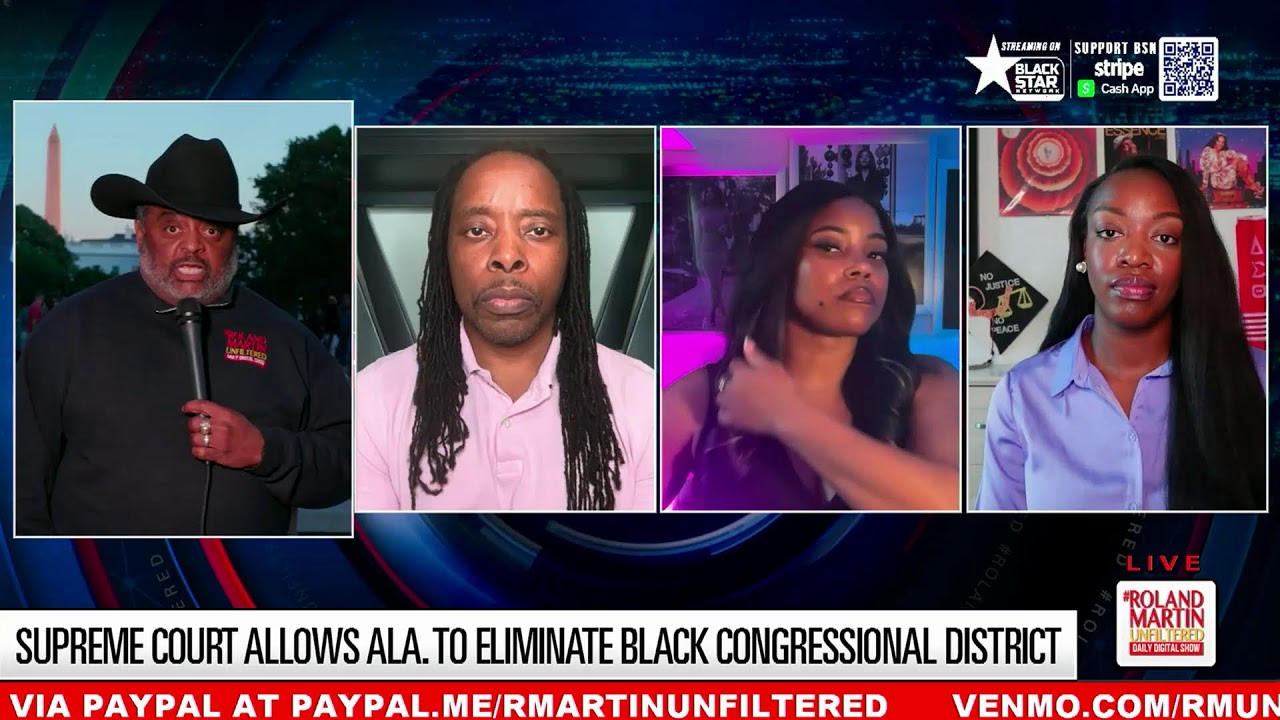
Moral Monday at BLM Plaza. Cleo Fields Sounds Alarm on Louisiana & Gary Chambers Pushes Turnout
"Activists and faith leaders gathered at Moral Monday to denounce 'policy violence' in various forms, from war and budget cuts to voter suppression and healthcare denial, urging sustained mobilization against a 'hijacked' democracy."