Celebrating the Legacy of the Rev. Dr. Bernard Lafayette, Jr.
YouTube · 4ADkiAe8dLc
Quick Read
Summary
Takeaways
- ❖Rev. Dr. Bernard Lafayette, Jr. was a civil rights icon, voting rights warrior, and strategist of nonviolence.
- ❖He co-founded the Student Nonviolent Coordinating Committee (SNCC) and was a Freedom Rider, enduring arrests and violence.
- ❖Lafayette dedicated his life to teaching and training others in Kingian nonviolence, ensuring the philosophy continued after Dr. King's assassination.
- ❖His work extended globally, training leaders and communities in nonviolent social change in places like South Africa, Russia, and Nigeria.
- ❖He emphasized that nonviolence is not weakness, but 'power under control,' 'courage wrapped in compassion,' and 'strength guided by love and truth.'
- ❖Lafayette taught that the struggle for justice is about changing laws, lives, and ultimately, building a 'beloved community' rooted in love and reconciliation.
- ❖His legacy calls for continued vigilance, active participation in voting, and the application of nonviolent principles in contemporary challenges.
Insights
1Institutionalizing and Internationalizing Nonviolence
After Dr. King's assassination, Lafayette made it his mission to ensure the philosophy and methodology of nonviolence would not die. He devoted himself to institutionalizing, internationalizing, and demystifying Kingian nonviolence, working with the King Center to build a curriculum and structure that turned the philosophy into a teachable practice. This involved training leaders and communities worldwide, proving nonviolence is a transformative power.
Dr. Bernice King states, 'He made it his mission to ensure that the philosophy and methodology of nonviolence could not die on April 4th, 1968. He devoted himself completely to institutionalizing, and internationalizing, and demystifying what we call Kingian nonviolence.'
2The Six Principles of Kingian Nonviolence
Lafayette's teachings were rooted in Dr. King's six principles, which include: 1. Nonviolence is a way of life for courageous people. 2. The Beloved Community is the framework for the future. 3. Attack forces of evil, not persons doing evil. 4. Accept suffering without retaliation for the sake of the cause. 5. Avoid internal and external violence of the spirit. 6. The arc of the moral universe is long and bends toward justice. These principles guided his training and actions.
Chadra Agiga from Nigeria and other trainers elaborate on each of the six principles, citing Lafayette's interpretations and examples.
3Transforming Conflict in the Niger Delta
Lafayette's nonviolence training had a profound impact on resolving extreme violence in Nigeria's Niger Delta. After years of militant activity, oil production slump, and government resistance, local youth leaders were trained in nonviolence. This led to a shift from armed struggle to organized engagement, resulting in improved community conditions, electricity, water, scholarships, and legislative changes like the Petroleum Industry Act.
A Nigerian speaker details how Lafayette's training transformed over 30,000 ex-militants, leading to them dropping arms and embracing peace. Chadra Agiga further explains how their communities now have 'high waters, electricity, and scholarship from government' due to applying these principles.
4The Power of Conviction Over Strategy
Lafayette taught that true change and justice come not just from ideas or strategies, but from conviction in one's heart. He exemplified this by being 'prepared to die for what we believed,' demonstrating that deep-seated belief fuels the courage to endure abuse and push for change.
Bryan Stevenson recounts Lafayette telling him, 'Brian, we were prepared to die for what we believed.' Stevenson emphasizes, 'Change comes, justice comes, where the ideas in our mind are fueled by conviction in our heart.'
5Nonviolence as a Response, Not Passivity
Lafayette clarified that accepting suffering for the cause does not mean passive acceptance of abuse. Instead, it requires a purposeful response consistent with the goals of change. He demonstrated this by wearing a bloody shirt for several days after an assassination attempt, making a powerful statement to both opponents and the community.
Richard, a trainer, explains Lafayette's interpretation of principle four: 'It doesn't mean accepting abuse and punishment with no response, in fact it requires a response, but that response has to be consistent with the goals we seek.' He cites Lafayette wearing his bloody shirt after an attack.
Key Concepts
Kingian Nonviolence
A philosophy and methodology for social change, institutionalized and taught by Lafayette, based on six principles and six steps. It emphasizes confronting injustice without hatred, seeking reconciliation, and building a 'beloved community' through love and strategic nonviolent action.
Salt Melts Ice
An analogy used to describe Lafayette's impact, suggesting that his presence and teachings, like salt, actively broke down barriers and rigid structures of injustice and segregation.
The Peanut Butter on the Spoon
A personal anecdote from Lafayette's son, illustrating a lesson about valuing resources, respecting sacrifices, and understanding that nothing should be wasted because everything comes at a cost, reflecting a mindset of stewardship and purpose.
Lessons
- Actively participate in democratic processes, particularly voting, to honor the sacrifices made for civil rights and to continue the pursuit of justice.
- Embrace and practice the principles of Kingian nonviolence in daily life and in confronting injustice, focusing on love, reconciliation, and strategic, non-retaliatory action.
- Seek opportunities to educate and train others in nonviolent methods, contributing to the institutionalization and internationalization of these transformative practices.
- Cultivate relationships across differences, even with those who hold opposing views, striving for mutual understanding and a 'win-win' rather than 'win-lose' outcome, as a step towards building the beloved community.
- Reflect on personal values and responsibilities, recognizing that every action and resource matters, and leveraging them with purpose to carry forward the legacy of social change.
Notable Moments
Tuskegee University, a national historic site, hosts the service, emphasizing its role as a place where 'giants are studied and where giants are made.'
This highlights the deep historical connection of Lafayette to the struggle for justice and the significance of institutions like Tuskegee in fostering such leaders.
Ambassador Andrew Young recounts his first meeting with Lafayette, who helped him understand that the Black Belt was a 'place of liberation' and that African Americans were brought to America not as slaves, but 'to teach the world how to be free.'
This reframes the narrative of slavery and oppression into one of divine purpose and liberation, emphasizing the inherent strength and mission of the Black community.
A speaker from Nigeria describes how Lafayette's nonviolence training transformed over 30,000 ex-militants in the Niger Delta, leading to an end to violence and significant community development.
This provides concrete, global evidence of the practical and transformative power of Kingian nonviolence beyond the American Civil Rights Movement.
Charles Honor recounts how Lafayette, upon arriving in Selma in 1963, joined him and a friend pushing a car, immediately announcing his purpose to 'organize your students' for nonviolent change.
This personal anecdote illustrates Lafayette's immediate, hands-on, and direct approach to grassroots organizing and his commitment to empowering local youth.
Lafayette's son shares a story about his father teaching him and his brother not to waste peanut butter on a spoon, explaining it was 'money on a spoon' and 'the result of sacrifice.'
This intimate story reveals Lafayette's core values of stewardship, respect for hard-won gains, and the importance of not taking for granted what others struggled to achieve.
Dr. Charles Steel recounts Lafayette training Palestinians and Israeli leaders in nonviolence, leading to a Palestinian participant abandoning a suicide bombing plan after hearing Lafayette speak.
This powerful anecdote demonstrates the life-saving and conflict-resolving impact of Lafayette's nonviolence training in one of the world's most intractable conflicts.
Quotes
"Reverend Lafayette was certainly a civil rights leader, but he was more than that. He was a voting rights warrior. He was a strategist of nonviolence. He was a teacher to all of us of moral courage."
"The movement, in his words, was never an event, it was a calling for him."
"God did not bring us here as slaves to be slaves. He brought us here to teach the world how to be free."
"His life reminded us that the struggle for justice is not just about changing laws, but about changing lives."
"Nonviolence is not weakness. It is power under control. Courage wrapped in compassion and strength guided by love and truth turned into a movement."
"Change comes, justice comes, where the ideas in our mind are fueled by conviction in our heart."
"Love is patient. Love is kind. It does not envy. It does not boast. It's not proud. It does not disarm others. It is not self-seeking. It is not easily angered. It keeps no records of wrong. Love does not delight in evil but rejoices in the truth. It always protects. It always trusts. It always holds. And love always preserves."
"They thought that they buried the nonviolence movement in 1968, but they didn't know we were seeds."
"Don't take lightly what others had to struggle to make possible for you."
"We all got to die. But what's the purpose of living? Because God put you here for a reason."
Q&A
Recent Questions
Related Episodes
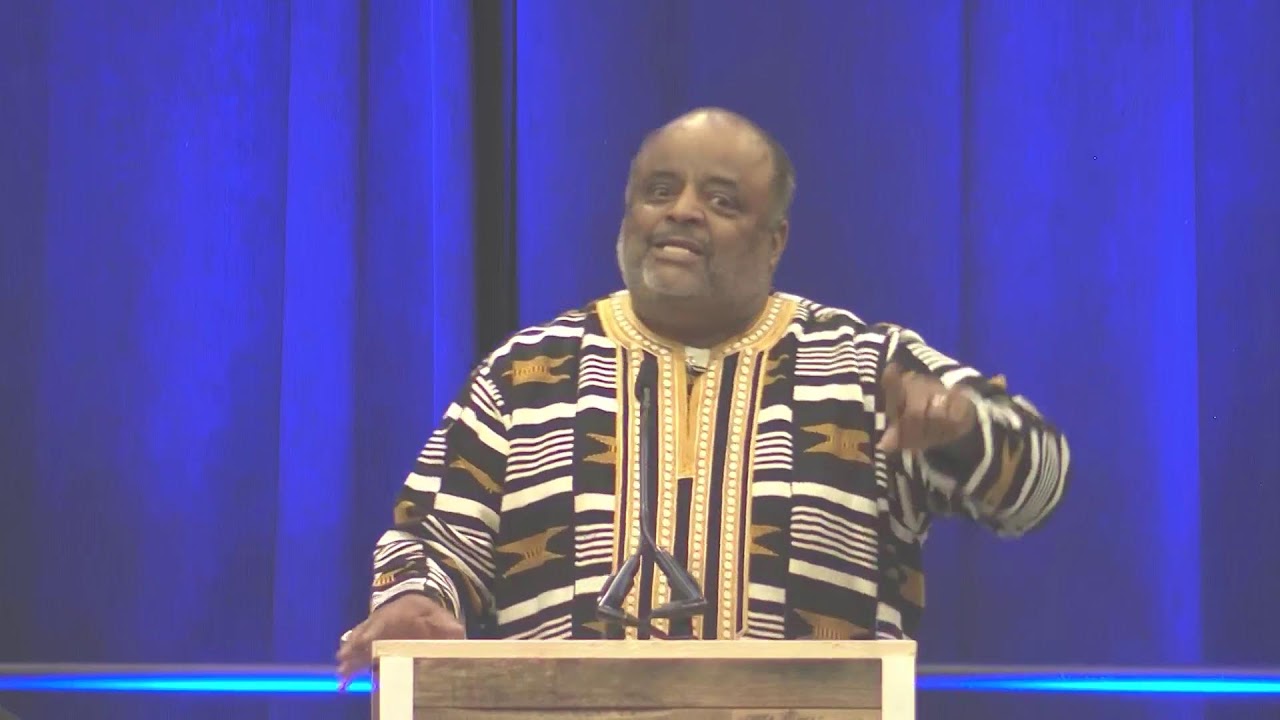
Roland speaks at Columbus Educ. Assoc. MLK Dinner
"Roland Martin challenges the audience at an MLK dinner to move beyond passive celebration and engage in active, sustained political and economic struggle, emphasizing that 'rest time is over' for those seeking real societal change."

Contested Primary Elections. Facebook Marketplace Shooting. Hey Black Girl Affirmations#TheBreakdown
"This episode explores a Georgia lawsuit challenging a new election law, highlights a community-driven real estate project building Black wealth, and features initiatives empowering Black women and girls."

All Roads Lead To the South: Nat’l Day Of Action For Voting Rights | Mass Rally | Montgomery, AL
"A mass rally in Montgomery, Alabama, ignites 'Freedom Summer 2026' to combat the Supreme Court's decimation of Black political power and demand unprecedented voter mobilization across the South."
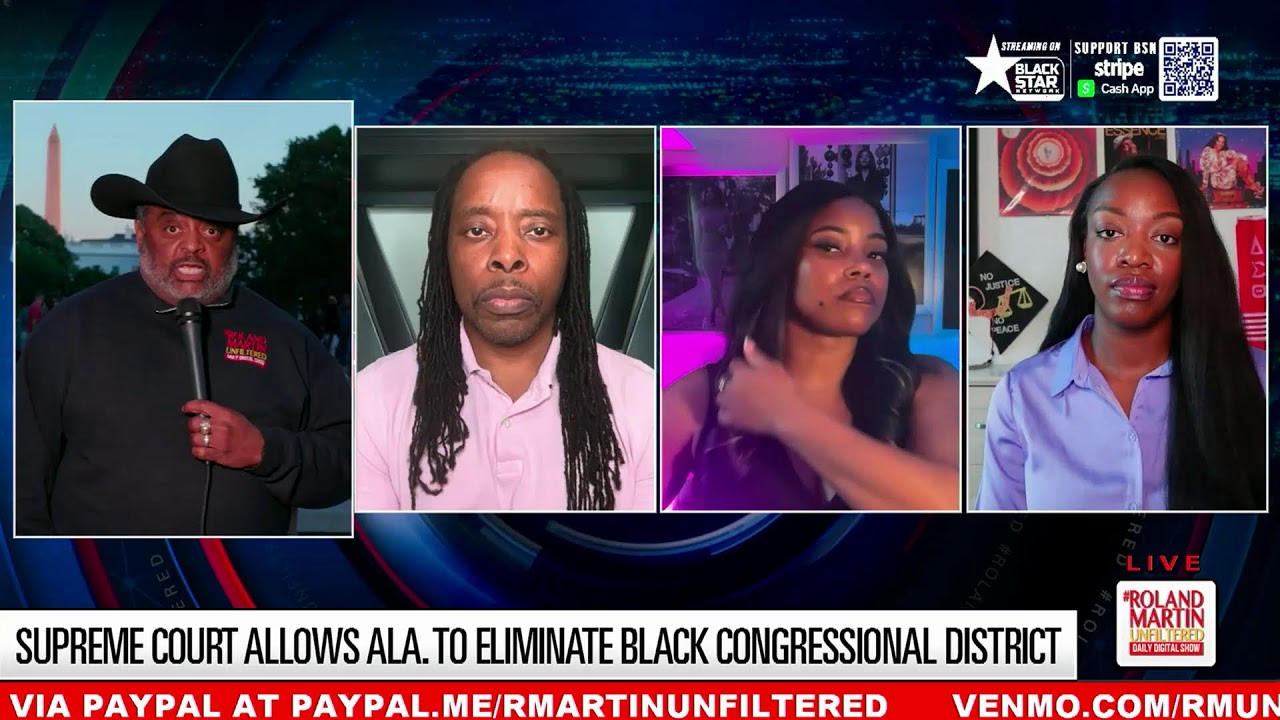
Moral Monday at BLM Plaza. Cleo Fields Sounds Alarm on Louisiana & Gary Chambers Pushes Turnout
"Activists and faith leaders gathered at Moral Monday to denounce 'policy violence' in various forms, from war and budget cuts to voter suppression and healthcare denial, urging sustained mobilization against a 'hijacked' democracy."