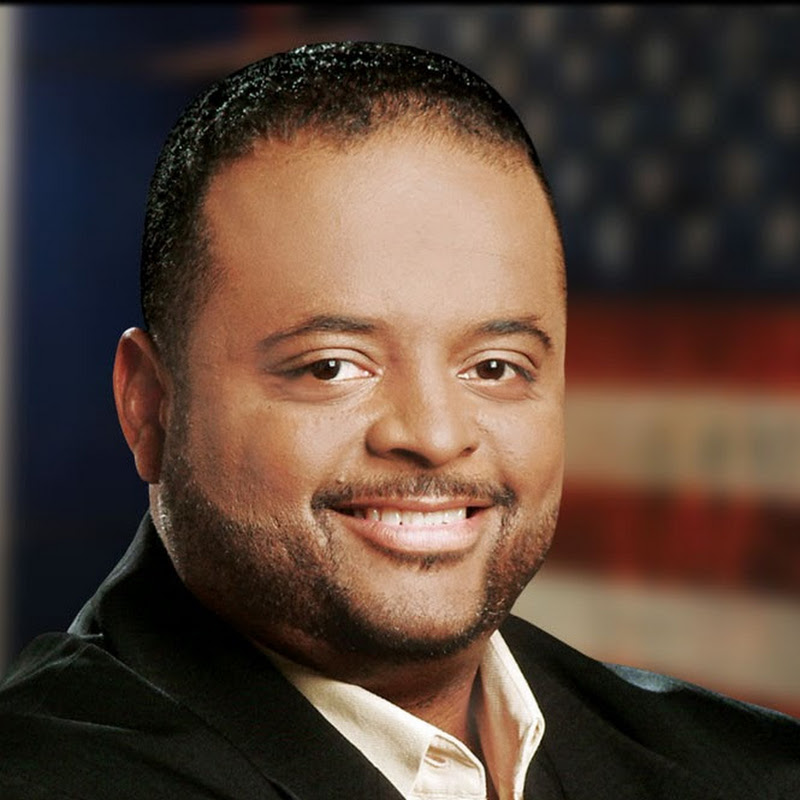
"Black Out Loud": Roland, Geoff Bennett Dissect The Revolutionary Era of ’90s Black TV Comedy
YouTube · 4AeX9z9IXmM
Quick Read
Summary
Takeaways
- ❖The 1990s created a 'perfect storm' for Black TV comedy due to a growing Black middle class and network strategies.
- ❖Fox Broadcasting explicitly targeted Black audiences, building its initial success on shows like 'Martin' and 'In Living Color'.
- ❖'In Living Color's' counter-programming during the Super Bowl fundamentally changed the halftime show format.
- ❖Black shows, despite widespread popularity, often faced a 'black tax' in terms of pay, critical acclaim, and future opportunities for actors.
- ❖Black showrunners and writers from the '90s, like Debbie Allen and Yvette Lee Bowser, created vital pipelines for future Black talent.
- ❖Authentic and specific Black stories consistently demonstrated universal appeal, proving that niche doesn't mean limited reach.
Insights
1The 'Perfect Storm' for 90s Black TV Comedy
The 1990s created a unique confluence of economic, cultural, and industry factors that enabled the boom in Black TV comedy. This included a thriving Clinton-era economy, the end of the Cold War, and a burgeoning Black middle class. For the first time, networks and advertisers actively courted Black audiences, viewing them as a valuable demographic beyond just Nielsen ratings.
The guest highlights the Clinton economy, end of the Cold War, and a growing black middle class as key factors. Barry Diller of Fox Network recognized the indistinguishable nature of the 'big three' networks' sitcoms, leading Fox to differentiate by targeting underserved audiences.
2Fox Broadcasting's Foundation on Black Viewership
Fox Network strategically built its early success and financial stability by intentionally catering to Black audiences. Recognizing that Black people consumed more television than any other demographic, Fox leveraged Black sitcoms to gain ratings and revenue, which eventually funded major acquisitions like NFL rights.
The host states, 'Fox broadcasting was really built on black eyeballs.' He notes Fox's independent stations were fed by black sitcom reruns like 'Good Times' and 'The Jeffersons,' leading them to prioritize new Black-led shows like 'Martin,' 'Living Color,' and 'Roc.'
3In Living Color's Impact on the Super Bowl Halftime Show
In Living Color's audacious counter-programming during the Super Bowl in the early 1990s fundamentally transformed the event's halftime show. By drawing over 20 million viewers away from the game with a live special, it forced networks to elevate the halftime entertainment from marching bands to superstar acts.
The guest details how 'In Living Color' aired a live special during the Super Bowl halftime, pulling away 'more than 20 million viewers.' The following year, CBS booked Michael Jackson, establishing the modern superstar halftime show.
4The Generational Pipeline of Black Talent and Mentorship
The success of 90s Black sitcoms was not just about on-screen talent but also about the creation of opportunities behind the scenes. Black showrunners, writers, and directors from this era actively mentored and opened doors for subsequent generations, directly influencing today's successful Black creators.
The guest explains that Larry Wilmore (from 'In Living Color') mentored Issa Rae and Quinta Brunson for 'Insecure' and 'Abbott Elementary.' Mara Brock Akil (creator of 'Girlfriends') was inspired by Debbie Allen's work on 'A Different World' to pursue television.
5The 'Black Tax' in Hollywood: Undervalued Success
Despite the immense popularity and financial success of 90s Black sitcoms, Black actors and creators frequently faced a 'black tax' in Hollywood. This manifested as lower pay, lack of critical recognition (e.g., Emmy snubs), and a significant scarcity of post-show opportunities for actors, unlike their white counterparts or Black comedian-leads who had alternative career paths.
Erica Alexander (Living Single) and Tisha Campbell (Martin) struggled to find roles post-show. Tisha Arnold went a decade without landing another show after 'Martin'. Karen Parsons (Fresh Prince) was typecast and had to audition for everything. The host notes 'A Different World' was highly rated but received no Emmy wins, and Felicia Rashad never won a Best Actress Emmy for 'The Cosby Show'.
6The Business of Syndication and the Demise of 'In Living Color'
The economic value of a successful TV show is heavily tied to its syndication rights, typically achieved after 100 episodes. Fox's decision to air 'In Living Color' reruns on its newly launched FX channel prematurely destroyed the show's syndication value, leading to a decline in quality and the eventual departure of creator Keenan Ivory Wayans.
The host explains the 'magic number' of 100 episodes for syndication and how Fox airing 'In Living Color' on FX 'destroying the value' in the syndication market. The guest corroborates that the show's quality 'goes off a cliff' in later seasons due to these behind-the-scenes issues.
Bottom Line
The '90s Black TV comedy boom was a direct result of networks taking 'risks' by giving Black comedians and creators full agency and significant budgets to produce shows they genuinely wanted to make, rather than trying to fit them into pre-existing molds.
This demonstrates that true innovation and mass market appeal can emerge when creators are empowered to tell authentic stories without excessive corporate interference, challenging the notion that 'risk' means deviating from a white-centric default.
Modern media companies and platforms should replicate this model by providing substantial resources and creative autonomy to diverse creators, especially in the creator economy, to unlock new forms of content and tap into underserved audiences with authentic narratives.
The cultural perception of a 'black show' significantly impacts its industry valuation and the career trajectories of its cast, even when the show itself is wildly popular and critically acclaimed by its primary audience.
This 'black tax' means that shows explicitly identified as 'black' by the industry face systemic disadvantages in advertising revenue, critical awards, and post-show opportunities for actors, regardless of their actual success or universal appeal.
Advocates for diversity in media should focus not only on increasing representation but also on challenging the industry's categorization and valuation mechanisms that perpetuate the 'black tax,' pushing for equitable financial and critical treatment for all content.
Key Concepts
The Black Tax
A systemic devaluation of Black talent, content, and media within industries like Hollywood and advertising. Despite generating significant profit and cultural impact, Black-led projects and Black-owned media often receive less financial investment, lower compensation, and less critical recognition compared to their white counterparts. This 'tax' manifests as lower ad rates for Black media, reduced pay for Black actors, and a constant need for Black success to 're-prove' its viability.
Universal Appeal Through Specificity
The principle that highly specific, authentic, and culturally rooted storytelling, rather than limiting an audience, often generates broader, more universal appeal. The '90s Black sitcoms, by focusing on genuine Black experiences, resonated deeply with diverse audiences, demonstrating that true authenticity transcends cultural boundaries.
Lessons
- Creators should prioritize specificity and authenticity in their storytelling, as these elements are proven to generate universal appeal and resonance.
- Industry executives must actively challenge the 'black tax' by ensuring equitable pay, promotional support, and post-show opportunities for Black talent, rather than viewing Black success as a 'one-off' phenomenon.
- Mentorship and creating pipelines for diverse talent behind the scenes (writers, directors, showrunners) are critical for long-term industry transformation and sustaining cultural impact.
Notable Moments
Red Fox and Malcolm X were childhood friends in New York, both known as 'Red' due to their hair color, highlighting an unexpected cross-pollination between comedic and civil rights figures.
This anecdote reveals a deeper, often unseen, connection between cultural performance and social activism, suggesting that figures from seemingly disparate fields shared common origins and influences in their formative years.
Jaleel White, who played Steve Urkel on 'Family Matters,' encountered a media criticism class at USC where his professor, unaware of his identity, argued that Urkel was a '90s sitcom minstrel' character.
This illustrates the academic and public debate surrounding the portrayal of Black characters in media, and the burden placed on Black actors/characters to represent an entire race, a weight not typically applied to white counterparts in farcical roles.
Quotes
"If you want to go back to the game, go back to the game, but you know, for the next 15, 20 minutes, we're going to do a shortened live special."
"Networks desperately want black eyeballs, but they only want a certain number of black eyeballs because advertisers don't covet black eyeballs. They covet white eyeballs."
"The more specific and authentic you are, the more universal you become."
"You likely won't in your career have an opportunity like this where you are on a hit show. So she had them write into their contract that they would have experience directing."
Q&A
Recent Questions
Related Episodes

"Black Out Loud": Roland, Geoff Bennett Dissect The Revolutionary Era of ’90s Black TV Comedy
"Geoff Bennett and Roland Martin dissect the revolutionary 1990s era of Black TV comedy, revealing how economic shifts and visionary Black creators transformed television, despite persistent industry biases and a 'black tax' on talent."

Roland, Geoff Bennett Talk "Black Out Loud" and the Revolutionary Era of ’90s Black TV Comedy
"This episode dissects the revolutionary 1990s era of Black TV comedy, revealing how it reshaped network television, influenced culture, and exposed the enduring 'black tax' in Hollywood."
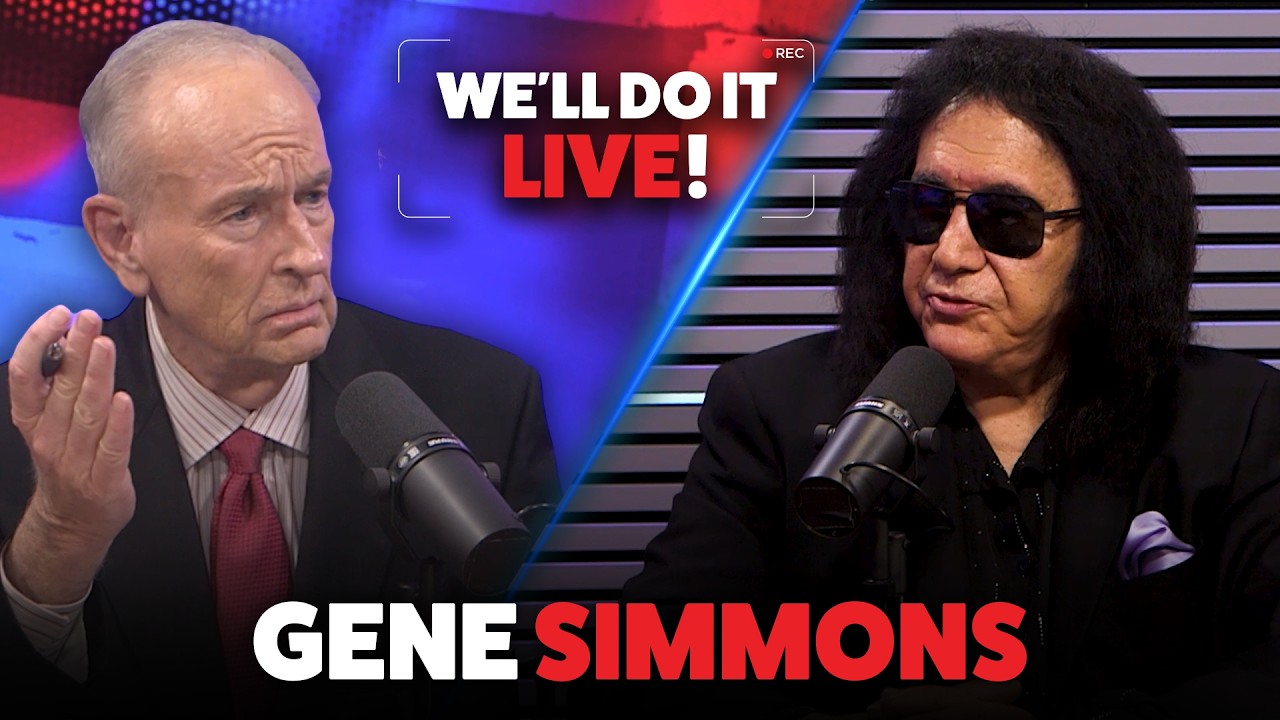
We'll Do It LIVE! — Gene Simmons
"Gene Simmons shares his mother's harrowing Holocaust survival story, his deep-seated patriotism, and the capitalist principles that fueled KISS's unprecedented success, all while advocating for civility and individual thought in a polarized world."

HOT TOPICS | The MAGA Mainstream Media & CBS Shake-Up Is Backfiring!
"Don Lemon and guests dissect how corporate media's attempts to appease political factions are backfiring, leading to ratings collapses and a growing distrust that fuels the rise of independent journalism."