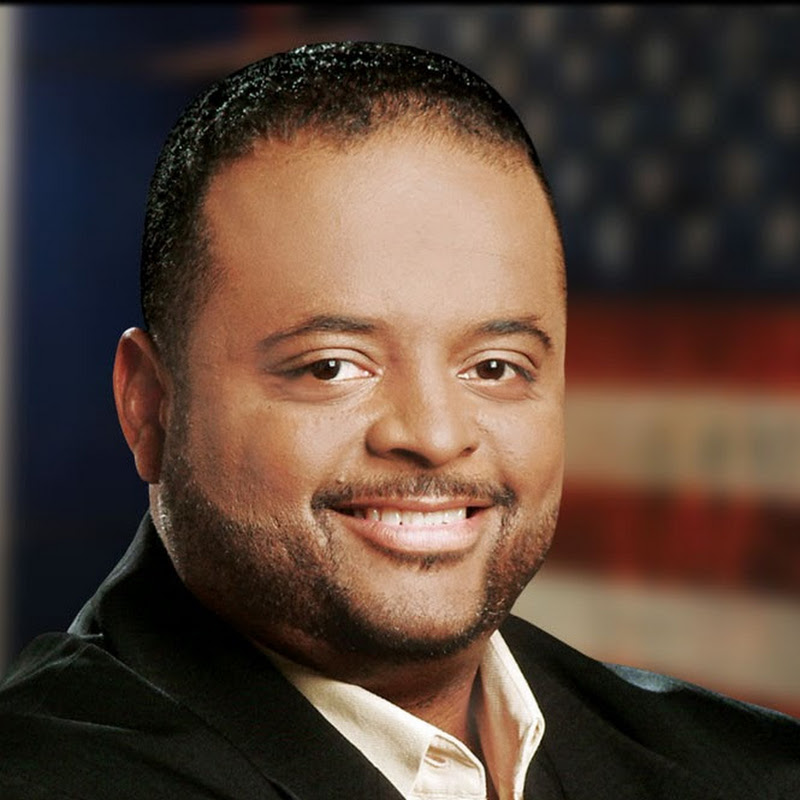
Roland, Geoff Bennett Talk "Black Out Loud" and the Revolutionary Era of ’90s Black TV Comedy
YouTube · FYsTs8s1x20
Quick Read
Summary
Takeaways
- ❖The 1990s saw an unprecedented concentration of top-rated Black sitcoms, driven by a growing Black middle class and networks like Fox actively courting Black audiences.
- ❖Shows like 'In Living Color' not only launched legendary careers but also reshaped industry practices, such as the Super Bowl halftime show.
- ❖The 'black tax' meant Black shows and talent, despite massive success, received less pay, critical acclaim, and post-show career support compared to their white counterparts.
Insights
1The '90s Black TV Comedy Boom: A Perfect Storm
The confluence of the Clinton economy, the end of the Cold War, and a burgeoning Black middle class created a unique environment. Networks and advertisers began actively courting Black audiences, recognizing their viewership power beyond just Nielsen ratings. Fox Broadcasting, in particular, capitalized on this by intentionally programming shows that appealed to Black viewers, leveraging them to build its network against the established 'big three'.
Guest Geoff Bennett notes, 'you have the Clinton economy, you have the end of the Cold War, you have a growing black middle class. And so for the first time, you had networks and you had advertisers who were looking at black audiences and not just counting them for Neielson purposes... but were actually courting them.' ()
2Fox's Strategy: Built on Black Eyeballs
Fox Broadcasting's initial success and growth were fundamentally driven by its appeal to Black audiences. While 'Married with Children' (originally 'Not the Cosby Show') was an early hit, the network's sustained power came from shows like 'Martin,' 'In Living Color,' and 'Living Single.' This viewership provided the ratings and capital that eventually allowed Fox to acquire major assets like NFL rights.
Roland Martin states, 'What really did it for Fox? It was black people... Fox broadcasting was really built on black eyeballs.' () He adds that this led to acquiring NFL rights ().
3In Living Color's Industry-Shifting Impact
Keenan Ivory Wayans' 'In Living Color' not only created an entirely new talent pipeline for sketch comedy, launching careers like Jim Carrey, Jamie Foxx, and Jennifer Lopez, but also directly influenced major industry events. Its counter-programming during the Super Bowl halftime show, drawing over 20 million viewers away from CBS, directly led to the NFL booking superstar acts like Michael Jackson for subsequent halftime shows.
Bennett details how Keenan Ivory Wayans 'had to create an entirely separate talent pipeline' () and how 'In Living Color's live special during the Super Bowl pulled away more than 20 million viewers... the next year CBS booked Michael Jackson' ().
4The 'Black Tax' on Talent and Shows
Despite immense popularity and cultural significance, Black shows and actors consistently faced systemic undervaluation. This 'black tax' manifested in lower pay, lack of critical awards (e.g., Emmys), and a severe absence of post-show career opportunities for actors. Many highly successful Black actors found themselves auditioning for roles or facing long periods of unemployment after their hit shows ended, unlike their white counterparts.
Erica Alexander (Maxine Shaw) found 'Hollywood was not ready to absorb them once the shows ended' (). Roland Martin explains, 'advertisers do not covet black eyeballs... so for white television executives... our real goal... is that white viewer' (). Tasha Arnold went a decade without landing another show after 'Martin' ().
5Debbie Allen's Transformative Leadership on 'A Different World'
The success and authenticity of 'A Different World' were largely due to Debbie Allen taking over as showrunner in its second season. She reimagined the show, infusing it with genuine HBCU culture (e.g., 'hot sauce on the tables') and empowering actors to bring their real lives to the script. Crucially, she ensured actors like Kadeem Hardison and Jasmine Guy gained directing and writing experience, creating a pipeline for future Black talent behind the scenes.
Bennett recounts how Felicia Rashad brought in her sister, Debbie Allen, to 'get this show back to where it needs to be' (). Sinbad noted Allen 'basically allowed all of the characters on that show to bring their real lives to the script' () and ensured actors had 'experience directing' ().
6Black Creators Opening Doors for Future Generations
The 90s era was pivotal for creating opportunities for Black showrunners, writers, and creators. Black individuals who broke through, like Iet Lee Bowser and Larry Wilmore, intentionally opened doors for others, fostering diverse writing rooms and mentoring future talent. This legacy directly led to the success of contemporary Black creators and shows like Issa Rae's 'Insecure' and Quinta Brunson's 'Abbott Elementary'.
Roland Martin emphasizes, 'the few black folks who did break through were creating these shows were writing and then what they did was they threw the door open' (). Bennett mentions Larry Wilmore mentoring Issa Rae and Quinta Brunson () and Iet Lee Bowser's 'entire writer's room of black and brown faces' ().
Bottom Line
The 90s Black TV comedy boom demonstrates that investing in authentic, specific cultural narratives, even those perceived as 'niche,' yields universal appeal and significant economic returns, challenging traditional Hollywood risk aversion.
This historical precedent suggests that current media companies and investors are missing opportunities by not fully empowering and funding diverse creators with creative autonomy, perpetuating the 'black tax' instead of maximizing market potential.
Develop investment funds or production studios specifically dedicated to providing Black creators with full creative and financial agency, mirroring the 'Martin' and 'In Living Color' model, but with equitable long-term compensation and ownership structures to avoid the 'black tax' pitfalls.
Opportunities
Creator Empowerment Platform with Equity Model
A platform or studio that provides significant funding and creative autonomy to diverse content creators (especially Black creators), similar to how networks backed Martin Lawrence or Keenan Ivory Wayans in the 90s. The key differentiator would be an equitable ownership and syndication model, ensuring creators and talent share substantially in long-term profits, addressing the 'black tax' issues of the past. This could focus on short-form content, online sitcoms, or digital series.
Key Concepts
The Black Tax
This model describes the systemic undervaluation and discriminatory practices faced by Black talent, content, and businesses within mainstream industries. In Hollywood, it manifests as lower pay for Black actors, reduced syndication value for 'black shows,' advertisers paying less for Black eyeballs, and limited post-show career opportunities, regardless of commercial or critical success.
Specific to Universal Appeal
This model posits that the more specific, authentic, and audacious a story is to a particular cultural experience (in this case, Black life), the more universal its appeal becomes. The 90s Black sitcoms, by deeply reflecting Black experiences, resonated across racial lines, proving that niche authenticity can lead to mass market success.
Lessons
- Media executives should actively challenge the 'black tax' by valuing Black audiences and content equitably in advertising rates, production budgets, and syndication deals.
- Creators should prioritize securing equitable ownership and long-term profit-sharing in their contracts to mitigate the historical 'black tax' on Black talent.
- Support and mentor emerging Black writers and showrunners, creating intentional pipelines and diverse writing rooms, as seen with Debbie Allen and Iet Lee Bowser, to ensure sustained representation and opportunity.
Notable Moments
The unexpected friendship between Red Foxx and Malcolm X, who grew up together in New York, both known as 'Red' due to their hair color.
This anecdote highlights the surprising cross-pollination between different spheres of Black influence (comedy and civil rights) and offers a unique historical connection that many might not know, underscoring the deep roots of Black cultural impact.
Quotes
"The more specific and authentic you are, the more universal you become. And that's another lesson, too, from these shows."
"Networks desperately want black eyeballs, but they only want a certain number of black eyeballs because advertisers don't covet black eyeballs. They covet white eyeballs."
"You likely won't in your career have an opportunity like this where you are on a hit show. So she had them write into their contract that they would have experience directing."
Q&A
Recent Questions
Related Episodes
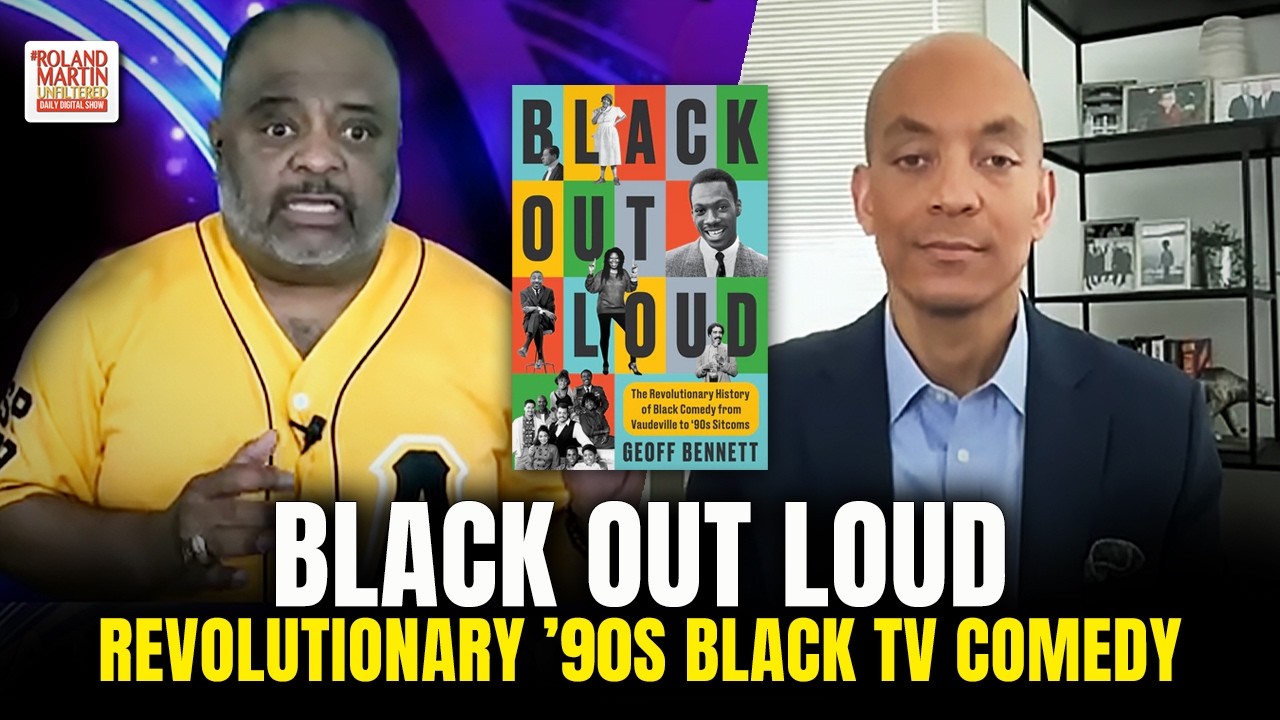
"Black Out Loud": Roland, Geoff Bennett Dissect The Revolutionary Era of ’90s Black TV Comedy
"The 1990s marked a revolutionary era for Black TV comedy, driven by a unique confluence of economic, cultural, and industry factors that reshaped television and created lasting cultural impact, despite persistent systemic inequities like the 'black tax'."

"Black Out Loud": Roland, Geoff Bennett Dissect The Revolutionary Era of ’90s Black TV Comedy
"Geoff Bennett and Roland Martin dissect the revolutionary 1990s era of Black TV comedy, revealing how economic shifts and visionary Black creators transformed television, despite persistent industry biases and a 'black tax' on talent."
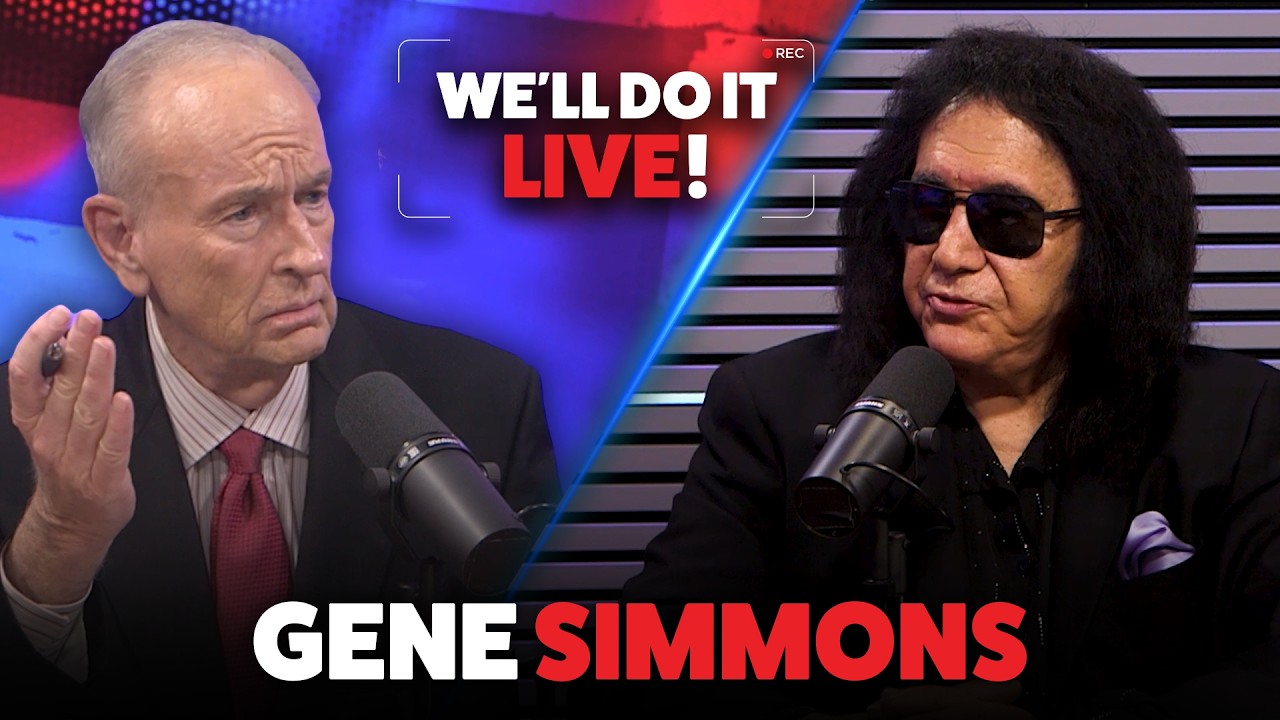
We'll Do It LIVE! — Gene Simmons
"Gene Simmons shares his mother's harrowing Holocaust survival story, his deep-seated patriotism, and the capitalist principles that fueled KISS's unprecedented success, all while advocating for civility and individual thought in a polarized world."
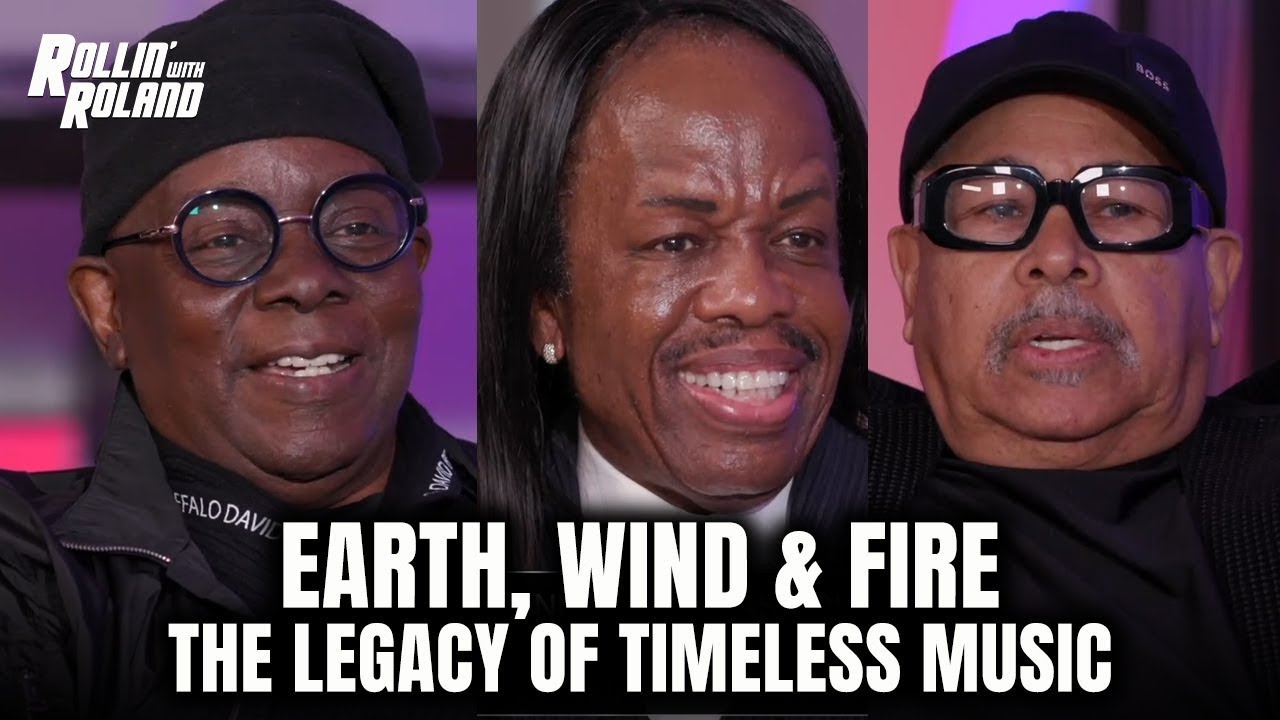
Earth, Wind & Fire on Timeless Music, Legacy & Generations Grooving Together | #RollinWithRoland
"Earth, Wind & Fire members discuss the enduring power of classic music, the challenges of maintaining a legendary group, and the importance of humility and collaboration in a 50-year career."