
Alastair Crooke: IRAN’S TRIGGER WARNING: ‘Withdraw from Lebanon… Any Violations and We Strike
YouTube · 5RrorBzJhgs
Quick Read
Summary
Takeaways
- ❖Israel has adopted a 'permanent security' doctrine, moving away from its historical 'stay within borders' approach, driven by a perception of October 7th as a 'holocaust' and an ongoing existential threat.
- ❖This new doctrine justifies targeting civilians and aims to eliminate the 'root' of the Palestinian problem, precluding the existence of an armed Hezbollah in southern Lebanon.
- ❖Significant pushback exists within the Israeli military against the current strategy, arguing it's bogged down in multiple unwinnable wars and lacks resources.
- ❖Iran has shifted to an 'escalatory deterrence' policy, responding to attacks on its shipping or allies (like Lebanon) with proportional or greater strikes on US/Israeli assets.
- ❖The notion of Hezbollah and Yemen as mere 'proxies' of Iran is challenged, with historical context suggesting a more independent and influential role for Lebanese Shi'a.
- ❖Iran's fatwa against nuclear weapons remains in place, and any change would require extensive religious deliberation, not just political decree.
- ❖A bill in the US Congress proposes a complete fusion of Israeli and American militaries, including data, AI, technology, and missile development.
- ❖The US faces dwindling oil reserves and a potential economic 'cliff' in Europe, which could impact its ability to sustain current geopolitical conflicts.
- ❖Russia is also reassessing its deterrence strategy, considering 'escalatory deterrence' against Europe in response to drone attacks and military aid to Ukraine.
Insights
1Israel's Shift to 'Permanent Security' Doctrine
Following October 7th, Israel adopted a new security doctrine, moving away from its foundational 'stay within borders' policy. This doctrine views the recent events as a 'holocaust' and mandates 'permanent security' by eliminating threats at their 'root,' including hostile populations. This justifies targeting civilians in Gaza and seeking to disarm Hezbollah in Lebanon, even if it means creating a 'desert' buffer zone.
The speaker details how the 7th of October was framed as 'a holocaust against them' (), leading to the idea that 'the Holocaust is not over' () and Israel is 'always at the threshold of Holocaust' (). This doctrine 'precludes the existence of Hezbollah continuing in adjacent to the northern towns' ().
2Internal Israeli Military Pushback
Despite the government's adoption of the 'permanent security' doctrine, there is significant internal dissent within the Israeli military and serious Israeli press. Critics argue that Israel is bogged down in seven unwinnable wars, lacks resources, and should revert to the earlier Ben-Gurion doctrine of staying within its borders.
The speaker notes 'quite a lot of push back within the military, the Israeli military' (), with 'serious Israelis are saying you know this is ridiculous. We are bogged down in seven wars for aims which are not clear' ().
3Iran's 'Escalatory Deterrence' Policy
Iran has entered a new phase of deterrence, characterized by an escalatory policy. This means any disruption to its interests, such as attacks on shipping or violations of ceasefires affecting its allies (like Lebanon), will be met with strong, escalating responses against US or Israeli targets. This policy is seen as a pressure point, especially as the West faces potential economic instability.
Crooke states, 'Iran has now moved to a new phase of deterrence' () and 'we are seeing a sort of escalatory sort of policy coming into being now' (). He cites Iran's response to an attack on its tanker by escalating against US bases in Kuwait ().
4Challenging the 'Proxy' Narrative for Hezbollah
The conventional Western view of Hezbollah and other regional groups as mere 'proxies' of Iran is historically inaccurate. The speaker argues that the Shi'a influence in the region predates the Safavid state, and figures like Hassan Nasrallah are highly respected strategists whose advice Iran often seeks, rather than simply dictating terms to them.
Crooke argues, 'it doesn't reflect history because the whole of that area was in fact shei for many years' () and 'it's the Sapphavids that became the proxies of the Lebanese she if anything rather than the other way around' (). He adds that Iran 'not only respected him hugely as a statesman... but as a wise person' () and 'more often than not I think it was Hassan Nasola giving advice to Iran' ().
5Proposed US-Israel Military Fusion
A bill is reportedly moving through the US Congress to completely merge the Israeli and American militaries. This fusion would encompass data, AI, technology sharing, research and development, and missile production, effectively making the two forces interchangeable. This raises significant questions about American sovereignty and its military-industrial complex.
Crooke mentions, 'passing through Congress is a bill to merge the Israeli and American militaries completely fuse them together in data sharing, AI sharing, technology sharing, research and development, missile um technology, building of missiles' ().
Bottom Line
The proposed US-Israel military fusion could represent a 'reverse takeover bid,' where Israeli interests increasingly dictate US military strategy and resource allocation, fundamentally altering American sovereignty.
This could lead to deeper US entanglement in Middle Eastern conflicts, potentially against its own broader strategic interests, and shift significant portions of the US military-industrial complex's budget and direction.
For defense contractors and technology firms, this fusion could open new avenues for joint development and procurement, but also poses risks for those not aligned with Israeli priorities.
The West is on the verge of an 'economic cliff,' with depleted oil reserves and rising commodity prices (like fertilizers), which could severely impact European economies and global supply chains.
This economic instability could serve as a critical pressure point for Iran's 'escalatory deterrence' strategy, potentially forcing Western capitulation or leading to unpredictable, desperate actions from leaders like Donald Trump.
Nations and businesses resilient to supply chain disruptions and energy shocks, or those with alternative resource access, may gain significant geopolitical and economic leverage.
Key Concepts
Permanent Security Doctrine (Israel)
A post-October 7th Israeli security paradigm that views threats as existential and requires their elimination at the 'root,' including hostile populations and armed groups like Hezbollah. It moves beyond conventional warfare to a policy of attrition and eradication, often fused with messianic territorial expansionist goals.
Escalatory Deterrence (Iran/Russia)
A strategic policy adopted by Iran and potentially Russia, where any attack or violation by an adversary is met with a disproportionate or escalating response against the adversary's interests or assets. This aims to raise the cost of aggression and establish new red lines, often in the absence of diplomatic channels.
Lessons
- Monitor the progression of the proposed US-Israel military fusion bill in Congress, assessing its potential impact on US foreign policy autonomy and defense spending.
- Analyze Iran's 'escalatory deterrence' actions in the Strait of Hormuz and against regional US/Israeli assets to predict potential flashpoints and economic repercussions.
- Evaluate the stability of global energy and commodity markets, particularly oil reserves and fertilizer prices, in anticipation of a potential 'economic cliff' and its geopolitical consequences.
Notable Moments
Netanyahu's decision to not attack Dahi (southern Beirut) after a call from Trump led to a 'tsunami of protests' across Israel, highlighting the public's deep assimilation of the 'permanent security' doctrine and its demand for aggressive action.
This demonstrates the intense domestic pressure on Israeli leadership to adhere to the new, more aggressive security doctrine, making de-escalation politically perilous and indicating a lack of internal off-ramps for conflict.
Donald Trump's shifting stance on Iran's nuclear program, initially making uranium enrichment central, then dismissing it as 'finished,' suggests a lack of clear strategic objectives and a focus on perceived 'wins' rather than coherent policy.
This unpredictability and focus on personal victories rather than strategic outcomes make diplomatic resolutions with Iran highly unlikely and increase the risk of impulsive, potentially disastrous, military actions by the US.
Quotes
"what happened on the 7th of October was a holocaust against them. Um it wasn't but that's what they are seeing it and it is been deeply assimilated into Israeli consciousness."
"permanent security precludes the existence of Hezbollah continuing in in adjacent to the northern the northern towns the northern towns towns that lie near the border with Lebanon."
"it's the Sapphavids that became the proxies of the Lebanese she if anything rather than the other way around."
"passing through Congress is a bill to merge the Israeli and American militaries completely fuse them together in data sharing, AI sharing, technology sharing, research and development, missile um technology, building of missiles."
"everything is decided on the battlefield is not by negotiations because there is no negotiations happening and whoever comes out with some sort of deal or agreement the one wins who is prepared for the day after any sort of deal."
Q&A
Recent Questions
Related Episodes

Patrick Henningsen: Hezbollah JUST Fired Back at Israel - Iran Vows to “Crush” All Attacks
"Patrick Henningsen argues that the US and Israel initiated an illegal war against Iran, driven by Trump's incompetence and Israeli influence, leading to an inevitable escalation with severe global economic repercussions."

Col. Jacques Baud: What a US Ground Invasion of Iran Would REALLY Look Like
"Colonel Jacques Baud dissects the strategic futility of a US ground invasion of Iran, arguing that current troop levels are insufficient and such an action would backfire, exposing US allies and potentially leading to Iran's nuclearization."
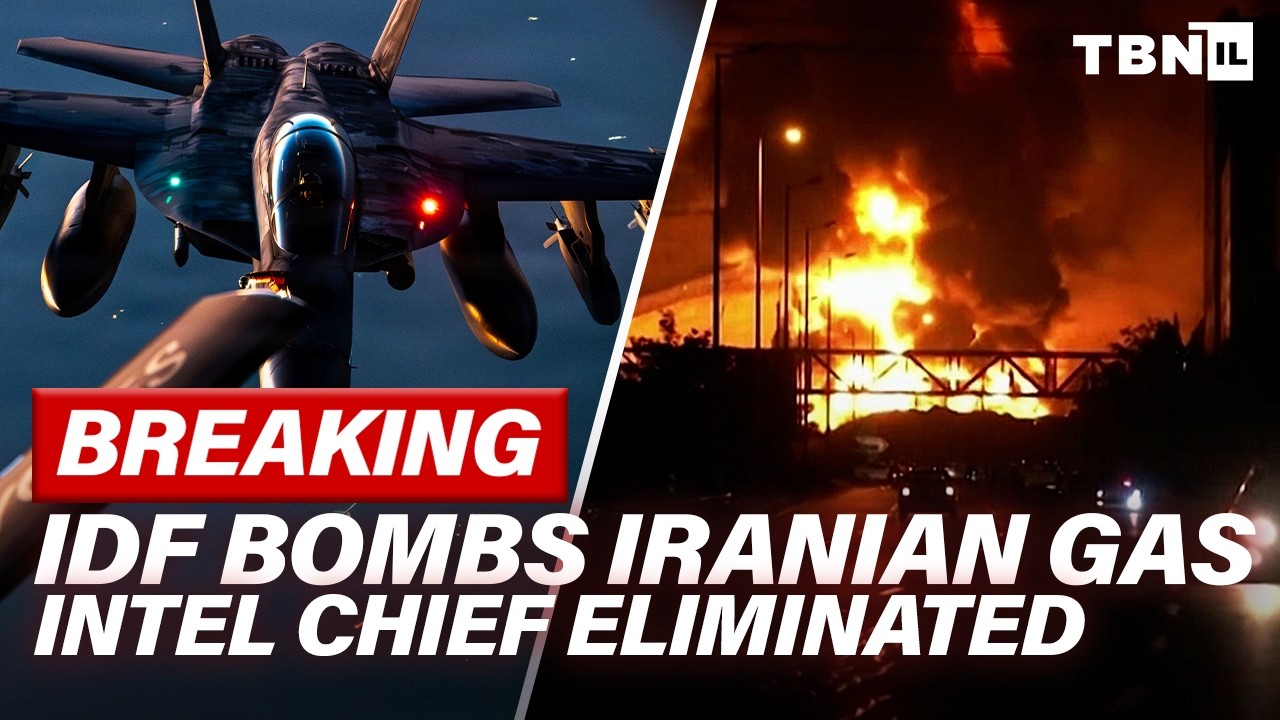
BREAKING: Israel BOMBS Major Iran Gas Site; Top Mullah ELIMINATED; Iran Vows VENGEACE | TBN Israel
"Israel and the United States have escalated their 'Roaring Lion War' against Iran, striking its largest gas facilities, eliminating key intelligence and military figures, and disrupting missile production, while Iran threatens a broader energy war in the Gulf."

Alex Krainer: US STRIKES Iran – Iran RETALIATES Against Kuwait, Bahrain & Jordan!
"Amidst escalating US-Iran conflict and Iranian retaliation against regional US allies, this episode argues that US foreign policy is deeply controlled by an 'Anglo-Zionist conspiracy' led by the Rothschild banking dynasty, prioritizing Israeli interests over American ones."