
🚨 LIVE: Islamic Republic REJECT Trump's Demands - Iran War Nears - LIVE Coverage
YouTube · 5q1VIVPoCq8
Quick Read
Summary
Takeaways
- ❖Iran rejected US demands to dismantle nuclear facilities, transfer enriched uranium, and accept permanent restrictions without a sunset clause.
- ❖US Vice President JD Vance and Secretary of State Marco Rubio stated Iran is attempting to build nuclear weapons and intercontinental ballistic missiles capable of reaching the US.
- ❖Israel launched a major attack on the IRGC's Hezbollah wing in Lebanon, confirmed by video footage.
- ❖The USS Gerald R. Ford aircraft carrier is hours away from the Middle East, completing a 'puzzle piece' of military buildup.
- ❖The IRGC leadership officially confirmed mass defections within the regime, downplaying the numbers and claiming 'guidance' for defectors.
- ❖Mysterious fires and explosions continue to occur at industrial complexes in southern Iran, which the host implies are not accidental.
- ❖Politico reported that senior Trump advisors prefer Israel to launch the first attack on Iran to minimize US casualties and political risk.
Insights
1Iran's Rejection of US Nuclear Demands
The Islamic Republic rejected the United States' final demands in Geneva, which included dismantling three nuclear facilities (Ford, Natans, Esvahan), transferring all enriched uranium to the US, accepting permanent restrictions with no sunset clause, and achieving zero enrichment. The US also offered minimal upfront sanction relief, which Iran found unacceptable.
The host detailed the five specific demands made by the US and Iran's rejection, noting Iran's counter-proposal to pause for 3-5 years and offer economic ties was also rejected.
2US Officials Frame Iran as Direct Threat
Vice President JD Vance stated the US has evidence Iran is trying to build a nuclear weapon. Secretary of State Marco Rubio emphasized Iran's refusal to discuss ballistic missiles, which he said are a threat to Europe and will eventually reach the US, citing satellite launches and increased missile range as evidence of intercontinental ballistic missile development.
JD Vance: 'We now have evidence that the Islamic Republic are trying to build a nuclear weapon.' (). Marco Rubio: 'Iran refuses to talk about the ballistic missiles... they are certainly trying to achieve intercontinental ballistic missiles.' (, )
3Israeli Military Action Against Hezbollah
Israel launched a major attack on the IRGC's Hezbollah wing in Lebanon. This action was confirmed by received video footage, indicating an active escalation of military engagement in the region.
Host: 'The Israelis have now launched a major attack on the IRGC's Hezbollah wing in Lebanon that has already started.' (). Later, 'We can now confirm that the footage that we have now received confirms the... Israelis have now launched a major attack on the IRGC's Hezbollah wing.' ()
4Iran Regime's Internal Instability and Defections
The IRGC leadership officially confirmed mass defections within the regime, with Majid Kadi, head of IRGC intelligence, stating thousands defected since the '12-day war'. He claimed 3,000 were 'warned' and 'guided', 13,000 received warning texts, and 50 were arrested, which the host interprets as torture and a downplaying of actual numbers.
Host: 'IRGC leadership confirming the mass defections.' (). Majid Kadi's statement summarized: 'thousands and thousands of our own people defected... 3,000 people... 13,000 others were just we just sent them some text messages warning them and there was another 50 that were arrested.' ()
5US Strategy: Legitimacy Building for Conflict
The host argues that the 'pointless negotiations' and 'geopolitical dance' were primarily to build international legitimacy for a conflict with Iran. This included lobbying European Union and Canada to align with a 'regime change' narrative, pushing out Russia and China from direct support, and preparing a military buildup.
Host: 'The second main reason for these pointless negotiations was to create legitimacy.' (). 'The Americans have been successfully lobbying all countries from the European Union to Canada to everybody to get on board. Now everybody is talking about regime change.' ()
Bottom Line
The host believes the US's 'diplomatic' engagement with Iran was a deliberate strategy to legitimize future military action and regime change, rather than a genuine attempt at a peaceful resolution.
This perspective suggests that the current geopolitical maneuvers are pre-planned steps towards an inevitable conflict, implying that the 'talks' were a performative act for international optics.
Analysts and policymakers should scrutinize diplomatic efforts for underlying strategic objectives beyond stated goals, especially in high-stakes geopolitical standoffs, to anticipate true intentions and potential escalations.
Despite Iran's nuclear ambitions, the host argues that the immediate and most pressing threat from Iran is its ballistic missile program, not its current nuclear capabilities.
This reframes the primary concern, suggesting that while nuclear proliferation is a long-term issue, the existing missile threat is what could trigger immediate conflict, particularly for Israel.
Focusing solely on nuclear disarmament might miss the more immediate triggers for regional conflict. Understanding the primary 'imminent threat' from various actors is crucial for effective de-escalation or military planning.
Lessons
- Monitor the official statements from US and Iranian negotiators following their next meeting for subtle cues on whether a 'deal' or a 'delay' is announced, as the host suggests this indicates the imminence of conflict.
- Track the movements of the USS Gerald R. Ford carrier strike group and other US military assets in the Middle East, as their arrival is framed as a critical 'piece of the puzzle' for potential military action.
- Pay close attention to Israeli military actions, particularly against Hezbollah, as the host suggests Israel might be incentivized to initiate a preemptive strike due to the ballistic missile threat.
Notable Moments
Iran rejected US demands in Geneva, asking for a few hours to consult with the Supreme Leader before returning with a final counter-proposal.
This rejection signals a diplomatic deadlock, pushing the situation closer to military options as the US demands were deemed 'impossible' by Iran.
Israel launched a major attack on the IRGC's Hezbollah wing in Lebanon, with video evidence shown.
This is a concrete military escalation, demonstrating active engagement and increasing regional instability.
The USS Gerald R. Ford aircraft carrier is only a few hours away from the Middle East.
The arrival of a major US naval asset signifies a significant military buildup, positioning forces for potential intervention or deterrence.
IRGC leadership confirmed mass defections within the regime, albeit downplaying the numbers and methods of handling defectors.
This confirms internal instability within the Iranian regime, suggesting a weakening of its control and potential vulnerability.
Quotes
"Iran cannot have a nuclear weapon. If they try to rebuild a nuclear weapon, that's that causes problems for us. And in fact, we've seen evidence that they have tried to do exactly that."
"But it's also important to remember that Iran refuses refuses to talk about the ballistic missiles to us or to anyone and that's a big problem."
"If in fact what you're interested in is a peaceful nuclear program, you can do it like most of the countries in the world do it, which is they have above ground reactors and they import the fuel."
"If we are talking about a regime change scale attack, Iran is very likely to retaliate with everything that they've got. We have a lot of assets in the region and every one of those is a potential target."
Q&A
Recent Questions
Related Episodes

Alex Krainer: US STRIKES Iran – Iran RETALIATES Against Kuwait, Bahrain & Jordan!
"Amidst escalating US-Iran conflict and Iranian retaliation against regional US allies, this episode argues that US foreign policy is deeply controlled by an 'Anglo-Zionist conspiracy' led by the Rothschild banking dynasty, prioritizing Israeli interests over American ones."

Patrick Henningsen: Hezbollah JUST Fired Back at Israel - Iran Vows to “Crush” All Attacks
"Patrick Henningsen argues that the US and Israel initiated an illegal war against Iran, driven by Trump's incompetence and Israeli influence, leading to an inevitable escalation with severe global economic repercussions."

🚨 TOTAL F*CKING CHECKMATE 😂😂😂
"The host argues that Trump's 'ceasefire' with Iran was a calculated '5D chess' move to orchestrate a global energy market reshuffle, while simultaneously lambasting 'woke' domestic policies and the 'freefall' of anti-Trump conservative figures."
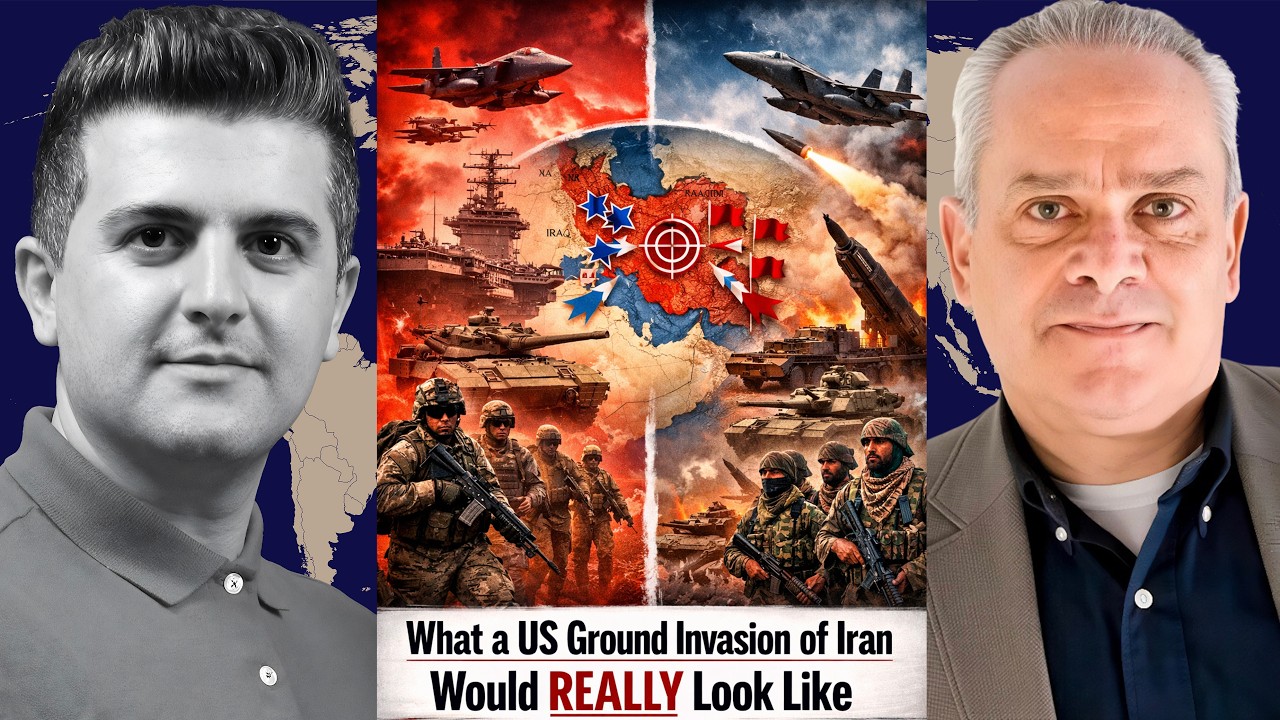
Col. Jacques Baud: What a US Ground Invasion of Iran Would REALLY Look Like
"Colonel Jacques Baud dissects the strategic futility of a US ground invasion of Iran, arguing that current troop levels are insufficient and such an action would backfire, exposing US allies and potentially leading to Iran's nuclearization."