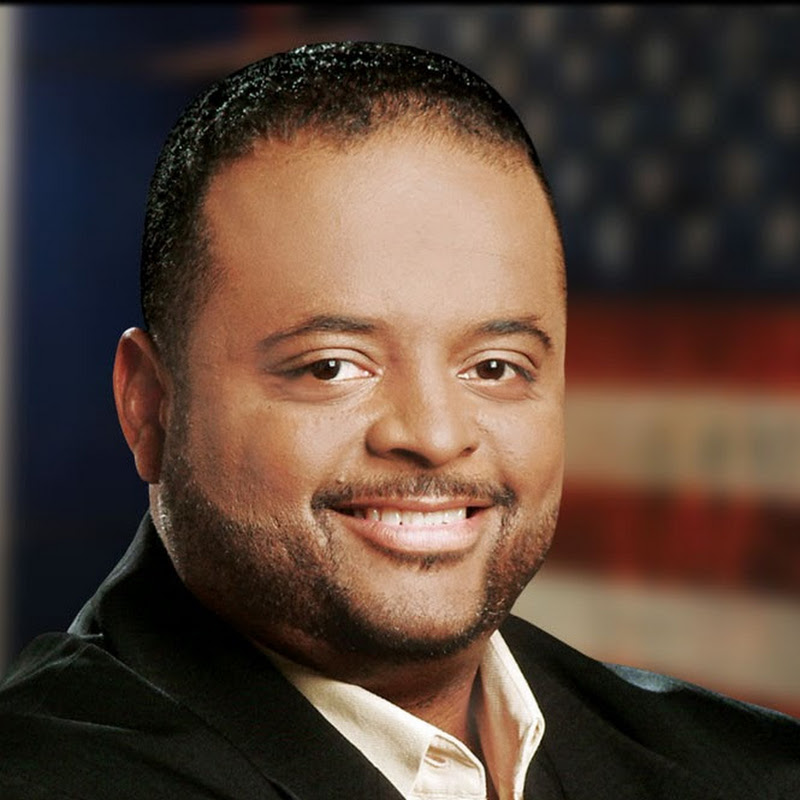
I Don’t Give A S* What They Say. Roland Breaks Down What Wins Elections.
YouTube · 60lNN0q2654
Quick Read
Summary
Takeaways
- ❖Republicans currently hold a 53-47 Senate majority, but Democrats have potential pickup opportunities in North Carolina, Maine, Iowa, Alaska, and Ohio.
- ❖Winning the Senate is critical for Democrats to block judicial and cabinet nominations, especially with potential Supreme Court retirements.
- ❖The host, Roland Martin, firmly believes Texas, Florida, and Mississippi are not realistic Democratic pickup opportunities due to insufficient long-term infrastructure.
- ❖Successful campaigns, like those in Georgia, require year-round, micro-level organization and mobilization, focusing on specific precincts and voter demographics.
- ❖Candidate charisma alone is insufficient to win elections without a robust ground game, as evidenced by Beto O'Rourke's losses in Texas despite significant funding.
- ❖Infrastructure must be party-centric and sustained, not person-centric, to avoid collapse after a candidate's term or departure.
Insights
1Infrastructure and Organization are Paramount for Electoral Victory
Roland Martin vehemently argues that winning elections, particularly statewide races like the U.S. Senate, is fundamentally about building and sustaining a robust ground game infrastructure and year-round organization. He states, 'Winning is about numbers' and 'If you have not created the infrastructure on the ground... there is no candidate who is so charismatic that they can overcome that.' This infrastructure involves micro-level precinct organization, consistent voter engagement, and sustained investment over multiple cycles.
Martin cites Georgia's flip, which took eight years of ground game (), and Beto O'Rourke's losses in Texas despite raising $100 million and visiting 254 counties (, ). He also contrasts this with Nevada's Democratic success under Harry Reid's strong infrastructure and subsequent struggles after his death ().
2Strategic Focus on Winnable States vs. 'In Play' Narratives
Martin provides a specific, data-driven pathway for Democrats to win the Senate, identifying North Carolina, Maine, Iowa, Alaska, and Ohio as the five most realistic pickup opportunities. He dismisses the narrative that Texas, Florida, or Mississippi are 'in play' for Democrats, arguing that without a foundational infrastructure, these states remain out of reach.
He details the current Senate majority (53-47 for Republicans) and potential Democratic pickups (, ). He explicitly states, 'I don't put Texas, Florida, Mississippi in that mix' () and emphasizes that Texas's demographic reality (60% white voters, 254 counties) requires a different strategy than focusing solely on major urban centers (, ).
3The Imperative of Narrowing Loss Margins in Rural Areas
A critical component of the ground game strategy is not necessarily winning every county, but significantly reducing the margin of loss in rural, traditionally red areas. This allows large urban centers to compensate for smaller losses elsewhere, making statewide victories achievable.
Martin explains that Democrats lose in Texas because they get 'crushed everywhere else in Texas. 65, 35, 70, 30, 80, 20 by Republicans' (). He clarifies, 'The issue for a Democrat is not losing 65,35 70 80. The issue is can you lose 5545' (). He uses a visual of Ted Cruz's victory map to illustrate widespread red counties ().
4Critique of Person-Centric vs. Party-Centric Infrastructure
Martin criticizes the tendency to build campaign infrastructure around individual charismatic candidates, arguing that this leads to the collapse of organizational efforts once the candidate leaves or the election ends. He advocates for a party-wide or community-led infrastructure that persists across election cycles.
He uses Barack Obama's 'Obama for America' campaign as an example, noting it became 'organizer for America' and competed with the DNC, leading to 'a thousand seats lost' because the infrastructure was about him, not the party (). He stresses that black infrastructure 'must be a black infrastructure that's not completely controlled by the party' ().
Lessons
- Political parties and community organizations should prioritize building sustained, year-round ground game infrastructure at the micro-level (precincts, local communities) rather than relying on last-minute campaign surges.
- Strategists must conduct granular analysis of electoral maps to identify realistic pickup opportunities and focus resources on states where narrowing loss margins in rural areas can lead to statewide victory.
- African-American communities and other key demographics should fund and build their own independent political infrastructure, separate from party control, to ensure continuity and leverage for their interests beyond specific election cycles.
- Candidates and organizers need to connect issues directly to people's pain (e.g., school loans, healthcare, housing costs, food prices) and demonstrate how specific policies will bring tangible change to motivate voters to the polls.
Quotes
"I don't give a s* what they're saying. I'm being I'm being very serious. Winning is about numbers."
"If you have not created the infrastructure on the ground, not TV ads, not radio ads, but the get out to vote infrastructure on the ground. If that is non-existent, there is no candidate who is so charismatic that they can overcome that."
"The issue for a Democrat is not losing 65,35 70 80. The issue is can you lose 5545."
"The infrastructure cannot be tied to a person. This was the f black people love us and Obama. Progressives and Democrats love Obama. But my biggest criticism of Obama is that Obama had an infrastructure that was about him. It wasn't about the party."
Q&A
Recent Questions
Related Episodes

GOP Plots New Trump Supreme Court Pick Before Midterms | Elie Mystal | TMR
"Elie Mystal and Sam Seder discuss the Republican strategy to pressure Justice Samuel Alito into retiring before the midterms to allow Donald Trump to appoint a new, younger conservative justice, and the origins of the Supreme Court's 'shadow docket'."

Secret Podcast Preview: The Last Temptation of Sarah Longwell
"Sarah Longwell and JVL delve into Pete Buttigieg's evolving political philosophy and critically analyze a viral tweet about Democratic election lessons, revealing their differing views on institutional reform and voter sentiment."

Democrat NAZI SCANDAL Erupts, Trump Says THEY CHEATED In California | Timcast IRL
"Donald Trump alleges widespread cheating in California elections as a Democrat candidate faces a Nazi tattoo and 'unsettling behavior' scandal, fueling host predictions of a bleak midterm outlook for Democrats amidst broader cultural decline."

Ken Paxton Dominates Cornyn Ahead of Race Against RADICAL Talarico, Plus SHOCK Prince Andrew Stories
"Megyn Kelly delivers a sharp analysis of Ken Paxton's decisive victory in the Texas Republican primary and his upcoming battle against a 'radical' Democratic opponent, alongside explosive new allegations of predatory behavior and corruption surrounding Prince Andrew and Sarah Ferguson."