
She disappeared in a Massachusetts gift shop
YouTube · 6tOg9LH9afw
Quick Read
Summary
Takeaways
- ❖Lisa Ziegert was abducted from her workplace in Agawam, Massachusetts, in April 1992, and her body was found three days later.
- ❖Initial investigations were hampered by a lack of eyewitnesses, security footage, and the limitations of early 90s DNA testing.
- ❖Despite hundreds of tips and 400 persons of interest, the case remained unsolved for over two decades.
- ❖In 2015, new District Attorney Anthony Gulluni reopened the case, leveraging DNA phenotyping to create a physical profile of the killer.
- ❖This led to re-investigating 11 suspects who had previously refused DNA samples, one of whom, Gary Schara, confessed.
- ❖Schara, a customer obsessed with Lisa, was identified as the killer, and it was revealed his wife had given a tip against him in 1993, which was deemed not credible at the time.
Insights
1Initial Investigation Challenges
Detective Wayne Macy's 1992 investigation into Lisa Ziegert's disappearance and murder was severely hindered by the absence of eyewitnesses, security camera footage, and the technological limitations of DNA testing at the time. The ability to compare DNA samples was restricted, requiring direct comparison to specific suspects rather than database searches.
Macy found no security cameras in the plaza () and no eyewitnesses (). DNA testing in the early '90s required significant samples and direct comparison, not database searches ().
2The Cold Case and Unsolved Mysteries
After a year of intense investigation yielding no leads, the case went cold. An appearance on 'Unsolved Mysteries' in 1993 generated over 200 tips, but most were based on rumors or speculation, particularly about Ed Borgatti, who had already been ruled out by DNA evidence but not publicly announced.
The 'Unsolved Mysteries' segment aired in fall 1993 (), generating 212 tips, none of which led anywhere (). Ed Borgatti was ruled out by DNA early on, but this wasn't public knowledge, leading to conspiracy theories ().
3DNA Phenotyping Breakthrough
In 2015, District Attorney Anthony Gulluni reopened the case, utilizing advanced DNA phenotyping technology. This process built a physical profile (Caucasian man, dark hair, brown/hazel eyes) of the killer from the existing DNA sample, which helped narrow down the list of suspects who had previously refused DNA testing.
DA Gulluni initiated DNA phenotyping in 2015 (). The results, announced in September 2016, described a Caucasian man with dark hair and brown or hazel eyes ().
4Killer Identified and Confession
Gary Schara, a customer who became obsessed with Lisa, was identified as the killer. He was one of 11 suspects who fit the phenotype profile and had previously refused DNA testing. Realizing he was about to be caught, Schara confessed to the murder in a letter to his girlfriend and attempted suicide before being arrested and later pleading guilty.
Schara was one of the 11 people served a warrant for DNA (). He confessed in a letter to his girlfriend and attempted suicide (). He was arrested on September 16, 2017 () and pleaded guilty two years later ().
5Dismissed Early Tip
Crucially, Gary Schara's wife had called in a tip suggesting her husband's involvement in January 1993, less than a year after the murder. However, police dismissed her tip as not credible due to her alcoholism and their ongoing, heated divorce, causing a 25-year delay in justice.
Schara's wife called in a tip in January 1993 () but it was dismissed because she was an alcoholic and they were in a heated divorce ().
Lessons
- Re-evaluate cold cases with advancements in forensic technology, especially DNA analysis, as new methods like phenotyping can provide crucial leads.
- Establish clear protocols for assessing the credibility of tips, particularly from close associates or family members, ensuring potential biases (e.g., divorce, substance abuse) do not automatically dismiss valuable information.
- Maintain meticulous records of all persons of interest and their refusal to provide evidence (e.g., DNA samples) for future re-evaluation when probable cause or technology allows.
Notable Moments
Lisa Ziegert's sister, Lynn, visits her at the gift shop, providing a detailed description of Lisa's clothing just hours before her disappearance.
This seemingly innocuous visit provided a crucial detail (the charm bracelet) that later helped confirm Lisa's identity when her body was found, a small but vital piece of evidence in a case initially lacking leads.
Detective Macy discovers flattened, blood-stained cardboard boxes in the back room of the gift shop, indicating a violent struggle and abduction.
This was the first clear indication of foul play, confirming Lisa did not disappear voluntarily and setting the tone for a murder investigation rather than a missing person's case.
The decision to publicly withhold the DNA exclusion of Ed Borgatti, a prominent suspect in local rumors, leads to widespread conspiracy theories about police cover-ups.
This highlights the delicate balance between investigative secrecy and public transparency in high-profile cases, demonstrating how lack of information can fuel distrust and misdirection.
Quotes
"Most violent attacks are not committed by strangers. They're committed by people who know their victims."
"This was the early '90s, there was no way to to have one DNA sample, like you would find on a body, let's say, and then just put it into a bank and see what turns up. That didn't exist."
"He knew, after, you know, two and a half decades here, he finally knew exactly who had killed Lisa Ziegert."
Q&A
Recent Questions
Related Episodes

Amanda Knox and John Ramsey - Megyn Kelly's "Double Feature" of Fascinating Interviews
"This episode features two individuals, Amanda Knox and John Ramsey, whose lives were irrevocably altered by tragic crimes and subsequent wrongful accusations, revealing systemic failures in justice and media manipulation."

True-crime cases with recent developments | 48 Hours Full Episodes
"This episode reconstructs four complex true-crime cases, detailing the harrowing searches for missing persons, the challenges of prosecuting murders without bodies, and the enduring quest for justice in cold cases spanning decades."
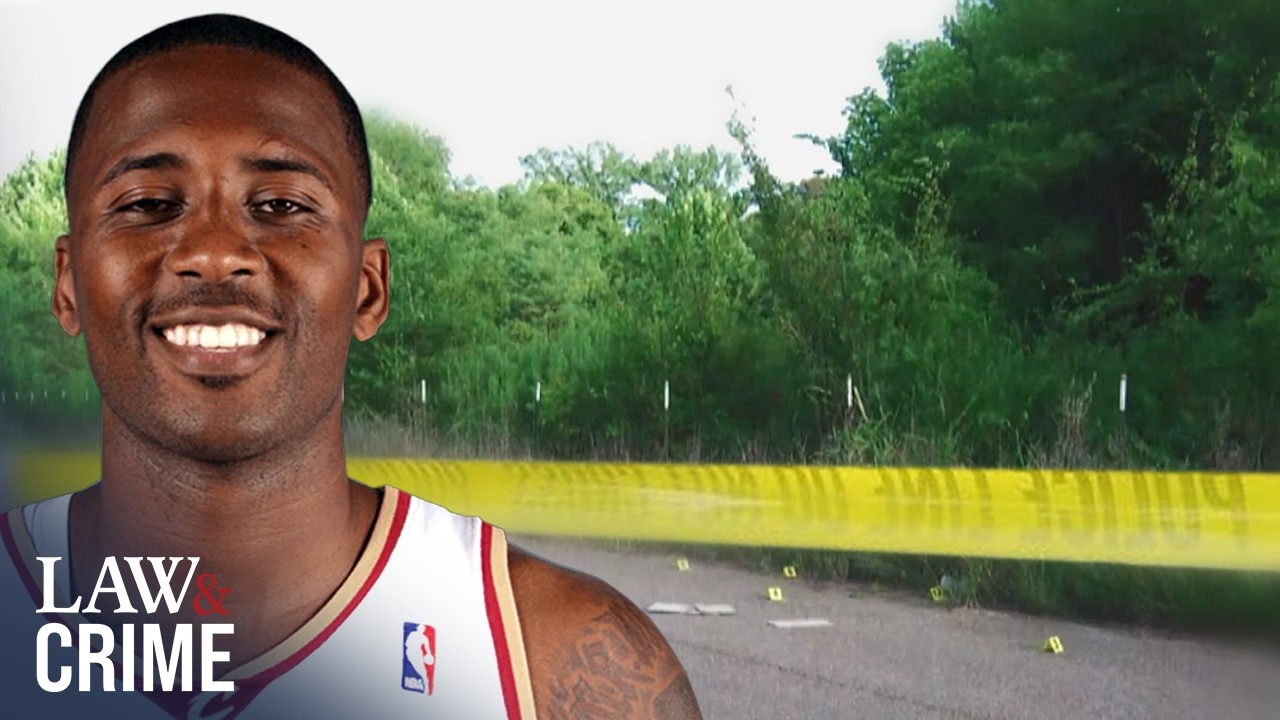
Killer Cases: NBA Star Lured to Execution In Rural Tennessee
"The decade-long cold case of NBA star Lorenzen Wright's murder was cracked through a persistent mother, a jailed informant, and a covert police operation that recovered the murder weapon from a lake and exposed a conspiracy driven by greed."

TEEN'S DNA REVEALED IN ANNA KEPNER'S R*** KIT
"The investigation into Anna Keaptainner's death on a cruise ship reveals shocking DNA evidence, a previously unknown male minor, and critical questions about evidence handling and family dynamics."