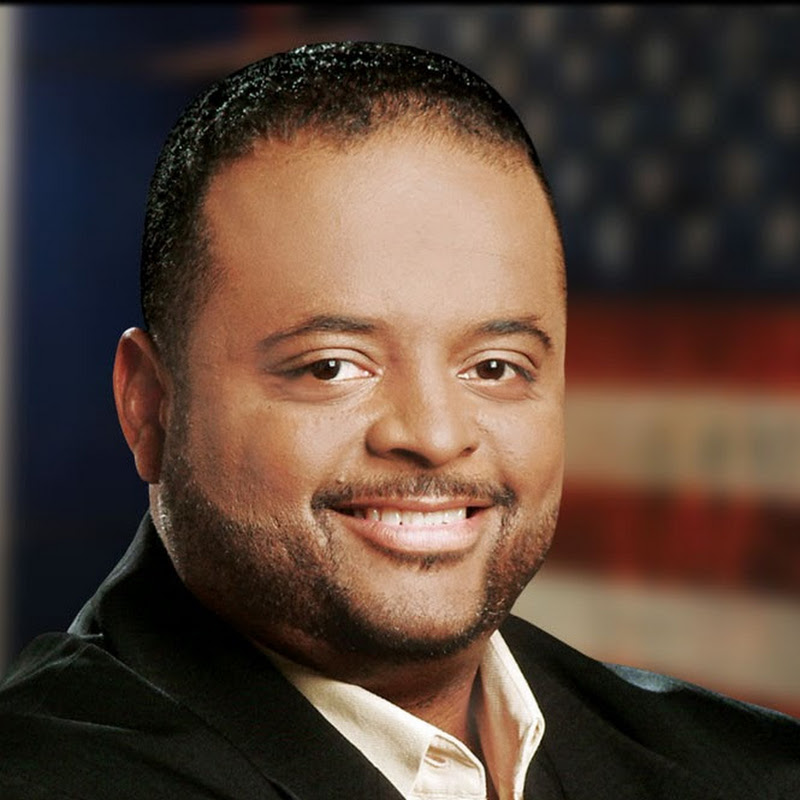
Celebrating Jackie Robinson Day 2026 | Jackie Robinson Museum Grand Opening Revisited
YouTube · 7U6RoNDn77U
Quick Read
Summary
Takeaways
- ❖The Jackie Robinson Museum, a decades-long dream of his family and foundation, officially opened in New York City.
- ❖Spike Lee and other notable guests attended the sneak preview, emphasizing Robinson's broader impact beyond sports.
- ❖Jackie Robinson was a multi-sport athlete, excelling in football and track more than baseball, and was court-martialed for refusing to sit at the back of a bus before Rosa Parks.
- ❖He sacrificed his personal well-being, including his health, by suppressing his natural defiance to integrate baseball, knowing retaliation would end the movement.
- ❖Rachel Robinson, celebrating her 100th birthday, was the driving force behind the museum, mirroring Coretta Scott King's dedication to preserving her husband's legacy.
- ❖The museum deliberately focuses on Jackie Robinson's totality, showcasing his work with the NAACP, his business ventures (coffee company, Freedom National Bank), and his political activism.
- ❖Robinson was a visionary who integrated corporate America and served as the first Black VP in the country, demonstrating a commitment to Black economic agency.
- ❖He was highly critical of both Black and white leaders, including Roy Wilkins of the NAACP, prioritizing the liberation of Black people over personal allegiances.
- ❖Jackie Robinson's willingness to self-correct, such as regretting his testimony against Paul Robeson and evolving views on Vietnam, highlights his integrity and growth.
- ❖Independent media, as exemplified by Roland Martin, plays a crucial role in speaking truth to power, even if it means sacrificing access or personal relationships.
- ❖The museum aims to inspire young people to understand their values and apply them to current societal issues, emphasizing that the struggle for equality continues.
Insights
1Jackie Robinson's Broader Impact Beyond Baseball
The museum and various speakers emphasize that Jackie Robinson was significantly more than just a baseball player. He was a multi-sport athlete (stronger in football and track), a civil rights pioneer who faced a court-martial for refusing to sit at the back of a bus, an entrepreneur (co-founding a coffee company and a Black bank), and a vocal activist who criticized both Black and white leaders for the liberation of Black people. His integration of baseball was a strategic sacrifice, not a reflection of a passive personality.
Spike Lee states, 'Baseball was his weakest sport. He was a greater football player, track player, than he was baseball.' () Roland Martin and others repeatedly state the museum is 'not a baseball museum' but focuses on his 'totality.' (, , ) Howie Bryant details Robinson's 'firsts' in corporate America, broadcasting, and as a VP, and his vision for Black economic agency through Freedom National Bank. ()
2The Enduring Legacy of Rachel Robinson
Rachel Robinson is highlighted as the relentless force behind the museum's creation and the preservation of Jackie's legacy. Her dedication, especially as she reached 100 years old, is compared to Coretta Scott King's efforts, underscoring the vital role of women in cementing the legacies of freedom fighters. She raised approximately $35 million to bring the museum to fruition, embodying extraordinary determination and patience.
Roland Martin notes, 'what Rachel Robinson has done since his death 50 years ago... is very similar to what Coretta Scott King did.' () Bill Rhoden states, 'This was her dream... she raised almost like $35 million to get this done.' ()
3The Personal Cost of Being a 'First' and the Power of Self-Correction
Jackie Robinson's experience as a 'first' took a severe toll on his health, contributing to his early death at 53. The immense pressure to suppress his natural defiance and absorb racist abuse for the sake of the movement was a profound sacrifice. Despite his principled stance, Robinson was also capable of self-correction, regretting his testimony against Paul Robeson and evolving his political views, demonstrating a commitment to truth over unwavering personal consistency.
Spike Lee notes, 'He was 53 years old when he died... his hair was white as snow' due to the stress of holding in his reactions. () Eric Holder and Roland Martin discuss how 'having to hold all of that in... contributes to breaking down your body.' () Howie Bryant details Robinson's regret over testifying against Paul Robeson and his evolution on issues like Vietnam. ()
4The Museum's Call to Action and Relevance for Today
The Jackie Robinson Museum is designed not just as a historical archive but as an interactive experience that challenges visitors to consider their own commitments to social justice. It includes a section where visitors can pledge their commitment, name, and zip code, transforming historical understanding into a personal call to action. The museum aims to educate both young and old about the ongoing struggle for equality, drawing parallels between Robinson's era and contemporary issues.
Bill Rhoden describes the museum's interactive screens where visitors 'have to pick what your commitment is' and enter personal information. () He emphasizes the museum is 'basically for young people to wake up' but also for 'oldheads' to learn new history. ()
Bottom Line
Jackie Robinson's early death at 53 from diabetes and other ailments was potentially exacerbated by the immense psychological stress of suppressing his natural defiance and enduring systemic racism during his first year in Major League Baseball.
This highlights the hidden, long-term health costs associated with pioneering social change and facing intense, sustained prejudice, suggesting that the burden on 'firsts' extends beyond their immediate public struggles.
Further research into the physiological impacts of systemic racism and stress on historical figures could provide deeper insights into health disparities and the true cost of social progress, informing contemporary wellness initiatives for activists and marginalized communities.
Roland Martin's journalistic philosophy of 'speaking truth for Black people' regardless of political allegiance or personal relationships, even if it means criticizing powerful figures like President Obama, results in exclusion from certain social circles but maintains journalistic integrity and audience trust.
This illustrates the trade-offs inherent in independent, advocacy-driven journalism, where access and personal favor are sacrificed for unvarnished truth-telling, which is crucial for a specific audience.
This approach could be a model for media outlets aiming to build deep trust within specific communities, prioritizing accountability over broad appeal or political alignment, potentially leading to more impactful and resonant content.
Opportunities
Digitized Historical Museum Experiences (Metaverse Integration)
Keith Shockley suggests integrating the Jackie Robinson Museum into the metaverse to engage younger audiences. This could involve creating immersive virtual tours, interactive exhibits, and educational programs accessible globally, extending the museum's reach and impact beyond its physical location.
Curated Historical Film Re-release/Distribution
The host and Howie Bryant lament the unavailability of 'The Court-Martial of Jackie Robinson' (starring Andre Braugher) on DVD or streaming. A business opportunity exists in re-acquiring rights, restoring, and distributing such historically significant but currently inaccessible films, potentially through a dedicated platform for Black history cinema.
Key Concepts
Self-Definition
The principle that individuals and communities must control their own narratives and define their own stories, rather than allowing external forces to do so. This is exemplified by Rachel Robinson's tireless efforts to create a museum that accurately portrays Jackie Robinson's full life and impact, as well as Roland Martin's journalistic philosophy.
Evolutionary Leadership
The idea that effective leaders are not static but capable of growth, self-correction, and adapting their perspectives in response to new information or changing circumstances. Jackie Robinson's life, including his regrets over past actions and evolving political views, serves as a prime example of this model.
Lessons
- Visit the Jackie Robinson Museum in New York City to gain a comprehensive understanding of his life beyond baseball and engage with its call to action for social commitment.
- Research the full lives of historical figures, especially 'firsts,' to understand their multi-faceted contributions, personal sacrifices, and capacity for evolution and self-correction.
- Support independent Black-owned media platforms that prioritize speaking truth to power and self-definition, recognizing their critical role in telling authentic stories and holding leaders accountable.
Notable Moments
Spike Lee's impromptu interview at the museum's sneak preview.
This highlights the spontaneous nature of the event and Lee's deep personal connection to Jackie Robinson's legacy, adding celebrity endorsement and personal anecdotes to the museum's opening.
Discussion about Jackie Robinson's court-martial for refusing to sit at the back of a bus.
This lesser-known event predates Rosa Parks and demonstrates Robinson's inherent defiance and commitment to principle long before his baseball career, revealing a core aspect of his character.
Roland Martin's explanation of his journalistic philosophy regarding President Obama.
This provides insight into the challenges and principles of independent journalism, particularly for Black media, in holding even allied leaders accountable, and the personal cost associated with that commitment.
Quotes
"Baseball was his weakest sport. He was a greater football player, track player, than he was baseball. That's how bad this brother was."
"He sacrificed his life because he knew the first time he retaliated, that'd have been it."
"I will not salute that flag and stand for that song, because of what he had to endure. And this was what was amazing why his book was called Never Had It Made. He said because if there is one black person who is not free, none of us are free."
"My role is not to be your cheerleader. My role is to speak truth for black people."
"He changed the nation for the better along with Rachel Robinson. And to be here to celebrate the two of them was important for me."
"This is not a baseball museum. There's going to be baseball in it, but this is not going to be defined by baseball."
"Life has no meaning except the impact it has on other people."
Q&A
Recent Questions
Related Episodes

DAPHNIQUE SPRINGS | ENGLISH MAJORS | SEASON 3 | EP 10
"Comedian Daphnique Springs joins the hosts for a freewheeling discussion on everything from her childhood fish-selling hustle and the 'Florida Man' phenomenon to deep-sea conspiracies, the future of AI, and parenting advice for children with ADHD."
If you have career regrets in 2026, watch this.
"Discover why 7 out of 10 people regret their career choices and how embracing curiosity, continuous learning, and strategic peer groups can future-proof your path against AI and burnout."
Rev. C.T. Vivian talks MLK and staring death in the face. #MLKDay2026
"Civil Rights icon Rev. C.T. Vivian reflects on a lifetime of struggle, from facing childhood bullies to confronting Jim Clark, and shares his profound insights on the continuous fight for freedom and the true cost of a movement."
Roland speaks at Columbus Educ. Assoc. MLK Dinner
"Roland Martin challenges the audience at an MLK dinner to move beyond passive celebration and engage in active, sustained political and economic struggle, emphasizing that 'rest time is over' for those seeking real societal change."