DILLON BROOKS - MILLION DOLLAZ WORTH OF GAME EPISODE 369
YouTube · 7bXybnRcSlk
Quick Read
Summary
Takeaways
- ❖Dillon Brooks' 'villain' persona was a deliberate strategy developed during a contract year with Memphis when his offensive role diminished.
- ❖His defensive strategy against LeBron James was to force him into more isolation shooting, believing he could handle the one-on-one matchup.
- ❖Brooks felt betrayed by the Memphis Grizzlies' handling of his departure, believing they leaked information to devalue him financially.
- ❖He identifies Shay Gilgeous-Alexander, Luka Dončić, Kawhi Leonard, Nikola Jokic, and Devin Booker as the hardest players to guard.
- ❖Brooks advocates for basketball minds, not media, to vote for MVP, citing potential biases and the impact on player incentives.
- ❖He criticizes the current NBA generation for lacking the raw physicality and mental toughness of past eras, partly attributing it to modern amenities and social media distractions.
Insights
1The Strategic Genesis of the 'Villain' Persona
Dillon Brooks explains that his 'villain' persona wasn't innate but developed during his final year with the Memphis Grizzlies. When the team wasn't offering a contract extension and his offensive role decreased, he became 'bored' and started talking trash in post-game media sessions, which quickly gained traction and led to the 'Dylan the Villain' nickname. This persona was a conscious effort to create engagement and challenge opponents.
Brooks states, 'the villain and all that shit came from that very year where they weren't trying to pay me and I was just and then my shots decreased and then I was like I'm bored like we need to talk some shit now.'
2Defensive Strategy Against LeBron James
Brooks reveals his specific strategy when guarding LeBron James: he actively tried to make LeBron shoot more. His goal was to force James into one-on-one situations, believing that if LeBron focused on scoring himself, other key players on the opposing team would receive fewer touches. Brooks felt confident in his ability to defend James in isolation.
Brooks explains, 'My thoughts by doing that in that series was him to shoot the ball more. I wanted him to shoot the ball more. But being LeBron, he's not going to overshoot. He's not going to try to take over a game. He's going to try to get everybody involved... I was trying to get him to shoot more cuz I know if he shoots more, then this guy's not getting the ball. This guy's not getting the ball. And it's like a one-on-one matchup. I could take on that match up any day of the week.'
3Overseas Players Dominating the NBA
Brooks acknowledges that overseas players are increasingly 'running the NBA,' noting that many of the league's top players are international. He attributes this to the global growth of basketball, citing his personal experience playing against future NBA stars like Luka Dončić, Nikola Jokic, and Giannis Antetokounmpo in U16 and U17 FIBA World Cups, demonstrating that talent development is no longer confined to America.
Brooks states, 'Cuz basketball's growing all over the world. Like I played FIA basketball so I run into these guys like all the time. Like I ran into obviously we're talking about Luca, we're talking about Joker. We're talking about Giannis... I just think the basketball game is just it's not only held to America.'
4Critique of Media's Role in MVP Voting
Brooks argues that media members should not have a vote in determining the MVP award. He believes media personnel can be influenced by personal feelings, lack direct playing experience, and may base decisions on superficial statistics rather than a deep understanding of the game. He highlights that such biases can unfairly impact a player's financial incentives and career trajectory.
Brooks asserts, 'I don't think so [media voting for MVP]... they human beings just like everybody else and they they get in their feelings... they're getting their feelings because the dude didn't give him an interview or they shoved them off after a game or now it's coming down to your vote... and that's what's crazy too because then you're playing with dudes money and incentive.'
5Social Media's Detrimental Impact on Player Development
Brooks believes social media negatively affects player development by encouraging athletes to 'do the work just to show people' rather than for genuine improvement. He suggests that players prioritize creating viral content over consistent, focused training, leading to a disconnect between perceived effort and actual on-court performance, citing Klay Thompson's shooting struggles despite showcasing perfect practice sessions online.
Brooks states, 'I think they just do the work just to show people. They're not really doing the work... I never put in the work until these past two years. So, I know like the work is real. It's just what do you what are you doing it for? You're doing it for the love of the game to get better. Or you're doing it just to, you know, show like a couple clicks here, a couple clicks there. Like there's no way Klay Thompson should be shooting like shit this year. And we seen all the videos of him shooting 30 in a row, 40 in a row.'
Lessons
- Cultivate a strong competitive spirit and be willing to take on challenges, even against top-tier opponents.
- Thoroughly scout and study opponents' tendencies, including their preferred shots, plays, and physical limitations, to gain a defensive edge.
- Prioritize genuine skill development and hard work over creating social media content, recognizing the difference between 'doing work to show' and 'doing work to get better.'
- Understand the business aspects of professional sports, including how team decisions and media narratives can impact player value and career trajectory.
- Develop a mental toughness that allows you to remain unaffected by trash talk or physical play, maintaining focus on your game plan.
Quotes
"I was the heart and soul of the team. Like I was the one that gave us some heartbeat. I was the one that they didn't look at us like we were soft because they knew that okay they got certain players that they going to go to bat soon as you..."
"No, it's no Batman without the Joker. There's none of that. There's none of that. So, you know me, bro."
"I don't care what nobody say with camera. Am I y'all done made some shit up? All right. Can you see this basketball? Like back in the day it was bam, one, two. That's it. Now a motherfucker could go one, two, turn, two. What the fuck was that? That's not a walk."
"I don't want to let these guys off the hook. That's why he be attacking every single time to the bump to the step through to the foul bait whatever it is cuz he doesn't want to let no one off the hook or guarding him."
"My job every night is to throw off somebody off their game. They're so known now that guys really try to not like, you know, like, you know what I'm saying?"
Q&A
Recent Questions
Related Episodes

Unc, Ocho & Iso react to Cavs beat Hawks, Cade returns, JJ Redick drama brewing w/ Lakers | Nightcap
"The hosts dissect critical NBA playoff races, the financial implications of player contracts, and the brewing internal drama within the Lakers, offering strong opinions on player power and team management."
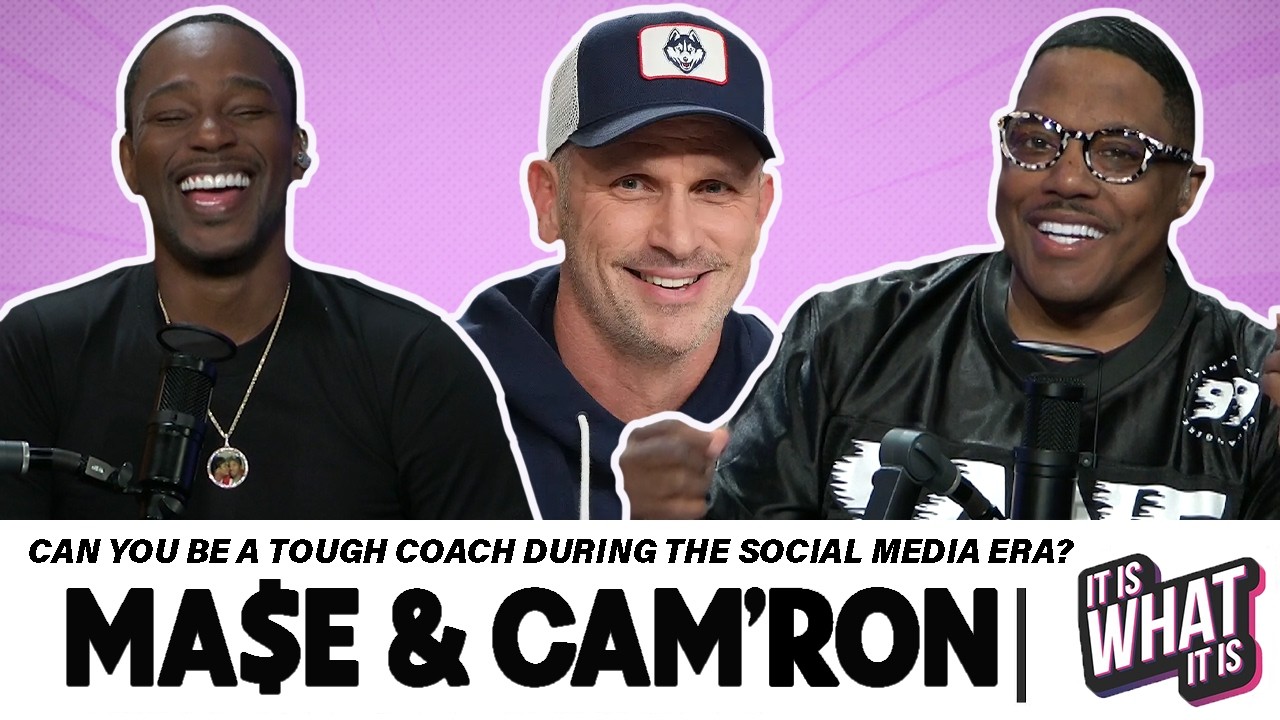
ARE YOU ALLOWED TO BE A TOUGH COACH & MA$E EXPLAINS THE DIFFERENCE BETWEEN A RAP LEGEND & ICON!
"This episode dissects the Lakers' future with Austin Reaves, debates the ethics of 'tough coaching' exemplified by Dan Hurley, and distinguishes between rap legends and icons."
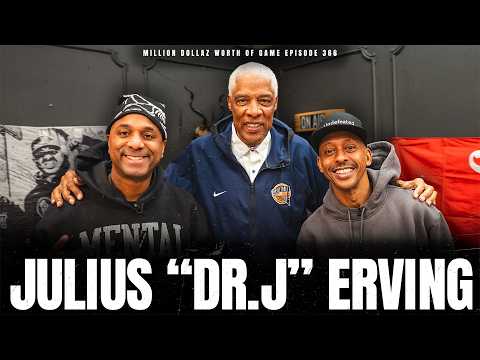
JULIUS "DR.J" ERVING - MILLION DOLLAZ WORTH OF GAME EPISODE 366
"NBA legend Dr. J offers a rare, firsthand account of professional basketball's evolution, contrasting the raw, unglamorous realities of his era with the hyper-professionalized, high-stakes environment of today's league."

The Pat McAfee Show Live | Tuesday June 23rd 2026
"Pat McAfee and guests dissect the seismic Giannis trade to Miami, the NFL's firm stance on gambling, Windham Clark's US Open triumph, and the USMNT's World Cup momentum, all while celebrating the Kachuk brothers' reunion."