
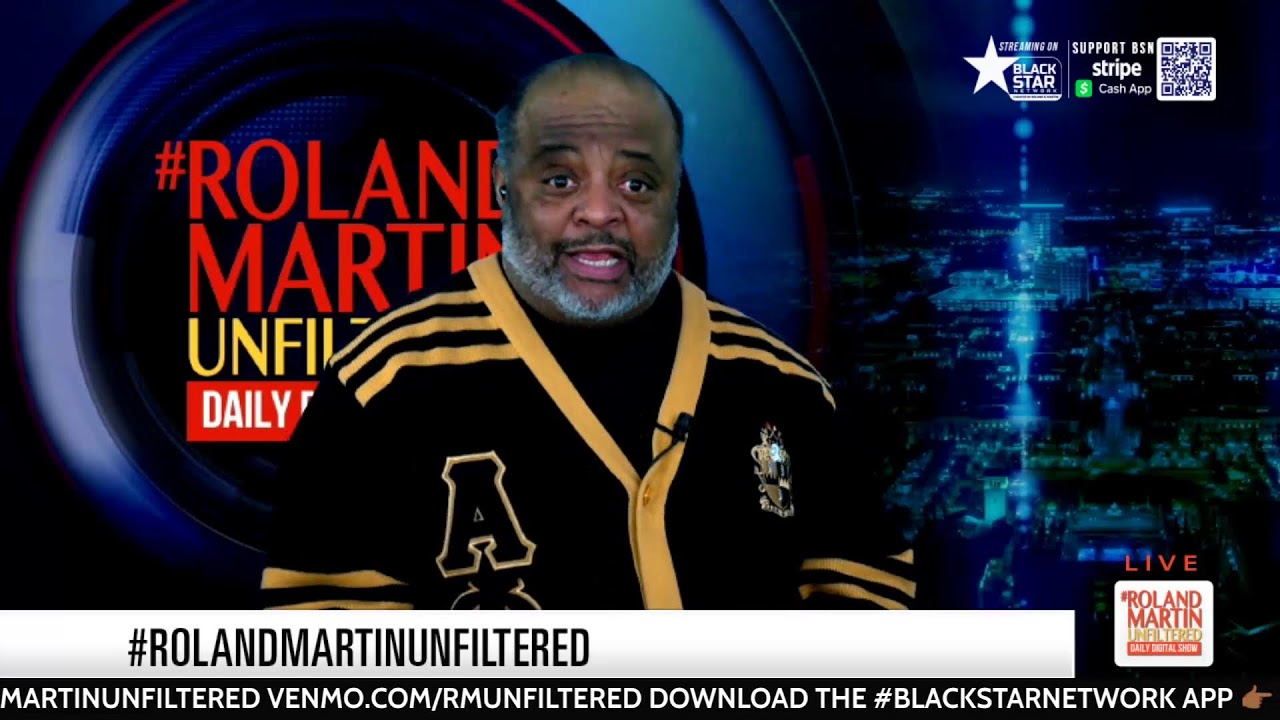
LIVE: Trump IMPLODES at Supreme Court + BREAKING NEWS!!! | 6/30/2026
YouTube · 7lVNm52SlgQ
Quick Read
Summary
Takeaways
- ❖The Supreme Court's 6-3 decision upholding birthright citizenship, while a 'win,' is criticized for its narrow margin and Chief Justice Roberts' 'crocodile tears' given his court's record on other rights.
- ❖The Court's ruling against Temporary Protected Status (TPS) for Haitians and Syrians is deemed 'deeply racist' and will affect over 350,000 people, jeopardizing their work permits and increasing deportation risk.
- ❖A new 6-3 decision on campaign finance, authored by Justice Kavanaugh, is expected to flood more 'dark money' into elections, disproportionately benefiting Republicans.
- ❖The Supreme Court ruled that biological sex determines sports league participation, a decision criticized for stigmatizing the transgender community.
- ❖The 'Alligator Alcatraz' immigrant detention facility in Florida has officially closed, a victory attributed to environmental lawsuits and public pressure, exposing its high cost and alleged funneling of taxpayer money to political donors.
- ❖Calls for Supreme Court reform include adding four seats, implementing term limits, establishing an ethics code, and initiating impeachment processes against justices like Alito and Thomas.
Insights
1Supreme Court's Selective Rights Protection
Chief Justice John Roberts is accused of strategically writing 'flowery' opinions on popular rights, like birthright citizenship, to maintain the Court's image, while simultaneously allowing other conservative justices (like Alito) to pen decisions that erode civil liberties, such as voting rights. This creates a perception of judicial balance while systematically narrowing rights for various groups.
Roberts wrote the birthright citizenship decision (6-3) with eloquent language about the history of rights, despite the host's view that Roberts' court has been the 'worst' for civil rights, voting rights, and women's rights. Roberts is also cited as authoring decisions protecting Donald Trump, such as the immunity and 'not an insurrectionist' decisions.
2Devastating Impact of TPS Ruling
The Supreme Court's decision allowing the Trump administration to eliminate Temporary Protected Status (TPS) for Haitians and Syrians will profoundly impact over 350,000 individuals. This ruling strips them of work permits and driver's licenses, placing them at immediate risk of deportation to countries still facing severe crises, despite the U.S. State Department's own travel warnings.
Representative Maxwell Frost details that 350,000 Haitian-Americans will lose work permits and driver's licenses, facing immediate deportation. He highlights the hypocrisy of expelling people to Haiti when the State Department advises U.S. citizens not to travel there due to danger. Frost also mentions a discharge petition passed in the House to extend TPS for Haitians, now awaiting Senate action.
3Closure of 'Alligator Alcatraz' and Accountability
The controversial 'Alligator Alcatraz' immigrant detention facility in the Florida Everglades has officially closed. Its closure was not primarily due to human rights concerns but rather environmental lawsuits and the exorbitant cost of operation, which allegedly funneled taxpayer money to political donors and private corporations. This highlights a strategic pathway for activism through environmental litigation.
Representative Maxwell Frost confirms the facility's closure, attributing it to lawsuits from the Mikasuki tribe, Center for Biological Diversity, and Friends of the Everglades, focused on environmental impacts. He notes the facility cost over a billion dollars to operate, about a million dollars a day, and was run by private corporations, with funds diverted from hurricane preparedness.
4Strategic Value of Dissents in Supreme Court Rulings
Supreme Court dissents, particularly those from justices like Ketanji Brown Jackson, serve as crucial legal arguments for future cases and as educational tools for law students and the public. They outline alternative legal interpretations and highlight potential future issues, influencing legal discourse and providing a foundation for eventual majority opinions.
The host and guest Somil Trevetti discuss that dissents are read by future justices, law students, and legislators. Clarence Thomas's ideas, initially 'fringe,' became mainstream through persistent dissents. KBJ's dissents are seen as speaking to a future audience, providing legal arguments that can be cited in future filings to reconsider issues from different angles.
Bottom Line
Environmental litigation can be a highly effective, indirect strategy to shut down facilities or projects that are difficult to challenge directly on human rights or civil liberties grounds.
Activists and legal groups should consider broader legal avenues, beyond direct civil rights claims, to achieve their goals, especially when facing politically entrenched opposition. Environmental regulations or financial mismanagement can provide leverage.
Organizations can collaborate with environmental groups to identify and target projects with dual human rights and environmental concerns, leveraging diverse legal expertise for greater impact. This approach proved successful in closing 'Alligator Alcatraz.'
The perceived political weaponization of the Supreme Court, even in seemingly 'positive' rulings, can be used to galvanize public support for radical judicial reform.
By exposing the perceived hypocrisy of justices and the strategic nature of their rulings, advocates can build a stronger case for structural changes to the judiciary, such as court expansion or impeachment, rather than relying on incremental legislative fixes.
Progressive media and advocacy groups can amplify critiques of the Court's perceived political agenda, framing even 'wins' as insufficient or disingenuous, to maintain pressure for fundamental reforms and prevent voter apathy.
Lessons
- Contact your senators to urge them to pass the House-approved bill extending Temporary Protected Status (TPS) for Haitians, as the Supreme Court's ruling puts over 350,000 people at risk.
- Engage in grassroots political organizing by donating to campaigns, volunteering for voter registration drives, or knocking on doors, even if you're in a 'red state' or your candidate is unopposed.
- Support and advocate for Supreme Court reform initiatives, including adding more seats, implementing term limits, establishing a judicial ethics code, and initiating impeachment proceedings against justices accused of corruption or lying to Congress.
Grassroots Political Action to Counter Judicial Overreach
**Leverage Discharge Petitions:** If the House Speaker blocks a bill, utilize a discharge petition to force a vote. Representative Frost successfully used this to pass TPS extension for Haitians, demonstrating its power.
**Sustain Relentless Pressure on Legislators:** Organize thousands of calls, office visits, and even fax campaigns (as done by March for Our Lives) to create an undeniable physical and political pressure on elected officials. One call may not work, but thousands will.
**Invest in Long-Term Power Building:** Focus on building political power from the top of the ticket down to local school board races, even in challenging states. This involves continuous organizing, aggressive fundraising, and hiring organizers year-round, regardless of immediate election outcomes.
Notable Moments
Host Michael Popock launches his law firm's redesigned website, 'The Popock Firm,' dedicated to assisting individuals with catastrophic injury, civil rights violations, and other legal matters.
This marks a significant business development for the host, aligning his professional legal practice with his public advocacy work, and offering a direct service to his audience.
Confirmation of 'Alligator Alcatraz' closure, an immigrant detention facility in Florida.
This is presented as a major victory for activists and environmental groups, demonstrating how strategic litigation (focused on environmental impact rather than human rights) can achieve significant policy changes and shut down controversial facilities.
Quotes
"The Roberts court will go down in history as the worst court for civil rights, civil liberties, voting rights, women's rights, immigration rights, the separation of powers, co-equal branches of government, checks and balances, you name it. The hits just keep on coming."
"The purpose of TPS is our country saying we know that there's an emergency. There are natural disasters. There is repression in your nation and we are giving you safe harbor as we work to to to solve the issue there. The issue in Haiti is not solved."
"You know how you win? You know how you win a hard state. You get your heart broken a lot. And then one day, your heart's fulfilled."
"We need to start viewing Supreme Court cases in terms of power, not procedure, not jurisprudence, not the law, in the ways that they want us to believe it is, but in the ways it actually is."
Q&A
Recent Questions
Related Episodes

All Roads Lead To the South: Nat’l Day Of Action For Voting Rights | Mass Rally | Montgomery, AL
"A mass rally in Montgomery, Alabama, ignites 'Freedom Summer 2026' to combat the Supreme Court's decimation of Black political power and demand unprecedented voter mobilization across the South."

HOT TOPICS | WARNING: Donald Trump's Iran War Chaos Has Hit the Point of No Return!
"Don Lemon delivers a scathing critique of Donald Trump's recent actions, framing them as desperate, unconstitutional attempts to consolidate power, undermine democracy, and distract from economic and foreign policy failures, all while questioning his mental stability."

Trump RUSHES Election Scheme as Midterms HAUNT HIM
"The hosts and guest expose the SAVE Act as a deceptive voter suppression tactic, drawing a stark contrast between the protection of gun rights and the erosion of voting rights."
Don Lemon, Georgia Fort Arrested Over Church Protest. Press Freedom on the Line Under Trump.
"The Trump administration's arrest of journalists Don Lemon and Georgia Fort for covering a church protest is framed as a direct assault on press freedom and a calculated distraction from the release of damaging Epstein files."