
Larry Johnson: BREAKING: $150 Billion of Iran’s $300B Reparations Is ALREADY Spent!
YouTube · 7mPS8rP_Oxc
Quick Read
Summary
Takeaways
- ❖The reported $150 billion of Iran's 'reparations' are financial commitments from private companies, not actual disbursed funds, and their realization is uncertain.
- ❖Trump's administration has not released the full Memorandum of Understanding (MOU) with Iran, possibly due to unresolved disagreements or fear of Zionist/neoconservative backlash.
- ❖Israel likely has intelligence on the MOU despite public claims of being denied access, using these denials to portray itself as a victim and embarrass the Trump administration.
- ❖Trump's recent aggressive rhetoric towards Benjamin Netanyahu and Israel is likely influenced by poor polling numbers and the need to stabilize oil prices by ending regional conflict.
- ❖Iran has achieved de facto control over the Strait of Hormuz, a strategic choke point, which US intelligence assesses as a more potent 'weapon' than any nuclear capability.
- ❖GCC countries like Qatar and UAE are increasingly distancing themselves from US military presence and seeking closer ties with Iran, recognizing the new regional power dynamics.
- ❖Internal Israeli politics show a trend towards even more hawkish leaders than Netanyahu, indicating a continued commitment to conflict with neighbors.
- ❖The 'law of unintended consequences' is evident, as the war against Iran has paradoxically strengthened Iran's position and control over critical waterways.
Insights
1Iran's 'Reparations' Are Pledges, Not Guaranteed Funds
A Reuters report stated $150 billion of Iran's $300 billion 'reparations' are committed. Larry Johnson clarifies this refers to financial commitments or pledges from private companies in South Korea, Japan, Singapore, Malaysia, and the US to invest in the Iranian economy. He draws a parallel to unfulfilled pledges for Gaza, suggesting these commitments are not guaranteed and Iran should be wary of 'empty promises.'
Reuters report on $150 billion committed (host), Johnson's clarification on pledges from private companies (), comparison to unfulfilled Gaza pledges ().
2Trump's Motivations for the Iran Deal and Withholding the MOU
Trump's administration has not released the full Memorandum of Understanding (MOU) with Iran. Johnson suggests two main reasons: either there are still unresolved areas of disagreement, or Trump fears a backlash from Zionist and neoconservative factions that could derail the agreement. He also posits that Trump's shift in policy, including his public criticism of Netanyahu, is driven by negative polling news and the need to stabilize oil prices, as the US Strategic Petroleum Reserve is critically low.
Host's question on unreleased MOU (), Johnson's options for delay (, ), discussion of polling news (), Strategic Petroleum Reserve depletion ().
3Israel's Strategic Deception Regarding the MOU
Despite reports from Israeli Channel 12 and Israeli reporters claiming Israel asked the US for a copy of the MOU and was rejected, Johnson believes Israel has spies within the Trump administration and knows 'everything' that is in the agreement. He argues Israel is playing a 'victim' card to embarrass Trump and generate public sympathy, masking their 'pissed off and panicked' reaction to the deal.
Host's report on Israel asking for MOU copy (), Johnson's counter-argument about Israeli spies and playing the victim ().
4Iran's De Facto Control Over the Strait of Hormuz
Axios reported that the MOU mentions Iran, alongside Oman, will be in charge of the Strait of Hormuz and will charge fees for passage. A CNN report further assessed that US intelligence believes Iran can shut down the Strait at will, and it would be impossible to reopen it without Iran's consent. A US official reportedly stated, 'We have now handed Iran de facto control over the Strait. A weapon more powerful than any nuke.' Johnson emphasizes that Iran has always had this control, but the US now legitimizes it.
Axios report on Iran/Oman control and fees (), CNN report on US intel assessment (), US official quote (), Johnson's agreement on Iran's existing control ().
5Trump's Public Attacks on Netanyahu and Israel
Trump has publicly criticized Benjamin Netanyahu, stating, 'Everybody hates you and everybody hates Israel. You're surviving this sort of chaos because of me. Israel is alive because of me.' He also condemned Israel's actions in Lebanon, saying, 'too many people are being killed. And you don't have to knock down an apartment house every time you're looking for somebody.' Trump suggested Syria should handle Hezbollah, believing they'd do a 'better job.' Johnson views this as Trump admitting Israel's 'genocide' and a move to infuriate neoconservatives.
Host's description of Trump's attacks (), Trump's direct quotes on Netanyahu and Israel's actions ().
6CIA's Consistent Assessment on Iran's Nuclear Program vs. Dissenting Voices
The DNI (Director of National Intelligence) assessment, which aggregates information from key intelligence agencies, concluded that 'Iran is not currently building a nuclear weapon' and the supreme leader has not reauthorized a weapons program. Johnson notes that the CIA's assessment remains the same. He questions why John Ratcliffe (head of CIA) would claim a 'completely different point of view' without specific, recent intelligence, suggesting it's political spin. Trump is reportedly considering firing Ratcliffe, Hickster, and Rubio for opposing the Iran agreement.
Host's report on CIA head's differing assessment (), Johnson's explanation of DNI/CIA assessment (), host's report on Trump considering firing officials ().
7GCC Countries Shift Away from US Military Alliance
Qatar and UAE leaders met with Trump, expressing support for the Iran deal and willingness to invest. Johnson highlights the UAE's shift from being 'a shill of Israel' to pushing back against it. He reports that Qatar and Saudi Arabia have informed Pakistani sources they plan to end their military relationship with the US within 9 months to a year, potentially leading to the closure of US bases like Al Udeid and Prince Sultan. This indicates a significant realignment of regional alliances.
Host's report on Qatar/UAE meetings (), Sheikh Tamim's quote (), Johnson's analysis of UAE shift (), report on Qatar/Saudi Arabia informing Pakistan of US withdrawal ().
Bottom Line
J.D. Vance is being positioned as a potential sacrificial lamb for the Trump administration's Iran deal.
If the Iran deal succeeds, Trump will take all the credit. If it fails, Vance will be blamed, potentially damaging his 2028 presidential aspirations.
Observers should monitor Vance's public statements and political trajectory for signs of his alignment or divergence from Trump's policy, especially if the deal faces challenges.
The 'law of unintended consequences' has significantly strengthened Iran's regional power following the war initiated against it.
The conflict allowed Iran to realize its control over the Strait of Hormuz and demonstrate resilience against US/Israeli military might, leading to a more powerful geopolitical position than before the war.
This suggests that military interventions can sometimes backfire, empowering the very adversaries they aim to weaken. Future foreign policy decisions should account for this dynamic.
Lessons
- Monitor official releases of the US-Iran Memorandum of Understanding (MOU) to understand the concrete terms, as current reports are based on partial information and spin.
- Evaluate investment opportunities in the Middle East with caution, recognizing that reported 'financial commitments' or 'reparations' may be pledges with uncertain timelines and actual disbursement.
- Track the shifting alliances of Gulf Cooperation Council (GCC) countries, as their increasing independence from the US and rapprochement with Iran will redefine regional security and economic landscapes.
Notable Moments
Discussion of Trump's potential firing of key intelligence and political figures (Ratcliffe, Hickster, Rubio) for opposing the Iran agreement.
This indicates internal dissent within the Trump administration regarding the Iran deal and highlights the political pressure exerted to secure the agreement, potentially compromising intelligence assessments.
Analysis of Naftali Bennett's aggressive rhetoric, calling Netanyahu a 'wimp' and vowing to be Iran's 'worst nightmare,' if he were to replace him.
This illustrates the deeply entrenched hawkish sentiment within Israeli politics, suggesting that a change in leadership might not lead to a more moderate stance on regional conflicts but rather an escalation.
Quotes
"I'll gladly pay you Tuesday for a hamburger today. Give me the hamburger now and I might pay you then when I going to see you next."
"Israel knows everything. But I don't know why are they asking the United States officially? What What is that?"
"Everybody hates you and and everybody hates Israel. You know, you're surviving this sort of chaos because of me. Israel is alive because of me."
"We have now handed Iran de facto control over the Strait. A weapon more powerful than any nuke."
"Iran is not currently building a nuclear weapon. Uh the the supreme leader has not reauthorized the weapons program that was suspended in 2003."
"If it turns into a disaster, uh this is that will say, 'This was This was JD Vance's proposal and I listened to him. I made the mistake. I listened to him. It's all on him.'"
"I want to tell the Iranian regime from here, the regime, I'm going to be your worst nightmare ever. I I won't relent until we free your people, ensure you don't have a nuclear weapon. So, you've got no hope."
Q&A
Recent Questions
Related Episodes

Patrick Henningsen: Hezbollah JUST Fired Back at Israel - Iran Vows to “Crush” All Attacks
"Patrick Henningsen argues that the US and Israel initiated an illegal war against Iran, driven by Trump's incompetence and Israeli influence, leading to an inevitable escalation with severe global economic repercussions."

Bibi DEMANDS Ground Troops As Marines Rushed to Iran
"Benjamin Netanyahu is pushing for US ground troops in Iran, framing air strikes as insufficient, while the US rushes Marines to the region and struggles to secure the Strait of Hormuz against surprisingly capable Iranian defenses."
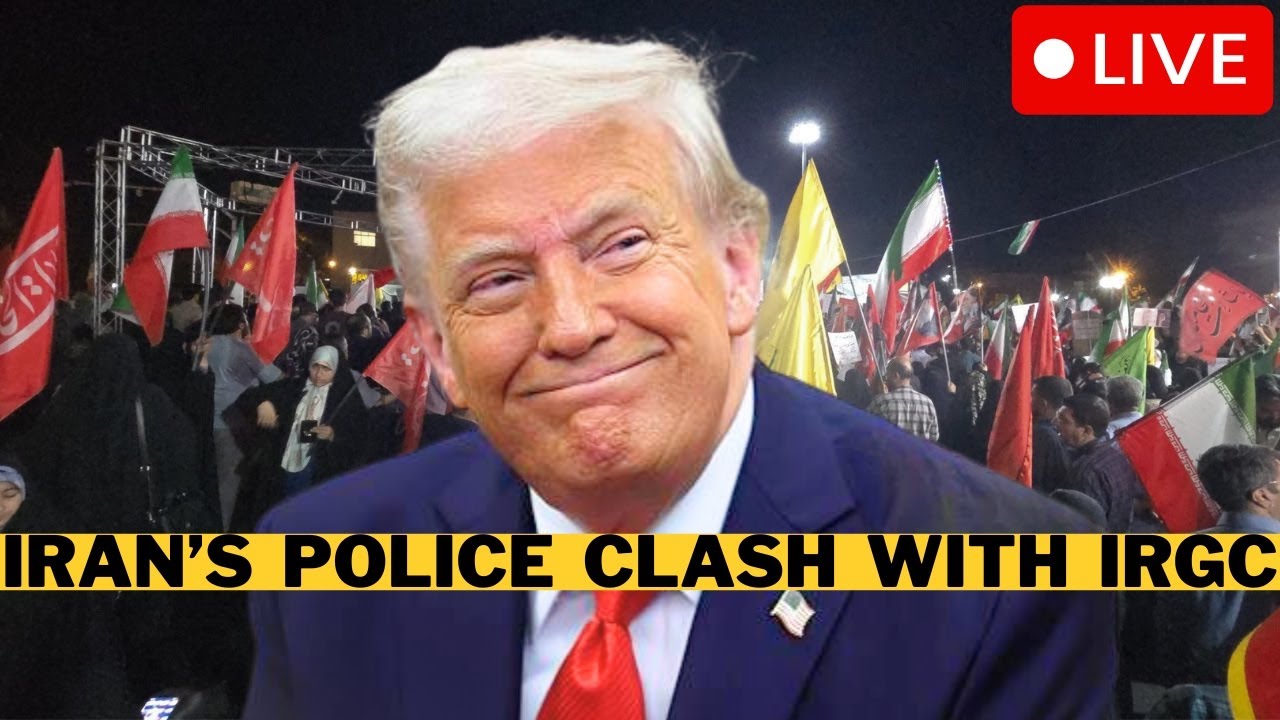
BREAKING: Protests ERUPT In Iran Over IRGC Surrendering To Trump - Infighting Clashes In Tehran
"Iran is experiencing severe internal infighting and protests as hardline IRGC elements clash with government figures over a perceived 'surrender' to the US, while mainstream Western media misrepresents the situation."

Alex Krainer: US STRIKES Iran – Iran RETALIATES Against Kuwait, Bahrain & Jordan!
"Amidst escalating US-Iran conflict and Iranian retaliation against regional US allies, this episode argues that US foreign policy is deeply controlled by an 'Anglo-Zionist conspiracy' led by the Rothschild banking dynasty, prioritizing Israeli interests over American ones."