
Matthew Hoh: Section 224 the provision merging the US and Israeli militaries
YouTube · 7nRoD1Kxdr8
Quick Read
Summary
Takeaways
- ❖A US-brokered ceasefire between Israel and Lebanon is deemed 'meaningless' and a 'farce' because it excludes Hezbollah and favors Israeli objectives.
- ❖Israel's military actions in Lebanon aim to acquire land, terrorize civilians into submission, and sow internal divisions, following the 'Dahiya doctrine.'
- ❖Donald Trump is perceived as 'trapped' in the Middle East war, unable to win or withdraw, while Benjamin Netanyahu's actions provoke Iran.
- ❖Robert Kagan's analysis of the Iran war is criticized as 'confused' and based on a false premise that the US can militarily control the Strait of Hormuz.
- ❖Section 224 of the NDAA, allegedly requested by Netanyahu, aims to merge US and Israeli military processes, including R&D and procurement, to hide aid and remove accountability.
- ❖This provision would allow Israel to receive substantial, unaccountable assistance from the US military-industrial complex, effectively making the relationship 'parasitic.'
- ❖Concerns are raised about US officials holding dual citizenship with Israel, particularly in sensitive security roles, due to potential conflicts of loyalty.
- ❖The cycle of warfare in the Middle East is predicted to continue until the US withdraws support for Israel and Israel recognizes the limits of its expansionist ideology.
Insights
1The 'Farce' of the Israel-Lebanon Ceasefire Agreement
Matthew Hoh describes the US-brokered ceasefire agreement between Israel and Lebanon as 'completely meaningless' and an 'absolute farce.' He argues it was an 'insular agreement' between the US, Israel, and a 'quisling or collaborationist government' in Beirut, designed for propaganda purposes. The terms are 'ludicrous,' demanding Lebanese withdrawal from southern Lebanon while the 'occupier' (Israel) remains, and declaring Hezbollah an 'enemy of the state' without their involvement in the agreement's construction.
Host Nima states the agreement requires Hezbollah to stop attacking Israel and designates Hezbollah as an 'enemy of the Lebanese state.' Matthew Hoh responds, 'it's completely meaningless... The terms of the ceasefire as I've seen them are absolutely ludicrous. I mean, this is just Orwellian.'
2Israel's Multi-faceted Strategy in Lebanon
Israel's actions in Lebanon are driven by a desire for land expansion ('greater Israel'), establishing 'facts on the ground' for future negotiations, and terrorizing the Lebanese population into submission. This terror campaign, rooted in the 'Dahiya doctrine,' aims to create internal divisions within Lebanon, blaming Hezbollah for Israeli bombings and potentially instigating a civil war reminiscent of the 1970s and 80s.
Hoh explains Israel's desire to 'take as much land as they can' and 'cause as much harm as they can,' citing the 'idea of greater Israel.' He adds, 'it's to terrorize the Lebanese into submission... to try and drive a wedge between within Lebanon, somehow create maybe even a civil war.' He explicitly mentions the 'Dahiya doctrine' for 'bombing civilians for the sake of bombing civilians.'
3Trump's 'Trap' in the Middle East War
Donald Trump is depicted as being 'trapped' in a war with Iran that Benjamin Netanyahu helped instigate, a war Trump cannot win and from which he cannot easily withdraw. The US and Israel have divergent goals, with Israel seeking the 'conquest of Lebanon' and restarting the war with Iran, which is not an American objective. Trump's frustration stems from Netanyahu's provocations against Iran, knowing that an Iranian retaliatory strike would compel US involvement due to Washington D.C.'s political realities, restarting the conflict.
Hoh states, 'Donald Trump is in a trap... He's in this war that Benjamin Netanyahu helped lead him into... a war that Donald Trump can't win and he can't seem to get out of it.' He notes 'the Americans and the Israelis don't share the same plans... the conquest of Lebanon is one of those goals. That's not an American goal.'
4Critique of Robert Kagan's 'Confused' Analysis
Matthew Hoh dismisses Robert Kagan's analysis, particularly regarding Iran's control of the Strait of Hormuz and the US's options, as 'confused' and illogical. Kagan's assertion that the US 'lost this war' and has 'no options' is contradictory, as he simultaneously implies the US has the capability to 'take back' the Strait but chooses not to. Hoh argues that Kagan's neoconservative viewpoint consistently advocates for larger wars and increased military spending as solutions to perceived failures, rather than acknowledging fundamental limitations or flawed strategies.
Hoh states, 'Kagan's analysis this there is just... confused. It doesn't make sense.' He challenges Kagan's claim that 'the United States has the capability to take the Straits of Hormuz back' and his assertion that 'the United States has no options.' Hoh concludes, 'they're presenting the same nonsense they've always presented... they believe an occupation of Iran would be successful. First of all, the United States doesn't have the capability to do that.'
5Section 224: De Facto US-Israel Military Merger
Section 224 of the NDAA, allegedly inserted at Netanyahu's request, is a 'short,' 'vague' provision that facilitates a deep integration of Israeli military processes into the Pentagon. While not a technical 'merger,' it allows Israel to be embedded in US defense procurement, research, and development from 'start to finish.' This mechanism effectively hides US assistance to Israel, removes Congressional accountability for funding and weapons transfers, and bypasses the need for votes, creating a 'symbiotic' and 'parasitic' relationship.
Congressman Ro Khanna states Netanyahu 'wrote to a member of Congress to put this section 224 into the bill.' Hoh explains it 'basically says that the... Department of Defense will create an agent to oversee the coordination of... research and development, industry and a whole bunch of other things. Very vague.' He adds, 'this way Congress doesn't have to vote on sending weapons or sending money... it's already baked into the Pentagon.'
6Dual Loyalties and National Security Concerns
The issue of dual citizenship and loyalty among US officials, particularly those serving in Congress or holding high-level security clearances, is raised as a significant national security concern. The guest points out the apparent double standard where Israel has strict laws against dual citizenship for its officials, while the US allows individuals who have served in foreign militaries (like the IDF) to hold influential positions, such as the Chairman of the House Foreign Affairs Committee.
Nima asks if dual citizenship 'is harming the security and the future for the people in the United States.' Hoh questions, 'how can you have dual loyalties?' and highlights Brian Mast, 'the senior most person for foreign affairs in the House of Representatives is a member of the Israeli Defense Forces... Where is his loyalties?'
Bottom Line
The 'Dahiya doctrine,' developed by Israel, explicitly involves bombing civilians for the sake of terrorizing them into submission, aiming to break the will of the population and create internal divisions.
This doctrine reveals a calculated and ethically controversial military strategy that prioritizes psychological warfare and civilian suffering as a means to achieve political objectives, rather than solely targeting military assets. It underscores a willingness to inflict widespread harm to achieve strategic ends.
Understanding this doctrine is critical for analysts and policymakers to accurately assess Israeli military actions and anticipate their strategic intent, rather than accepting narratives of collateral damage. It also highlights the need for international legal frameworks to address such doctrines.
The deep integration proposed by Section 224 is a 'masterful' and 'brilliant' move by Israel to secure unaccountable, continuous support from the US military-industrial complex, effectively making US aid 'organic' to the Pentagon's processes.
This insight suggests that Israel is actively seeking to institutionalize its reliance on US military resources in a way that bypasses traditional political scrutiny and public debate. It transforms aid from a discretionary policy decision into an inherent part of the US defense apparatus, making it extremely difficult to curtail or scrutinize.
This creates an opportunity for investigative journalists and oversight bodies to scrutinize the implementation of such vague legislative provisions. It also calls for greater public awareness and advocacy to demand transparency and accountability in military aid, especially when it is embedded within the defense budget rather than explicitly voted on.
Key Concepts
The Bubble of Irrational Reality
This model describes a state where a nation's leadership or populace develops a distorted view of reality due to hubris, conditioning from schools and media, and a lack of dissenting voices. This leads to irrational decisions, such as believing a war is 'won' when it is not, or pursuing expansionist policies that are ultimately self-destructive. Matthew Hoh applies this to both Israeli and US military/political establishments.
Parasitic Integration
This model describes a relationship where one entity (Israel) becomes deeply embedded within and benefits extensively from another, larger entity's (US) systems and resources (military-industrial complex, intelligence) without proportional contribution or accountability. This allows the smaller entity to 'feed' off the larger one, gaining significant advantages while obscuring the true cost and nature of the support.
Lessons
- Investigate Section 224 of the National Defense Authorization Act (NDAA) to understand its full implications for US-Israel military integration and accountability.
- Demand greater transparency and oversight from elected officials regarding military aid and cooperation agreements that bypass traditional Congressional approval processes.
- Critically evaluate media narratives and political statements about Middle East conflicts, particularly those from neoconservative voices, by questioning underlying assumptions and proposed solutions.
Notable Moments
The host and guest discuss a reported phone call between Donald Trump and Benjamin Netanyahu, where Trump allegedly called Netanyahu 'effing crazy' and claimed Israel would be destroyed without him. Netanyahu downplayed the incident as 'tactical disagreements' among friends.
This exchange highlights the deep personal and political tensions within the US-Israel relationship, even among allies, and suggests a significant level of frustration from the US side regarding Israeli actions and influence.
Matthew Hoh references Congressman Ro Khanna's statement that Israel's GDP is smaller than a single town in his Silicon Valley district, yet Netanyahu dictates US policy.
This comparison starkly illustrates the disproportionate influence Israel is perceived to wield over US foreign policy, despite its smaller economic and military scale, underscoring concerns about sovereignty and accountability.
Hoh describes a scenario where US officials with dual Israeli citizenship, like Congressman Brian Mast (Chairman of the House Foreign Affairs Committee), who wears an IDF uniform, raise serious questions about loyalty and security clearances.
This moment directly addresses the contentious issue of dual loyalties in high-level government positions, suggesting a potential conflict of interest that could compromise US national security and policy decisions.
Quotes
"The terms of the ceasefire as I've seen them are absolutely ludicrous. I mean, this is just Orwellian. Uh the Lebanese who are fighting against an occupier are the ones who need to leave uh the southern Lebanon. The occupier doesn't need to leave southern Lebanon."
"Donald Trump is in a trap. Donald Trump is stuck. He's in this war that Benjamin Netanyahu helped lead him into... And this is a war that Donald Trump can't win and he can't seem to get out of it."
"You can clearly see now what the future looks like. Iran is in control of the strait... I don't see any particular options. I think we have already lost this war. It's just a question of when do we acknowledge it."
"The entire country of Israel has a GDP that is less than a single town in my district. Yet somehow Netanyahu thinks he can tell the American people what we should do."
"This hides the assistance that goes to Israel. This makes for no accountability. Again, Congress doesn't have to vote on it."
"What you have in Palestine, what you have in Lebanon, what you have in Iran is resistance to empire. It's resistance to colonization. It's resistance to occupation. And until those things are ended, you're going to have that resistance."
Q&A
Recent Questions
Related Episodes
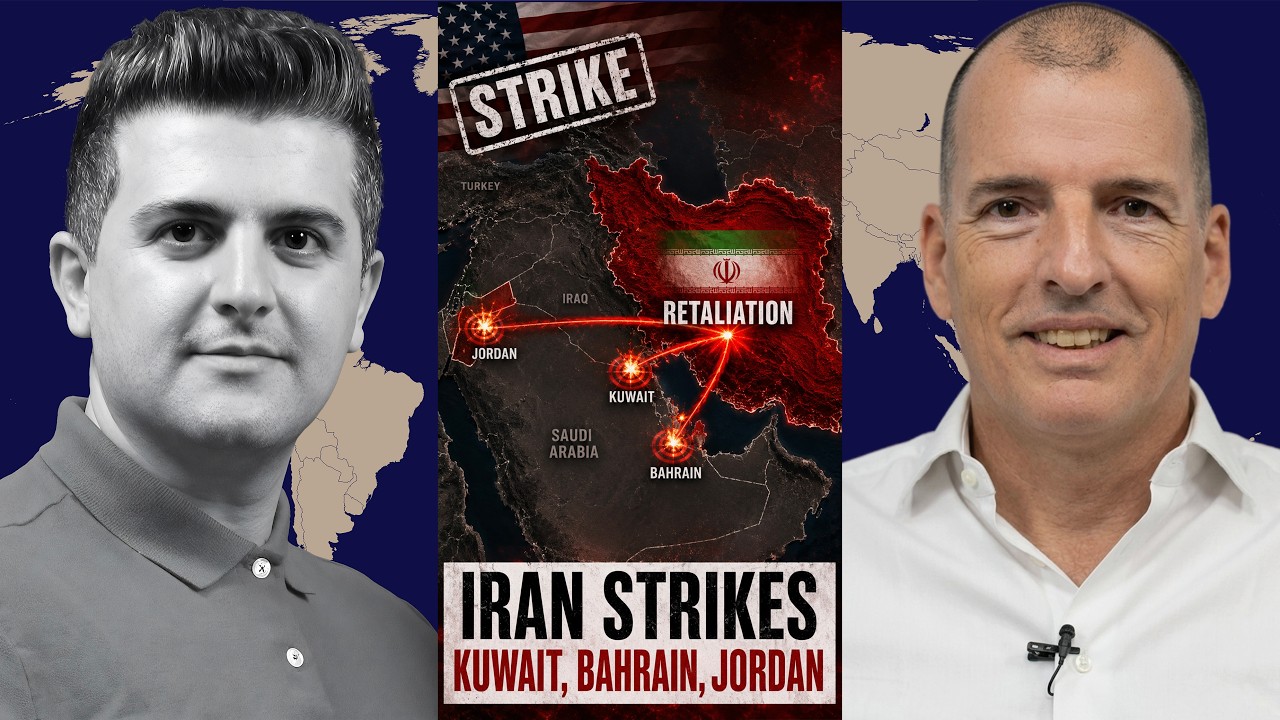
Alex Krainer: US STRIKES Iran – Iran RETALIATES Against Kuwait, Bahrain & Jordan!
"Amidst escalating US-Iran conflict and Iranian retaliation against regional US allies, this episode argues that US foreign policy is deeply controlled by an 'Anglo-Zionist conspiracy' led by the Rothschild banking dynasty, prioritizing Israeli interests over American ones."

Iran Update: Israel’s Newest Bombing Campaign, the Oncoming War With China and How to Avoid It
"Colonel Wilerson reveals how the US and Israel are actively bombing China's strategic infrastructure in Iran, escalating a covert economic war that Beijing intends to win without direct military conflict by dismantling the dollar's global dominance."

Patrick Henningsen: Hezbollah JUST Fired Back at Israel - Iran Vows to “Crush” All Attacks
"Patrick Henningsen argues that the US and Israel initiated an illegal war against Iran, driven by Trump's incompetence and Israeli influence, leading to an inevitable escalation with severe global economic repercussions."
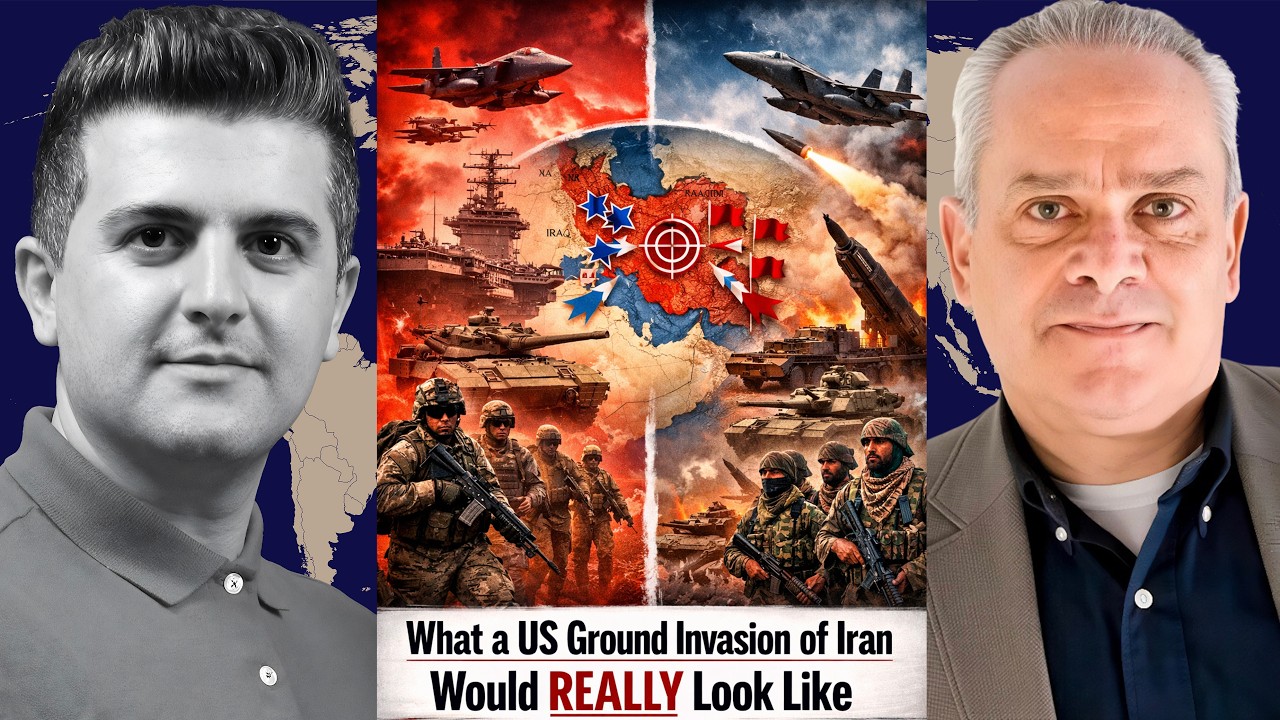
Col. Jacques Baud: What a US Ground Invasion of Iran Would REALLY Look Like
"Colonel Jacques Baud dissects the strategic futility of a US ground invasion of Iran, arguing that current troop levels are insufficient and such an action would backfire, exposing US allies and potentially leading to Iran's nuclearization."