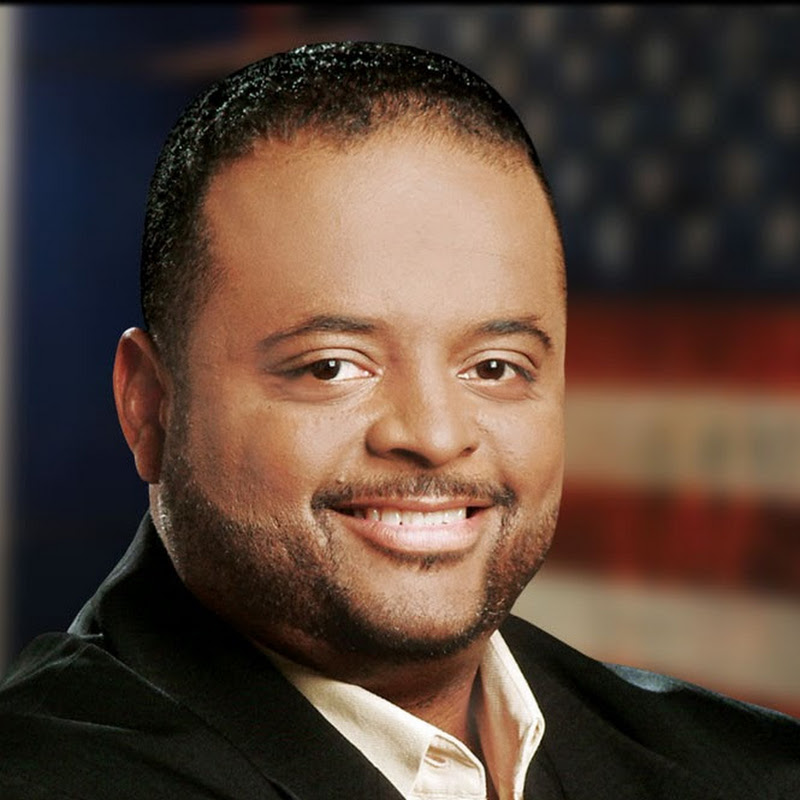
Virginia Court Kills Redistricting Vote. NAACP Fights Tennessee Black District Attack
YouTube · 7slJJa3WjhQ
Quick Read
Summary
Takeaways
- ❖Alabama and Tennessee legislatures are actively wiping out Black congressional districts, following a Supreme Court decision that enabled such actions.
- ❖The Virginia Supreme Court overturned a voter-approved redistricting referendum, sparking outrage over judicial overreach and voter disenfranchisement.
- ❖Black unemployment rates are rising, federal jobs are being cut, and wage growth lags behind inflation, exacerbating economic disparities.
Insights
1Systematic Dismantling of Black Political Power in Southern States
Republican-led legislatures in states like Alabama, Tennessee, and Mississippi are actively redrawing congressional maps to eliminate Black majority-minority districts. This follows a recent Supreme Court decision (Cala) that is interpreted as giving states the 'go-ahead' to diminish Black electoral opportunity. Congresswoman Terry Sewell highlights that Alabama's actions, including a special election to revert to a less favorable map, aim to reduce Black representation significantly, potentially leading to the largest reduction in American history since the Voting Rights Act of 1965.
Host Roland Martin states, 'yesterday was Tennessee. Today it is Alabama wiping out black congressional districts.' Congresswoman Terry Sewell details Alabama's efforts to eliminate two seats, affecting her own and Congressman Shamari Figers' districts, and mentions Mississippi's attempt to remove Congressman Benny Thompson's seat. Christian Clark of the NAACP discusses their lawsuit in Tennessee challenging the dismantling of the only majority-Black district. (, , )
2Virginia Supreme Court Overturns Voter-Approved Redistricting Referendum
The Virginia Supreme Court, with a 4-3 Republican-appointed majority, ruled that a redistricting referendum approved by over 3 million voters violated procedural rules. Critics argue the court 'contorted the plain language of the Constitution' to fit a political agenda, effectively silencing the will of the people and setting a dangerous precedent of tilting power away from voters. The Attorney General of Virginia, Jay Jones, and House Speaker Don Scott, have filed an emergency order to stay the decision, intending to appeal to the U.S. Supreme Court.
Roland Martin reports, 'Democrats were said given a huge setback today when the Virginia Supreme Court ruled 4 to3 that the redistricting referendum that was narrowly approved by voters in April special election violated procedural rules.' Attorney General Jay Jones' statement accuses the court of 'politics over the rule of law' and 'contorted the plain language of the Constitution.' (, )
3Economic Disparities Worsen for Black Americans Amidst Broader Economic Claims
Despite claims of overall economic stability and job growth, Black Americans face a disproportionately increasing unemployment rate (7.3%) compared to the general population. This disparity is attributed to factors like the elimination of federal jobs, a decline in transportation-related jobs (which heavily employ Black men), and stagnant wage growth that fails to keep pace with rising inflation. The economy is described as 'K-shaped,' where large corporations and the wealthy continue to thrive, while small-to-medium businesses and working-class individuals, especially Black Americans, struggle.
Morgan Harper, Director of Policy and Advocacy at the American Economic Liberties Project, states, 'the black unemployment rate that's continuing to increase at 7.3%.' She notes the 'elimination of federal jobs' and 'lack of transportation related jobs' as drivers, and that 'inflation's going to be rate rising faster than wage growth.' (, , )
4Tennessee Death Row Case Raises Concerns Over Justice and Due Process
Tony Kurthers is scheduled for execution in Tennessee despite a co-defendant, James Montgomery (now free), stating Kurthers was not involved in the 1994 murders. There is no physical evidence linking Kurthers to the crime, and untested DNA and fingerprint evidence exists. The case relied heavily on a paid informant who recanted his testimony but was pressured by prosecutors to revert to his original statement. Furthermore, Kurthers was forced to represent himself at trial, a situation unprecedented for an executed individual in Tennessee in over a century.
Maria Delibero of the ACLU's Capital Punishment Project explains, 'his testimony uh the the uh codefendant had said to federal investigators back in 2010 and 2011 that Mr. for others was not involved.' She adds, 'There is untested DNA and fingerprint evidence' and that the case 'was built on the testimony of a paid informant who who said he was pressured to lie and paid.' (, , )
Bottom Line
Corporations, which previously spoke out against voting rights issues (e.g., John Lewis Voting Rights Act, Indiana's transgender bathroom bill), are notably silent on the current wave of attacks on Black voting rights and political power.
This silence indicates that Black communities cannot rely on corporate advocacy to protect their rights, highlighting a selective engagement with social justice issues by businesses.
Black communities must organize and leverage their collective economic power through boycotts and strategic withdrawals of support from corporations that do not actively stand for Black civil rights, as demonstrated by historical examples like the Tuskegee boycott.
The rapid advancement of AI is being used by companies as a 'convenient cover' for layoffs, rather than being the sole or primary cause of job losses.
This corporate tactic masks underlying business issues or overhiring, potentially shifting blame and avoiding accountability for workforce reductions.
Workers and policymakers should apply skepticism to corporate claims about AI-driven layoffs, investigating true motivations and advocating for transparency. Individuals should focus on acquiring fundamental professional skills alongside AI tool proficiency, as AI's impact on entry-level positions is expected to grow.
Key Concepts
K-Shaped Economy
This model describes an economic recovery or growth where different parts of the economy or different demographic groups recover at different rates, leading to a 'K' shape. In this context, those who already have wealth or stable positions continue to prosper (the upper arm of the K), while those at the lower end experience decline or stagnation (the lower arm of the K), particularly impacting Black working-class communities.
Lessons
- Participate in a massive Black voter registration and mobilization drive, aiming for 70-90% turnout in upcoming elections to overwhelm systemic efforts to suppress votes.
- Engage in citizenship training sessions weekly in every state and city to educate communities on political processes, data, and voter outreach strategies.
- Leverage economic power by organizing and withdrawing support from corporations that remain silent or complicit in the 'war on Black America,' drawing lessons from historical economic boycotts.
Mobilizing Against the War on Black America
**Mobilize and Organize**: Initiate a massive voter registration and turnout drive, especially in Southern states, aiming for unprecedented participation rates (70-90% baseline).
**Educate and Train**: Conduct weekly citizenship training sessions to inform communities about political data, voter outreach, and the impact of current legislative and judicial actions.
**Leverage Economic Power**: Organize economic boycotts and withdraw financial support from corporations that do not actively defend Black civil rights, using economic leverage to enforce political agendas.
Notable Moments
A Louisiana legislative committee meeting erupts in a heated exchange when a Black legislator confronts a white chairman about the impact of redistricting on Black political power, leading to the chairman attempting to cut off the legislator's microphone.
This moment vividly illustrates the intense racial tensions and power dynamics at play in redistricting debates, highlighting the frustration and perceived disrespect faced by Black elected officials when challenging measures that diminish their communities' representation.
A Black man waiting for a bank to open in Tampa, Florida, is approached by police because bank employees called to report him as 'suspicious,' despite another non-Black individual also waiting in the parking lot.
This incident exemplifies everyday racial profiling and the 'driving while Black' phenomenon, where routine activities by Black individuals are viewed with suspicion, leading to unnecessary police intervention and reinforcing perceptions of systemic prejudice.
Quotes
"The GOP's war on black America continues where today in Alabama they wiped out two black congressional seats."
"We have seen the floodgates of of racism open and unleashed. and their very first target, the very top of their agenda is wiping out black electoral opportunity and black leadership."
"The Supreme Court decision will have the largest reduction of black representation in American history."
"If we don't have a seat at the table, we're going to be on the menu."
"This decision silences the voices of the millions of Virginiaians who cast their ballots in every corner of the Commonwealth, and it fuels the growing fears across our nation about the state of our democracy."
"If you don't think this is a war on black people, then you ain't paying attention."
"Racism and white supremacy attacks all black people regardless of the religion you practice, the language you speak, or u which political ideology you have or anything like that."
"If you don't think that Trump is not doing specific things to black people, then you just don't know how to do a Google search."
Q&A
Recent Questions
Related Episodes

George Floyd 6 Years Later. Redistricting War in The South. Talarico Senate Campaign
"This episode exposes the ongoing legislative battles and strategic resistance against efforts to diminish Black political power, from federal policing reform to state-level gerrymandering and calls for economic boycotts by Black athletes."

"Mini" Super Tuesday Primaries. Bodycam Clears Black Teen. Haitian Heritage Month. #TheBreakdown
"This episode breaks down critical political developments, highlights the power of bodycam footage in exonerating a Black teen, celebrates Haitian heritage, showcases innovative arts education, and champions breast cancer awareness for Black women."

All Roads Lead To the South: Nat’l Day Of Action For Voting Rights | Mass Rally | Montgomery, AL
"A mass rally in Montgomery, Alabama, ignites 'Freedom Summer 2026' to combat the Supreme Court's decimation of Black political power and demand unprecedented voter mobilization across the South."

PBS News Hour full episode, May 8, 2026
"This episode unpacks escalating US-Iran military actions in the Strait of Hormuz, a resilient yet divergent US jobs market, the ongoing political battle over congressional redistricting, and the controversial new US counterterrorism strategy."