
BOSSMAN DLOW - MILLION DOLLAZ WORTH OF GAME EPISODE 374
YouTube · 8B_p5Z1PFyk
Quick Read
Summary
Takeaways
- ❖Initial public criticism and being labeled a 'one-trick pony' almost led BOSSMAN DLOW to quit music.
- ❖Newfound wealth often changes relationships, with people demanding more financial support.
- ❖The size of an artist's entourage often shrinks from many to a few as they realize the cost of non-contributing members.
- ❖Adversity and doubt are powerful motivators that can lead to an artist's best work.
- ❖Having a 'real one' in your circle who offers harsh but honest feedback is essential for growth.
- ❖A record label was critical for BOSSMAN DLOW, providing access and infrastructure unavailable in his hometown of Port Salerno, Florida.
- ❖Success doesn't require universal approval; a dedicated 'pocket of people' is sufficient to thrive.
- ❖DLOW's creative process involves freestyling and punching in, capturing ideas instantly rather than extensive writing.
- ❖It took BOSSMAN DLOW five years to earn $2500 for a show, highlighting the long grind before significant financial returns.
Insights
1Fame and Wealth Transform Relationships and Expectations
BOSSMAN DLOW details how acquiring wealth drastically alters personal relationships. People who once asked for small favors now demand significant sums, and previously genuine connections can become transactional. This shift often leads to artists reducing their entourages to only those who provide real value, as supporting a large, non-contributing group becomes financially unsustainable.
DLOW states, 'You go through most [stuff] when you got the motion... people ask you for [stuff] just off just cuz... people that needed $7 from you now they need $7,000 from you.' The hosts add that artists often go from '38 [people] to four' on tour due to costs.
2Adversity as a Catalyst for Creative Evolution
Initial criticism, including being called a 'one-trick pony,' nearly made DLOW quit. However, he and the hosts agree that such backlash and doubt can ignite a deeper creative fire, pushing artists to innovate and prove critics wrong. This struggle is framed as necessary for producing 'the best music' and preventing creative stagnation.
DLOW admits, 'I was on some [stuff] like I'm done with this [stuff]' after criticism. The host later says, 'I'm kind of glad though that you had to go through what you went through... this going to be some of the best music... it don't give you that same fire in the studio.'
3The Strategic Importance of Record Labels for Artists from Underserved Regions
While some artists thrive independently, BOSSMAN DLOW asserts that a record label was crucial for his success, especially coming from Port Salerno, Florida—a town lacking music industry infrastructure like producers or engineers. Labels provided access to 'certain rooms' and opportunities (e.g., Sports Center appearances) that would have been inaccessible otherwise, making his path significantly easier.
DLOW states, 'I'm from Port Salerno, Florida, bro, ain't no producers, ain't no engineers, ain't no nothing... it's nothing without a label no way.' He adds that labels open 'certain rooms you just can't touch without the label.'
4Success Requires a Dedicated Niche, Not Universal Approval
In an era where everyone has an opinion, artists can get bogged down by negativity. DLOW and the hosts argue that an artist doesn't need everyone to like them to succeed. A small, dedicated 'pocket of people' from the global population is enough to build a sustainable career and feed a family, rendering widespread hate largely irrelevant.
The host states, 'I don't need all you [people] to [mess] with me... I need a small portion of that 8.2 billion [people] to [mess] with me for me to be able to feed my family.' DLOW agrees, 'I hope they all comment that they hate me cuz I need them comment.'
Bottom Line
An artist's entourage often consists of individuals who prioritize personal gain or convenience over the artist's immediate needs, even for simple tasks.
This highlights a critical lack of value contribution within many artist support systems, leading to inefficiencies and potential resentment.
Artists should rigorously vet their inner circle for genuine support and proactive contribution, fostering a team that actively solves problems rather than just 'hanging around.' Developing clear roles and expectations for team members can prevent this drain.
The most impactful motivation for an artist can come from a trusted 'homie' who delivers harsh, unfiltered criticism, rather than constant praise.
This challenges the common belief that artists primarily need positive reinforcement. Sometimes, brutal honesty from a respected source is more effective in pushing creative boundaries.
Artists should identify and cultivate relationships with a few 'truth-tellers' who are unafraid to provide constructive, even if uncomfortable, feedback. This requires a strong ego and a willingness to accept criticism for growth.
Opportunities
Artist-Centric Talent Development & Business Incubation
An artist, once successful, establishes a structured program to develop talent and build sustainable businesses/trades for their loyal team members and community, moving beyond temporary employment to long-term career paths. This includes mentorship, skill development, and investment in their ventures.
Lessons
- Cultivate a small, trusted circle: Prioritize genuine relationships over large entourages. Actively seek out individuals who provide value and honest feedback, even if it's critical.
- Leverage criticism as fuel: Instead of being discouraged by negative opinions, reframe them as motivation to innovate and prove doubters wrong. Use challenges to push your creative boundaries.
- Understand industry access: For artists from areas without established music industry infrastructure, strategically consider the benefits a record label can offer in terms of access to resources, networks, and promotional opportunities that might be otherwise unattainable.
- Focus on your niche: Recognize that you don't need universal approval to succeed. Identify and cater to your core audience, understanding that a dedicated segment of fans is sufficient for a thriving career.
Quotes
"You go through most [stuff] when you got the motion."
"If you can't spend it three times, you don't need that."
"It's almost it ain't it ain't right when everything is going right. You need a [person] to challenge you."
"I don't need all you [people] to [mess] with me. I need a small portion of that 8.2 billion [people] to [mess] with me for me to be able to feed my family."
"Everybody got their own route. Some people going to be better off independent. Some people going to be better off with a label."
Q&A
Recent Questions
Related Episodes

PATREON EXCLUSIVE | The Human Experience (feat. Eric Benet and T.I) | The Joe Budden Podcast
"Eric Benét and T.I. offer candid insights into the evolving music industry, the challenges of maintaining authenticity, and their personal philosophies on career longevity, health, and societal changes."
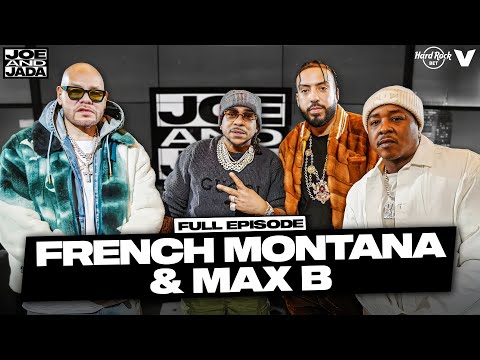
French Montana & Max B on 'Coke Wave 3.5,' prison stories & "All The Way Up" | Fat Joe & Jadakiss
"Max B details his return to music after 17 years in prison, while French Montana and Fat Joe share candid stories about navigating the music industry, from independent success to global hits like 'Unforgettable' and 'All The Way Up'."
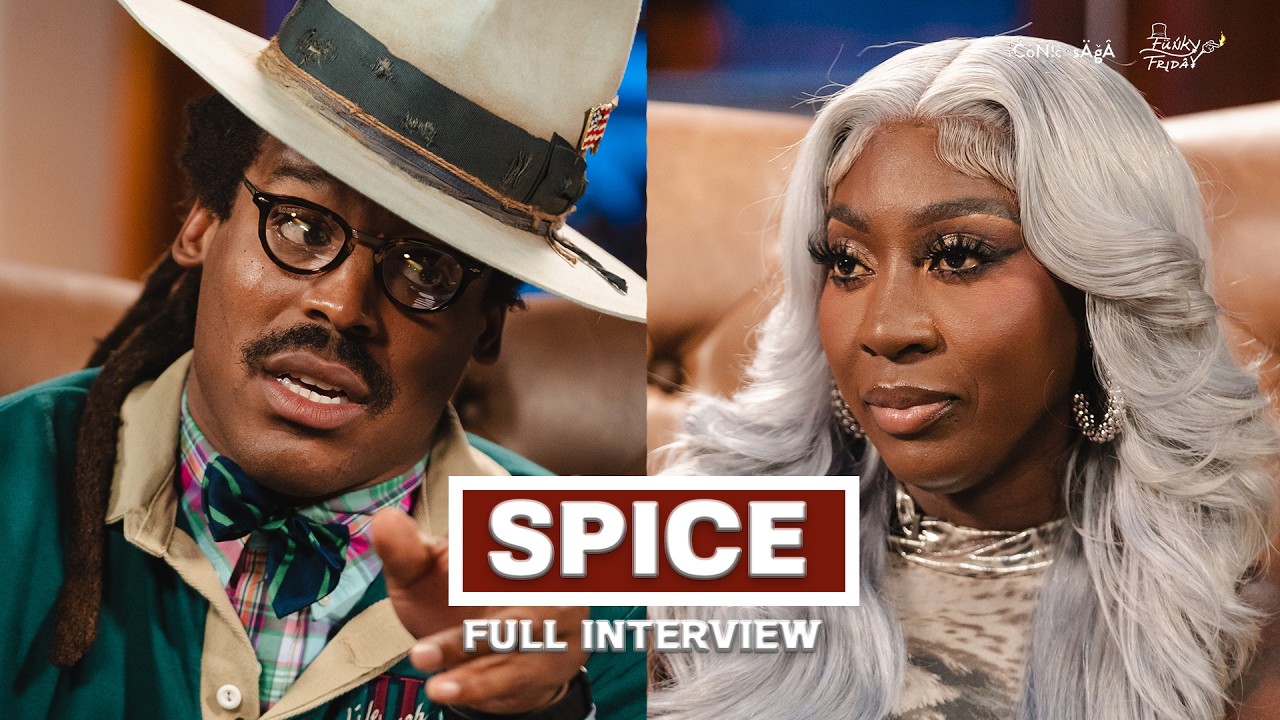
Spice: "I'm Not Watering Down My Culture for Anybody" | Funky Friday
"Dancehall Queen Spice discusses her 27-year career, the origins of dancehall and hip-hop, the pervasive issue of colorism, and her unapologetic views on relationships and cheating."
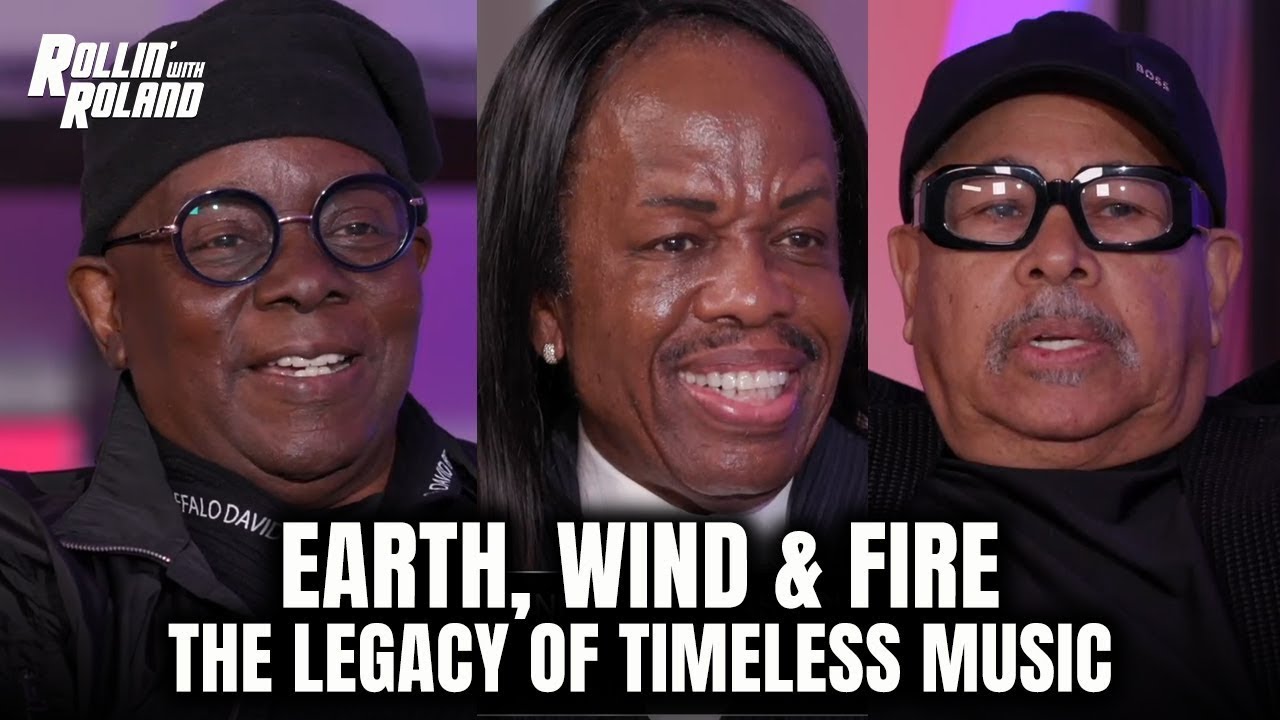
Earth, Wind & Fire on Timeless Music, Legacy & Generations Grooving Together | #RollinWithRoland
"Earth, Wind & Fire members reflect on the enduring power of their music, its multi-generational appeal, and the critical factors that sustained their legendary career through industry shifts and personal challenges."