
How Police Captured A Killer Soldier 7 Years Later
YouTube · 8PyJNey15gU
Quick Read
Summary
Takeaways
- ❖Katie Blauvelt was found murdered in an abandoned house with satanic markings, a scene orchestrated by her husband, John Blauvelt.
- ❖John Blauvelt, a former army sergeant, had a restraining order against him and a $150,000 life insurance policy on Katie.
- ❖Initial suspect Wayne Roer was framed by John, who used military experience to create a misleading crime scene.
- ❖Investigators obtained John's DNA by covertly placing cups at Katie's funeral and filming him drinking from one.
- ❖Funeral footage showed John taking pictures of Katie's body and his 17-year-old girlfriend, Hannah Thompson, giggling.
- ❖Hannah Thompson, John's accomplice, eventually confessed that John killed Katie for her and detailed the murder, including the knife breaking.
- ❖John and Hannah fled, with John adopting the alias Ben Klene and evading capture for seven years, even remarrying.
- ❖John's internet history revealed searches like 'how to make a two-way radio' and 'how to sharpen a knife' prior to the murder.
- ❖In 2022, John Blauvelt was arrested in Oregon; in 2024, he was sentenced to life, and Hannah Thompson received 10 years for her role.
Insights
1Elaborate Framing of Wayne Roer
The crime scene was meticulously staged to frame Katie's ex-boyfriend, Wayne Roer. Katie's body was found in an abandoned house with satanic markings, and her phone was submerged in water to destroy evidence. Wayne was the one who 'discovered' the body, placing him squarely in the investigators' crosshairs, exactly as the killer intended.
Body found in abandoned house with satanic markings; Katie's phone submerged in water; Wayne found the body and called police.
2John Blauvelt's Psychological Manipulation of Witnesses and Detectives
John skillfully manipulated the investigation from the outset. He used 'reverse empathy' by defending Wayne during his initial interrogation to appear harmless. He also planted the idea that Katie was 'dating around' with friends like Crystal, who unknowingly reinforced this narrative, diverting suspicion from him. His ex-wife, Catherine, was also influenced to remain silent about his past violence.
John's defense of Wayne (); Crystal's testimony about Katie dating around (); Catherine's reluctance to discuss John's past violence ().
3Covert DNA Collection at Katie's Funeral
Facing a lack of direct evidence and inability to secure a DNA warrant, detectives devised an unconventional plan: they wired Katie's funeral home with hidden cameras and strategically placed drinks. John drank from a cup, providing the DNA sample needed to compare against evidence found on Katie's body.
Detectives positioned hidden cameras and planted cups at the funeral; John drank from a cup, leaving his DNA; footage captured him taking pictures of Katie's body.
4Hannah Thompson's Role as Accomplice and Informant
Hannah Thompson, John's 17-year-old girlfriend and former friend of Katie, was present at the funeral and later fled with John. She initially lied to police but eventually confessed that John admitted to killing Katie for her, stating he found it 'funny' and that the knife broke. Years later, she provided John's journal, which contained his premeditated plans.
Hannah's presence and behavior at the funeral (); her initial lies during interrogation (); her confession about John killing Katie for her (); her later revelation of John's journal ().
5Digital Forensics and Long-Term Evasion
Cell phone pings placed John and his friend Charles Scott near the crime scene. John's internet search history revealed premeditation (e.g., 'how to sharpen a knife'). Despite these leads, John, leveraging his military experience, successfully evaded capture for seven years, crossing state lines, adopting an alias (Ben Klene), and maintaining contact with Hannah, who fed him information.
Cell phone pings of John and Charles Scott near the crime scene (); John's internet history (); his use of an alias and remarrying (); Hannah's continued communication with him ().
Bottom Line
John Blauvelt's disturbing behavior at Katie's funeral, where he took pictures of her body and made unsettling comments, was captured by hidden cameras, providing a psychological profile of his detachment.
This detail, combined with Hannah's giggling, highlighted a profound lack of remorse and a chilling dynamic between the killer and his accomplice, offering a deeper understanding of their psychopathy.
Such emotional cues, when captured, can be invaluable in building a psychological case against a suspect, even before forensic evidence is conclusive.
Hannah Thompson, John's accomplice, continued to communicate with him for years while he was on the run, even after she had returned to South Carolina and was under police watch.
This prolonged communication suggests a deeper, more enduring complicity than initially understood, indicating she was actively aiding his evasion, potentially acting as an information conduit.
Investigators should consider the possibility of long-term, covert communication channels between fugitives and their known associates, even after initial interrogations or releases, as these can provide continuous intelligence.
Key Concepts
Red Herring
The killer, John Blauvelt, deliberately planted evidence (satanic symbols, phone in water) and manipulated initial suspect Wayne Roer's actions to create a false trail, diverting police attention away from himself.
Psychological Manipulation
John Blauvelt employed advanced psychological tactics, including 'reverse empathy' during his interrogation and influencing witnesses like Crystal and Catherine, to control the narrative and deflect suspicion.
Persistence Hunting (Investigation)
Despite years of dead ends and John Blauvelt's sophisticated evasion tactics, law enforcement relentlessly pursued leads, utilizing digital forensics, covert DNA collection, and eventually leveraging his accomplice's cooperation to achieve capture and conviction after seven years.
Lessons
- Implement covert DNA collection strategies, such as the funeral 'cup trap,' when traditional warrants are unobtainable, ensuring legal collection protocols are strictly followed.
- Train investigators to recognize and counter psychological manipulation tactics like 'reverse empathy' and narrative control, which perpetrators use to deflect suspicion and influence witnesses.
- Prioritize digital forensics, including cell phone pings, internet search history, and chat logs, as these often provide critical, undeniable evidence of premeditation, location, and accomplice involvement, even years after a crime.
Quotes
"Mr. defies any kind of logic that I have experienced in my 62 years on this earth."
"What if I told you that your cell phone did ping somewhere other than where you say you were?"
Q&A
Recent Questions
Related Episodes

The Root Beer Float Murder | Full Episode + Post Mortem
"A seemingly natural death of a husband is unmasked as a calculated poisoning plot by his wife and stepdaughter, revealed only after an unrelated burglary exposes a trail of incriminating text messages."

Widow Realizes Cops Know She Poisoned Her Husband
"A seemingly routine burglary unexpectedly unravels a year-old murder, exposing a mother-daughter poisoning plot and a chilling pattern of suspicious deaths."

Hell On Wheels: Mackenzie Shirilla's Double Murder Crash
"A seemingly accidental car crash that killed two young men in Strongsville, Ohio, was meticulously uncovered by investigators to be a deliberate act of double murder by the 17-year-old driver, Mackenzie Shirilla, amidst a tumultuous relationship and a shocking lack of remorse."
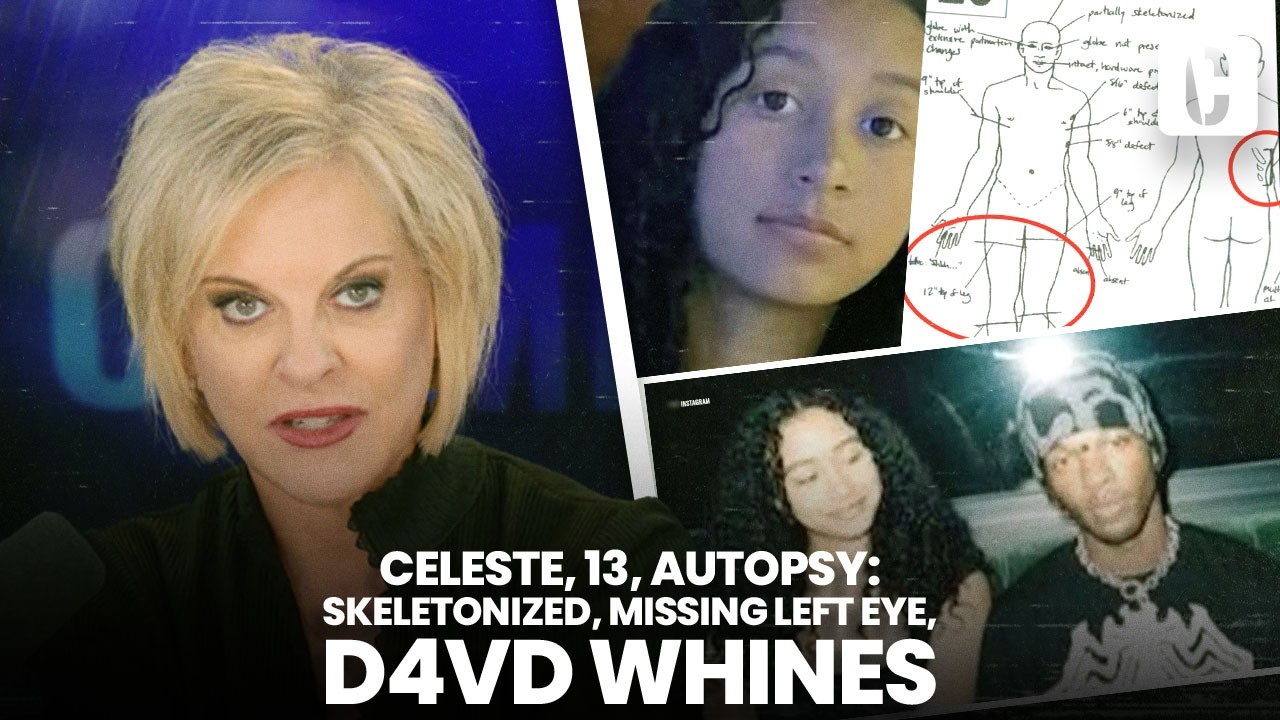
CELESTE, 13, AUTOPSY: SKELETONIZED, MISSING LEFT EYE, D4VD WHINES
"A 13-year-old girl, Celeste Rivas, was found partially skeletonized with a missing left eye, traces of meth and MDMA, and fatal stab wounds, while the accused musician David Anthony Burke (D4VD) complains about jail conditions."