Venezuela Was Not Liberated (w/ Quico Toro) | Mona Charen Show
YouTube · 9-0lVgVj0sY
Quick Read
Summary
Takeaways
- ❖Venezuela's repressive state is highly sophisticated, with multiple security forces and civilian militias operating torture chambers and monitoring citizens.
- ❖The Trump administration's engagement with Venezuela was primarily transactional, focused on oil access rather than supporting democratic movements, leading to profound betrayal among the opposition.
- ❖Reviving Venezuela's neglected heavy-crude oil industry is a multi-year, capital-intensive endeavor, not a quick fix, and involves some of the world's most polluting oil.
Insights
1Deeply Entrenched Repressive Apparatus
The guest explains that Venezuela's regime maintains control through a multi-layered repressive system. This includes SEBIN (civilian secret police), DGCIM (military counter-intelligence), the National Guard (anti-riot), and civilian 'colectivos.' These groups operate their own prison systems and torture chambers, monitoring communications and harassing citizens. This structure ensures that even if a top leader like Maduro is removed, the state's repressive capacity remains intact.
Venezuelans know their communications are monitored; outward signs of joy at regime setbacks lead to jail or torture. The 'people with guns are still the people with guns.' Citizens perform a 'ritual' of deleting messages and search history before leaving home.
2US Policy Prioritizes Oil Over Democracy
The Trump administration's approach to Venezuela was framed by the guest as transactional, prioritizing access to Venezuelan oil over supporting democratic movements or human rights. This stance, while 'not ambiguous,' led to a profound sense of betrayal among the Venezuelan opposition, who had hoped for US support in establishing a democratic government after winning elections.
The Trump administration seemed 'quite comfortable' with the regime remaining intact as long as the US gained 'access to oil.' Trump's tweets about closing prisons were seen as negotiating demands, not actual agreements, and not the 'central thrust of American policy.'
3Opposition Lacks Military Support Despite Electoral Victory
Despite the democratic opposition, led by Maria Corina Machado, winning the 2024 election by a 2-to-1 margin, they could not claim power. The guest acknowledges that US officials like Marco Rubio and Donald Trump were 'probably not wrong' in stating that Machado lacked the military support needed to stabilize the country. The military and security leadership, implicated in human rights abuses, corruption, and drug trafficking, view a democratic future as one where they face jail or exile, creating a 'twisted logic' for maintaining the current regime.
Maria Corina Machado's stand-in candidate, Edmundo Gonzalez, clearly acknowledges the election win. However, the military leadership's human rights records and involvement in corruption mean they cannot accept a democratic transition without risking their freedom.
4Debunking Myths: Venezuelan Criminals and Gangs
The guest refutes claims that Venezuela intentionally 'dumped' prison populations into the US or that the Tren de Aragua gang is controlled by the Maduro administration. He attributes the 'dumping' narrative to a misremembered 'Scarface' plot (Mariel boatlift) and a misreported Breitbart headline. Tren de Aragua is described as a prison gang that evolved into a criminal empire from within a prison, with some members migrating due to Venezuela's collapse, but not as a government-orchestrated entity.
The 'Scarface' plot involved Fidel Castro in 1981, not Venezuela. A DHS report was 'misreported in a Breitbart headline.' Tren de Aragua is a 'relatively small prison gang' (3-8,000 members) that became dominant in a prison and ran a criminal empire from there, not controlled by the government.
5Chavismo and Trumpism: Dramatization of Power
The guest identifies a key parallel between Hugo Chavez and Donald Trump: their need to dramatize their power and the public's powerlessness. This is achieved by making absurd decisions and ensuring they stick, often through symbolic gestures. Chavez, for example, changed the country's name to the 'Bolivarian Republic of Venezuela,' demonstrating arbitrary power.
Both leaders reject checks and balances. Trump's actions like putting his name on the Kennedy Center or needing a giant ballroom next to the White House are about demonstrating 'arbitrary power.' Chavez changed the country's name, akin to 'calling this like the MAGA states of America.'
6Challenges of Reviving Venezuela's Oil Industry
Reviving Venezuela's oil industry is a complex, multi-year undertaking, not a quick solution. The country's best light oil wells are depleted, leaving mostly 'extra heavy crudes' that are difficult and capital-intensive to extract. Decades of neglect under Chavez, including lack of investment, maintenance, and the exodus of PhD geologists, have left much of the infrastructure in disrepair. Wells cannot simply be turned off and on without losing pressure and solidifying the oil.
Venezuelan oil is 'extra heavy crudes,' more like tar, requiring mixing with lighter crudes to flow. The industry was 'horribly neglected' from 2003-2019. PhD geologists 'all left.' Turning off an oil well causes loss of pressure and heat, solidifying the tar into asphalt underground.
Quotes
"Venezuelans understand how the dictatorship works very well. They know that their communications are being monitored. They know that outward signs of joy at a bad thing that happens to the regime will get you thrown in jail, if not into a torture chamber."
"The people with guns are still the people with guns."
"When Marco Rubio and and President Trump say that um Maria Korina Machello did not have the support of the military she would have needed to stabilize the country he's they're probably not wrong about that."
"Many of these people understand that a future where Maria Machello and the democratic movement has power in Venezuela is a future where they're in jail, right, or or exiled."
"The thing that really makes Trump and and Chavez similar to my mind is that they have this need to dramatize their power and your powerlessness and to demonstrate that by just taking a making absurd decisions and just to demonstrate that they can make them stick."
"You can't just turn an oil well off and expect to turn it back on three weeks later because you lose the pressure, you lose the heat, the tar will solidify, you end up with asphalt underground, you lose the oil, right?"
Q&A
Recent Questions
Related Episodes

Will Venezuela Be Trump's Vietnam?
"An expert breaks down three perilous pathways for Venezuela under potential US intervention, from a 'Panamanian model' to a 'Libyan-style civil war,' and the broader geopolitical fallout for Latin America."

Iran Deal Skepticism. Whoopi Vs Vance. Potomac Park Invasion. Racist Hurls Slurs At Black Boy.
"This episode dissects multiple instances of alleged anti-Black policies and racial injustice, from the Trump administration's legal challenges to reparations and the Iran deal, to police brutality and the erasure of Black history."

PBS News Hour full episode, June 12, 2026
"The U.S. and Iran inch closer to a contentious peace deal amidst conflicting terms, while President Trump hosts a UFC cage fight on the White House lawn, and Gaza's children struggle for education in war-torn conditions."
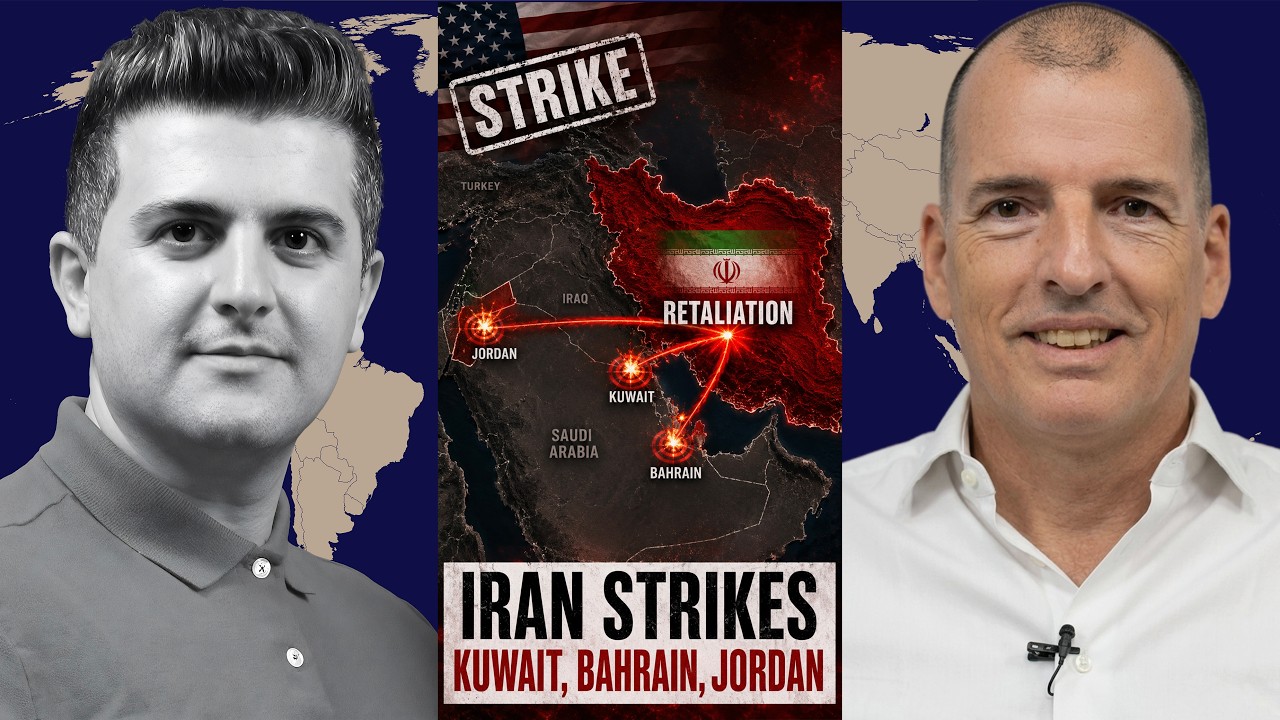
Alex Krainer: US STRIKES Iran – Iran RETALIATES Against Kuwait, Bahrain & Jordan!
"Amidst escalating US-Iran conflict and Iranian retaliation against regional US allies, this episode argues that US foreign policy is deeply controlled by an 'Anglo-Zionist conspiracy' led by the Rothschild banking dynasty, prioritizing Israeli interests over American ones."