SCOTUS Shields USPS in Mail-In Ballot Case. White South Africans Fast-Tracked. Lacks Settlement
YouTube · 9Klty8tX8uQ
Quick Read
Summary
Takeaways
- ❖The Supreme Court's 5-4 decision, authored by Justice Clarence Thomas, prevents lawsuits against the USPS for intentional non-delivery of mail.
- ❖This ruling is seen as a 'green light' for postal workers to potentially withhold mail-in ballots from specific zip codes, particularly those with high Black or Latino populations.
- ❖Elections are frequently decided by margins as small as 7,000 votes, making even minor vote suppression impactful.
- ❖Republican strategy, as articulated by Paul Weyrich in 1991, is explicitly to prevent certain demographics from voting.
- ❖Vice President Kamala Harris endorsed Congresswoman Jasmine Crockett in the Texas Democratic Senate primary, a rare national-level primary endorsement.
- ❖Debate exists regarding the 'viability' of a Black woman (Crockett) versus a white man (Talarico) in a Texas statewide election, with some attributing 'viability' concerns to racial and gender bias.
- ❖North Carolina Governor Roy Cooper, a Democratic Senate candidate, advocates for cutting tax breaks for the wealthy, expanding Medicaid, and addressing tariffs to lower consumer costs.
- ❖Democrats' pathway to recapturing the Senate is seen in states like North Carolina, Maine, Alaska, Ohio, and Iowa, not traditionally red states like Texas or Florida.
- ❖Effective voter mobilization requires year-round, micro-level infrastructure building, independent of candidate campaigns or party cycles.
Insights
1SCOTUS Ruling Enables Targeted Voter Suppression via Mail
The Supreme Court's 5-4 decision, with Justice Clarence Thomas writing for the majority, ruled that the U.S. Postal Service cannot be sued for intentionally choosing not to deliver mail. This decision is framed as a critical vulnerability for mail-in voting, as it could allow postal employees to deliberately withhold ballots from specific zip codes known to be Democratic strongholds or predominantly Black and Latino communities without legal repercussion. This tactic, combined with state laws that invalidate ballots received after election night, creates a powerful mechanism for voter suppression.
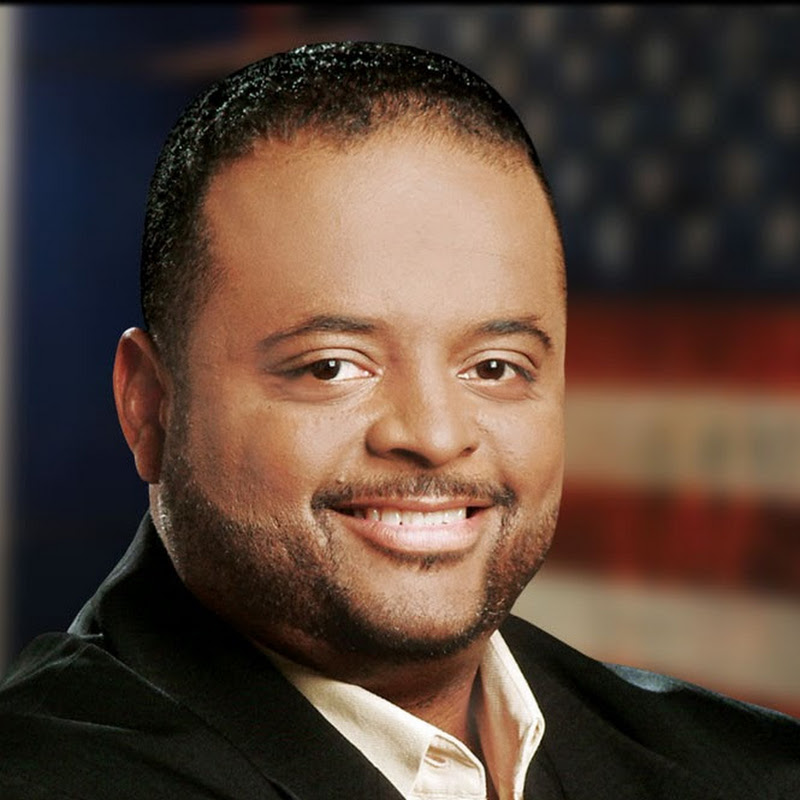
Host Roland Martin and guest Cliff Albright (Black Voters Matter co-founder) discuss the 5-4 Supreme Court decision, citing the case of Leine Kadan, a Black Texas landlord whose mail was allegedly withheld due to racial prejudice. Albright states, 'All you need is some postal workers or a postmaster general that will say, 'Oh, let's hold on to these as you said in these targeted [cities].' (, )
2Elections Decided by Critical Mass, Not Total Suppression
The guests emphasize that voter suppression does not require disenfranchising every voter in a given area. Instead, elections are increasingly decided by extremely narrow margins—often thousands or even hundreds of votes. Therefore, suppressing a 'critical mass' of votes in key precincts or demographic groups is sufficient to swing an election or control legislative chambers, making targeted mail non-delivery a potent tool.
Roland Martin highlights that Republicans won the House by a total of 7,000 votes across critical races. Cliff Albright adds, 'You don't have to suppress every vote... All you need to do is suppress a critical mass, right? A certain margin because all of these elections... are going to be close.' (, )
3Racial and Gender Bias in Candidate 'Viability' in Texas
The discussion around the Texas Democratic Senate primary, where Kamala Harris endorsed Jasmine Crockett, exposes underlying racial and gender biases in political 'viability' assessments. Despite polling showing Crockett competitive, some Democrats and media narratives frame the white male candidate, James Talarico, as 'more viable,' which panelists attribute to a preconceived notion of what a Texas Senator 'looks like.'
Roland Martin questions why Talarico is considered 'more viable' than Crockett, stating, 'I think he's more viable than she is because he's a white man and they think that confers upon him a greater ability to win this state.' (, ) Michael Imhotep adds that 'they are operating based upon their conception of what a US senator from Texas looks like.' ()
4Need for Sustained, Independent Black Voter Infrastructure
Panelists argue that relying on candidate campaigns or political parties for voter mobilization is insufficient. A permanent, year-round, and independently funded Black voter infrastructure is essential to consistently engage and mobilize voters, especially in states like Texas and Florida where Democratic party infrastructure is weak. This infrastructure should focus on micro-level organizing and addressing community needs beyond election cycles.
Roland Martin states, 'We can't wait on campaigns. We cannot wait on parties to fund what's happening on the ground.' () He later emphasizes, 'Our black infrastructure must be a black infrastructure that's not completely controlled by the party because we have to have the flexibility to be able to where it is it is going on 365.' ()
Lessons
- Voters should proactively check their registration status and be vigilant about potential mail-in ballot delays or non-delivery, especially in targeted areas.
- Support and fund independent, year-round voter mobilization organizations, particularly those focused on Black and minority communities, to build sustained infrastructure beyond election cycles.
- Challenge narratives that frame candidates based on race or gender as 'less viable' and instead focus on their qualifications, policy platforms, and actual polling data.
- Engage in local politics and community organizing at a micro-level (precinct by precinct) to narrow Republican margins in rural areas and maximize Democratic turnout in urban centers.
Quotes
"All you need is a critical number, critical mass, in order to take away just enough votes in order to swing these elections."
"People don't cheat when they're winning, right? You don't start reigging in spades if if you're winning."
"The idea that the Supreme Court is saying, 'Yeah, it's okay. You can choose not to deliver mail' is is problematic."
"When they show you, believe them. And I believe they are crooks."
"If the infrastructure was in place, you don't go from a 2.6 point lead loss to a 10-point loss and now all of a sudden the state's going to flip."
Q&A
Recent Questions
Related Episodes

GOP Plots New Trump Supreme Court Pick Before Midterms | Elie Mystal | TMR
"Elie Mystal and Sam Seder discuss the Republican strategy to pressure Justice Samuel Alito into retiring before the midterms to allow Donald Trump to appoint a new, younger conservative justice, and the origins of the Supreme Court's 'shadow docket'."

A major shift is happening right now
"Donald Trump is losing his grip on the Republican party and movement, evidenced by internal dissent and a broader political landscape grappling with a collapse of accountability and truth."

Ken Paxton Dominates Cornyn Ahead of Race Against RADICAL Talarico, Plus SHOCK Prince Andrew Stories
"Megyn Kelly delivers a sharp analysis of Ken Paxton's decisive victory in the Texas Republican primary and his upcoming battle against a 'radical' Democratic opponent, alongside explosive new allegations of predatory behavior and corruption surrounding Prince Andrew and Sarah Ferguson."

HOT TOPICS | WARNING: Donald Trump's Iran War Chaos Has Hit the Point of No Return!
"Don Lemon delivers a scathing critique of Donald Trump's recent actions, framing them as desperate, unconstitutional attempts to consolidate power, undermine democracy, and distract from economic and foreign policy failures, all while questioning his mental stability."