
Trump BLINDSIDED as Lawyers Go on OFFENSE with THE LAW
YouTube · A6ca_E8iSNo
Quick Read
Summary
Takeaways
- ❖Movement lawyering focuses on shifting power to impacted communities through organizing, not just legal action.
- ❖Lawyers must develop equal respect for organizing and legal skills, understanding how power is built outside the courtroom.
- ❖Building deep, sincere relationships with community movements is fundamental, moving beyond transactional client interactions.
- ❖Lawyers should not underestimate their inherent privilege and authority; listening and humility are paramount.
- ❖Success is measured by community power-building, not solely by winning cases or passing policies.
- ❖Movement lawyers should utilize all their skills, not just legal ones, to support community efforts (e.g., communications, strategy).
- ❖A strong political analysis is essential to understand the law's limitations and its historical role in maintaining inequality.
- ❖Hope in social change is a discipline, requiring daily commitment and grounding in collective action, not just legal systems.
Insights
1Movement Lawyering: Shifting Power to Communities
Movement lawyering is defined by its core theory of change: achieving sustainable social change by shifting power to the communities most impacted. This is best accomplished through organizing. Lawyers act as supportive forces, working alongside and supporting community organizing, rather than leading or dictating the direction.
The host states, 'your theory of change is that sustainable change through uh you achieve sustainable change by shifting power to the communities most impacted uh and which is best accomplished through organizing, right?' ()
2The 'Dos' of Movement Lawyering: Skill and Relationship
Movement lawyers must excel in two key areas: honing their legal craft and deeply understanding community organizing. Movements deserve the best legal support, but lawyers also need to develop an equal respect for organizing work and how power is built. Crucially, they must cultivate 'right relationships' – deep, sincere, and non-transactional connections with movements, moving beyond the traditional client-lawyer dynamic.
Ama emphasizes, 'not just knowing the law, which you should and you should be honing your legal skills. Absolutely. Right. movements deserve the best and the brightest...' () and 'you need to also understand organizing and how movements work, how power is built.' (). Marbre adds, 'being in right relationship... is a depth and a sincerity of relationships that is not just transactional.' ()
3The 'Don'ts' of Movement Lawyering: Avoiding Pitfalls
Movement lawyers should avoid common pitfalls: underestimating their privilege and authority, mistaking legal victories for the ultimate goal, and being confined solely to a 'legal practitioner' identity. Lawyer privilege can inadvertently shape conversations, so active listening is crucial. Losing a case can still build community power, meaning the 'ends' are community empowerment, not just court wins. Lawyers should also be willing to use non-legal skills like communications strategy or breaking down complex information.
Marbre states, 'don't underestimate um the privilege you have' () and 'don't mistake the the means for the end... The ends of movement lawyering is seeing communities um be able to step into and exercise their power in meaningful ways.' (). Ama adds, 'don't be afraid to reach into or at least tap into... other skills that you have that are not just legal skills.' ()
4Law's Dual Nature: Tool for Justice and Protector of Power
Movement lawyers must operate with a robust political analysis, recognizing that while law is an indispensable tool for justice (e.g., keeping someone in their home), it was also created and structured to protect power and naturalize injustices like slavery or misogyny. The law will not 'save us' on its own; ultimately, it bends to power. This skepticism about the law's absolute purity is crucial for effective movement lawyering, which takes its lead from community building rather than solely from legal precedent.
Marbre explains, 'the law is absolutely indispensable and key tool in creating space for groups to pursue justice... And also, the law was created and structured to protect power.' () and 'the reality is that it absolutely will not save us, right? That ultimately the law bends to power.' ()
Lessons
- If you are a lawyer, actively seek out and join political or community organizations to ground your legal work in collective action and build accountable relationships.
- Prioritize understanding community organizing strategies and power dynamics as much as you do legal doctrine; movements need lawyers who are both legally competent and politically astute.
- When engaging with communities, consciously mitigate your inherent lawyer privilege by practicing active listening and valuing community perspectives over your own legal interpretations.
- Broaden your definition of a lawyer's role: be prepared to contribute non-legal skills (e.g., communications, logistics, strategic thinking) to support movement goals.
- Measure the success of your legal interventions not just by court victories or policy changes, but by whether they genuinely build power, legitimacy, and space for the communities you serve.
Quotes
"movements deserve the best and the brightest and you can only bring your best if you are practicing and you are a student of your craft."
"the strength of any movement is the strength of the relationships and the accountability structures inside of that movement."
"The ends of movement lawyering is seeing communities um be able to step into and exercise their power in meaningful ways."
"the law is such an important tool in our toolbox it's one we're seeing right how how incredibly powerful it can be in really kind of staving off or slowing down authoritarianism and other threats. But the reality is that it absolutely will not save us, right?"
"hope is a discipline and that you do have to do something every day, right? To keep to keep that going, to keep your hope going."
"I went to law school thinking that this system was broken and left realizing it was rotten. And the difference between fixing a broken system and replacing a rotten one is absolutely huge."
Q&A
Recent Questions
Related Episodes
Celebrating the Legacy of the Rev. Dr. Bernard Lafayette, Jr.
"This memorial service celebrates the life and enduring legacy of Rev. Dr. Bernard Lafayette, Jr., a pivotal civil rights leader, nonviolence strategist, and educator whose teachings transformed movements globally."

LIVE! Love Forward Together Mass People’s Assembly & Moral March Mobilization In Raleigh, NC
"Thousands marched across North Carolina in the 'This Is Our Selma' movement, led by Reverend William Barber, to combat gerrymandering, voter suppression, and advocate for a proactive, love-driven vision of social and economic justice."
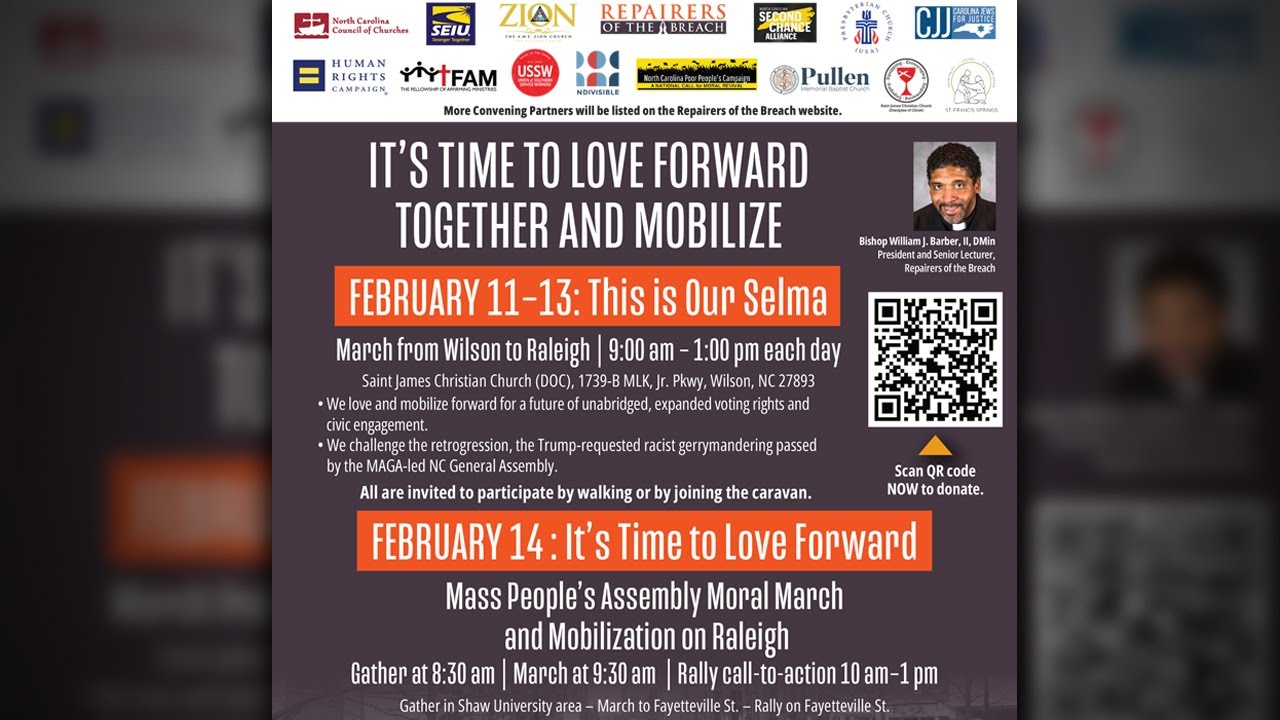
Love Forward Together Mass People’s Assembly & Moral March Mobilization | Day 2
"This episode documents Day 2 of the 'Love Forward Together' march in rural North Carolina, a mobilization against voter disenfranchisement and redistricting, emphasizing community unity and persistent activism."
The Texas Yogurt Shop Exonerations | "Case by Case" | "48 Hours" Podcast
"Four men, including the late Maurice Pierce, were wrongfully accused and suffered decades of public scorn and legal battles for the 1991 Austin yogurt shop murders, only to be exonerated after DNA evidence identified the real killer, highlighting severe systemic failures and police misconduct."