
Homegoing Service for Ronald LaPread, co-founder of and bassist for the Commodores
YouTube · AVLSzB9_wic
Quick Read
Summary
Takeaways
- ❖Ronald LaPread, co-founder and bassist of The Commodores, passed away at 76 in Oakland, having lived in New Zealand for 40 years.
- ❖He was born in Tuskegee, Alabama, in 1949, during the Civil Rights era, and was among the first students to integrate his high school.
- ❖LaPread's distinct bass playing propelled The Commodores to global fame from 1974-1985, contributing to hits like 'Brick House' and 'Three Times a Lady'.
- ❖He was deeply influenced by a chance meeting with Martin Luther King Jr. at age 15, participating in the Selma march and sit-ins.
- ❖Ronald was initially trained as an engineer at Tuskegee Institute before joining The Commodores in late 1969.
- ❖He was born Baptist and later converted to Islam, demonstrating an open-minded and inclusive approach to faith.
- ❖His daughter Sera described him as her 'soulmate,' teacher, protector, and companion, emphasizing his unconditional love and belief in her.
- ❖Ronald Jr. highlighted his father's emphasis on respect, noting how he was loved genuinely by people worldwide, not just for his fame.
- ❖Friend Mike King recounted Ronald's unique mannerisms, including 'Hey man,' 'mud sucker,' 'show you're right,' and always saying 'peace' instead of goodbye.
- ❖Dr. Lemon McMillan, a long-time friend, recalled Ronald's lowest point after leaving The Commodores until he met his wife, Ferry, who helped him become a serious businessman.
- ❖Ronald's passion for music never waned; he was discussing a new record label and aiming for a Grammy on the day he passed.
- ❖A recurring theme was Ronald's ability to make everyone feel like his best friend, fostering a diverse and eclectic group of relationships.
Insights
1Ronald LaPread's Dual Legacy: Global Icon and Community Pillar
Pastor John Curry highlighted that while the world remembers Ronald LaPread as a musical icon for the joy his music brought, his family remembers him for his love, and his church community celebrates him as one of their own, whose roots remained planted in faith and fellowship.
The world will remember him for the joy his music brought. His family will remember him for his love and Malik will remember him as a son of his church family whose roots remain planted in faith fellowship that helped shape his journey.
2Early Life and Family Roots on a Self-Sufficient Farm
Ronald LaPread's grandson shared that LaPread grew up on a 300-acre family farm in Tuskegee, Alabama, owned by his grandfather, who was 'probably the first black man to have 300 acres land.' The farm cultivated corn, cotton, and watermelon, fostering a self-sufficient environment where the boys formed their own sports teams.
He was probably the first black man to have 300 acres land and he planted corn and cotton and watermelon and things like that. And all of the boys grew up on the farm like that. So we had our own football team, we had our own basketball team, we had our own baseball team and we would go around and play everybody in the neighborhood.
3Personal Character and Artistic Identity
When asked what he wanted people to remember about him, Ronald LaPread described himself as kind, gentle, a 'bad monstrum' on guitar, able to dance and write, but fundamentally a good person. He called himself 'Shaggy Dog' because 'dog is man's best friend,' reflecting his approachable and loyal nature.
I'm kind. I'm gentle. I'm a bad monstrum when it comes to playing guitar. I can dance. I can write, but I'm still a good person. I'll talk to anybody. I'll go anywhere. I'll do anything if that's what we're doing. I'm a good guy. I call myself Shaggy Dog. Dog is man's best friend.
Lessons
- Prioritize spending time with loved ones and friends, as opportunities may not always recur (Mike King, 01:55:08).
- Embrace an inclusive approach to faith and respect diverse backgrounds, as exemplified by Ronald's spiritual journey (Sera LaPread, 00:48:48).
- Cultivate deep self-respect and extend it to others, as respect is a foundational value that carries people through life (Ronald LaPread Jr., 01:00:01).
- Reflect on the multifaceted legacies individuals leave behind – not just professional achievements, but also personal character, faith, and community contributions.
- Consider the importance of family history and roots in shaping an individual's journey and values, as exemplified by LaPread's upbringing on a self-sufficient farm.
- Embrace and articulate your core personal values and how you wish to be remembered, much like LaPread's self-description as 'kind' and 'Shaggy Dog.'
Notable Moments
Tim Roxbor recounts how Ronald LaPread, a famous musician, showed up at his apartment for a college interview 25 years prior, an act of kindness that blew his mind and started a lifelong friendship.
This anecdote illustrates Ronald's humility, generosity, and willingness to connect with people on a personal level, regardless of his celebrity status.
Ronald LaPread's daughter, Sera, describes their unique bond, stating, 'I am my dad. From every groove in my hand to the expression on my face and the love in my heart.'
This powerfully conveys the deep, almost spiritual connection between father and daughter, highlighting how Ronald's essence profoundly shaped her identity and values.
Mike King shares a regret about declining an invitation from Ronald to attend a Commodores concert backstage, thinking 'there'll be other times,' only to realize there never was another time.
This serves as a poignant reminder to cherish opportunities with loved ones and not postpone moments, as life's uncertainties mean 'there might never be another time.'
Neil 'Rashins' recounts meeting Ronald LaPread in a notorious Auckland bar in 1986, where Ronald, despite his fame, offered to help during a fight, embodying his humble and protective nature.
This story vividly portrays Ronald's down-to-earth character, his immediate connection with people, and his willingness to engage in ordinary situations despite being a global music icon.
Pastor John Curry's eulogy for Ronald LaPread, emphasizing his musical legacy and deep community roots.
This segment clearly articulates the dual impact of LaPread's life: his global influence through music and his cherished role within his local church and family.
Performance of Sam Cooke's 'A Change Is Gonna Come,' followed by 'Precious Lord, Take My Hand' and 'Amazing Grace.'
These gospel and soul classics set a deeply spiritual and reflective tone, connecting LaPread's life to themes of hope, faith, and eventual peace.
Ronald LaPread's grandson sharing personal anecdotes about LaPread's upbringing on a 300-acre family farm in Tuskegee, Alabama.
This provided a rare, intimate glimpse into LaPread's formative years and the strong familial and agricultural foundations that shaped him, adding depth to his public persona.
The playing of Commodores hits like 'Easy Like Sunday Morning' and 'Nightshift' during the service.
These musical tributes directly honored LaPread's iconic contributions to The Commodores, allowing his own music to be a central part of his farewell.
The committal service where family and community members individually contributed handfuls of dirt to the grave.
This act provided a deeply personal and communal moment of farewell, symbolizing shared grief, support, and the final resting of a beloved individual.
Quotes
"We are here because of what Ronald was but also what what Ronald did. We are here to give great thanks to God for wonderful gift of music which inspired him and inspired many through him and which continues to inspire many in many different ways."
"His distinct prominent bass playing helped propel the Commodores to the top of global charts during their peak years between 1974 and 1985, making them one of the biggest American R&B bands of all time."
"His faith was deeply personal, but it was also inclusive. And that openness became one of the values he passed on to me."
"My dad taught me to respect people from different backgrounds and beliefs, and he always emphasized the idea of one God."
"He was always looking ahead. He was always dreaming, always creating, and always building. He never allowed fear, setbacks, age, or circumstance slow him down. His heart was fixed on what was possible."
"If you got a friend or a loved one that asks you to do something, don't say there'll be another time, cuz there might never be another time."
"His life stands as a testimony that greatness and humility can walk hand in hand. And though he achieved worldwide recognition, he never lost the connection to his family, his heritage, and the people who loved him."
"I have fought a good fight. I finished my course. I have kept the faith."
"Ronald's song did not end. It simply transitioned from Earth's stage to Heaven's Choir."
"He was probably the first black man to have 300 acres land and he planted corn and cotton and watermelon and things like that."
"I'm kind. I'm gentle. I'm a bad monstrum when it comes to playing guitar. I can dance. I can write, but I'm still a good person. I'll talk to anybody. I'll go anywhere. I'll do anything if that's what we're doing. I'm a good guy. I call myself Shaggy Dog. Dog is man's best friend."
"Let us love one another. Let us care for each other. Let us be good in this world that needs good people. Ronald has shown us that we can live that way no matter where we are and what we do."
Q&A
Recent Questions
Related Episodes

PATREON EXCLUSIVE | The Human Experience (feat. Eric Benet and T.I) | The Joe Budden Podcast
"Eric Benét and T.I. offer candid insights into the evolving music industry, the challenges of maintaining authenticity, and their personal philosophies on career longevity, health, and societal changes."

Freedom to Discriminate: Realtors Conspired to Segregate Housing & Divide America |#RolandsBookClub
"This episode exposes how American realtors deliberately invented and institutionalized housing segregation, shaping federal policy and ultimately redefining the concept of 'freedom' to fuel a political ideology that continues to divide the nation."

Spice: "I'm Not Watering Down My Culture for Anybody" | Funky Friday
"Dancehall Queen Spice discusses her 27-year career, the origins of dancehall and hip-hop, the pervasive issue of colorism, and her unapologetic views on relationships and cheating."
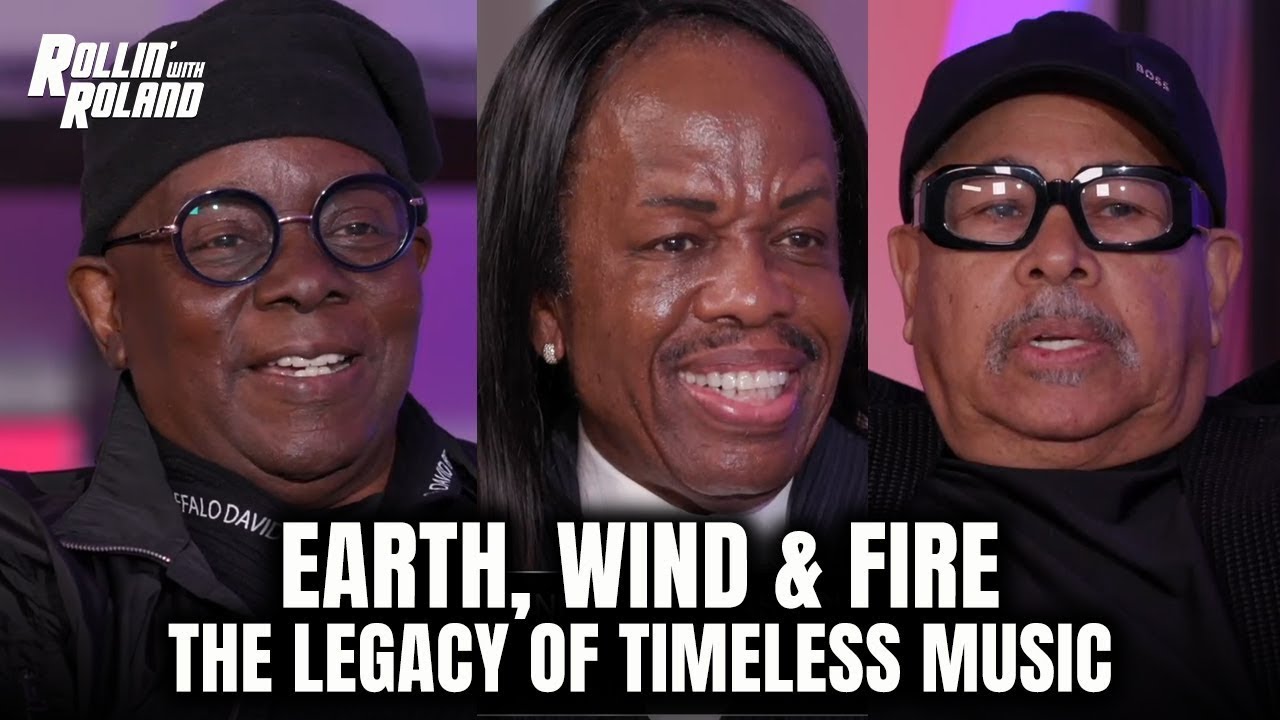
Earth, Wind & Fire on Timeless Music, Legacy & Generations Grooving Together | #RollinWithRoland
"Earth, Wind & Fire members reflect on the enduring power of their music, its multi-generational appeal, and the critical factors that sustained their legendary career through industry shifts and personal challenges."