
Our latest reports on the Iran war | 60 Minutes Full Episodes
YouTube · AtQ3WPd3OWA
Quick Read
Summary
Takeaways
- ❖Raza Pahlavi, son of the former Shah, believes the Iranian regime is collapsing and seeks to lead a democratic transition, advocating for peace with Israel and nuclear disarmament.
- ❖Defense Secretary Pete Hegseth asserts the US goal is 'unconditional surrender' from Iran, leveraging overwhelming airpower and reserving the right for any necessary action, including ground operations.
- ❖The Strait of Hormuz, a crucial choke point for 20% of the world's oil, remains largely closed due to Iranian threats, leading to significant increases in global energy and consumer prices.
- ❖Iranian drones, costing as little as $20,000, are proving highly effective against US anti-missile interceptors that cost millions, highlighting a critical asymmetric warfare challenge.
- ❖Laser defense systems, like AV's Locust, offer a cost-effective counter to drones (approx. $3 per shot vs. $4 million for a Patriot missile) but face challenges in scaling production and deployment.
- ❖Iran is estimated to possess enough highly enriched uranium for 10-11 nuclear bombs, stored in deep, fortified tunnels, making its removal a complex and high-risk operation.
- ❖A US Army Master Sergeant was charged with using classified intelligence to profit over $400,000 from betting on military operations, exposing a new form of insider trading on prediction markets.
- ❖Bubble Maps identified a group of nine linked Poly Market accounts with a 98% win rate, collectively profiting $2.4 million from bets on US military operations in Iran, suggesting systemic insider trading.
- ❖Israeli Prime Minister Benjamin Netanyahu states the war is not over until Iran's nuclear material is removed and proxies are dismantled, while also expressing a desire for Israel to wean off US financial aid over the next decade.
- ❖The US military is actively learning from Ukraine's drone warfare innovations, integrating drones into training and developing new counter-drone technologies to maintain supremacy.
Insights
1Iranian Opposition's Vision for a Post-Regime Iran
Raza Pahlavi, son of the last Shah, sees the current conflict as an opportunity for the Iranian regime's collapse. He envisions leading a transitional government towards a secular, democratic Iran based on territorial integrity, separation of religion and state, equality under law, and individual liberties. He advocates for peace with Israel and the complete dismantling of Iran's nuclear weapons program, rejecting the idea of becoming a king.
Pahlavi states, 'I'm not running for office... They trust me as the transitional leader, not as the future king or future president.' He outlines four core principles: territorial integrity, separation of religion from state, equality of citizens, and a democratic process. He also confirms, 'I imagine peace with Israel,' and regarding nuclear weapons, 'I think it should be totally dismantled.'
2US Military Strategy: Unconditional Surrender and Overwhelming Force
Defense Secretary Pete Hegseth outlines the US strategy of 'unconditional surrender' for Iran, emphasizing that the US and Israeli air forces possess overwhelming capabilities. He clarifies that this is not a traditional 'regime change war' with massive ground troop deployments, but rather a targeted campaign to render Iran combat ineffective. While denying current 'boots on the ground,' he maintains the right to use any option necessary to achieve objectives.
Hegseth states, 'We're fighting to win. It means we set the terms. We'll know when they're not capable of fighting.' He adds, 'This is not a regime change war, but the regime has changed. That's obvious. Can you square the two? Sure. Go ahead. I meant what I said. It's not a regime change war in the conventional George W. Bush context of hundreds of thousands of troops.' He also confirms, 'We reserve the right... to take any particular option, whether it included boots on the ground or no boots on the ground.'
3Strait of Hormuz Blockade and Global Economic Impact
Iran's blockade of the Strait of Hormuz, a critical waterway for 20% of the world's oil, has brought commercial shipping to a standstill. This unprecedented closure has caused US gas prices to rise by over 65 cents per gallon, with projections of new record highs. The disruption extends to jet and diesel fuel, threatening higher plane tickets and grocery prices, demonstrating a direct trickle-down effect on the global supply chain.
Matt Smith, an oil market analyst, notes that daily ship traffic dropped from 100 to 'one or two tankers' after the war began. Bob McNally, an energy advisor, calls it 'the mother of all choke points' and warns of 'new records' for gas prices if Hormuz isn't reopened. Captain Zilka Lemuster confirms, 'all navigating through the straight of hormones is forbidden,' leading to 'hundreds if not thousands of ships sitting hovering outside.'
4Asymmetric Drone Warfare and Laser Countermeasures
Iran's mass-produced Shahed drones, costing as little as $20,000, are inflicting significant damage and casualties, including on US service members. These low-tech drones are draining US weapon stockpiles, as expensive anti-missile interceptors (costing millions) are used to counter them. Laser defense systems, like AV's Locust, are emerging as a cost-effective solution, capable of shooting down drones for as little as $3 per shot, though scaling production and deployment remain challenges.
The report highlights that 'Iranian drones are a drain on the US weapon stockpiles.' Wahed Nawabi, CEO of Aervironment, states a Patriot missile costs '$4 million a shot,' while a laser shot costs 'less than $5 a shot.' Mara Carlin, former Pentagon official, notes the US 'did not go into this war prepared for other threats like drones hitting soft targets.'
5Challenges of Removing Iran's Highly Enriched Uranium (HEU)
Despite US claims of obliterating Iran's nuclear infrastructure, international monitors estimate Iran still possesses nearly 1,000 pounds of 60% enriched uranium, enough for 10-11 nuclear bombs. This material is stored in deep, fortified tunnels at facilities like Isfahan and Pickaxe Mountain, making military removal extremely difficult and risky. Experts suggest a cooperative agreement, similar to 'Project Sapphire' in Kazakhstan, is the only viable path, but distrust makes this unlikely.
Dr. Matthew Bunn states, 'Iran still has enough nuclear material for a bunch of nuclear bombs.' Andrew Weber, who led Project Sapphire, explains that in Iran, 'you would need to set up in the middle of the country a secure perimeter. It would probably take thousands of US troops.' Scott Roker, former NNSA official, emphasizes, 'You want to have a willing partner who's working with you hand-in-hand. I've never seen it done without that.'
6The Rise of War Betting and Insider Trading
A new phenomenon of online prediction markets allows individuals to bet on military decisions and outcomes, leading to alarming instances of insider trading. A US Army Master Sergeant was charged with using classified intelligence from a Venezuela mission to net over $400,000. Analysis by Anti-Corruption Data Collective and Bubble Maps reveals systemic insider trading, with some accounts achieving a 98% win rate on military bets, raising serious national security concerns and the potential for information manipulation.
Rob Schwarz, former CFTC, calls the soldier's actions 'one of the worst betrayals of trust.' Michelle Kendler Cret notes military bets have a '52% success rate' compared to 'Sports 7%.' Nicholas Vimman's firm identified accounts with a '98% win rate' on 'US military operations,' profiting '$2.4 million.' Emanuel Fabian, a journalist, received death threats for a story that voided $22 million in war bets.
7Netanyahu's Post-War Objectives and US Aid Stance
Israeli Prime Minister Benjamin Netanyahu asserts the war with Iran is not over until all highly enriched uranium is removed, enrichment sites are dismantled, and Iranian proxies are neutralized. He also expresses a desire for Israel to gradually reduce and eventually eliminate its financial reliance on US military aid over the next decade, citing shifting public attitudes and Israel's growing economic and technological capabilities.
Netanyahu states, 'it's not over because there's still nuclear material, enriched uranium that has to be taken out of Iran.' He also declares, 'I want to draw down to zero the American financial support... I want to start now and do it over the next decade.'
Bottom Line
The emergence of 'war betting' on prediction markets creates a novel and dangerous vector for insider trading, potentially allowing adversaries to glean operational intelligence or manipulate public perception by observing suspicious trading patterns.
This phenomenon not only undermines market integrity but poses a direct national security threat. If foreign entities or rogue insiders can profit from foreknowledge of military actions, it incentivizes espionage and could influence military planning, putting lives at risk.
Governments and regulatory bodies need to rapidly develop sophisticated AI-driven surveillance tools to detect and prosecute war-related insider trading across all markets, including decentralized prediction platforms. This also presents an opportunity for defense contractors to develop secure, unhackable communication and planning systems to prevent information leaks.
Ukraine's rapid, decentralized drone innovation model, moving from concept to deployment in as little as a week, offers a blueprint for other nations to counter asymmetric threats and adapt quickly on the battlefield.
Traditional military procurement cycles are too slow to keep pace with modern, rapidly evolving threats like cheap, mass-produced drones. Adopting Ukraine's 'end-user' driven, agile development approach could significantly enhance military readiness and effectiveness against future adversaries.
Establish 'Forge'-like innovation labs within military units, empowering soldiers to directly contribute to drone design and countermeasure development. Invest in modular, adaptable drone platforms that can be quickly reconfigured for various missions (e.g., evacuation, attack, surveillance) and foster public-private partnerships with agile tech companies to accelerate R&D and production.
Opportunities
Rapid-Scale Laser Defense Systems for Drone Countermeasures
Develop and rapidly scale production of cost-effective laser defense systems (like AV's Locust) specifically designed to neutralize cheap, mass-produced drones. Focus on modularity, ease of deployment (truck-mounted, stationary), and all-weather capability to meet urgent global demand.
Decentralized Military Drone Innovation Hubs
Establish and fund a network of decentralized innovation labs (similar to Ukraine's model) that empower military personnel and civilian engineers to rapidly design, prototype, and deploy drones and counter-drone technologies. Emphasize agile development cycles (e.g., one-week iteration) and direct feedback from 'end-users' (soldiers on the front line).
Key Concepts
Asymmetric Warfare
A military strategy where opposing sides have vastly different resources and tactics. Iran's use of cheap, mass-produced drones against expensive US interceptors exemplifies this, forcing the US to seek cost-effective countermeasures like lasers.
Choke Point (Geopolitical)
A narrow passage, such as a strait or canal, that is strategically important for trade or military movement. The Strait of Hormuz is a prime example, where Iran's control has halted global oil shipments, causing significant economic disruption.
Insider Trading (War Bets)
The unethical and illegal practice of using non-public, material information to make financial gains. This episode highlights a new form where individuals with classified military intelligence bet on the outcomes of military operations, creating national security risks and market manipulation.
Lessons
- Assess your supply chain for vulnerabilities to geopolitical choke points like the Strait of Hormuz, considering alternative routes or stockpiling strategies to mitigate energy and shipping disruptions.
- Investigate and implement cost-effective, asymmetric defense technologies, such as laser systems, to counter the rising threat of cheap, mass-produced drones in modern warfare.
- Advocate for stronger regulatory oversight and enforcement against insider trading in prediction markets, recognizing the potential for national security risks and information manipulation in times of conflict.
Blueprint for Highly Enriched Uranium (HEU) Removal (Project Sapphire Model)
Establish Trust and Diplomatic Channels: Engage in prolonged, covert diplomatic efforts to build trust with key figures in the HEU-holding nation, potentially through non-military pretexts.
Secure Intelligence and Agreement: Obtain precise intelligence on HEU location, quantity, and enrichment levels. Negotiate a formal agreement for the US to take possession of the stockpile, requiring a willing partner.
Assemble Specialized Teams and Equipment: Dispatch multi-agency teams (Defense, Energy, intelligence) with specialized, crash-resistant transport drums and heavy-lift cargo aircraft (e.g., C5 Galaxy).
Execute Covert Packaging and Transport: Conduct the operation with utmost secrecy, packaging HEU in secure containers. Transport material over land to airfields under cover, mitigating risks of interception or accidents.
Fly to Secure US Facility: Airlift the HEU to a Department of Energy complex in the United States for long-term safekeeping and dismantlement.
Notable Moments
Raza Pahlavi describes the killing of Ayatollah Khamenei as an 'earthshattering event' leading to 'elation' among Iranians, calling Khamenei the 'chief monster' of the regime.
This highlights the deep-seated animosity towards the Iranian regime's supreme leader and the potential for public uprising following his death, framing it as a moment of liberation for the Iranian people.
Defense Secretary Pete Hegseth dismisses concerns about Israeli influence on US war decisions, stating, 'President Trump's approach has been our interest in advancing those interests from the beginning.'
This statement directly addresses criticism that the US was pulled into the war by Israel, asserting that US actions are solely driven by American interests and control.
Captain Zilka Lemuster, overseeing a 300-vessel fleet, recounts receiving a message from Iran's Revolutionary Guard forbidding all navigation through the Strait of Hormuz, leading to a complete standstill of hundreds of ships.
This vividly illustrates the immediate and direct impact of Iran's control over the Strait, showcasing the real-time threat commercial shipping faces and the resulting global economic paralysis.
Aervironment CEO Wahed Nawabi reveals their Locust laser system, designed to counter Shahed drones, has been deployed in 'multiple battles in different theaters around the world' but not in the current Iran war.
This indicates that advanced, cost-effective counter-drone technology exists and is proven, but its absence in a critical conflict highlights potential bureaucratic or logistical hurdles in military procurement and deployment.
Journalist Emanuel Fabian receives death threats for a news story that voided $22 million in war bets on Poly Market, with threats including details about his family.
This chilling incident underscores the extreme real-world dangers and potential for coercion associated with war betting, demonstrating how financial stakes can directly threaten journalists and manipulate information integrity.
Quotes
"When he's gone one the minute such a personality disappears it's like elation it was like oh my god it has finally occurred maybe this is it this is our chance now."
"We're fighting to win. It means we set the terms. We'll know when they're not capable of fighting."
"Choke point understates it. This is the mother of all choke points. Imagine your heart has one artery taking that lifeblood to the rest of your body and that is what the straight of hormones is."
"The cost per shot goes from $4 million a shot to less than $5 a shot. In most cases, about $3 a shot."
"If you can think of it, you can make a drone do it."
"You can't say that a program that still has enough nuclear material for a bunch of nuclear bombs is obliterated."
"If the allegations are true, this is one of the worst betrayals of trust in this area that that I can remember and and possibly ever."
"I want to draw down to zero the American financial support, the financial component of the military cooperation that we have because we receive we receive uh $3.8 8 billion a year and I uh I think that it's time that we weaned ourselves from the remaining uh military support."
Q&A
Recent Questions
Related Episodes

Patrick Henningsen: Hezbollah JUST Fired Back at Israel - Iran Vows to “Crush” All Attacks
"Patrick Henningsen argues that the US and Israel initiated an illegal war against Iran, driven by Trump's incompetence and Israeli influence, leading to an inevitable escalation with severe global economic repercussions."

🚨 TOTAL F*CKING CHECKMATE 😂😂😂
"The host argues that Trump's 'ceasefire' with Iran was a calculated '5D chess' move to orchestrate a global energy market reshuffle, while simultaneously lambasting 'woke' domestic policies and the 'freefall' of anti-Trump conservative figures."

Bibi DEMANDS Ground Troops As Marines Rushed to Iran
"Benjamin Netanyahu is pushing for US ground troops in Iran, framing air strikes as insufficient, while the US rushes Marines to the region and struggles to secure the Strait of Hormuz against surprisingly capable Iranian defenses."
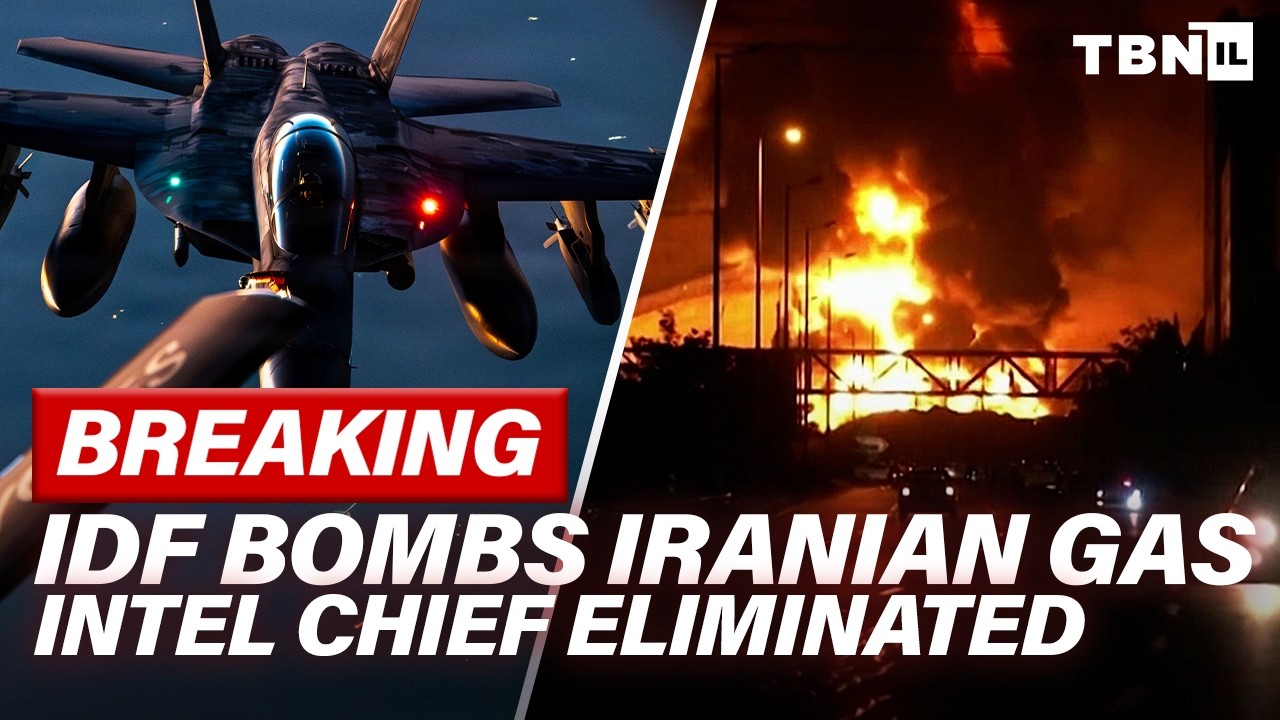
BREAKING: Israel BOMBS Major Iran Gas Site; Top Mullah ELIMINATED; Iran Vows VENGEACE | TBN Israel
"Israel and the United States have escalated their 'Roaring Lion War' against Iran, striking its largest gas facilities, eliminating key intelligence and military figures, and disrupting missile production, while Iran threatens a broader energy war in the Gulf."