Secretive Trump-Netanyahu Meeting Sends PANIC Across Iran's Ayatollah Regime | TBN Israel
YouTube · BGM6QTXCgA8
Quick Read
Summary
Takeaways
- ❖President Trump and Prime Minister Netanyahu held a secretive, unannounced meeting in the White House, followed by a Pentagon announcement of an additional carrier group heading to the Middle East.
- ❖The Middle East currently hosts the most substantial amassment of US weapon systems since the first Iraq invasion, including THAAD and Patriot anti-rocket systems.
- ❖US-Iran negotiations are indirect, with Iran wanting to discuss only nuclear issues, while the US demands a comprehensive deal covering ballistic missiles, proxies, and funding.
- ❖Iran possesses 1,800-2,000 ballistic missiles and is actively manufacturing more, receiving shipments from allies like China.
- ❖Iran uses 'terror boats' and slow drones to probe US defenses in the Strait of Hormuz, testing reactions without initiating full-scale attacks.
- ❖The Iranian regime leverages external threats and propaganda to divert attention from internal protests and economic struggles.
- ❖Disrupting the Strait of Hormuz, through which 20% of global oil passes, can instantaneously raise oil prices worldwide due to futures trading and perceived shortages.
- ❖Israel's defense establishment is boosting production of its multi-layered anti-rocket systems (Arrow, David's Sling, Iron Dome, laser beam systems) due to increased global demand.
- ❖The Israeli economy, particularly its defense sector, is experiencing record-breaking deals and a strengthening shekel, defying expectations of wartime downturns.
- ❖US weapon systems demonstrated superiority over Russian and Chinese defense technologies in recent operations, including offensive cyber attacks and precision strikes.
- ❖Israel's primary fear is a partial agreement with Iran that only addresses nuclear issues, leaving ballistic missiles, proxies, and the regime's oppressive nature unaddressed.
- ❖The ultimate goal for the US and Israel is regime change in Iran, aiming to dismantle the current radical Islamic government and restore the Persian nation.
Insights
1Secret Meeting & Unprecedented Military Buildup
President Trump and Prime Minister Netanyahu held a private meeting without public fanfare, immediately followed by the Pentagon announcing an additional carrier group deployment to the Middle East. This contributes to the largest accumulation of US weapon systems in the region since the first Iraq invasion, signaling a significant escalation of military readiness.
Trump and Netanyahu met; no press release except Trump calling it a 'good meeting' (). Pentagon announced additional carrier group (). 'Most substantial amassment of forces... biggest buildup of weapons since the first invasion to Iraq' ().
2Dual-Track Strategy: Diplomacy Under Military Pressure
The US is engaging in indirect negotiations with Iran, but simultaneously building up military capabilities. This 'yes, and' approach means diplomacy is pursued while military options are fully prepared, leveraging maximum pressure to achieve a comprehensive agreement beyond just nuclear issues.
Are we going the negotiation route or military route? 'The answer is yes.' (). 'You can't negotiate without having every military piece on the table.' (). 'Maximum pressure on the military level, maximum on the political.' ().
3Iran's Multi-Faceted Threat & Propaganda
Iran poses a direct military threat with 1,800-2,000 ballistic missiles, employs terrorism through proxies (Houthis, IRGC), and harasses oil vessels in the Strait of Hormuz to test responses and manipulate global oil prices. Internally, the regime uses these external tensions to divert public attention from widespread protests and economic hardship, projecting strength to its own people.
Iranians have 1,000-2,000 ballistic missiles ready (). Threats include 'direct military,' 'terrorism route' (proxies, Houthis, IRGC), and 'economic piece' (Strait of Hormuz) (, ). They use media to 'project strength inwards' and 'create fear amongst their own people' (), diverting from internal protests ().
4Israel's Defense Tech Boom Amidst Regional Tensions
Despite the threat of conflict, Israel's economy is thriving, particularly its defense sector. Israeli companies like Rafael, Elbit, and Elta are securing record-breaking deals for advanced anti-rocket defensive systems (Arrow, David's Sling, Iron Dome, laser systems) from European and other countries, driven by the proven effectiveness of these systems.
Israel's defense establishment boosting production of Arrow, David's Sling, Iron Dome, laser beam systems (). Headlines in Israel: 'Biggest deals in history' for defense contractors (). 'Everyone around the world said, 'We want one of those too.'' ().
5US Military Technology Dominance
Recent US military operations demonstrated the overwhelming superiority of American weapon systems over Russian and Chinese technologies. US forces can punch through air defenses, hack radar systems, and conduct offensive cyber attacks, indicating a significant technological gap that would be leveraged in any conflict with Iran.
US actions in Venezuela showed 'American weapon systems... trump pun intended every Russian and Chinese technological solution' (). They 'punch through the air defenses, the radar systems. They hack all the systems through offensive cyber attacks' ().
6Regime Change as the Ultimate Goal
The overarching objective for the US and Israel is not merely to contain Iran's nuclear program or ballistic missiles, but to achieve regime change. This aims to dismantle the current radical Islamic government, which is seen as the source of regional instability and global terrorism, and allow the Iranian (Persian) people to reclaim their nation.
Preparation 'is to change the regime in Iran and to topple it completely' (). Israel's fear is an agreement that 'leave out of it all the ballistic missile development and the investment in proxies' (). 'Our governments are going for regime change not for just hurting the people' ().
Bottom Line
Iran's economic warfare strategy can manipulate global oil prices without direct military engagement by simply creating perceived instability in critical shipping lanes like the Strait of Hormuz, affecting futures markets.
This allows Iran to exert significant economic leverage globally, even against superior military powers, by impacting the cost of oil for all nations, creating a complex challenge for retaliatory actions.
Develop sophisticated market monitoring and alternative supply chain strategies to mitigate the impact of perceived disruptions in key choke points, reducing adversaries' economic leverage.
The global demand for proven missile defense systems, particularly those demonstrated effective by Israel, is skyrocketing, leading to massive defense contracts even with countries that are not traditional allies.
This indicates a worldwide recognition of escalating missile threats and a shift in defense spending towards advanced, multi-layered anti-missile technologies, creating a lucrative market for innovators in this space.
Invest in or develop next-generation missile defense technologies, focusing on integration, AI-driven threat assessment, and cost-effectiveness for diverse geopolitical clients.
Opportunities
Invest in Israeli Defense Technology
Given the record-breaking deals and global demand for Israeli anti-rocket defense systems (Arrow, David's Sling, Iron Dome, laser systems), investing in publicly traded Israeli defense contractors like Rafael, Elbit, and Elta could yield significant returns.
Geopolitical Risk Assessment & Mitigation Services
Offer specialized consulting services for businesses, particularly those in energy, shipping, and global trade, to assess and mitigate risks associated with geopolitical hotspots like the Middle East. This includes scenario planning for Strait of Hormuz disruptions and understanding 'shadow fleet' operations.
Key Concepts
Maximum Pressure Campaign
A strategy combining overwhelming military force and intense diplomatic pressure to compel an adversary to concede to demands, as seen in the US approach to Iran.
Dictator's Playbook
A set of tactics used by autocratic regimes to maintain power, including externalizing blame, parading military might, suppressing internal dissent, and manipulating media narratives.
Lessons
- Monitor geopolitical developments in the Middle East closely, particularly US-Iran negotiations and military movements, as they have direct implications for global energy markets and supply chains.
- Evaluate investment opportunities in the defense technology sector, especially companies with proven, in-demand missile defense systems, considering the global shift in defense spending.
- Understand the dual nature of modern conflict, where military pressure and diplomatic efforts are intertwined, and information warfare (propaganda, social media manipulation) plays a significant role in shaping public opinion and internal stability.
The 'Maximum Pressure' Campaign Against Adversaries
Amass overwhelming military force in the region to establish undeniable leverage and demonstrate readiness for kinetic action.
Engage in diplomatic negotiations, but demand comprehensive agreements that address all facets of the adversary's destabilizing activities (e.g., nuclear, ballistic missiles, proxy funding, human rights).
Utilize economic sanctions and disrupt illicit financial networks (e.g., 'shadow fleets') to cut off funding for adversarial operations and internal repression.
Counter adversary propaganda and information warfare by clearly articulating objectives and distinguishing between the regime and its people, fostering internal dissent.
Notable Moments
The hosts describe the current US military buildup as the largest accumulation of weapon systems in the Middle East since the first invasion of Iraq, highlighting the scale of the potential conflict.
This emphasizes the unprecedented nature of the current tensions and the seriousness with which the US is approaching the situation with Iran, indicating a high probability of significant action if diplomacy fails.
The hosts share personal anecdotes about receiving emergency text messages in Israel during a previous conflict, warning of an imminent preemptive strike against Iran and instructing citizens to go to bomb shelters.
This illustrates the constant state of readiness and the psychological impact of living under the threat of conflict in Israel, providing a human element to the geopolitical discussion.
Quotes
"Are we going the negotiation route or are we going the military route? And the answer is yes."
"You can't negotiate without having every military piece on the table. So maximum pressure on the military level, maximum on the political."
"If you really look at it in an objective way, they've succeeded in really one in in galvanizing their public opinion towards a a common enemy, which is Israel and the United States and the threat of an attack."
"20% of the world's oil is passing on a daily basis. And anything you do to disrupt this trade passage is basically raising the prices of oil for all of us almost instantaneously."
"We are not enemies of the Iranian people. We're enemies of the Islamic radical government that has stolen that country from those people. We're friends of those people. We love them."
Q&A
Recent Questions
Related Episodes

Pentagon Prepares For EXTENDED War With Iran
"This episode dissects the geopolitical maneuvers surrounding potential US-Iran conflict, revealing strategic leaks, Netanyahu's diplomatic sabotage playbook, and the true intent behind economic sanctions."
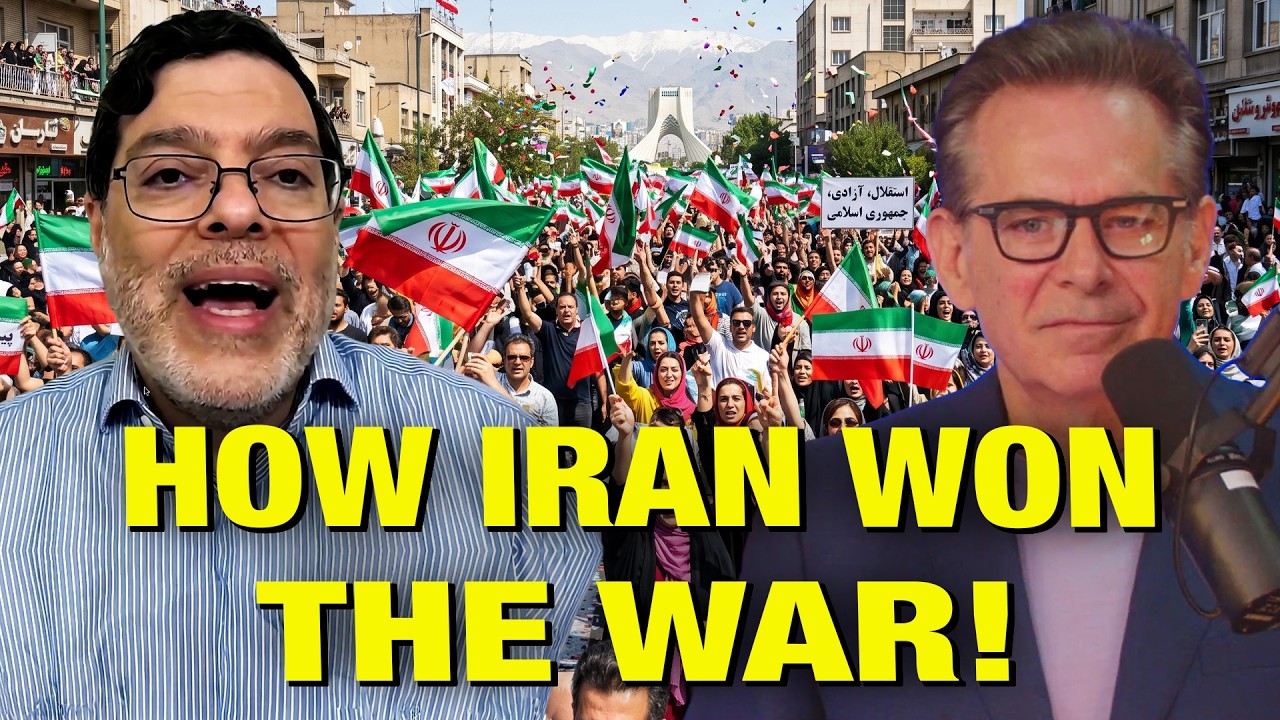
The REAL Story About The War From INSIDE IRAN! – Jimmy Interviews Prof. Marandi
"Professor Marandi, an Iranian academic, details how Iran emerged stronger from recent conflicts, now controlling the Strait of Hormuz and possessing a credible deterrent against its adversaries, despite facing economic siege and Western-backed regional proxies."

Robby Soave GOES OFF On ANNOYING Liberal Black Woman Making Emotional Trump Deranged Arguments!
"The host dissects a heated foreign policy debate, arguing that 'left-wing' emotionalism and 'Trump derangement' prevent a rational understanding of US sanction strategies against Cuba and Iran."

Col. Jacques Baud: Middle East on Fire — Is This the Start of Something Bigger?
"Colonel Jacques Baud dissects the escalating conflict between the US, Israel, and Iran, arguing that Western misunderstanding of Iranian culture and strategic duplicity have forced Iran into a position of necessary escalation, ultimately degrading the West's own strategic posture."