
Nima R. Alkhorshid: Trump Orders FULL Blockade on Iran – Talks COLLAPSE, Will This Spark WAR?
YouTube · B_pARqrMYMY
Quick Read
Summary
Takeaways
- ❖US-Iran negotiations in Islamabad collapsed due to the Trump administration's refusal to compromise on its 'everything' demands, including control over the Strait of Hormuz and Iranian nuclear enrichment.
- ❖The speaker asserts that the Trump administration initiated talks out of desperation after its military campaign and a raid to seize enriched uranium in Iran failed.
- ❖Iran's 10-point counter-proposal was initially accepted as a framework but later ignored by the US, which then issued ultimatums.
- ❖Trump's threat of a 'full blockade' on Iran is viewed as a delusional, Israeli-influenced strategy that would lead to global economic collapse, particularly through oil price surges, and military defeat for the US.
- ❖The speaker emphasizes Iran's military preparedness and ability to defend itself, contrasting it with Venezuela's vulnerability and suggesting that other nations like Taiwan are observing US limitations.
- ❖European and Asian nations are already feeling the economic pressure of the conflict, with some, like India, needing sanctions lifted to buy Iranian oil.
- ❖The speaker blames Israel for trapping the US in a destructive Middle East policy, prioritizing a 'greater Israel' agenda over American interests.
Insights
1US Demands Led to Negotiation Collapse
The US demanded Iran share benefits from its Strait of Hormuz toll system, ship all enriched uranium out of the country, and halt uranium enrichment on Iranian soil for 20 years. Iran rejected these as non-negotiable red lines.
the United States wanted to share the benefit of the poll system that Iran is applying... Iran said no... the enrichment enrich uranium they wanted that to be shipped out of Iran and Iran said no... they wanted Iran to stop enrich uranium on Iranian soil for 20 years
2Trump's Negotiations Driven by Military Failure
The speaker claims Trump initiated negotiations only after his war strategy and attempts at regime change failed, and a US raid to seize enriched uranium in Natanz was unsuccessful.
Donald Trump when they started the war on February 28th it seems that the war was not going the way they wanted it to be and you know the regime change didn't work... after 10 days in this war... they reach to the point that now this war is not going to work... Donald Trump has planned this raid in Iran... The operation has totally failed.
3Iran's Non-Negotiable Terms
Iran presented a 10-point plan, which included maintaining control over the Strait of Hormuz, the right to enrich uranium on its soil, and an end to attacks on Lebanon. These were considered 'solid terms' by Iran.
Iran prepared this 10point plan. They sent it to the United States through Pakistani government... The straight of Hormuz, Iranian right to enrich uranium on its soil, that's not going to change. The war between Israel and Lebanon, that's that has to come to an end. No negotiations on that. These are solid terms on the part of Iranians.
4Proposed Blockade is a 'Suicide Mission'
The speaker argues that Trump's declared 'full blockade on Iran' is a delusional strategy that will fail militarily, devastate the global economy (e.g., oil prices reaching $200-300/barrel), and is a 'suicide mission' for the US, not a viable strategy against Iran.
Right now, Donald Trump is talking about a full blockade on Iran... It's a new war... He's going to make, you know, the whole concept of these negotiations was based on the difficulties, the economic difficulties that the whole world is experiencing right now... Is he prepared for, you know, a barrel becoming $200? It's gonna go there. It's gonna go $300, $250... it's a suicide mission for him.
5Iran is Not Venezuela
The speaker repeatedly emphasizes that Iran's military, economic, and geopolitical strength makes it fundamentally different from Venezuela, which the US successfully influenced. Iran is prepared for any escalation and has alternative trade routes.
The guy has failed to understand that Iran is not Venezuela... Iran has proven so far that Iran is Vene is not Venezuela domestically, militarily, economically. They're far different... Iran doesn't need if it comes to the whole blockade of the straight of for most Iran Iran can go with other borders to the north to the east to the west they're able to do that.
6Israeli Influence on US Policy
The speaker asserts that Donald Trump is trapped by Israeli interests, particularly Benjamin Netanyahu's 'grand strategy' for a 'greater Israel,' which drives US escalation and undermines American interests.
It was a trap by Israelis. He just stepped in that trap... They don't want negotiations. They don't see negotiations being beneficial to Israel... It's all about Benjamin Netanyahu's grand strategy... The Zionist agenda is not American agenda... It's all about the greater Israel.
7Global Economic Repercussions
A blockade of the Strait of Hormuz would threaten 20% of global energy supply, fertilizers, LNG, and food security, impacting countries like Japan, South Korea, and India, who are already seeking solutions directly with Iran.
this global turmoil... the Japanese government, the government in South South Korea, uh Europeans are feeling the heat... India is in a desperate situation when it comes to the energy... the straight of foremost is going to it's 20% of the energy not only energy we have fertilizers we have LNG we have we have everything coming out the food security is in danger with the straight of foremost.
8Taiwan Learning from Middle East Conflict
The speaker suggests that the conflict in the Middle East is teaching Taiwan's leadership that the United States cannot defend them against China, potentially pushing them towards a political solution with Beijing.
China is has just made its move toward Taiwan... the war in the Middle East brought this sort of sanity to the mind of the leadership in Taiwan to find a political solution... the United States is not able to defend them if something happens between China and Taiwan.
Bottom Line
The perceived decline of US influence and the economic fallout from a potential Strait of Hormuz blockade could create opportunities for other global powers (like China, Russia, India) to redefine trade routes, energy partnerships, and geopolitical alliances, bypassing US-led sanctions or blockades.
The US's aggressive stance might inadvertently accelerate a shift towards a multipolar world order, where traditional US allies seek independent solutions for energy security and trade.
Nations can invest in alternative energy sources, diversify supply chains away from the Persian Gulf, and strengthen bilateral agreements with non-US aligned countries to mitigate the risks of US-imposed blockades.
Iran's strategic use of the Strait of Hormuz as a counter to US and Israeli pressure, rather than nuclear weapons, demonstrates a potent, non-conventional form of geopolitical leverage that could be replicated by other regional powers controlling vital trade arteries.
Control over critical maritime chokepoints becomes an increasingly powerful tool in international relations, potentially leading to more localized conflicts with global economic ripple effects.
Develop strategies for securing global trade routes that are less reliant on single chokepoints, including exploring new shipping lanes, land bridges, or diplomatic solutions to ensure free passage.
Lessons
- Recognize that geopolitical conflicts, particularly those involving critical energy chokepoints like the Strait of Hormuz, carry significant and immediate risks for global economic stability, including potential spikes in oil and food prices.
- Understand that the narrative around international negotiations can be heavily influenced by domestic political agendas and external pressures (e.g., perceived Israeli influence on US policy), leading to maximalist demands that preclude genuine compromise.
- Consider the long-term implications of perceived US foreign policy failures on the confidence of allies and adversaries, as other nations may draw conclusions about US reliability in defense and economic support.
Quotes
"The United States wanted to share the benefit of the poll system that Iran is applying in this rate of foremost... Iran said no that's not going to happen."
"Donald Trump when they started the war on February 28th it seems that the war was not going the way they wanted it to be and you know the regime change didn't work."
"I told my people, I want everything. I don't want 90%. I don't want 95%. I told them, I want everything."
"The guy has failed to understand that Iran is not Venezuela."
"It was a trap by Israelis. He just stepped in that trap and he doesn't know how to get out of that trap."
"Is he prepared for, you know, a barrel becoming $200? It's gonna go there. It's gonna go $300, $250. And I I don't see that happening. I don't see Donald Trump incapable to go in that direction. If he goes in that direction, it's a suicide mission for him."
"The Zionist agenda is not American agenda. The Zionist agenda is not for the future for a better future for the United States. It's all about the greater Israel."
"I believe that Iranians are getting there as well that everything going to be resolved on the battlefield and that's what's going on in the mind of Iranians right now. They're prepared."
Q&A
Recent Questions
Related Episodes

Patrick Henningsen: Hezbollah JUST Fired Back at Israel - Iran Vows to “Crush” All Attacks
"Patrick Henningsen argues that the US and Israel initiated an illegal war against Iran, driven by Trump's incompetence and Israeli influence, leading to an inevitable escalation with severe global economic repercussions."
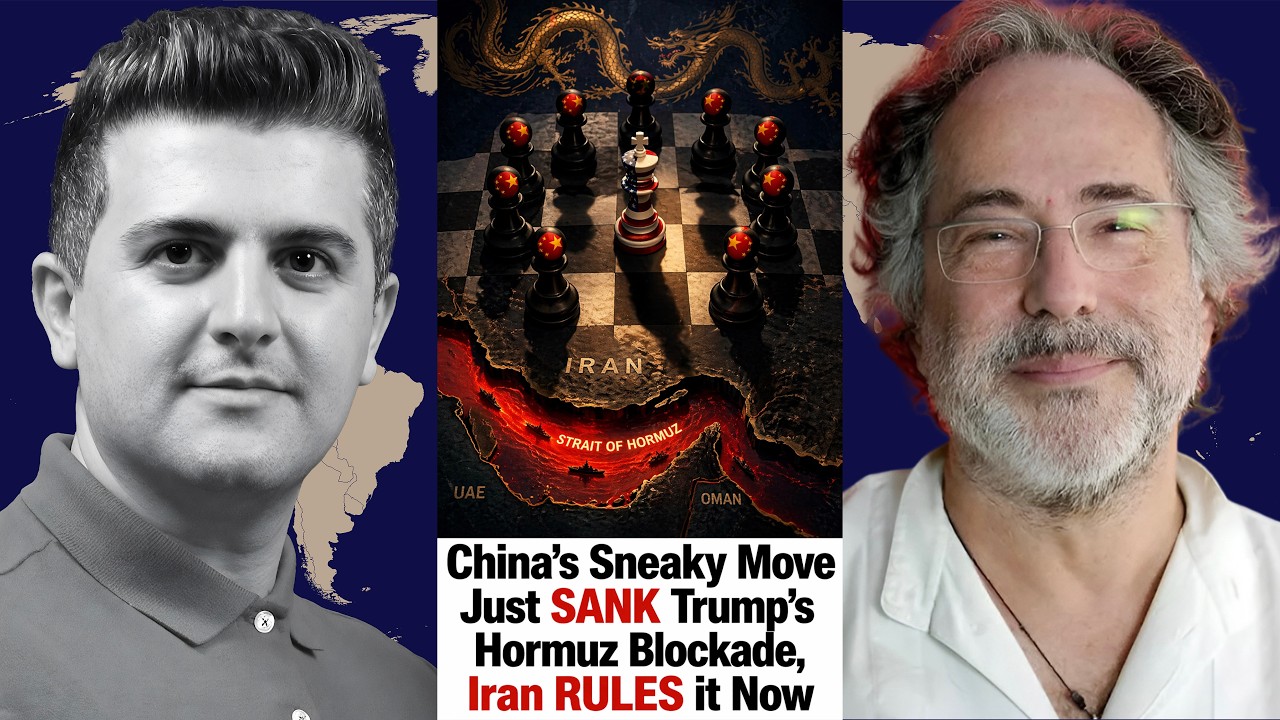
Pepe Escobar: “Total Failure”: Trump’s Blockade Just Backfired Disastrously
"Pepe Escobar argues that the US blockade against Iran, spearheaded by Donald Trump, has utterly failed and backfired, accelerating global economic chaos and challenging US geopolitical dominance."

Alex Krainer: US STRIKES Iran – Iran RETALIATES Against Kuwait, Bahrain & Jordan!
"Amidst escalating US-Iran conflict and Iranian retaliation against regional US allies, this episode argues that US foreign policy is deeply controlled by an 'Anglo-Zionist conspiracy' led by the Rothschild banking dynasty, prioritizing Israeli interests over American ones."

Col. Jacques Baud: What a US Ground Invasion of Iran Would REALLY Look Like
"Colonel Jacques Baud dissects the strategic futility of a US ground invasion of Iran, arguing that current troop levels are insufficient and such an action would backfire, exposing US allies and potentially leading to Iran's nuclearization."