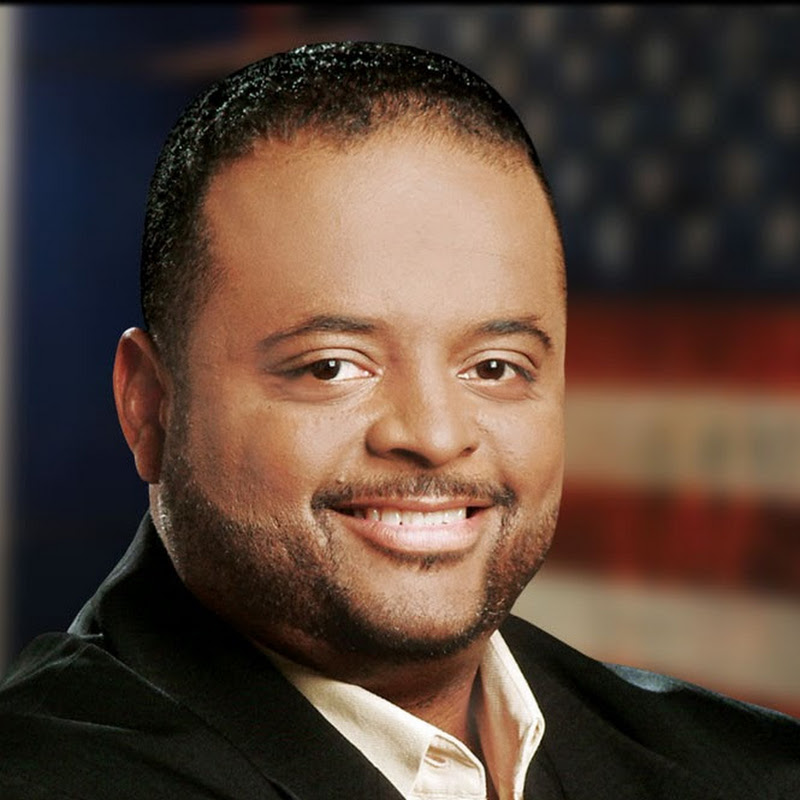
SCOTUS Weighs Voting Rights Case. ObamaCare Anniversary. Memphis Task Force Under Fire
YouTube · BaKqbs9zx0Y
Quick Read
Summary
Takeaways
- ❖The Supreme Court case regarding Mississippi's mail-in ballot counting (postmarked by Election Day, received within 5 days) is seen as a Republican attempt to challenge all mail-in and early voting nationwide.
- ❖Justice Neil Gorsuch's hypothetical about recalling ballots post-election is dismissed as 'provably dumb' and a pretext for broader voting restrictions.
- ❖Mississippi Republicans are accused of using their state's law as a 'straw man' for the Supreme Court to strike down, impacting over 30 other states with similar provisions.
- ❖The 1845 federal statute on 'Election Day' is being reinterpreted by conservatives to mean votes can only be cast or received on that single day, threatening early voting.
- ❖Donald Trump's push for voter ID and proof of citizenship, linked to 'homeland security,' is framed as part of a nationwide Republican strategy to suppress non-white votes.
- ❖The Memphis 'Safe Task Force,' praised by Trump, is viewed by local activists as a federal occupation designed to control majority-Black cities, with crime rates already declining before its implementation.
- ❖Memphis Mayor Paul Young is criticized for failing to demand federal resources for housing, food insecurity, and education during Trump's visit, instead allowing a 'photo op'.
- ❖The Afroman defamation lawsuit verdict, where he won but was ordered to split court costs, is cited as an example of judicial racism and bias.
- ❖Trump's refusal to approve a bipartisan deal to fund TSA agents, leading to airport chaos, is seen as a deliberate political tactic to blame Democrats and advance Project 2025 goals.
- ❖The 16th anniversary of the Affordable Care Act (ACA) highlights its critical role in expanding healthcare access, especially for Black Americans, despite ongoing Republican efforts to repeal it.
- ❖The book 'The Free and the Dead' uncovers the history of Black Seminoles, who formed military alliances with Native Americans in Florida to fight against slavery and US colonial aggression for 40 years.
- ❖Black Seminole leaders like Chief Abraham were powerful, bilingual, and highly valued advisors, challenging the narrative of their enslavement and demonstrating significant agency.
Bottom Line
The Supreme Court case challenging Mississippi's mail-in ballot policy is a strategic 'straw man' operation by the Republican National Committee, where Mississippi Republicans tacitly agree to have their own law overturned to set a precedent for restricting mail-in and early voting in over 30 other states.
This reveals a sophisticated, coordinated legal strategy to suppress voter turnout nationwide, using a seemingly localized case to achieve broad electoral impact.
Advocacy groups and Democratic strategists must expose this 'straw man' tactic to the public and prepare legal and political defenses for early and mail-in voting in all affected states.
Donald Trump's deployment of ICE agents to airports and refusal to fund TSA, leading to widespread travel chaos, is a deliberate tactic to create political leverage and advance Project 2025 goals, including potentially privatizing TSA.
This indicates a willingness to inflict public inconvenience for political gain, aiming to blame Democrats and weaken public sector unions, paving the way for private entities to take over government functions.
Political opponents should clearly articulate Trump's strategic intent behind these disruptions, connecting them to broader privatization and anti-union agendas, to mobilize public opposition and support for public services.
The historical alliance of Black Seminoles and Native Americans in Florida, who fought for decades against US forces and slavery, represents a powerful, often-ignored model of multi-ethnic resistance and self-determination.
This history challenges Eurocentric narratives of American expansion and highlights successful, armed resistance by marginalized groups, offering a foundational story of defiance against oppression.
Educators and cultural institutions can integrate this history to provide a more accurate and empowering understanding of American origins, inspiring contemporary movements for racial and Indigenous justice.
Lessons
- Engage in local and state elections: Voting extends beyond presidential races; state-level politicians significantly impact policies like healthcare and voting rights, as demonstrated by Medicaid expansion delays and gerrymandering.
- Challenge local officials: Demand that mayors and city leaders leverage visits from national figures to advocate for community-specific economic and social agendas, rather than participating in mere 'photo ops'.
- Educate on voting rights: Understand and disseminate information about ongoing attacks on mail-in and early voting, emphasizing that voter suppression efforts are a direct response to increased minority turnout, proving that every vote matters.
Notable Moments
The host, Roland Martin, recounts a conversation with a Black man who refused to vote for Hillary Clinton in 2016 due to perceived 'disingenuousness,' which Martin dismisses as a weak excuse, emphasizing the severe consequences of non-participation.
This highlights a common challenge in voter mobilization within the Black community, where personal grievances or apathy can overshadow the broader political stakes, directly aiding conservative agendas to suppress minority votes.
Ellie Misttol's analogy of Justice Gorsuch asking 'POINT TO ME IN THE STATUTE WHERE IT SAYS A DOG CAN'T VOTE' to illustrate the absurdity of judicial hypotheticals used to justify voting restrictions.
This moment effectively debunks the legal pretexts used to justify voter suppression, exposing them as illogical and detached from real-world voting practices and historical context.
The discussion of the Afroman court case, where he won a defamation lawsuit against sheriff's deputies but was ordered to pay half the court costs, is presented as clear judicial bias.
This illustrates how systemic racism can manifest even when a Black individual wins a legal battle, with the judge imposing an unusual penalty to undermine the victory and punish the defendant.
Quotes
"No, Neil, your hypothetical is provably dumb. It has never ever happened and never will happen. Neil Gorsuch is just basically saying, 'Mississippi, what's to stop a dog from voting?' And the guy's like, 'Well, dogs don't vote.' He's like, 'OH, POINT TO ME IN THE STATUTE WHERE IT SAYS A DOG CAN'T VOTE.' And the guy's like, 'Well, we didn't write that down because dogs don't vote, you idiot.'"
"The idea that black people got together enough voting power in association with Latino people, in association with with white allies, that that that the the rising majority in this country got together enough political power to elect a black president is a nightmare for the white supremacists that they are still trying to wake up from."
"If your vote didn't matter, why are they going through all of these various different things in order to try to rob you of your vote? Just think about it."
"This isn't about over policing. This is about uh having affordable housing. This is about having reliable transportation for people could to can get to work and and to get to school. This is about uh not racially profiling folks. I mean, there's so many layers that we've been working on. This is about uh having our schools fully funded."
"The mayor of Memphis has no excuse being in a red state. Our ancestors died in a red state. Civil rights leaders died in a red state speaking up and against what we are experiencing at this very moment."
"What's so difficult about the truth? Why can't what's so what's so hard about the truth? All I did in this book was try to tell the truth to the degree that that reflects on the country was and what the country is, it's all from the archives."
Q&A
Recent Questions
Related Episodes

MAGA Voting Rights Power Grab. Stacey Abrams Dire Warning. Justin Jones Stripped of All Committees.
"Roland Martin and guests expose a coordinated Republican effort to dismantle Black political power across the South through aggressive gerrymandering, voter suppression, and economic attacks, urging a unified, immediate, and sustained counter-mobilization."

PBS News Hour full episode, May 8, 2026
"This episode unpacks escalating US-Iran military actions in the Strait of Hormuz, a resilient yet divergent US jobs market, the ongoing political battle over congressional redistricting, and the controversial new US counterterrorism strategy."

Trump Impact On Black America. SCOTUS Birthright Citizenship Case. Alabama College DEI probe
"This episode dissects the multifaceted impacts of Trump-era policies on Black America, from economic destabilization and civil rights rollbacks to an inspiring narrative of an entrepreneur rebuilding her life and community."

PBS News Hour full episode, March 23, 2026
"President Trump's surprise diplomatic signals on the Iran war, a fatal plane collision at LaGuardia amidst a federal shutdown, and a Supreme Court case on mail-in ballots dominate a day of complex national and international developments."