
Col. Jacques Baud: Iran & Israel Just Opened a NEW WAR FRONT in the Mediterranean
YouTube · CEXkLl7pVzo
Quick Read
Summary
Takeaways
- ❖Netanyahu's strategy is to draw the US into a broader Middle East war, a consistent Israeli policy since the 1950s.
- ❖US foreign policy in the region is characterized by 'gut feelings' and 'one-man shows,' bypassing intelligence and diplomatic expertise.
- ❖Iran has established a credible deterrence, demonstrating its willingness and capability to respond to Israeli aggression.
- ❖Israel's miscalculations have inadvertently strengthened Iran's regional leverage and diminished US influence.
- ❖European nations (France, Germany) are criticized for a 'cowardice' rooted in historical guilt, preventing them from upholding international law against Israeli actions.
- ❖Hezbollah is framed as a legitimate defense movement against Israeli occupation, not a terrorist organization in Lebanon's context.
- ❖Yemen's attacks on Israel are interpreted as an application of the UN's 'Responsibility to Protect' (R2P) principle, given the failure of other pillars.
- ❖The UNIFIL peacekeeping mission in Lebanon is ineffective due to political decisions and a mandate misused by troop-contributing countries.
Insights
1Netanyahu's Strategic Goal: Entangling the US in a Middle East War
Colonel Baud asserts that Netanyahu's consistent policy, dating back to the 1950s, is to draw the US into a military conflict in the Middle East. Recent Israeli attacks, such as on Dahad, are seen as deliberate provocations designed to escalate the situation and force US military commitment, also serving Netanyahu's domestic political agenda to avoid legal proceedings.
Baud states, 'Netanyahu wants to drag the US in a war in the Middle East. He wants to have the US militarily committed with troops in the Middle East. So that's that's a given fact.' He later adds that the war helps Netanyahu 'avoid the legal proceedings against him.'
2Iran's Credible Deterrence Shifts Regional Power Balance
Iran's decision to respond directly to Israeli attacks, despite the initial target being empty, was crucial for establishing credible deterrence. By demonstrating both the means and the willingness to retaliate, Iran has gained significant leverage, surprising both Israel and the US who underestimated its resolve and resilience.
Baud explains, 'They have to respond otherwise their deterrence will not be credible.' He notes that 'Iran has become reinforced through this attack' and 'has more leverage than the US has.'
3Western Crisis Management is 'Gut-Driven' and Ineffective
Western decision-making, particularly in the US and Europe, is criticized for being based on 'gut feelings' and 'one-man shows' rather than sober intelligence assessments. This leads to erratic policies, bypasses professional diplomatic bodies like the State Department, and results in a failure to enforce international law or manage conflicts effectively.
Baud states, 'All this crisis management is the result of guts feeling, guts reaction... decision making bypasses all these advisers.' He also notes, 'the State Department seems to be absent from that.'
4European 'Cowardice' and Guilt Hamper Geopolitical Action
France and Germany are specifically called out for their 'cowardice' and 'sentiment of guilt' stemming from World War II. This historical burden prevents them from applying international law consistently or acting in their own national interests, leading them to support or enable Israeli actions even when those actions violate international norms and are detrimental to European stability.
Baud says, 'There is an element of cowardice in in in Europe that disturbs me profoundly.' He attributes this to 'this sentiment of guilt that is today... hampering decisions that would help humanity at large.'
5US as a 'Paper Tiger' Losing Regional Influence
The US, despite its military presence and superpower status, has become a 'paper tiger' in the Middle East. Its inability to control Israel, impose ceasefires, or secure diplomatic agreements (like the Abraham Accords with GCC countries) demonstrates a significant loss of leverage and influence in the region, making its military bases appear as liabilities rather than strengths.
Baud states, 'the US has basically lost its influence... in the region.' He concludes that 'the US have become a a a paper tiger.'
Bottom Line
Israel's historical tactical successes, often achieved through surprise attacks and disregard for international law, have masked a fundamental weakness in strategic thinking, leading to long-term geopolitical miscalculations that now empower adversaries.
This suggests that Israel's reliance on tactical superiority and bending rules creates short-term gains but erodes its strategic position and legitimacy over time, fostering a cycle of escalation.
For regional actors, understanding this pattern allows for counter-strategies that exploit Israel's strategic blind spots and leverage international law, rather than engaging solely in direct military confrontation.
The UN's 'Responsibility to Protect' (R2P) principle, typically invoked by Western powers, is being reappropriated by non-Western actors like Yemen to justify interventions against perceived injustices, fundamentally altering the narrative of international intervention.
This reinterpretation challenges the West's monopoly on humanitarian intervention and could lead to a more multipolar and potentially chaotic global security landscape where various actors justify their actions under R2P.
For international diplomacy, this presents an opportunity to either re-evaluate and strengthen R2P's universal application or risk its further fragmentation and misuse by diverse state and non-state actors.
Key Concepts
Credible Deterrence
The concept that a state's threat to respond to aggression must be believable, requiring both the means and the demonstrated willingness to use those means. Iran's response to Israeli attacks on Dahad is cited as an example of establishing credible deterrence.
Responsibility to Protect (R2P)
A United Nations principle (adopted 2005) with three pillars: 1) states must protect their own populations; 2) the international community must help states protect their populations; 3) if a state fails, individual countries are allowed to intervene to protect endangered populations. Yemen's intervention against Israel is framed as an application of the third pillar.
Spoiled Child Syndrome (Geopolitical)
A metaphor used to describe Israel's historical behavior, where it has consistently acted without accountability for violating international law, expecting no blame or enforcement from the international community, particularly the US.
Gut-Driven vs. Brain-Driven Policy
A critique of Western foreign policy, suggesting that decisions are often based on emotional reactions, personal feelings, or political expediency rather than sober assessment, intelligence, and professional diplomatic analysis.
Lessons
- Challenge the prevailing narratives on Middle East conflicts by scrutinizing the motivations of key actors like Netanyahu and the underlying geopolitical strategies.
- Recognize the limitations and biases in Western foreign policy decision-making, particularly the tendency to prioritize 'gut feelings' over intelligence and diplomatic expertise.
- Understand the concept of 'credible deterrence' as a critical factor in regional power dynamics, and how it shapes the responses of states like Iran.
- Evaluate the true extent of US influence in the Middle East, considering its diminishing leverage and the potential for it to be drawn into conflicts against its broader strategic interests.
- Advocate for a consistent application of international law and UN principles (like R2P) by all nations, rather than selective enforcement based on political alliances or historical guilt.
Notable Moments
The host highlights the discrepancy between the US claiming ignorance of Israeli attacks on Dahad and Israel claiming a 'green light,' underscoring the lack of transparency and trust.
This moment exemplifies the chaotic communication and potential deception between allies, making de-escalation difficult and fueling regional distrust.
Baud details how the UNIFIL mandate in Lebanon has been 'misused' by troop-contributing countries (like France) to fight Hezbollah, rather than prevent Israeli invasion, despite Hezbollah being considered a legitimate defense force by Lebanon.
This reveals a critical failure of international peacekeeping, where impartiality is compromised by national political agendas, undermining the UN's role and exacerbating conflict.
Quotes
"Netanyahu wants to drag the US in a war in the Middle East. He wants to have the US militarily committed with troops in the Middle East. So that's that's a given fact."
"All this crisis management is the result of guts feeling, guts reaction and in fact our one month shows and you have a couple of advisors of individuals who may advise the uh the decision makers."
"Iran has understood that in order to get out of this loop, the only way should be to completely destroy Israel to have what I have mentioned many times a decisive victory."
"Israel is a spoiled child. That's it. So that means that so far they received they never received any blame for everything they did wrong."
"The international law should should rule the world. That's the main lesson of World War II. And that's exactly what the French German do not apply."
"There is an element of cowardice in in in Europe that disturbs me profoundly."
Q&A
Recent Questions
Related Episodes

Patrick Henningsen: Hezbollah JUST Fired Back at Israel - Iran Vows to “Crush” All Attacks
"Patrick Henningsen argues that the US and Israel initiated an illegal war against Iran, driven by Trump's incompetence and Israeli influence, leading to an inevitable escalation with severe global economic repercussions."

Col. Jacques Baud: What a US Ground Invasion of Iran Would REALLY Look Like
"Colonel Jacques Baud dissects the strategic futility of a US ground invasion of Iran, arguing that current troop levels are insufficient and such an action would backfire, exposing US allies and potentially leading to Iran's nuclearization."
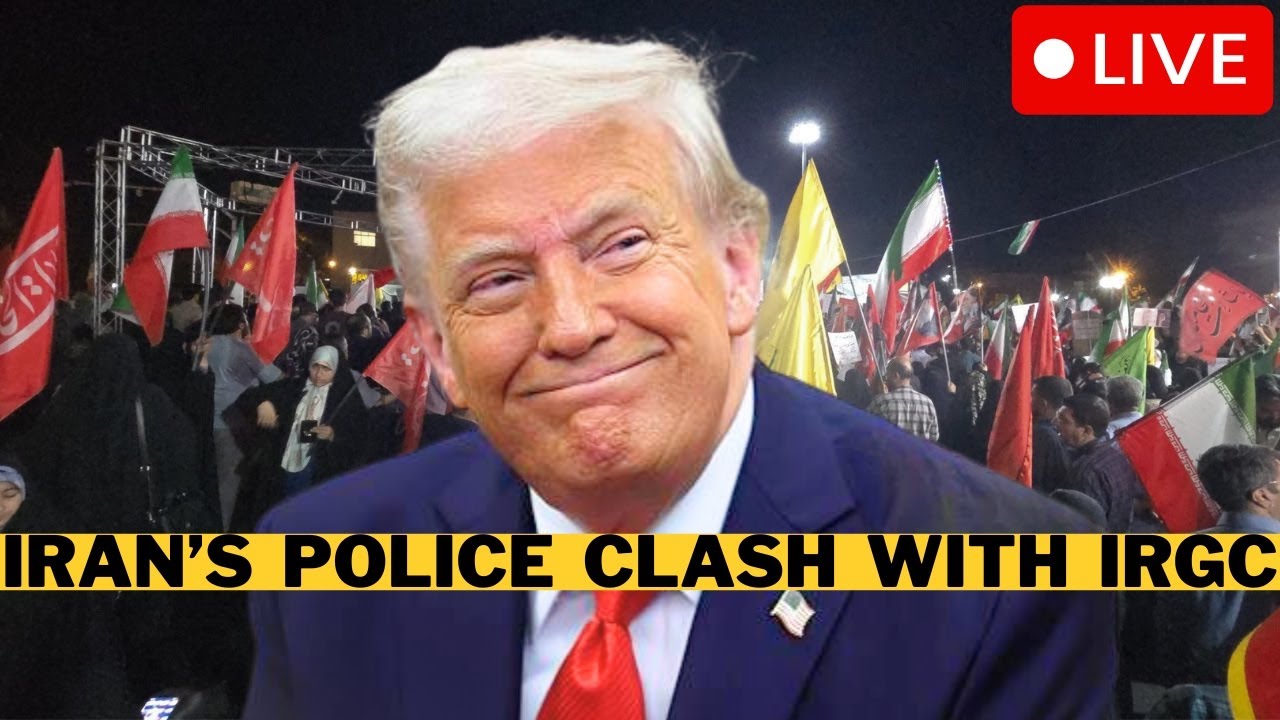
BREAKING: Protests ERUPT In Iran Over IRGC Surrendering To Trump - Infighting Clashes In Tehran
"Iran is experiencing severe internal infighting and protests as hardline IRGC elements clash with government figures over a perceived 'surrender' to the US, while mainstream Western media misrepresents the situation."

Alex Krainer: US STRIKES Iran – Iran RETALIATES Against Kuwait, Bahrain & Jordan!
"Amidst escalating US-Iran conflict and Iranian retaliation against regional US allies, this episode argues that US foreign policy is deeply controlled by an 'Anglo-Zionist conspiracy' led by the Rothschild banking dynasty, prioritizing Israeli interests over American ones."