
Andrei Martyanov: IT’S OVER: Iran & Russia Just Made Their Boldest Move Yet
YouTube · CHnb7vcLPoo
Quick Read
Summary
Takeaways
- ❖The United States possesses a limited arsenal of Tomahawk missiles (2,500-3,500), insufficient for a sustained conflict with Iran.
- ❖Iran has adopted an offensive, asymmetric warfare doctrine, prepared to retaliate against US regional bases and Israel.
- ❖US military doctrine is designed for expeditionary forces fighting indigenous groups, not serious, well-equipped adversaries like Iran.
- ❖Israel cannot unilaterally attack Iran without extensive US logistical support, particularly aerial refueling tankers.
- ❖US policymakers, including Congress members, are largely militarily incompetent, basing their understanding of war on entertainment rather than reality.
- ❖Russia and China are actively cooperating with Iran, with Russia providing intelligence, surveillance, and reconnaissance (ISR) analysis.
- ❖The New START treaty's expiration, largely ignored by Western powers, signifies a dangerous lack of concern for nuclear stability among US elites.
- ❖The combined economic and military might of BRICS and the Shanghai Cooperation Organization (SCO) is forming a 'hyperpower' that will define the new world order.
Insights
1US Military Incapacity Against Iran
Andrei Martyanov asserts that the United States is militarily incapable of conducting combined arms operations against Iran. He highlights the US's limited inventory of Tomahawk missiles (estimated 2,500-3,500) as insufficient for a major conflict. Furthermore, he describes US air battle concepts as obsolete and its army as unprepared for Iran's 'nightmarish terrain,' which would prevent effective armored maneuver and lead to catastrophic losses.
Martyanov states, 'The United States has only about... somewhere between two and a half maybe three and a half thousand of the Tomahawk missiles... United States is absolutely incapable in absolute terms to conduct combined arms operations... The US army is absolutely incapable to really fight that kind of war. Iran is a large country with the significant industrial capability and significant armed forces.' He adds, 'You cannot maneuver in Iran. You're going to be actually drawn into this catastrophic terrain, into those narrows, you know, and you're going to be killed.'
2Iran's Offensive Asymmetric Doctrine and Regional Leverage
Iran has shifted its military doctrine from defensive to offensive, focusing on asymmetric warfare to exploit enemy weaknesses. This strategy, combined with Iran's significant missile range and intelligence assets (e.g., agents within Israeli nuclear facilities), allows it to pose an immediate threat to US bases and Israel in the event of an attack. Martyanov emphasizes that Iran's preparedness and capability for painful retaliation deter direct military action.
The host notes, 'Major General Abdul Rahim Musi... said after the 12-day war, Iran's military doctrine has shifted from defensive to offensive with a focus on asymmetric warfare.' Martyanov confirms, 'Absolutely. That's... you exploit the weakness of the weak spots of your enemy and you go... all in. Iran has a ways to exploit this and as I already stated United States actually is exposed in the region because of the range of the Iranian missiles.' He also mentions, 'Iranian intelligence showed the videos from inside of the Nevatim nuclear facilities which obviously showed that there are Iranian agents operating somewhere there in Israel.'
3Russia and China's Strategic Support for Iran
Behind the scenes, Russia and China are actively working to support Iran and counter US pressure. Martyanov reveals that Iran has formally requested and received intelligence, surveillance, and reconnaissance (ISR) analysis from Russia regarding the strategic situation around Iran. This technological and strategic cooperation signifies a coordinated effort to bolster Iran's defenses and integrate it into a broader non-Western security framework.
Martyanov states, 'Russia and China work diligently behind the closed doors to sort of settle this whole thing.' He later adds, 'Iran actually demanded... that Russia with your ISR capability, intelligence, surveillance and recon provided the analysis of the strategic situation around Iran... I am positive Russians reacted very positively to that... something tells me that Iran is not alone.'
4US Policymaker Incompetence and Delusion
Martyanov critically assesses US policymakers, including Donald Trump and members of Congress, as militarily incompetent and disconnected from reality. He argues that their understanding of war is derived from entertainment rather than actual military experience or strategic knowledge. This delusion, coupled with a belief in outdated technological superiority, leads to flawed foreign policy decisions and a dangerous underestimation of adversaries.
Martyanov claims, 'Trump wouldn't understand the first thing about strategy. It's his desires... that's how he sees the world.' He also states, 'The average member of Congress of either party is... militarily incompetent... They live in this alternative universe not understanding well United States in general is not acquainted with the real war... They watched movies like Maverick... they probably believe in Star Wars too, that United States is somehow... they believe that United States controls the universe.' He cites Major General Latif's book, 'everything that American public and its policy makers know about war they know from the entertainment industry.'
Bottom Line
The US's perceived military 'paper tiger' status, combined with its policymakers' reliance on entertainment-derived understanding of war, creates a significant blind spot in its strategic planning and risk assessment.
This blind spot means US foreign policy decisions are likely based on flawed assumptions, increasing the probability of miscalculation and escalation in conflicts, particularly with non-Western powers that possess sophisticated asymmetric capabilities.
For non-Western nations and their allies, this perceived US weakness presents an opportunity to challenge US hegemony and accelerate the formation of a multipolar world order, leveraging asymmetric strategies and coordinated diplomatic/military support.
The current geopolitical landscape, marked by the US withdrawal from treaties like New START and a lack of concern for nuclear stability, is paradoxically stabilized by the existence of nuclear weapons.
Nuclear weapons, despite their destructive potential, currently act as a deterrent against conventional warfare between major powers, preventing direct kinetic confrontation between nuclear-armed states like the US and Russia.
For powers like Russia and China, maintaining and advancing their nuclear capabilities, while engaging in strategic partnerships (e.g., BRICS, SCO), allows them to project power and reshape global governance without direct military conflict with the US, leveraging the nuclear umbrella as a 'stabilizing role'.
Lessons
- Re-evaluate geopolitical risk models by factoring in the potential limitations of US military power and the enhanced capabilities of non-Western adversaries like Iran, supported by Russia and China.
- Monitor the strategic cooperation between Iran, Russia, and China, particularly in intelligence sharing and military technology, as this alliance significantly alters regional power balances.
- Consider the implications of a multipolar world order where traditional Western military dominance is challenged, especially for energy markets and global trade routes like the Strait of Hormuz.
Notable Moments
Martyanov's assertion that the US military is a 'paper tiger' and incapable of fighting a serious enemy like Iran, contrasting it with its doctrine for fighting 'indigenous people preferably with arrows and bows'.
This statement fundamentally challenges the perception of US military might, suggesting a profound mismatch between its capabilities and its geopolitical ambitions, with significant implications for global security assessments.
The revelation that Iran formally requested and received strategic ISR analysis from Russia, indicating a deeper, coordinated military-intelligence partnership.
This demonstrates a concrete, high-level strategic alliance between Russia and Iran, moving beyond mere diplomatic rhetoric and providing Iran with critical operational advantages against potential adversaries.
Quotes
"The United States is absolutely incapable in absolute terms to conduct combined arms operations... The US army is absolutely incapable to really fight that kind of war. Iran is a large country with the significant industrial capability and significant armed forces."
"Iran's military doctrine has shifted from defensive to offensive with a focus on asymmetric warfare."
"Trump wouldn't understand the first thing about strategy. It's his desires, you know, that's how he sees the world and he thinks that you can call it strategy."
"United States has been exposed as militarily as the paper tiger. Its technology doesn't work. It's operational planning is that of amateurs basically."
"Everything that American public and its policy makers know about war they know from the entertainment industry."
Q&A
Recent Questions
Related Episodes
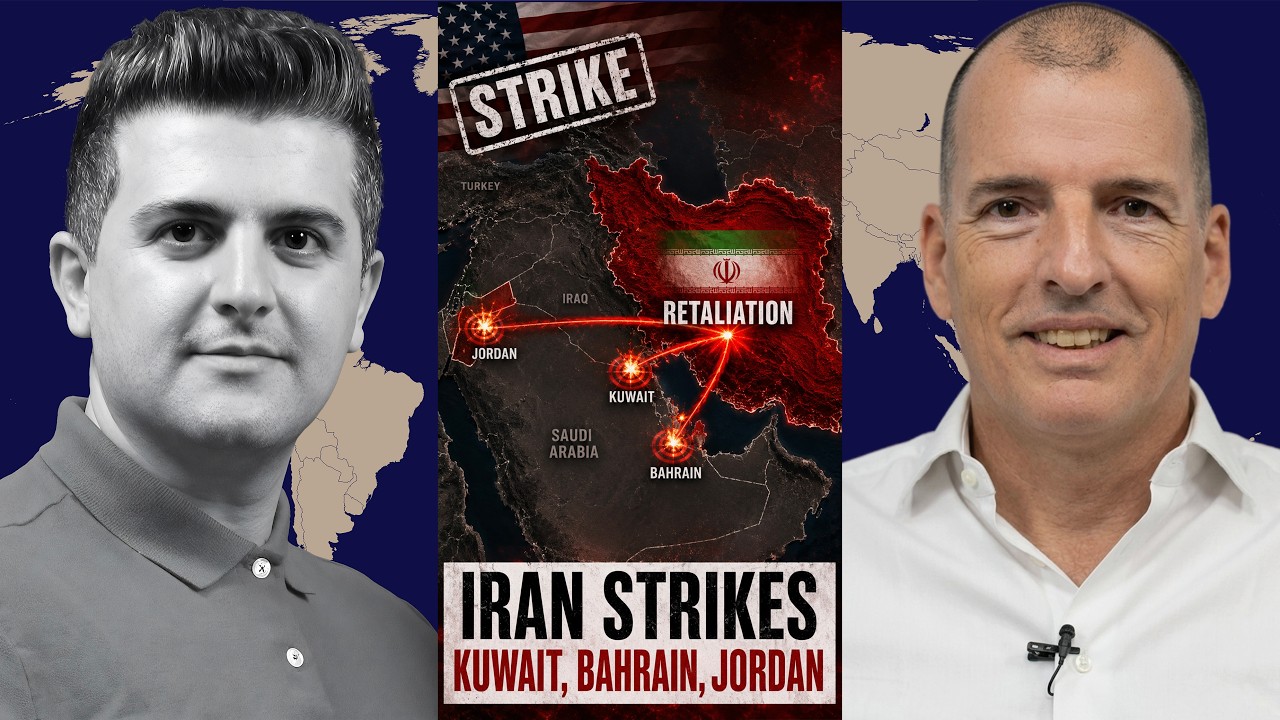
Alex Krainer: US STRIKES Iran – Iran RETALIATES Against Kuwait, Bahrain & Jordan!
"Amidst escalating US-Iran conflict and Iranian retaliation against regional US allies, this episode argues that US foreign policy is deeply controlled by an 'Anglo-Zionist conspiracy' led by the Rothschild banking dynasty, prioritizing Israeli interests over American ones."

Patrick Henningsen: Hezbollah JUST Fired Back at Israel - Iran Vows to “Crush” All Attacks
"Patrick Henningsen argues that the US and Israel initiated an illegal war against Iran, driven by Trump's incompetence and Israeli influence, leading to an inevitable escalation with severe global economic repercussions."
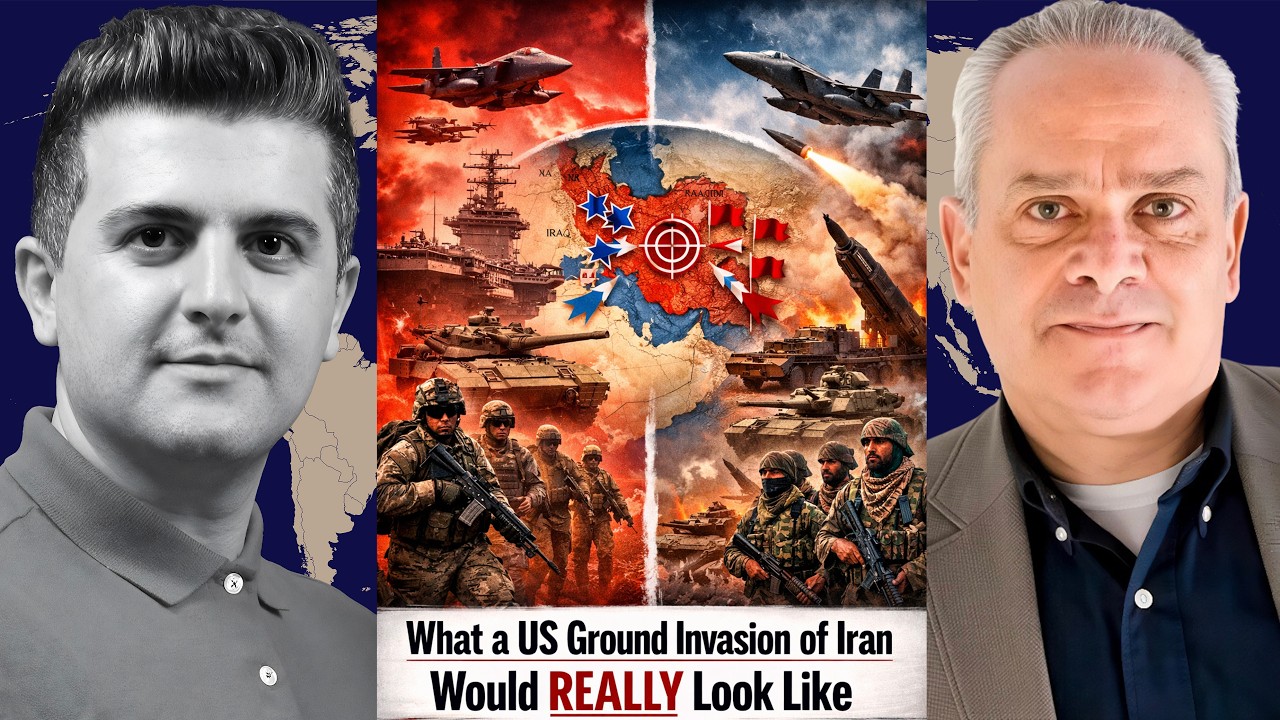
Col. Jacques Baud: What a US Ground Invasion of Iran Would REALLY Look Like
"Colonel Jacques Baud dissects the strategic futility of a US ground invasion of Iran, arguing that current troop levels are insufficient and such an action would backfire, exposing US allies and potentially leading to Iran's nuclearization."

Pentagon Prepares For EXTENDED War With Iran
"This episode dissects the geopolitical maneuvers surrounding potential US-Iran conflict, revealing strategic leaks, Netanyahu's diplomatic sabotage playbook, and the true intent behind economic sanctions."