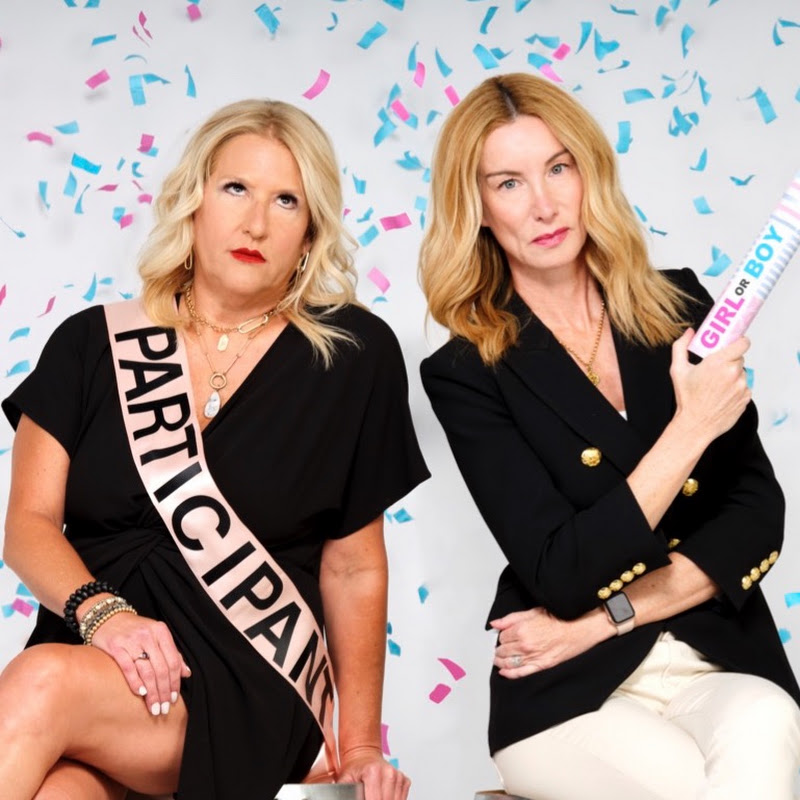
IHIP News:🚨 NAZI Wife Katie Miller's PSYCHOTIC MELTDOWN Explains EVERYTHING?! New Details EXPOSED!!
YouTube · CqKoRIvusHs
Quick Read
Summary
Takeaways
- ❖Michelle Obama suggests some Trump voters are driven by anger and desire for change, not necessarily racism.
- ❖The hosts argue that while not all Trump voters are racist, racists exclusively vote for Trump, and enabling racism is a form of it.
- ❖Senator Markwayne Mullin is accused of a conflict of interest, pushing kratom crackdowns while investing in a kratom-selling company linked to a convicted fraudster.
- ❖NBA player Victor Wembanyama is praised for speaking out on human rights, despite potential professional repercussions.
- ❖Katie Miller, Steven Miller's wife, is portrayed as equally, if not more, deplorable and power-hungry.
- ❖Trump's envoy to Greenland, Jeff Landry, is criticized for displaying 'confident stupidity' and prioritizing football over critical state issues in Louisiana.
- ❖The NAACP's proposal for black athletes to boycott college football in 'Bible Belt' states is discussed as a necessary, impactful sacrifice to combat anti-black racism and voting rights erosion.
Insights
1The Insidious Nature of Passive Bigotry
The host argues that individuals who are 'okay with racism' or for whom it's 'not a dealbreaker' are effectively racist. They contend that passive participation or covering for bigots is more insidious than overt bigotry, as it allows prejudice to flourish under a veneer of acceptability.
Kylie states, 'if you are okay with racism or it's not a dealbreaker, you are a racist.' The host adds, 'I would rather be around somebody who just owns who they are than somebody who covers for somebody who is homophobic or racist. The people that partake in it in a passive way secretly, that is the most those are the most insidious forms of bigotry.'
2Political Corruption and the 'Gas Station Heroin' Industry
Senator Markwayne Mullin, recently appointed Homeland Security Secretary, is implicated in a conflict of interest. He reportedly pushed for a federal crackdown on kratom while holding a significant stake (up to $1 million) in a company that sells the substance. This company is linked to JW Ross, a rebranded convicted fraudster (formerly Jerry Cash) who served prison time for embezzlement.
Seth details a Kansas City Star opinion piece linking Mullin, RFK Jr., and 'Botanic Tonics founder JW Ross' (Jerry Cash). He cites a Punchup Substack article stating Mullin 'pushed a federal cratom crackdown while holding stake of up to 1 million in a company that sells it.' The host confirms Jerry Cash's past as an oil and gas guy, his prison sentence for embezzlement, and his rebranding to JW Ross to sell kratom.
3The Moral Imperative of Public Figures to Speak Out
The podcast praises NBA player Victor Wembanyama for speaking out against human rights abuses (implicitly referencing ICE actions) despite acknowledging potential professional repercussions. The hosts frame such statements not as political, but as moral stances against fascism and for human rights, noting the 'chilling effect' that discourages other celebrities from speaking.
Wemby states, 'I'm conscious also that saying everything, you know, that's on my mind would have a cost that's too great for me right now.' The host responds, 'Speaking out for innocent people and speaking out for human rights and speaking out against fascism is not political. It is moral.'
4The 'Confident Stupidity' of American Politicians Abroad
Trump's special envoy to Greenland, former Louisiana Governor Jeff Landry, is criticized for an 'embarrassing' visit. His actions are portrayed as embodying a uniquely American trait: being 'stupid and confident at the same time,' oblivious to their own ignorance while engaging in diplomatic efforts.
The host describes Landry as a 'brown-nosing rube' who is 'putting on display in Greenland, Americans are stupid and confident at the same time. They are confident in their stupidity.'
5Proposed Athlete Boycott as a Civil Rights Tactic
Inspired by NAACP proposals, the hosts discuss the idea of black athletes boycotting college football in 'Bible Belt' states due to pervasive anti-black racism and the erosion of voting rights. They argue this 'massive' sacrifice is necessary to impact the 'white man's pocketbook' and force systemic change, despite the financial implications for athletes in the NIL era.
The host suggests 'these black athletes should say they will not play football in Alabama, in Florida, in, you know, Virginia... Texas, etc. And I support it.' Pumps notes the financial challenge for athletes, but the host counters, 'civil rights take sacrifice.'
Bottom Line
The rebranding of convicted fraudsters into legitimate-sounding entrepreneurs (e.g., Jerry Cash to JW Ross) highlights how individuals can exploit legal loopholes and political connections to re-enter lucrative markets, even with harmful products like kratom.
This demonstrates a systemic vulnerability where past criminal behavior can be whitewashed, and new ventures, particularly in unregulated or under-regulated sectors like supplements, can thrive through political influence, potentially at public expense.
Investigative journalism and regulatory bodies should focus on tracking individuals with histories of fraud who re-emerge in new industries, especially those with health implications, to prevent exploitation and ensure public safety.
The 'confident stupidity' observed in some American politicians, particularly in international contexts, suggests a disconnect between self-perception and global perception, potentially undermining diplomatic efforts and national image.
This behavior can lead to diplomatic gaffes, alienate international partners, and reinforce negative stereotypes about American intelligence and cultural awareness, hindering effective foreign policy.
There's an opportunity for political education and cultural sensitivity training for public officials engaging in international relations, emphasizing humility and genuine understanding over performative confidence.
The argument that 'Bible Belt' states are 'perfectly fine' with being 'bottom 10 states' and 'fighting for billionaires while they go broke' suggests a deep-seated cultural and political apathy or even resistance to progressive change, despite clear self-interest.
This indicates that traditional economic or policy-based arguments for improvement may be ineffective in these regions. The underlying values and cultural identities might be prioritized over material well-being or social progress, making change difficult.
Strategies for change in these regions might need to shift from purely economic or policy arguments to those that resonate with core cultural values, or to disruptive tactics like athlete boycotts that force a re-evaluation of priorities by impacting deeply held local identities (e.g., college football).
Lessons
- Challenge passive bigotry: Actively call out and refuse to enable individuals who are 'okay with racism' or for whom prejudice is 'not a dealbreaker,' recognizing its insidious impact.
- Demand accountability for political conflicts of interest: Investigate and expose politicians who advocate for policies while holding financial stakes in related industries, especially when public health is at risk (e.g., kratom regulation).
- Support athlete activism: Encourage and defend public figures, particularly athletes, who use their platforms to speak out on moral issues like human rights and systemic injustice, acknowledging the personal and professional risks they undertake.
Notable Moments
The host recounts a personal encounter with Jerry Cash (JW Ross) years ago, where Cash openly discussed his bisexuality in conservative Oklahoma, highlighting his flamboyant and unconventional persona even before his legal troubles and rebranding.
This anecdote provides a unique, personal lens into the character of a figure now at the center of a political corruption scandal, underscoring his consistent pattern of unconventional behavior and self-promotion.
The discussion about Steven Miller's high school student government pitch, where he complained about picking up trash when janitors were paid to do it.
This moment offers an early, telling glimpse into Steven Miller's character, revealing a sense of entitlement and disregard for labor that foreshadows his later political actions and ideology.
The host's observation that 'Bible belt people do not want this. They are perfectly fine being bottom 10 states. They are perfectly fine um fighting for billionaires while they go broke. They are completely fine with it. And you have to come to that reality because I kept thinking, "No, if they only knew. They know. They know and they don't care."'
This statement represents a critical, albeit cynical, realization about the entrenched political and social landscape in certain regions, suggesting that appeals to self-interest or common sense may be ineffective against deeply held beliefs or cultural identities.
Quotes
"I can't look some people in the face and tell them you have no right to be angry or to do something that maybe is against your own interest. That's what that's human nature. Many of the people who voted for my husband twice, voted for Donald Trump."
"If you're a racist, the only candidate you voted for was Trump."
"The secret bigotry that people cover up to me is the absolute most insidious."
"The real difference between me and them is I'm accepted because I have money and a skill that people will put aside. They'll put aside my blackness and my being foreign because I'm good at basketball. But if I were Joe Blow making 40 grand a year, I'm fair game to get killed in the street."
"If I could find one person that would say they were their friend, were her friend, I should get a Pulitzer Prize."
"Am I the only one who is sick and tired of being told to pick up our trash when we have plenty of janitors who are paid to do it for us?"
"Americans are stupid and confident at the same time. They are confident in their stupidity."
"Until you hit the white man's pocketbook, and black athletes could definitely hit their pocketbook, they will just keep exploiting people."
Q&A
Recent Questions
Related Episodes
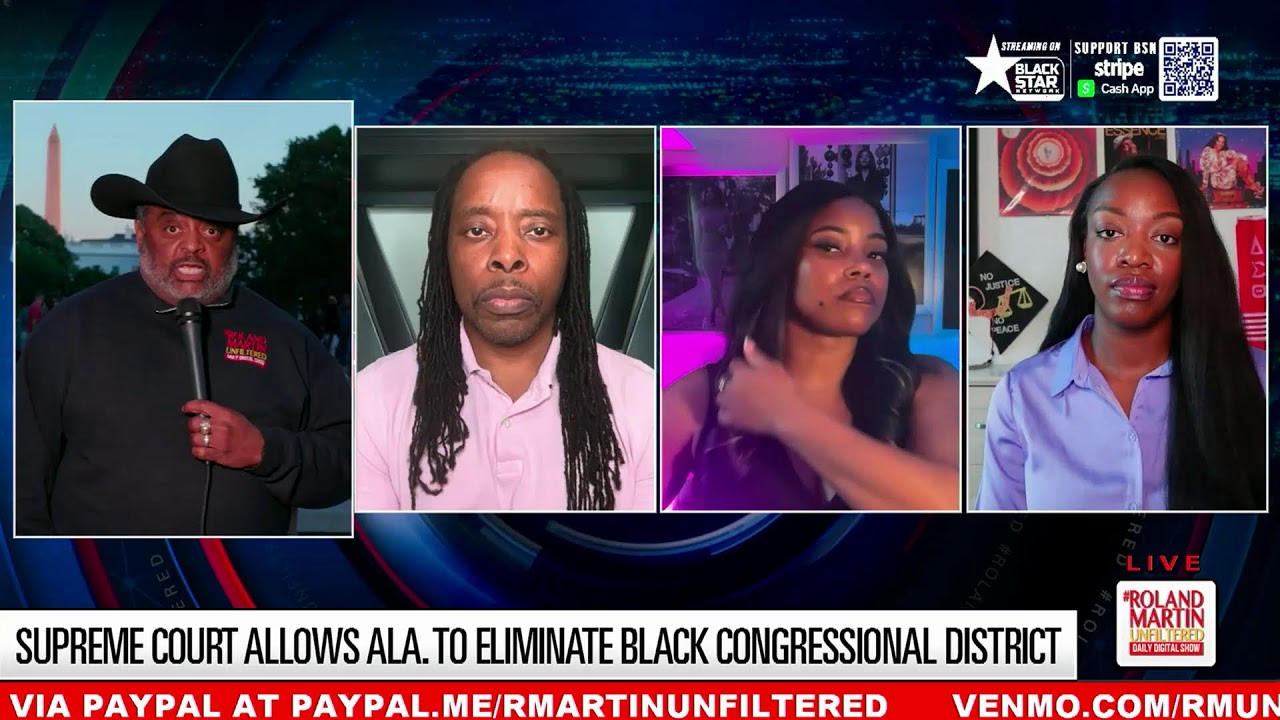
Moral Monday at BLM Plaza. Cleo Fields Sounds Alarm on Louisiana & Gary Chambers Pushes Turnout
"Activists and faith leaders gathered at Moral Monday to denounce 'policy violence' in various forms, from war and budget cuts to voter suppression and healthcare denial, urging sustained mobilization against a 'hijacked' democracy."

Iran Deal Skepticism. Whoopi Vs Vance. Potomac Park Invasion. Racist Hurls Slurs At Black Boy.
"This episode dissects multiple instances of alleged anti-Black policies and racial injustice, from the Trump administration's legal challenges to reparations and the Iran deal, to police brutality and the erasure of Black history."

Dan Bongino’s EPIC CRASHOUT Over Jimmy Dore!
"Jimmy Dore dissects Dan Bongino's alleged hypocrisy regarding the Epstein files and his public meltdown during a past interview, framing it as a case of psychological projection and political opportunism."

M&M's Employee Steals $26 MILLION (How He Did It)
"This episode details a series of white-collar crimes, from an M&M's sugar expert embezzling $26 million to a fake immigration attorney scamming undocumented immigrants, highlighting vulnerabilities in various systems and the surprising leniency of some sentences."