
Scott Ritter: Hormuz Blocked! Iran’s Missile Fire Can Leave the US Navy DEFENSELESS
YouTube · DCDuxei5dj8
Quick Read
Summary
Takeaways
- ❖The US is using diplomacy with Iran as a "sucker punch" to buy time for a massive military buildup aimed at regime change.
- ❖The US military has deployed THAAD, Patriot, F-35s, F-15s, F-16s, F-22s, and thousands of Tomahawk missiles to the region.
- ❖The US plan includes suppressing Iran's ballistic missile capabilities and triggering violent internal unrest using 80,000+ Starlink terminals.
- ❖Iran's perceived "hesitancy" to issue decisive, immediate threats against US regional assets (e.g., bases in Jordan, Saudi oil fields) is seen as a weakness by US planners.
- ❖Scott Ritter believes the US is prepared to escalate to nuclear options if an American aircraft carrier is sunk or conventional capabilities are exhausted.
- ❖Israel's objective is the elimination of the Islamic Republic, believing it will lead to regional subservience to Israel and the US.
- ❖China could deter a US attack on Iran by explicitly linking it to an immediate move on Taiwan, but is currently not doing so.
Insights
1US Diplomacy as a Pretext for War
Scott Ritter asserts that US negotiations with Iran are a deliberate distraction, buying two weeks for the US to deploy missile defense (THAAD, Patriot) and strike capacity (F-35s, F-15s, F-16s, F-22s). The ultimate goal, he claims, is regime change, not a diplomatic outcome.
This is just two weeks for the United States to get all the means. The first thing we did was deploy the missiles the the missile defense THAAD Patriot and now we're deploying the strike capacity. And when we get to green on both defense, missile defense and strike capacity, the president will pull the trigger because we have no interest in a diplomatic outcome with Iran. Our goal, our objective has always been regime change.
2Multi-pronged US Strategy for Regime Change
The US plan involves a massive air campaign to suppress Iranian ballistic missile capabilities, combined with internal destabilization efforts. The air campaign would involve advanced fighter jets to "blanket the skies of Iran 24/7 for a week nonstop day and night air campaign" to hit missile operations. Simultaneously, the US has infiltrated over 100,000 Starlink terminals into Iran, outfitted with Israeli software, to generate violent civilian unrest and mobilize anti-regime cells, aiming to "bomb Iran, trigger massive protests, violent protests, suppress the regime, and carry out regime change to include killing the supreme leader."
We now know that we if we're going to fight Iran, the requirement is that we have to suppress Iran's ballistic missile launch capacity early on. That and in order to do that, you need just the kind of aircraft mix that we've got coming in. F-35s, F-15s, F-16s, F-22s. the United States, the CIA, and others have infiltrated over 100,000 Starlink terminals into Iran. The Americans are planning to bomb Iran, trigger massive protests, violent protests, suppress the regime, and carry out regime change to include killing the supreme leader, trying to kill the presidency, killing the leadership.
3Iran's Perceived Hesitancy as a Fatal Flaw
Ritter criticizes Iran's diplomatic approach and past responses, arguing that its lack of decisive, preemptive threats is enabling the US war plan. Iran's engagement in "diplomatic games" and its historical "hedged" responses are interpreted by US planners as hesitancy. Ritter argues Iran should issue immediate, existential threats to regional US allies (e.g., Jordan, Saudi Arabia) stating that their infrastructure would be "eliminated on day one" if they facilitate US aggression. This would force allies to reconsider hosting US forces.
Iran is is setting itself up for failure here. They're negotiating with a man who is deliberately plotting against them, which means he isn't negotiating in good faith. Iran hasn't been decisive in the past. Even in their response against Israel, it wasn't decisive. It was it was hedged. The only way Iran deters an attack is to state right up front what the cost of this war will be instantaneously.
4US Military Preparedness and Escalation Risk
The US military is fully capable of waging a large-scale conventional war and is prepared for nuclear escalation if critical assets are threatened. Ritter emphasizes the US is a "mature military power" that plans for global conventional war, including sustained operations with at-sea replenishment of munitions like Tomahawk missiles (potentially 2-3 reloads for 800-1000 missiles). He highlights that military planners are confident in having "solutions" for Iranian air defenses (S-300, S-400). Critically, he warns that if Iran sinks a US aircraft carrier or exhausts US conventional capabilities, the US would likely resort to nuclear weapons as a "warning" or to avoid failure.
Our military will not pull the trigger on an Iranian strike unless they are confident that they have an adequate response to anything the Iranians can do. We have a solution for the S400. We have a solution for the S300. if you're looking at 800 to a,000 tomahawks um you've got to understand that we can probably replenish at least two times over. If Iran sinks it, I believe the consequences would be nuclear.
5Israel's Vision for a Post-War Middle East
Israel views the elimination of the Islamic Republic as the key to regional dominance. From Israel's perspective, destroying the Islamic Republic, which is the only nation that has consistently stood up to Israel and the US, would eliminate the "axis of resistance." This would pave the way for all Gulf Arab countries to become "compliant servant states" under a "greater Israel" and the US, fulfilling the vision of the Abraham Accords as a "vehicle of colonial empowerment."
The vision here is that we are able to to end the Islamic Republic with minimal damage... the maximum effect we get is the elimination of the Islamic Republic, which from the Israeli perspective opens the door for everything. The Abrams Accords will become reality. Israel will be anointed as the economic lord of the region. All Arab nations will now be, you know, subservient to to Israel.
Bottom Line
The US believes a decapitation strike will collapse the Iranian government, but Ritter argues the Islamic Republic's constitutional structure and the Assembly of Experts ensure a rapid succession, demonstrating US "ignorance" of Iran's resilience.
US strategy is fundamentally flawed by underestimating Iran's internal stability and institutional mechanisms for leadership transition, potentially leading to a prolonged and devastating conflict without achieving its primary objective.
Iran could leverage its constitutional resilience to demonstrate continuity and undermine US regime change objectives, if it acts decisively in its deterrence strategy.
China has significant leverage to deter a US attack on Iran by explicitly linking it to an immediate, decisive move on Taiwan.
The US cannot fight two major wars simultaneously. China's inaction allows the US to focus on Iran, potentially emboldening it to then challenge China on Taiwan after a perceived victory.
China could issue a clear warning that a US attack on Iran would mean "all bets are off on Taiwan," forcing the US to reconsider its priorities and potentially preventing the war.
US military decisions to launch major conflicts are based on a "green light" system where specific conditions (e.g., missile defense, strike capacity, suppression of enemy forces) must be met, often overriding detailed battle damage assessments.
This suggests a mechanistic approach to war initiation, where quantitative metrics can supersede qualitative analysis, potentially leading to premature or ill-advised engagements based on predefined triggers.
Understanding this "green light" mechanism could allow adversaries to disrupt the conditions necessary for the US to reach its "go" state, or to anticipate the timing of an attack based on observed deployments.
Lessons
- Recognize that diplomatic negotiations can be a strategic deception used to mask military preparations, requiring vigilance from all parties.
- Understand that perceived "hesitancy" or lack of decisive, preemptive threats from an adversary can be interpreted as weakness, potentially inviting aggression.
- Consider the broader geopolitical implications of regional conflicts, as they can trigger global economic instability, challenge international treaties (like the NPT), and shift global power dynamics.
Quotes
"The Americans are planning to bomb Iran, trigger massive protests, violent protests, suppress the regime, and carry out regime change to include killing the supreme leader, trying to kill the presidency, killing the leadership."
"The only way Iran deters an attack is to state right up front what the cost of this war will be instantaneously."
"If Iran sinks it, I believe the consequences would be nuclear."
"We are governed by madmen, insane people who have no sense of moral obligation to the legacy of arms control."
Q&A
Recent Questions
Related Episodes
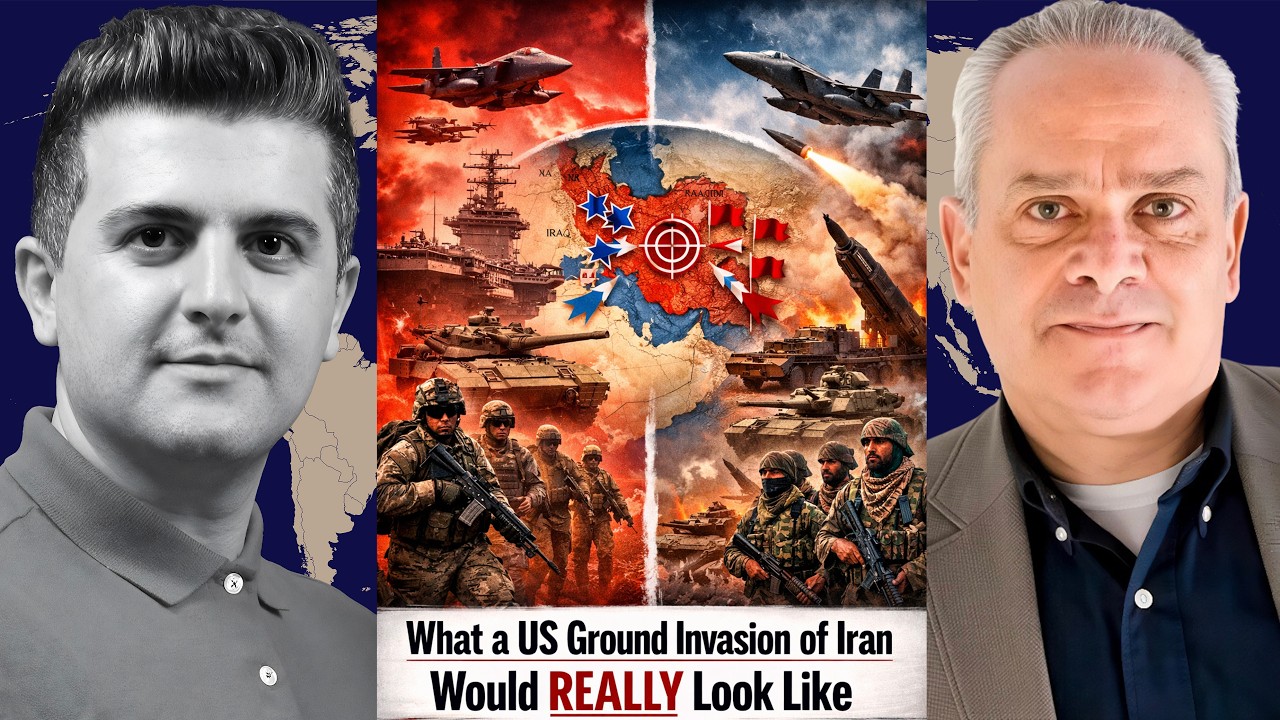
Col. Jacques Baud: What a US Ground Invasion of Iran Would REALLY Look Like
"Colonel Jacques Baud dissects the strategic futility of a US ground invasion of Iran, arguing that current troop levels are insufficient and such an action would backfire, exposing US allies and potentially leading to Iran's nuclearization."

Patrick Henningsen: Hezbollah JUST Fired Back at Israel - Iran Vows to “Crush” All Attacks
"Patrick Henningsen argues that the US and Israel initiated an illegal war against Iran, driven by Trump's incompetence and Israeli influence, leading to an inevitable escalation with severe global economic repercussions."

Pentagon Prepares For EXTENDED War With Iran
"This episode dissects the geopolitical maneuvers surrounding potential US-Iran conflict, revealing strategic leaks, Netanyahu's diplomatic sabotage playbook, and the true intent behind economic sanctions."
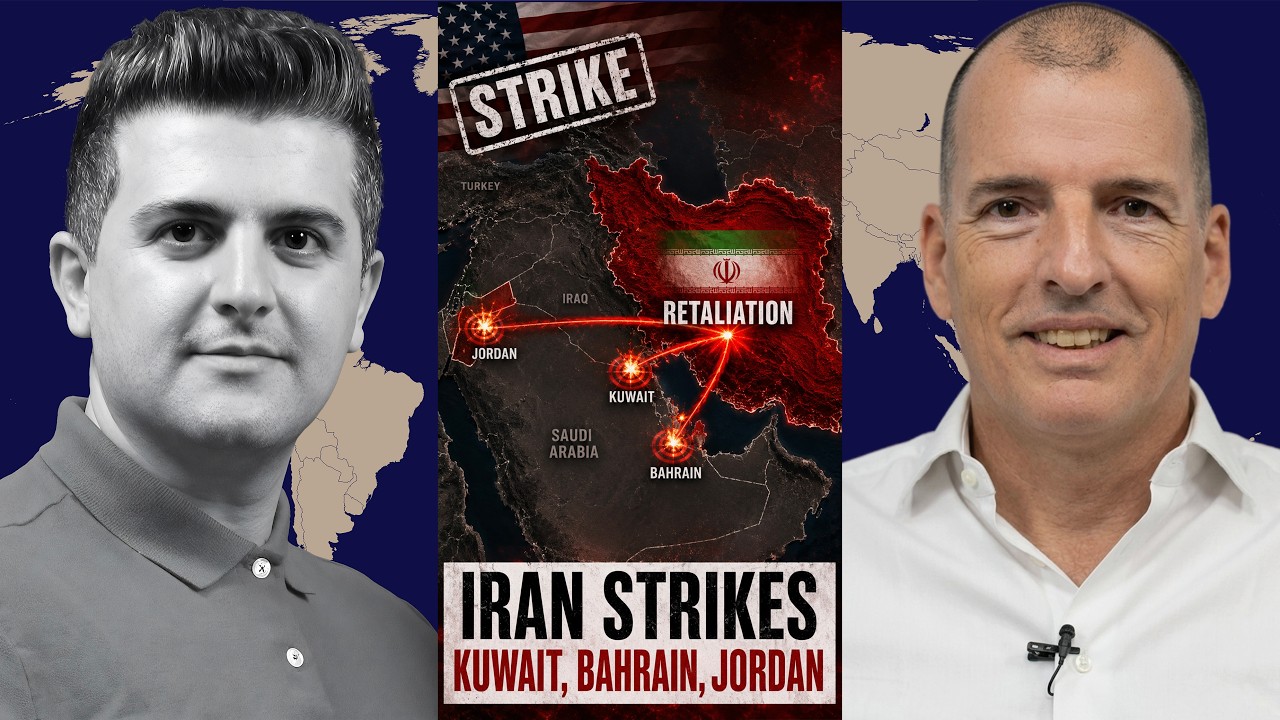
Alex Krainer: US STRIKES Iran – Iran RETALIATES Against Kuwait, Bahrain & Jordan!
"Amidst escalating US-Iran conflict and Iranian retaliation against regional US allies, this episode argues that US foreign policy is deeply controlled by an 'Anglo-Zionist conspiracy' led by the Rothschild banking dynasty, prioritizing Israeli interests over American ones."