BREAKING: Iran Threatens Its "Doomsday" Weapon; U.S. Signals IMMINENT Strike | TBN Israel
YouTube · DN__3bM2BRE
Quick Read
Summary
Takeaways
- ❖U.S. officials declared talks with Iran in Geneva a 'nothing burger,' signaling an imminent military strike.
- ❖The Pentagon is dramatically increasing its military presence in the Middle East, resembling the buildup for 'Operation Midnight Hammer.'
- ❖Iran is fortifying military and nuclear sites, including at Bin Isahan and Isfahan, with concrete sarcophagi and buried tunnel entrances.
- ❖U.S. deployments include over 150 military cargo flights, 50 fighter jets (F-35s, F-22s, F-16s), the USS Abraham Lincoln, and USS Gerald Ford carrier strike groups.
- ❖Iran is set to conduct joint naval exercises with Russia in the Sea of Oman and the northern Indian Ocean.
- ❖Iran's Supreme Leader Ali Khamenei issued threats on X, warning the U.S. military could take an unrecoverable hit.
- ❖Iran's 'doomsday weapon' is its ability to credibly threaten closure of the Strait of Hormuz, through which nearly a quarter of daily global seaborne energy trade passes.
- ❖Hamas is actively rebuilding tunnels, recruiting thousands of new fighters, and producing weapons in Gaza, exploiting the ceasefire and regional focus on Iran.
- ❖Hamas is collecting millions of shekels weekly from humanitarian aid taxes and smuggling to fund its rebuilding efforts.
- ❖Hamas's reported casualty figures are manipulated, failing to distinguish between combatants and civilians, or those killed by IDF vs. Palestinian fire.
Insights
1U.S. Military Buildup Signals Imminent Strike
The U.S. has completed a significant military force buildup in the Middle East, deploying over 150 cargo flights, 50 fighter jets (F-35s, F-22s, F-16s), and two aircraft carrier strike groups (USS Abraham Lincoln, USS Gerald Ford). This deployment includes THAAD and Patriot missile defense systems to protect U.S. bases, strongly resembling the prelude to 'Operation Midnight Hammer,' indicating a high likelihood of kinetic action.
Reports based on American sources and open-source intelligence analysis detail 150+ military cargo flights, 50 fighter jets, refueling aircraft, command and warning aircraft, and naval assets like the USS Abraham Lincoln and USS Gerald Ford with five destroyers armed with Tomahawk missiles. THAAD and Patriot missiles are deployed for defense.
2Iran Fortifies Nuclear and Military Sites
Iran is actively reinforcing and restoring military and nuclear facilities damaged in previous conflicts. Satellite images show efforts to build concrete sarcophagi over sensitive sites like Bin Isahan, bury tunnel openings at Isfahan, and rebuild logistical and command compounds at ballistic missile launch sites near Shiraz, preparing for sustained conflict.
Updated satellite images show efforts to restore and reinforce military facilities tied to the nuclear program, including concrete pours and new protective layers at Bin Isahan, covering and filling tunnel openings at Isfahan, and rebuilding compounds at a ballistic launch site near Shiraz.
3Strait of Hormuz: Iran's 'Doomsday Weapon'
Iran views its ability to close the Strait of Hormuz as its 'doomsday weapon,' a credible threat that can disrupt global energy shipments. Even short closures, like a recent live-fire drill, cause uncertainty and spike insurance premiums, demonstrating Iran's leverage over a critical global choke point.
Iran shut down parts of the Strait of Hormuz for a few hours during a live-fire drill. The Strait handles approximately 20 million barrels per day of oil and LNG, almost a quarter of daily global seaborne energy trade. Iran boasts it can use mines to close it.
4Hamas Rebuilds Under Ceasefire, Manipulates Data
During the ceasefire, Hamas is exploiting the regional focus on Iran to rebuild its military capabilities in Gaza. It is actively reconstructing tunnels, recruiting thousands of new fighters, and manufacturing weapons. Concurrently, Hamas manipulates casualty figures, failing to differentiate between combatants and civilians or causes of death, to serve its psychological warfare and recruitment narratives.
Hamas is 'hard working in rebuilding tunnels, recruiting fighters, and manufacturing weapons' under the ceasefire. It collects millions of shekels weekly from humanitarian aid taxes and smuggling. Its published fatality figures (72,037) do not distinguish between IDF and Palestinian fire, or combatants and civilians. Hamas's own financial grants to 'martyrs' widows (19,360) suggest almost a third of listed fatalities were its own armed combatants.
Opportunities
Invest in Israel's innovative economy
The podcast promotes investing in Israel's stock and bond markets through 'Wise Money Israel,' highlighting opportunities in traditional and high-growth sectors. This allows investors to diversify internationally and support the Israeli economy.
Lessons
- Stay informed on geopolitical developments in the Middle East, particularly regarding U.S.-Iran tensions and their potential impact on global energy markets.
- Recognize the strategic importance of the Strait of Hormuz and how its potential closure could affect global trade and energy prices.
- Be aware of the narratives and data presented by conflict actors, such as Hamas's casualty figures, and seek diverse sources for verification.
Notable Moments
U.S. officials dismiss Iran talks as 'nothing burger' and signal imminent military action.
This marks a definitive shift from diplomacy to a strong indication of military intervention, escalating regional tensions significantly.
Iran conducts joint naval exercises with Russia and threatens to close the Strait of Hormuz.
These actions demonstrate Iran's defiance, its strategic alliances, and its willingness to use its most potent economic leverage against international pressure.
Hamas actively rebuilds military infrastructure and manipulates casualty figures during ceasefire.
This highlights Hamas's strategic exploitation of conflict dynamics and humanitarian narratives to strengthen its position, posing a continued threat to Israel even during periods of supposed calm.
Quotes
"The United States officially declared late Wednesday in a statement to Israeli media that the talks with Iran in Geneva were a big nothing burger."
"There's a 90% chance that we will see kinetic action in the coming weeks."
"The American destroyers are dangerous, but the weapon that can sink them is more dangerous."
"The negotiations and the security readiness are complimentary strategies being pursued in parallel. In plain words, they talk with one hand and load weapons the other."
Q&A
Recent Questions
Related Episodes
BREAKING: Protests ERUPT In Iran Over IRGC Surrendering To Trump - Infighting Clashes In Tehran
"Iran is experiencing severe internal infighting and protests as hardline IRGC elements clash with government figures over a perceived 'surrender' to the US, while mainstream Western media misrepresents the situation."

Patrick Henningsen: Hezbollah JUST Fired Back at Israel - Iran Vows to “Crush” All Attacks
"Patrick Henningsen argues that the US and Israel initiated an illegal war against Iran, driven by Trump's incompetence and Israeli influence, leading to an inevitable escalation with severe global economic repercussions."

PBS News Hour full episode, April 10, 2026
"This episode covers high-stakes US-Iran peace talks amidst ongoing conflict, Hungary's pivotal election challenging Viktor Orban, the accelerating decline in US birth rates, AI's disruptive impact on jobs, and Palestinian Christians observing Easter under Israeli restrictions."
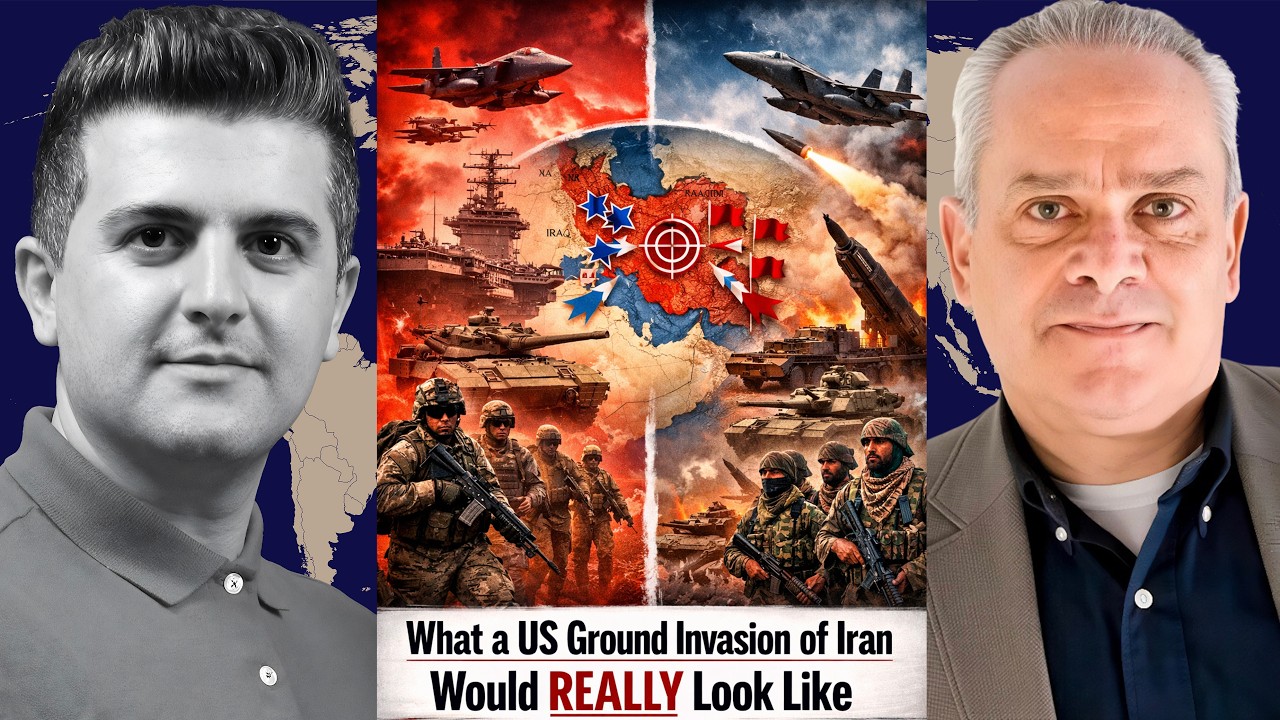
Col. Jacques Baud: What a US Ground Invasion of Iran Would REALLY Look Like
"Colonel Jacques Baud dissects the strategic futility of a US ground invasion of Iran, arguing that current troop levels are insufficient and such an action would backfire, exposing US allies and potentially leading to Iran's nuclearization."