
Drogué hombres con Las Goteras y perdí a mi hijo | Karla #Penitencia #entrevista #México
YouTube · DTir_TcFoAM
Quick Read
Summary
Takeaways
- ❖Karla joined 'Las Goteras' at age 26, driven by the need to support her daughter after divorce.
- ❖The gang's primary method involved sedating men with eye drops in bars, then robbing their credit cards and valuables.
- ❖Victims were often wealthy, married men who avoided reporting crimes to protect their reputations.
- ❖Stolen credit cards were used by 'compradores' to buy high-value goods (electronics, jewelry) which were then resold for cash.
- ❖The 'Goteras' operated for about 10 years, expanding from Mexico City to other states, with groups of 2-5 women.
- ❖Karla was arrested for credit card utilization but later charged with homicide from an incident a year prior, despite her incarceration.
- ❖Her refusal to cooperate with authorities regarding the homicide investigation led to her wrongful implication and a 34-year sentence.
- ❖Karla reflects on her ambition, the emotional toll, and her commitment to a legal life after prison, emphasizing the impact on her children.
Bottom Line
The 'Las Goteras' gang strategically targeted married men, understanding that their fear of public exposure (and marital consequences) would prevent them from reporting the robberies, thus ensuring the gang's long-term impunity.
This highlights a critical vulnerability in social dynamics that criminal organizations can exploit, where personal reputation outweighs justice, allowing crimes to go unreported and unpunished for extended periods.
Public awareness campaigns could address the broader implications of non-reporting, encouraging victims to prioritize safety and justice over social stigma, and offering anonymous reporting mechanisms.
Karla's wrongful murder conviction, despite being incarcerated for months before the investigation, demonstrates how prosecutorial pressure and a lack of cooperation can lead to severe, unjust charges within the judicial system.
This reveals a significant flaw where individuals, particularly those already within the system, can be leveraged or coerced into accepting charges they are not directly responsible for, often to close high-profile cases.
Advocacy for stronger legal defense for incarcerated individuals, especially when new charges arise, and independent oversight of prosecutorial practices are crucial to prevent such injustices.
Lessons
- Exercise extreme caution regarding personal safety and valuables when socializing in nightlife environments, especially when accepting drinks from strangers.
- Understand that criminal organizations often exploit social vulnerabilities, such as fear of exposure, to operate with impunity; reporting crimes is crucial for public safety.
- Recognize the potential for systemic injustices within the legal system, where individuals can be wrongly implicated or face disproportionate charges, especially when under pressure to cooperate.
Notable Moments
Karla describes how her initial mentor in the 'Goteras' gang gave her a smaller cut of the earnings, leading her to eventually break off and form her own group, seeking a fairer distribution.
This illustrates the internal dynamics and hierarchies within criminal groups, showing that even in illicit operations, there are elements of exploitation and a drive for individual agency and better 'compensation.'
Karla recounts being approached by judicial police while already incarcerated, who offered her freedom for cooperating in a murder investigation, an offer she refused due to fear of further involvement.
This moment highlights the immense pressure and difficult choices individuals face within the justice system, where cooperation can be a double-edged sword, and refusal can lead to severe, potentially unjust, consequences.
Karla shares that her son's father, who was also briefly detained due to association with her, now prevents her from seeing their son, using the child as a means of 'getting even.'
This powerfully demonstrates the devastating, long-lasting ripple effects of criminal activity and incarceration, extending beyond the individual to impact family relationships and the emotional well-being of children.
Quotes
"prostituta no soy. Me dijo, no, no, nada, nada de eso. Solamente vamos a quitarle a a robar."
"La mayoría de los hombres eran casados. Entonces, levantar una denuncia pues era meterse el pie ellos solitos."
"La maternidad es frágil, ¿no? O sea, la maternidad nos hace hacer cosas brutales."
"Pienso que si llego a salir pues es para trabajar y ver a mis hijos. No te ves volviendo a hacer lo que hiciste. No, no, nada de eso."
Q&A
Recent Questions
Related Episodes

Mis primos me enseñaron a vender droga a los siete años | Fernando #México #Fútbol #Entrevista
"Fernando, incarcerated in Mexico, recounts his harrowing journey from selling drugs at age seven, influenced by family and poverty, to finding a path toward rehabilitation through sports and the love of his children."

Me drogué desde lo 9 años: maté a mi tía y la cárcel salvó mi vida | Diego #Penitencia 192 #México
"Diego recounts his harrowing journey from childhood addiction and the murder of his aunt to finding sobriety and purpose within the confines of prison, revealing how incarceration paradoxically became his path to redemption."

A los 14, me drogaba con mi padre y vendía drogas con él | Octavio #Penitencia 189 #México
"Octavio, known as 'El Rayas,' shares a harrowing account of a childhood steeped in extreme violence, parental neglect, and a family history of abuse, addiction, and crime, revealing how these cycles shaped his path to incarceration."
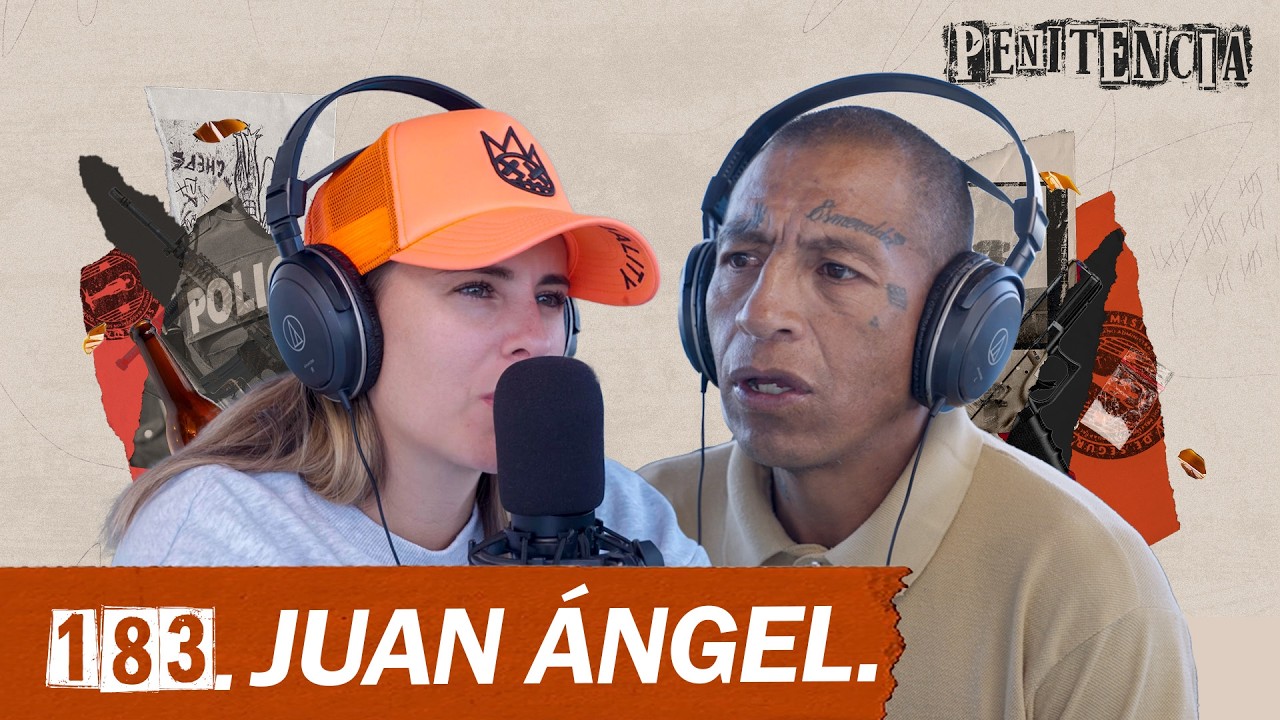
Maté por respeto: la cárcel se volvió mi hogar | Juan Ángel #Penitencia 183 #entrevista #México
"Juan Ángel's life story reveals a brutal cycle of violence, abandonment, and incarceration, where childhood trauma forged a path of crime and a desperate pursuit of respect through fear."