
Laith Marouf: Iran vs US & Israel — Now Hezbollah & Iraq Militias Step In!
YouTube · DbWPkSS1n5c
Quick Read
Summary
Takeaways
- ❖Israel declared South Lebanon a military operation zone, ordering evacuations, after suffering losses against Hezbollah forces.
- ❖Hezbollah reportedly preempted an Israeli cabinet meeting to launch a war on Lebanon, demonstrating unexpected strength and Israeli air defense weaknesses.
- ❖Iran's initial attacks targeted Israeli surveillance bases in the Golan Heights and Galilee, then shifted to central Israel and US bases in Gulf states.
- ❖The speaker views Gulf monarchies (Saudi, UAE, Qatar, Kuwait) as 'vassal puppet regimes' already fully complicit in the war against Iran and Palestinians.
- ❖The 'Axis of Resistance' aims for a long war, seeking the end of the 'Zionist colony' and American withdrawal from Western Asia.
- ❖The closure of the Strait of Hormuz and Bab-el-Mandeb is projected to severely impact European and East Asian economies, potentially drawing China into the conflict.
- ❖Gulf countries are highly vulnerable due to dependence on food imports and desalination plants, which could be targeted.
- ❖Iran's targeting of the bridge between Saudi Arabia and Bahrain aimed to prevent Saudi reinforcement of the Bahraini regime against popular uprisings.
Insights
1Hezbollah's Preemptive Strike and Israeli Vulnerability
Hezbollah launched retaliatory attacks, which the guest claims preempted an Israeli cabinet meeting to declare war on Lebanon. Hezbollah's drones and missiles reportedly passed through Israeli northern air defense systems 'at ease,' indicating a collapse in Israeli defenses and a higher tactical advantage for Hezbollah.
Hezbollah launched retaliatory attacks two days prior to the podcast. Israelis admitted their cabinet was meeting to launch a war on Lebanon before Hezbollah's attacks (). Hezbollah's drones and missiles are passing through northern Israeli air defense systems 'at ease' (). Israel declared all of South Lebanon a military operation zone and ordered evacuations after losing over six tanks and three drones attempting to enter Lebanese villages (, ).
2Iran's Strategic Targeting and Softening the Ground
Iran initially concentrated its firepower on Israeli surveillance bases in the Golan Heights, Galilee, and Haifa region. This strategy aimed to 'soften the ground' in northern occupied Palestine and the Syrian Golan Heights for a potential Hezbollah intervention, disabling key Israeli intelligence assets.
Iran concentrated firepower on Golan Heights, Galilee, and Haifa region on the first day of war (). This targeted major Israeli surveillance bases in the Golan Heights (). The goal was to soften the ground for Hezbollah's intervention ().
3Gulf States as 'Vassal Puppet Regimes' and Iranian Targets
The speaker asserts that Gulf states like Saudi Arabia and the UAE are not sovereign but 'vassal puppet regimes' whose resources are fully integrated into the war against Iran and Palestinians. Iran's missile strikes targeted American bases and CIA headquarters within these countries, particularly the UAE, which is seen as 'more filthy in bed with the Zionists' than Saudi Arabia.
Gulf states are 'vassile puppet regry regimes' (). Iran targeted American bases and destroyed them from Erbil to Abu Dhabi (). 30% of Iran's missiles and drones were directed towards the UAE, indicating its crucial role in the attack on Iran (). The speaker claims residential buildings hit in the Emirates housed 'front companies for the Zionist Mossad or the CIA' ().
4Economic Vulnerability of Europe and East Asia to Strait Closures
The closure of the Strait of Hormuz and Bab-el-Mandeb is projected to severely impact European, Japanese, Korean, and potentially Chinese economies due to rapid increases in oil and gas prices and dependence on imports. Japan reportedly has only two months of gasoline reserves.
Oil and gas prices, especially liquid gas in Europe, increased by 70% in the first 24 hours of the war (). Japan stated it has only two months of gasoline (). Europe is begging Ukraine to allow Russian gas/oil to pass ().
5Vulnerability of Gulf States: Food and Water
Gulf countries are critically dependent on food imports (90%) and desalination for water (70%). The disruption of shipping routes from Syria, Iraq, and India, combined with potential targeting of desalination plants, could lead to rapid market emptying and regime collapse.
Gulf countries depend on 90% food imports from Greater Syria and India (). Roads from Syria and Iraq are closed, and no shipping from India (). 70% of Gulf water comes from desalination (). Iran has not yet hit desalination factories but might if its water infrastructure is attacked ().
Bottom Line
The 'Axis of Resistance' deliberately allowed initial sacrifices in Gaza to 'awaken humanity' to perceived 'Jewish supremacy' and 'pedophilia cannibalistic class,' believing this generated global consciousness necessary for their all-out war.
This framing suggests a long-term, calculated strategy where human suffering was a necessary catalyst for broader geopolitical objectives, rather than a failure of immediate intervention. It implies a deep ideological conviction driving the conflict.
Understanding this perceived 'awakening' could inform counter-narrative strategies or efforts to de-escalate by addressing the underlying grievances and ideological drivers, rather than solely focusing on military actions.
Iran's decision not to sink nuclear-powered US aircraft carriers, despite claimed capability, is presented as a 'rational' choice for 'the sake of humanity,' implying a calculated restraint that could be abandoned if nuclear weapons are used against them.
This highlights a perceived red line and a potential for catastrophic escalation if nuclear weapons are introduced. It frames Iran as a rational actor holding back from extreme measures, contrasting with the 'crazies' in US/Israeli leadership.
This insight underscores the critical importance of de-escalation and preventing any nuclear engagement, as the speaker suggests Iran has the means and willingness to retaliate in kind, with devastating global consequences.
The Egyptian populace is overwhelmingly rooting for Iran against Israel and the US, despite the official Egyptian state's silence, and there is a 'huge vacuum of leadership' in the Arabic and Sunni Muslim world that even a Hollywood actor can fill with pro-resistance rhetoric.
This indicates a significant disconnect between Arab governments and their populations, suggesting widespread popular support for the 'Axis of Resistance' narrative. The 'vacuum' implies fertile ground for new, charismatic figures to emerge and mobilize sentiment.
For regional powers or external actors, understanding this popular sentiment and leadership vacuum is crucial for anticipating future political instability and potential shifts in alliances, as popular pressure could force regime changes or policy shifts.
Key Concepts
Axis of Resistance Strategy
A coordinated, multi-front approach by Iran and its allies (Hezbollah, Iraqi militias) to engage Israel and the US, aiming to deplete resources, expose vulnerabilities, and ultimately remove their presence from Western Asia. This includes preemption, strategic targeting of command centers and economic lifelines, and leveraging popular uprisings.
Delusions of Grandeur
The speaker attributes the perceived miscalculations and failures of US and Israeli leadership to a 'supremacist delusion' that prevents them from accurately assessing military realities and the resolve of their adversaries, leading to overconfidence and strategic errors.
Lessons
- Monitor the strategic importance of maritime chokepoints like the Strait of Hormuz and Bab-el-Mandeb, as their closure could trigger severe global economic disruptions, particularly in energy and trade.
- Assess the political stability and supply chain vulnerabilities of Gulf Cooperation Council (GCC) countries, considering their heavy reliance on food imports and desalination, and the potential for internal unrest or external targeting.
- Analyze the narratives and public sentiment in Arab and Sunni Muslim populations, recognizing potential disconnects with official state policies and the emergence of new influential figures, which could signal future geopolitical shifts.
Notable Moments
Laith Marouf claims Hezbollah preempted an Israeli war on Lebanon, highlighting perceived Israeli military incompetence.
This frames Hezbollah's actions as defensive and strategic, challenging the narrative of unprovoked aggression and suggesting a significant shift in regional military balance.
Discussion on Iran's strategic targeting of Israeli surveillance bases and US/CIA assets in Gulf states.
Reveals the 'Axis of Resistance's' calculated military strategy to degrade adversary intelligence and logistical capabilities across the region.
Marouf's assertion that Gulf monarchies are 'vassal puppet regimes' and will collapse due to economic and popular pressures.
Indicates a core objective of the 'Axis of Resistance' to dismantle existing regional power structures and highlights potential areas of extreme instability.
The argument that sacrifices in Gaza were necessary to 'awaken humanity' and set the stage for an all-out war.
Provides a chilling insight into the ideological underpinnings and long-term strategic patience of the 'Axis of Resistance,' viewing immense suffering as a means to an end.
The warning about Iran's capability to sink nuclear-powered aircraft carriers and the potential for nuclear escalation.
Emphasizes the extreme stakes of the conflict and the potential for global catastrophe, framing Iran as a rational actor exercising restraint under pressure.
Quotes
"The Zionists have been getting a whipping. They're getting creamed by the men of God, God's men."
"Hezbollah preempted them. This is one thing. The other thing that it seems like Hezbollah knows is that the Zionists are weaker than we even think at this point in terms of their air defenses because all of the drones and missiles of Hezbollah are passing through the whole northern air defense systems of the Zionist at ease."
"There will be no stopping this war until there is no more Zionist colony on the land of Palestine and until the Americans exit Western Asia and leave us the hell alone."
"Iran is doing a favor for all Arabic and Muslim people and humanity as a whole by making sure that the money of these Gulf vassels is not there to support the imperialist efforts."
"If they do that, Iran gonna wipe them out of the [map]."
Q&A
Recent Questions
Related Episodes

Patrick Henningsen: Hezbollah JUST Fired Back at Israel - Iran Vows to “Crush” All Attacks
"Patrick Henningsen argues that the US and Israel initiated an illegal war against Iran, driven by Trump's incompetence and Israeli influence, leading to an inevitable escalation with severe global economic repercussions."

Col. Jacques Baud: What a US Ground Invasion of Iran Would REALLY Look Like
"Colonel Jacques Baud dissects the strategic futility of a US ground invasion of Iran, arguing that current troop levels are insufficient and such an action would backfire, exposing US allies and potentially leading to Iran's nuclearization."

Alex Krainer: US STRIKES Iran – Iran RETALIATES Against Kuwait, Bahrain & Jordan!
"Amidst escalating US-Iran conflict and Iranian retaliation against regional US allies, this episode argues that US foreign policy is deeply controlled by an 'Anglo-Zionist conspiracy' led by the Rothschild banking dynasty, prioritizing Israeli interests over American ones."
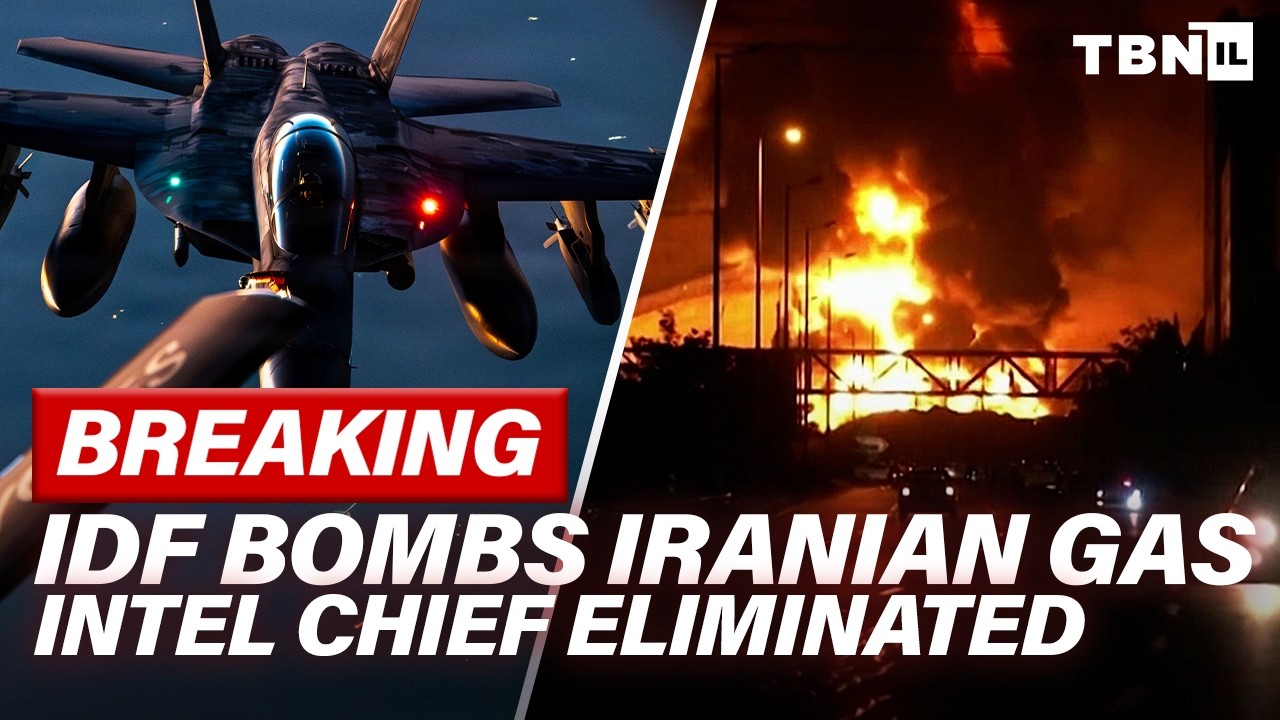
BREAKING: Israel BOMBS Major Iran Gas Site; Top Mullah ELIMINATED; Iran Vows VENGEACE | TBN Israel
"Israel and the United States have escalated their 'Roaring Lion War' against Iran, striking its largest gas facilities, eliminating key intelligence and military figures, and disrupting missile production, while Iran threatens a broader energy war in the Gulf."