
Iran REJECTS CEASEFIRE: Ready For Long WAR
YouTube · De9exaNYz78
Quick Read
Summary
Takeaways
- ❖Iran's top foreign policy advisor confirms readiness for a long war and rejects ceasefires, citing past US diplomatic failures.
- ❖The Iranian military is self-sufficient in arms production and considers the conflict an existential threat.
- ❖Hosts argue Iran's asymmetric warfare strategy aims to make the conflict's cost unbearable for the US and Israel, mirroring historical conflicts like Vietnam.
- ❖The assassination of Iranian leadership has strengthened nationalist sentiment, contrary to US expectations of regime change.
- ❖Iran seeks a 'deterrence-restoring outcome' and a lasting settlement, not just an end to hostilities.
- ❖Iran intends to use its control over strategic choke points to inflict devastating economic and political costs on the US, aiming for impact through at least the midterms.
Insights
1Iran's Commitment to a Long War and Rejection of Ceasefire
A top Iranian foreign policy advisor explicitly states Iran is ready for a long war if the US and Israel choose that path. They reject diplomacy, citing past experiences where the US, under Donald Trump, allegedly used diplomatic promises as a 'ruse and a cover to actually commit acts of war.' This indicates a deep-seated distrust preventing short-term de-escalation.
An interview with a top foreign policy adviser to the Ayatollah, who stated, 'I don't see any room for diplomacy anymore because Donald Trump had been deceiving others and not keeping with his promises.'
2Self-Sufficiency and Existential Threat Perception
The Iranian advisor asserts the military is 'quite strong' and self-sufficient, producing its own arms without dependence on other countries. Iran views the current conflict as an 'existential threat to the Islamic Republic,' necessitating a 'full might' response. This framing underscores their commitment to prolonged resistance.
The Iranian foreign policy advisor stated, 'Iranian military is quite strong... they have the arms that they need which are produced in Iran. As a matter of fact, we are not dependent on any other country for weapons and arms.' And 'It is an existential threat to the Islamic Republic and therefore we have to stay with full might.'
3Asymmetric Warfare and Strategic Patience
The hosts analyze Iran's strategy as asymmetric warfare, where Iran's goal is simply to 'hold on and make the price unbearably high' for the US and Israel. They compare this to the US experiences in Vietnam and Afghanistan, where adversaries with less conventional power outlasted superior forces by accepting high casualties and maintaining resolve.
The host states, 'All they have to do is hold on and make the price unbearably high for us and for the Israel.' The discussion references Vietnam and Afghanistan, noting, 'They are prepared to take 90% casualties at the top they are ready to fight to the death.'
4Failed Regime Change Attempts and Nationalist Hardening
The assassination of Iranian leadership, specifically the Ayatollah, was a tactical mistake by the US and Israel. Contrary to expectations of an uprising or regime collapse, it led to 'gigantic celebrations' for the new Ayatollah and a 'hardening of nationalist sentiment.' This 'rally around the flag effect' is predictable when a country is perceived to be under attack.
The host notes, 'one of I think the probably tactical mistakes from the Americans and the Israelis was assassinating the Ayatollah... There were gigantic celebrations in the street in Thyron celebrating the naming of the new Ayatollah... you've had the predictable opposite impact which is a hardening of nationalist sentiment.'
5Goal: Deterrence-Restoring Outcome, Not Just Ceasefire
Iran will not accept a temporary deal or ceasefire that leaves open the possibility of future wars. Their objective is a 'deterrence-restoring outcome' that creates conditions for a 'lasting, enforceable settlement.' This strategic logic dictates that 'holding out now despite the cost is the precondition for an agreement that actually holds,' indicating a long-term vision beyond immediate conflict cessation.
A senior Iranian official quoted by Drop Site stated, 'It is unlikely Iran would accept any temporary deal that leaves open the possibility that another war could be launched in the near future. Iran will not accept any ceasefire at this stage because what is pursuing is not a mere end to hostilities... but a deterrence restoring outcome that creates the conditions for lasting enforcable settlement.'
6Economic Warfare as a Strategic Tool
Iran aims to retaliate against decades of US economic warfare by leveraging its control over strategic choke points to drive up oil prices. Their goal is to inflict a 'devastating economic price' and a 'devastating political price' on the US president and his party, with an intent to sustain this pressure at least until the midterms.
The host explains, 'They want to give us a taste of our own medicine in terms of the economic warfare that we've been waging against them for decades... They're like, 'Look, $200 a barrel per oil. You want that? Let's keep going... we are going to make you pay.'... We want to be in this at least until the midterms.'
Lessons
- Recognize that adversaries with an existential stake in a conflict may possess greater strategic patience and willingness to absorb casualties than expected by conventional military powers.
- Understand that assassinating leadership in a nationalist context can backfire, consolidating support for the existing regime rather than causing its collapse.
- Factor in the long-term strategic goals of adversaries, such as seeking 'deterrence-restoring outcomes' rather than just temporary ceasefires, when evaluating conflict resolution pathways.
Quotes
"I don't see any room for diplomacy anymore because Donald Trump had been deceiving others and not keeping with his promises and we experienced it in two times of negotiations that while we were engaged in negotiation."
"All they have to do is hold on and make the price unbearably high for us and for the Israel."
"They are prepared to take 90% casualties at the top they are ready to fight to the death. I do not think that we understand we haven't fought an enemy like that in a well actually recently with the Taliban but uh like really at a large industrial scale since Vietnam."
"It is unlikely Iran would accept any temporary deal that leaves open the possibility that another war could be launched in the near future. Iran will not accept any ceasefire at this stage because what is pursuing is not a mere end to hostilities... but a deterrence restoring outcome that creates the conditions for lasting enforcable settlement."
"They want there to be an economic price, devastating economic price that all of us, by the way, all of you out there are going to pay and the entire world frankly is going to pay. They want there to be a devastating economic price and a devastating political price for uh for this president and his party. So that's what they're committed to."
Q&A
Recent Questions
Related Episodes

BREAKING: Iran Threatens To END Talks; U.S. Vows Retaliation; Hezbollah Collapsing? | TBN Israel
"Iran is leveraging Hezbollah and the Strait of Hormuz to manipulate US negotiations, while Israel asserts its right to dismantle Hezbollah's eroding but still dangerous infrastructure in Lebanon, independent of international talks."

🚨 THEY F*CKED AROUND FOR THE LAST TIME 😭😭😭
"This episode unleashes a torrent of highly opinionated commentary on the US-Iran deal, Israel's role, and a scathing critique of 'leftist' policies and immigration, particularly highlighting the UK grooming gang report as evidence of Western societal decay."
BREAKING: Protests ERUPT In Iran Over IRGC Surrendering To Trump - Infighting Clashes In Tehran
"Iran is experiencing severe internal infighting and protests as hardline IRGC elements clash with government figures over a perceived 'surrender' to the US, while mainstream Western media misrepresents the situation."
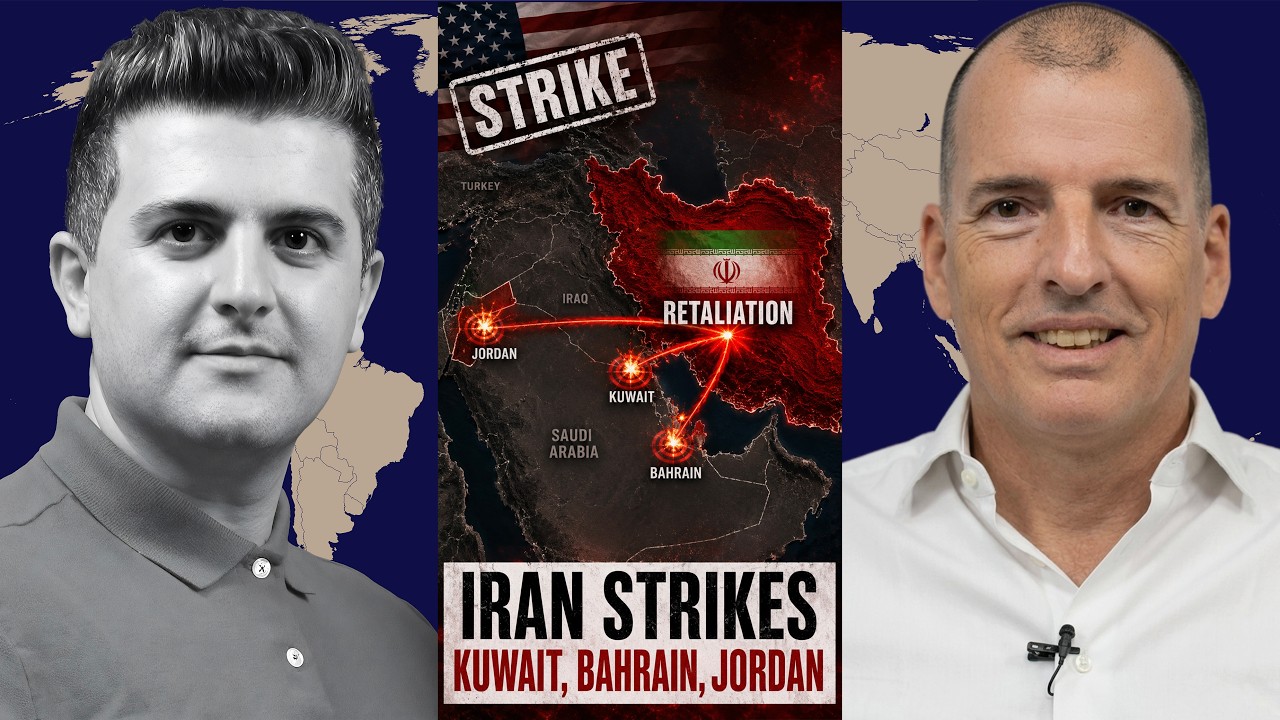
Alex Krainer: US STRIKES Iran – Iran RETALIATES Against Kuwait, Bahrain & Jordan!
"Amidst escalating US-Iran conflict and Iranian retaliation against regional US allies, this episode argues that US foreign policy is deeply controlled by an 'Anglo-Zionist conspiracy' led by the Rothschild banking dynasty, prioritizing Israeli interests over American ones."