
Tom Nichols: There Are 500 Ways This War Goes Wrong | Mona Charen Show
YouTube · EGb-u1XMl90
Quick Read
Summary
Takeaways
- ❖The best-case scenario for the Iran war (democratic regime change) is improbable, akin to drawing an 'inside straight' in poker.
- ❖A bombing campaign alone cannot enable an unarmed populace to overthrow a heavily armed regime.
- ❖The Trump administration's strategy mirrors Obama's in Libya ('no boots on the ground') but lacks Libya's key conditions: existing rebel groups and NATO support.
- ❖There is no organized opposition in Iran for military and security forces to defect to, a critical missing piece for regime change.
- ❖The administration has not articulated clear strategic goals or a post-conflict plan for Iran, repeating past mistakes like Rumsfeld's in Iraq.
- ❖Secretary of Defense Hegseth's rhetoric about 'no stupid rules of engagement' is unserious and demonstrates a fundamental misunderstanding of military operations.
- ❖Repressive regimes like Iran are adept at enduring pain and inflicting it on their people, making bombing campaigns less effective for regime change.
- ❖A likely outcome is Iran absorbing punishment, holding onto power, and then accelerating its nuclear program as a deterrent against future attacks.
- ❖The US is fighting this war with only Israel as an ally, undermining global perception and post-war diplomatic efforts.
- ❖Trump's decision-making is influenced by a 'simple-minded belief that things are easy' and a narcissistic bubble, leading to underestimation of complex conflicts.
- ❖Congress must demand a clear plan and authorization for the war, as the current approach lacks public and legislative support.
Insights
1Absence of Organized Opposition Undermines Regime Change Strategy
The US strategy relies on Iranian military and security forces defecting to rebel groups, but no organized opposition exists on the ground. This critical difference from conflicts like Libya means a bombing-only campaign cannot empower the populace to seize power from armed forces.
Mona Charen states, 'you can't just seize power from people with guns if you don't have guns.' Nichols confirms, 'Nothing like that exists in Iran.'
2Historical Precedents Show Failure of Bombing-Only Regime Change
Past attempts to change regimes solely through bombing, such as in Iraq (1991) and Libya (2011), often lead to instability, humanitarian crises, or the entrenchment of existing power structures. Kosovo was an exception due to specific, limited goals and subsequent ground peacekeeping forces.
Charen recalls George H.W. Bush's call for Iraqis to overthrow Saddam, which 'went badly.' Nichols notes Kosovo's specific goal was to 'head off a genocide,' not full regime change, and involved a NATO peacekeeping force.
3Administration Lacks Strategic Planning and Post-Conflict Vision
The Trump administration has not articulated clear strategic goals beyond 'bombing the hell out of everything' and expects an unspecified 'something will turn up.' This absence of planning for the 'day after' the war risks repeating the mistakes of past interventions, leading to prolonged instability or unintended consequences.
Nichols states, 'I don't think they've thought any of that through.' Charen adds, 'they don't any talk about what do we do?' Nichols quotes Rumsfeld's mistake in Iraq of not allowing discussion about post-war plans.
4Unilateral Action and Lack of Allies Undermine Legitimacy and Effectiveness
Undertaking a major war with only one ally (Israel) isolates the US diplomatically and fuels perceptions of the US acting solely for Israeli interests. This lack of broad international support severely hampers post-war reconstruction and stabilization efforts, contrasting sharply with past coalitions like Gulf War I.
Charen notes, 'We have one ally in this war and that's Israel.' Nichols adds, 'having Israel as your sole ally... looks like the United States and Israel basically dictating to the Middle East.'
5Trump's Contempt for Congress and Simplistic View of War are Dangerous
The president's decision to initiate war without congressional approval demonstrates contempt for legal restrictions and democratic processes. His 'simple-minded belief that things are easy' and 'apply force, and if that doesn't work, apply more force' approach is ill-suited for complex geopolitical conflicts, leading to unpredictable and potentially disastrous outcomes.
Nichols believes Trump 'did this specifically to show his contempt for the legal restrictions.' Charen observes Trump's 'simple-minded belief that things are easy.'
Key Concepts
Drawing to an Inside Straight
This poker analogy describes a situation where success depends on a very specific, low-probability outcome. Nichols uses it to illustrate the improbability of the best-case scenario for the Iran conflict, where all pieces fall perfectly into place for a democratic transition after military strikes.
The 500 Ways to Do It Wrong
Quoting Ambassador Barbara Bodine on Iraq, this model highlights the vast number of potential pitfalls and negative outcomes in complex military interventions, often far outnumbering the few ways to succeed. The administration is criticized for not considering these numerous failure modes.
Lessons
- Congress should demand a clear articulation of strategic goals and a post-conflict plan from the administration for any military action, rather than providing a 'blank check'.
- Policymakers must study historical precedents of regime change efforts, particularly the failures of bombing-only strategies and the necessity of ground forces, local opposition, and international alliances.
- The public should critically evaluate claims of 'easy' military victories and demand transparency and accountability from leaders regarding war aims, costs, and potential long-term consequences.
- International diplomacy and coalition-building are essential for legitimizing and effectively managing complex conflicts and post-war reconstruction, rather than relying on unilateral action or a single ally.
Notable Moments
Discussion of Ambassador Barbara Bodine's quote on Iraq reconstruction: 'There's 500 ways to do this wrong and only two or three ways to do it right. And what I didn't count on was that we were going to do all 500 ways first.'
This quote encapsulates the core argument about the administration's lack of foresight and planning, highlighting the numerous pitfalls of military intervention without a comprehensive strategy.
Critique of Secretary of Defense Hegseth's statement: 'no stupid rules of engagement, no nation-building quagmire, no democracy-building exercise, no politically correct wars, we fight to win.'
This moment exposes the administration's simplistic and dangerous understanding of modern warfare, demonstrating a disregard for ethical considerations, strategic planning, and the realities faced by soldiers on the ground.
Comparison of Trump's decision-making to a '12-year-old boy's mentality' and 'impulse control of a small toddler.'
This vivid characterization underscores the hosts' deep concern about the personal deficiencies of the commander-in-chief influencing high-stakes military decisions, leading to unpredictable and potentially catastrophic outcomes.
Quotes
"The president is trying to draw to an inside straight."
"There are 500 ways to do this wrong and only two or three ways to do it right. And what I didn't count on was that we were going to do all 500 ways first."
"This is now this is just we're going to just bomb the hell out of everything and then we're going to see what happens."
"He's just a child and that's the kind of thing you say when you don't know anything and you're just trying to get that USA chant going."
Q&A
Recent Questions
Related Episodes

Bibi DEMANDS Ground Troops As Marines Rushed to Iran
"Benjamin Netanyahu is pushing for US ground troops in Iran, framing air strikes as insufficient, while the US rushes Marines to the region and struggles to secure the Strait of Hormuz against surprisingly capable Iranian defenses."
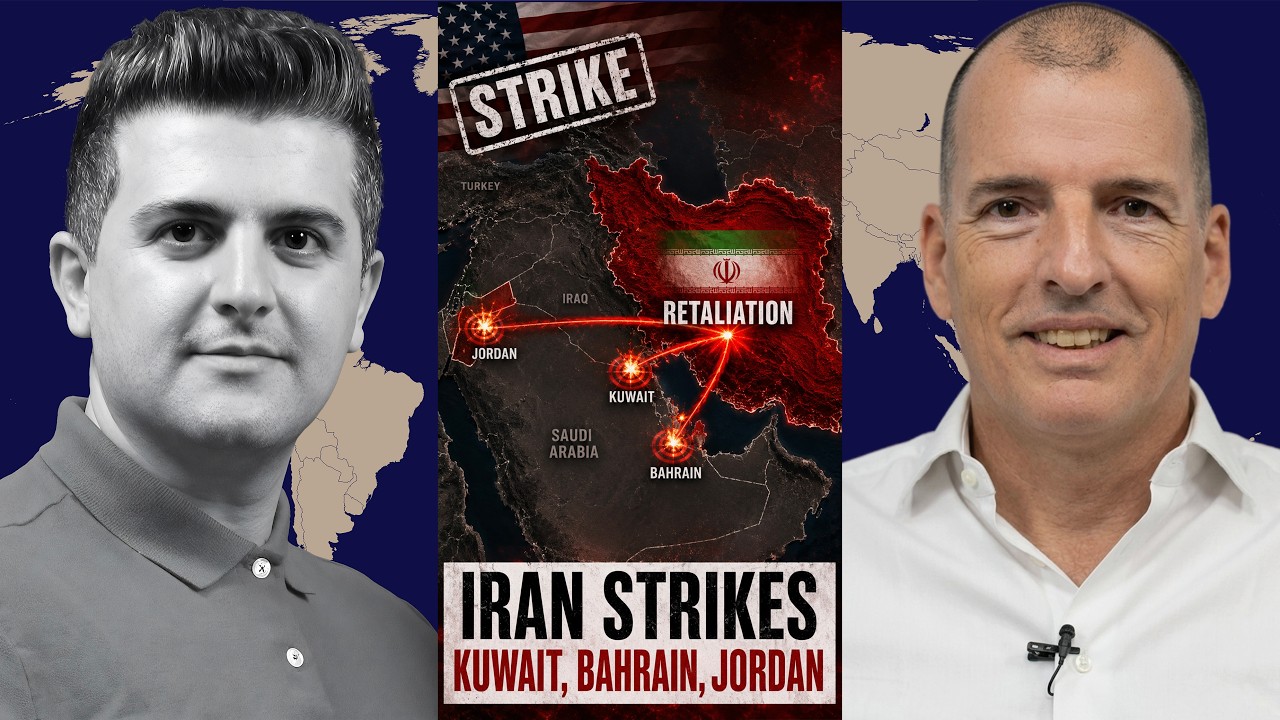
Alex Krainer: US STRIKES Iran – Iran RETALIATES Against Kuwait, Bahrain & Jordan!
"Amidst escalating US-Iran conflict and Iranian retaliation against regional US allies, this episode argues that US foreign policy is deeply controlled by an 'Anglo-Zionist conspiracy' led by the Rothschild banking dynasty, prioritizing Israeli interests over American ones."

Iran Update: Israel’s Newest Bombing Campaign, the Oncoming War With China and How to Avoid It
"Colonel Wilerson reveals how the US and Israel are actively bombing China's strategic infrastructure in Iran, escalating a covert economic war that Beijing intends to win without direct military conflict by dismantling the dollar's global dominance."
Patrick Henningsen: Hezbollah JUST Fired Back at Israel - Iran Vows to “Crush” All Attacks
"Patrick Henningsen argues that the US and Israel initiated an illegal war against Iran, driven by Trump's incompetence and Israeli influence, leading to an inevitable escalation with severe global economic repercussions."