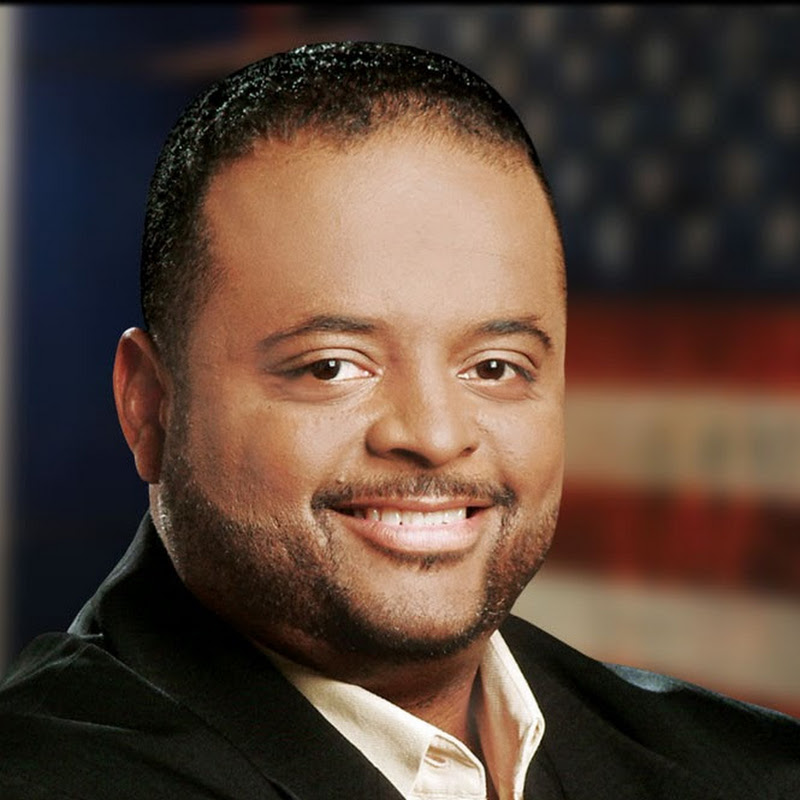
LIVE from Norfolk State. VA Referendum Could Flip 4 Seats. Youth Vote Push Intensifies
YouTube · EImCLI04SOM
Quick Read
Summary
Takeaways
- ❖Virginia's April 21st referendum could flip four congressional seats, significantly impacting the balance of power in the U.S. House.
- ❖Mid-decade gerrymandering, initiated by Republicans in states like Texas and Florida, is being met with a similar strategy by Virginia Democrats, but with voter approval.
- ❖Legislative control (the 'trifecta') in Virginia has already enabled the passage of minimum wage, paid family leave, and constitutional amendments for marriage equality and voting rights.
- ❖Young voters (18-29) have the lowest turnout, yet their participation is critical, as demonstrated by local elections won by razor-thin margins.
- ❖Deceptive KKK-themed mailers are being used to confuse voters and discourage a 'yes' vote on the referendum.
- ❖Democrats, when in the majority, secured over $100 million in additional funding for HBCUs like Norfolk State and Hampton University, often without public fanfare to avoid broader demands.
- ❖The party controlling the U.S. House in 2028 will certify the presidential election, making current congressional map battles nationally significant.
Insights
1Virginia Referendum as a Counter-Gerrymandering Strategy
The Virginia referendum to redraw congressional maps is framed as a direct response to aggressive mid-decade gerrymandering by Republicans in states like Texas, Florida, Missouri, and North Carolina. Roland Martin and guests argue that Democrats must use their power to 'roll' back these efforts and level the playing field, emphasizing that Virginia's approach involves a public vote, unlike Republican-led changes.
Roland Martin details Republican gerrymandering in Texas (), Florida (), Missouri (), and North Carolina (). Senator Lock states, 'They started it... we can finish it.' (). Senator Kaine highlights, 'Virginia, we're letting the voters vote on it.' ().
2Importance of Legislative Power (Trifecta) for Policy Enactment
Speakers consistently emphasize that holding a legislative 'trifecta' (control of the governorship, state House, and state Senate) is essential for enacting progressive policies. They cite recent successes in Virginia, such as passing minimum wage increases, paid family leave, and advancing constitutional amendments, which were previously blocked by a Republican governor.
Senator Lock lists accomplishments under the trifecta: minimum wage passed, paid family leave signed, collective bargaining on governor's desk, unconscious bias in medical care bill signed, and constitutional amendments for marriage equality, reproductive healthcare, and voting rights on the November ballot (). Speaker Scott notes, 'We have the kind of power in the Virginia legislature now that we are not likely to ever have again.' ().
3Youth Vote and Individual Mobilization are Critical
The episode highlights the disproportionately low voter turnout among 18-29 year olds and stresses that every single vote matters. The story of 19-year-old Supervisor Cameron Drew winning his election by just eight votes serves as a powerful example. Speakers urge individual citizens to actively engage five people, who then engage five more, to drive turnout.
Roland Martin points out that 18-29 year olds vote the least (). Cameron Drew won his election by 8 votes (). Senator Lucas and Roland Martin advocate for individuals to 'go ask five people, but then I want you to ask those five people to ask five people.' ().
4Strategic Funding for HBCUs and Political Maneuvering
Congressman Bobby Scott reveals that when Democrats controlled the House under the Biden-Harris administration, they secured significant, often quietly distributed, funding for Historically Black Colleges and Universities (HBCUs). This strategic allocation was done without public fanfare to avoid other groups demanding similar funds, demonstrating the practical application of legislative power.
Congressman Scott states, 'Norfolk State got 102,526,938. Hampton got 112,242,25681.' (, ). He explains, 'I didn't want to be bragging about it because everybody else would be looking where my money.' ().
5Long-Term Implications: 2028 Presidential Election Certification
The battle over congressional maps in Virginia and other states has critical long-term implications, specifically for the 2028 presidential election. The party controlling the U.S. House of Representatives in 2028 will be responsible for certifying the election results, a power that could be decisive in case of irregularities or contested outcomes, as seen historically.
Speaker Don Scott explains, 'The 2028 presidential election is certified in the House... in case of any irregularity, any confusion... the House can decide who wins.' (). He references the contested 1876 election and the Compromise of 1877 ().
Bottom Line
The current political climate necessitates Democrats to adopt aggressive, 'fight fire with fire' tactics, mirroring Republican strategies, rather than adhering to traditional 'play nice' bipartisanship.
This shift in strategy signals a more confrontational political landscape where securing and wielding power is prioritized over compromise, potentially leading to more rapid policy changes but also heightened partisan conflict.
For political strategists, understanding and adapting to this 'no more Mr. Nice Guy' approach is crucial for effective campaign planning and legislative action in highly polarized environments.
The quiet allocation of significant funds to specific constituencies (like HBCUs) by a ruling party, without broad public announcement, is a deliberate tactic to maximize impact while minimizing political backlash from other demanding groups.
This reveals a nuanced aspect of legislative power: not all impactful policy wins are publicly celebrated, and some are strategically underplayed to preserve future political capital or avoid setting precedents for other demands.
Advocacy groups and institutions seeking funding should recognize that direct, targeted lobbying during periods of legislative control can yield substantial, albeit less publicized, benefits.
Lessons
- Vote 'yes' on the Virginia referendum by April 21st to support fair congressional maps and Democratic political power.
- Mobilize your personal network: ask five people to vote, and encourage them to ask five more, to significantly boost voter turnout.
- Educate yourself and others on the specific impacts of local and state elections on national policy, and be aware of deceptive campaign tactics like fake mailers.
Grassroots Voter Mobilization for Critical Elections
Identify your target: Focus on registered voters, especially those in demographics with historically low turnout (e.g., 18-29 year olds).
Personalize the message: Explain how specific policy outcomes (e.g., healthcare, education funding, voting rights) directly impact their lives.
Leverage personal networks: Encourage individuals to reach out to five people they know, and empower those five to reach out to five more, creating a multiplying effect.
Utilize all voting methods: Inform voters about available options (mail-in, early in-person, election day) to maximize convenience and participation.
Counter misinformation: Actively address and debunk deceptive campaign materials (e.g., fake mailers) by providing accurate information and context.
Notable Moments
19-year-old Supervisor Cameron Drew recounts beating his high school government teacher by just 8 votes, emphasizing the power of every vote.
This personal anecdote powerfully illustrates the critical importance of individual votes, especially in local elections, and highlights the potential for youth engagement in politics.
Senator Manny Lock describes countering KKK-themed fake mailers by showing voters the real and fake flyers in churches, asking, 'In what world does Barack Obama come on television in an ad and tell you to vote yes, then he sends you a mailer and tells you to vote no?'
This demonstrates a direct, effective strategy to combat voter misinformation and manipulation, showing how community leaders can educate and empower voters against deceptive tactics.
Congressman Bobby Scott reveals that Democrats quietly secured over $100 million in additional funding for Norfolk State and Hampton University (HBCUs) during their majority, avoiding public bragging to prevent other groups from demanding similar funds.
This illustrates a pragmatic and strategic use of political power to benefit specific constituencies, highlighting that significant legislative achievements are not always publicly broadcasted for political reasons.
Speaker Don Scott explains that the U.S. House of Representatives will certify the 2028 presidential election, making the current battle over congressional maps in Virginia a critical determinant of future national political power.
This connects local and state electoral battles directly to the highest levels of national power, revealing the long-term strategic stakes of the current political fights.
Quotes
"Politics is a participant about participation. So, if you don't show up, you're not going to be represented."
"If somebody is in a fight and they pick up a 2x4, I'mma pick up a crowbar. I'm not going to sit here and say that's not right. That's not fair. When you get clubed upside the head."
"We have the power. We have the majority in the Senate. We know that we're going to get the majority in the House. So let's start talking about redistricting right now. And they started it... but we can finish it."
"We have an inescapable responsibility to do all we can for as long as we can for as long as we have this power."
"Until there's a Republican party, enough with bipartisanship and Louise, let's kick their ass."
Q&A
Recent Questions
Related Episodes

George Floyd 6 Years Later. Redistricting War in The South. Talarico Senate Campaign
"This episode exposes the ongoing legislative battles and strategic resistance against efforts to diminish Black political power, from federal policing reform to state-level gerrymandering and calls for economic boycotts by Black athletes."

We're finally breaking it...
"The hosts argue that young, progressive Democrats must abandon outdated political norms, adopt aggressive communication strategies, and reject corporate money to effectively counter Republican tactics and restore faith in democracy."

MAGA Voting Rights Power Grab. Stacey Abrams Dire Warning. Justin Jones Stripped of All Committees.
"Roland Martin and guests expose a coordinated Republican effort to dismantle Black political power across the South through aggressive gerrymandering, voter suppression, and economic attacks, urging a unified, immediate, and sustained counter-mobilization."

SCOTUS Hands Trump THIRD MASSIVE WIN | Timcast IRL w/ Brett Weinstein
"The Supreme Court's redistricting rulings and the Hantavirus narrative expose deep political hypocrisy and the dangers of unchecked power in media and medicine, highlighting the ongoing battle for truth and individual liberty."